
Translated material
Long echo
Russia is now suspected of explosions not only in the Czech Republic, but also in Bulgaria
The Bulgarian prosecutor’s office finally responded to a sharp increase in tension in European relations with the Russian Federation, caused by the investigation of the explosions of weapons warehouses in Eastern Moravia in the fall and in the winter of 2014. The representative of the chief prosecutor Sika Milev announced the “similarity” of now four explosions in the Bulgarian plants for the production of ammunition, "which distinguished them from other similar cases that occurred in the same period."
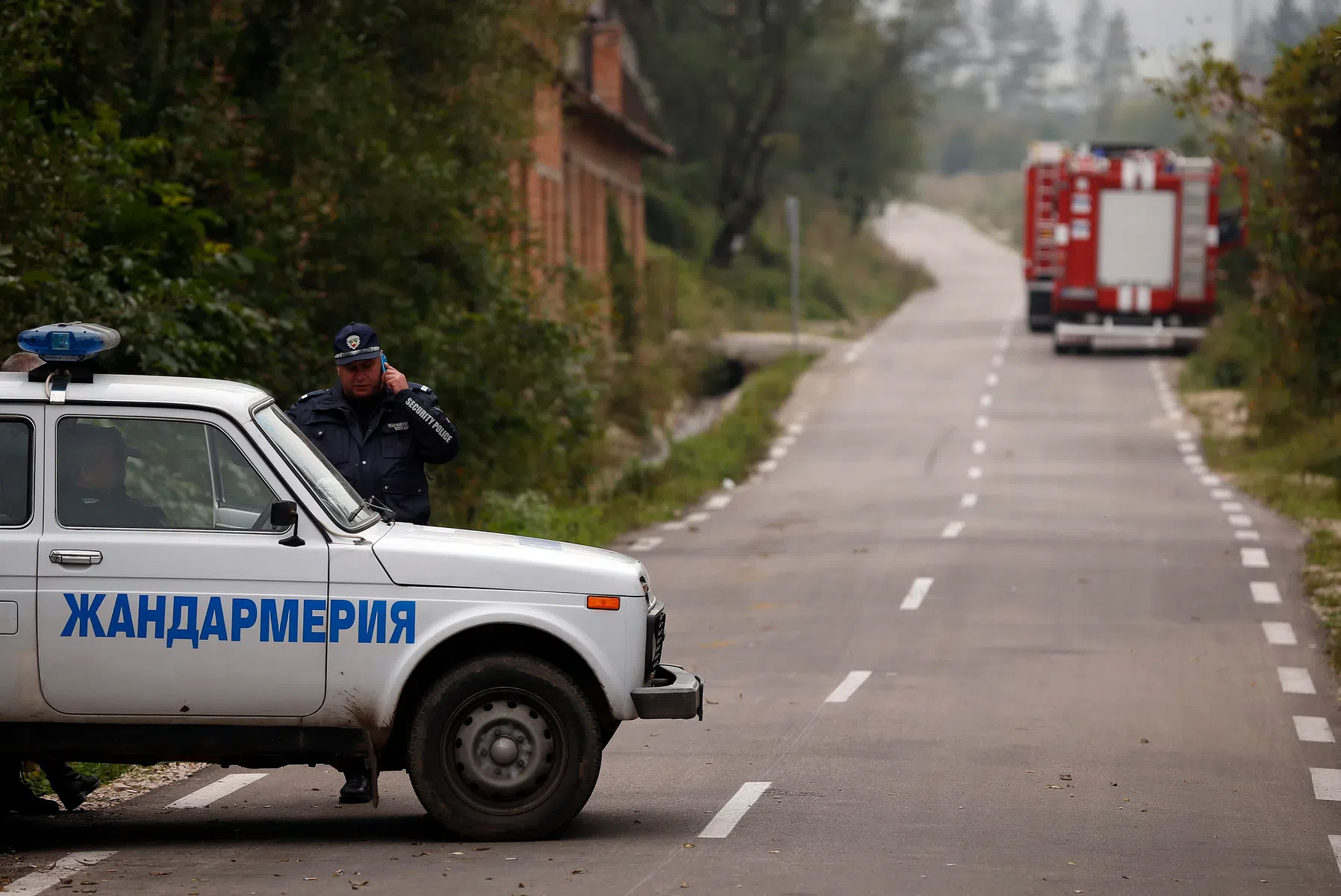
“Products that were supposed to be exported to Georgia and Ukraine were destroyed,” said Mileva. “Based on the investigation data, we can make a reasonable assumption of the relationship between explosions in Bulgaria, an attempt to poison three Bulgarian citizens and explosions in other countries.”
The Bulgarian prosecutor’s office, thus, expanded the horizon of subversive actions against the military industry of its country, saying that the explosions occurred from 2011 to 2020. Although it has still been said about six similar episodes dating back to 2014-2015. The Russians are suspected by the Russians by the number of six people, and these incidents are united by the fact that products belonging to the Bulgarian arms dealer Emilian Goebrev were stored at military enterprises. The motives are also clear: the supply of weapons to the states - to the antagonists of Russia.
Three Bulgarian citizens are, except Goebrev, his son and one of the employees of his EMCO company, who in April 2015 were poisoned by the combat poison from the Novice family, and Goebrev himself barely survived, and then subjected the second attempt to attempt. Now the Bulgarian prosecutor's office had to recognize the relationship of these events, greatly losing in the pace of the investigation both the Bellingcat group and the official bodies in the Czech Republic. And not only to recognize, but also to begin "pre -trial production regarding the national security of the country."
Most likely, such production will last vaguely long - all the mentioned incidents at military facilities were written off on technogenic factors or a combination of circumstances, and it is difficult to imagine that other reasons can now be revealed. This is also indicated by the highly assessing the prosecutor's office of the quality of explosive work: there are no victims and victims in all four cases, the briefing said.
Each explosion was preceded by a fire, and the working version is that this was done with a special calculation - so that people managed to move away.
Charges were undermined just during fire extinguishing, "it was definitely established that this happened remotely."
At one time, Goebrev’s poisoning was lowered by the official Bulgarian bodies on the brakes: the state did not defend it. The media spread the dark rumors about the machinations of Goebrev’s competitors, especially since everyone knew about his inanimate character. Now, when the whole picture opens, the words of the former Minister of Defense Boyko Noev are also perceived that the investigating authorities in Bulgaria were not given the opportunity to find out the truth about the poisoning of the weapons businessman, and the investigation was stopped “by agreement with Russia”. The certificates of Noev, acting as a military expert, are also well known to counteract the GRU export of military products.
Bulgaria also does not have a political position in the Goebrev case - Vrbetitsa. The traditional parties of Bulgaria, which went to a complete impasse due to the inability to form the coalition government after the election on April 4, remain silent, and only the parliamentary beginner (coincidence of the term-random) “democratic Bulgaria”, representing the interests of the city intelligentsia, made a request to the current Prime Minister Boyko Borisov (formally the entire government is retired): was there an external external Explosion interference at military plants in Bulgaria over the past 10 years? In a statement read out in the hall of plenary meetings of the People’s Assembly on behalf of “democratic Bulgaria”, concern was also expressed regarding the “scale and level of the identified Russian spy network in the Ministry of Defense”. “Democratic Bulgaria” insists that the Prime Minister introduces the parliament at a closed meeting, if necessary, “his assessment of the network of influence of the Russian Federation in the executive branch, security sector and the governing bodies of parliament”.
Giving the characteristic of the current situation in a more general plan, the former Foreign Minister in the government of Ivan Kostov (1997-2001), Nadezhda Naynsky said that the countries of the former Soviet bloc, which have become members of the European Union, have problems in the sphere of contradictions between “democratic development and Russian interests” and are the most vulnerable. “When we joined the EU, we hoped that we could better defend our interests before Moscow on the issue of gas, for example. Russia communicates with all EU countries, but differently. The question is whether he is ready to draw his red line "...