
Translated material
Ansian chronicles
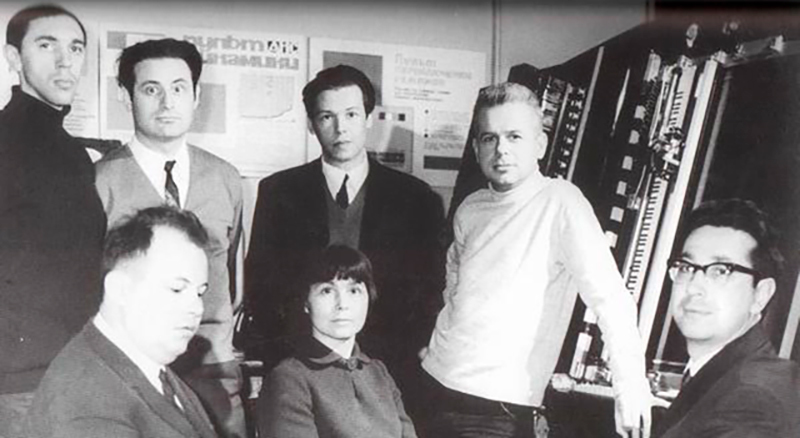
50 years ago- in 1971 -was prepared for the publication the album "Musical Office" , which could commit a revolution in Soviet music. But it did not happen: he lay on the shelf and was released only after 20 years- in 1991 , when it was already too late. Denis Boyarinov tells the amazing and tragic story of this plate, a unique synthesizer of ANS and its creator Evgeny Murzin.
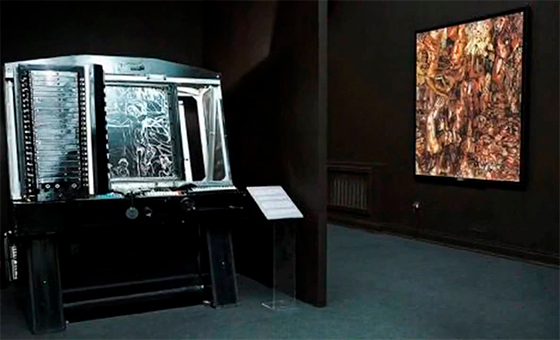
Since 2006, the only copy of the ANS synthesizer, miraculously saved from destruction, has been in the Glinka Museum among the patrifons, musical caskets and other dinosaurs of sound technologies. To him, one of the first polyphonic synthesizers in the world, sometimes lead school excursions to lose to children on a mighty instrument from which electronic music in the USSR began, the song “A Christmas tree was born in the forest” - the most nimble of the guides even manage to scratch on his working screen covered with dark mastic, their initials.
Fate for him has long been unfair. ANS is a miracle and a feat of engineering thought, created by the designer Evgeny Murzin, a unique tool that anticipated and realized the dreams of Soviet science fiction writers about electronic organs of the future, fulfilling the music of the heavenly spheres.
Ans still belongs to the world of the future - there are no equal and is unlikely to appear.
In fact, ANS, named after Alexander Nikolayevich Skryabin, is a prototype of a musical computer with a graphic interface-it was invented back in the 1930s , and appeared in the late 1950s : this is one of the few original developments in the field of musical technology made in our country. The thinking ocean Solaris in the famous science fiction film Andrei Tarkovsky speaks his unearthly voice. Ans still belongs to the world of the future - there are no equal and is unlikely to appear. In no synthesizer in the world, you still can’t get the sounds of such a timbral complexity. Computer programs recreating the capabilities of Ansa are devoid of liveliness of his sound. However, the fate of this tool is the plot about how they tried to exclude it from the future and successfully coped with this task.
 © Archive Stanislav Kreichi
Creator
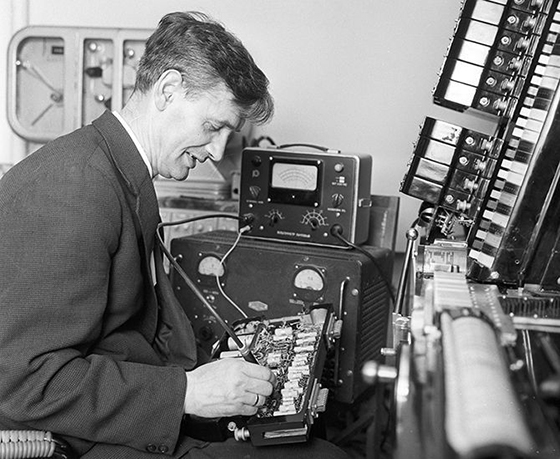
Ansu was very lucky with the creator. The designer of artillery guidance instruments Yevgeny Murzin was not only a versatile and gifted person in love with music, but also an active and penalty organizer who occupied an important place among the Soviet military-industrial complex and skillfully used his status. He was not only an inventor, but also an entrepreneur in the modern sense of the word, although there was no business and commerce in the USSR. In the United States, Evgeny Murzin would probably be able to become the creator of the revered brand and a successful company, such as pioneers of synthesizers of Don Buke or Robert Mug, whom he was ahead of. But the Soviet designer set himself tasks more ambitious than the maximum distribution of his own tool. Following his beloved composer Alexander Skryabin, in whose honor Ans was named, Evgeny Murzin dreamed of a revolution in music that would turn the centuries -old traditions of her writings and fulfillment.
Before the native of Samara, Yevgeny Murzin, carried away by Skryabin, he studied in the 1930s in Moscow at communal construction engineer, was interested in all new ones, invented strange gizmos like amplifiers of brain bioks and, as it should be young, listened to the jazz that was not yet banned in the Union. Having discovered classical music for himself, Evgeny Murzin was especially impressed by the works of Alexander Skryabin, a mystic composer who believed that sound and music had a special creative force, to the end to feel the mediation of the performer. In 1938 , in the year of graduation, 24-year-old Murzin took to the Laboratory of Musical Acoustics of the Moscow Conservatory a project of a photo-optical synthesizer of ANS sounds, which would allow the composer to create music using an expanded palette of timbres and drawing a score-as a painter, and then reproduce it, bypassing without musicians. With the invention of Murzin, the composer became an orchestra who could create sounds that had not existed in the physical world. The project of the young inventor was presented to Professor Boris Yankovsky, the pioneer of graphic analysis and synthesis of sound in the USSR, and received his approval. However, Yankovsky immediately disappointed the enthusiast, explaining that he should not wait for help in the implementation of the project: the times in the yard were harsh and terrible, not up to music. Murzin did not despair and decided to build his car himself.
Evgeny Murzin dreamed of a revolution in music, which would turn the centuries -old traditions of its composition and performance.
The engineer, however, intervened in the plans of the engineer: in 1941, the war began with Germany, which distinguished the birth of Ansa, and helped him. Having gone to the front by an artilleryman, Evgeny Murzin was in the secret NII-5 , who was developing automated air defense systems, and made a brilliant career there. After the war ended, the engineer took the post of deputy chief designer at the Research Institute and rose to the colonel, creating an artillery shield of the country - equipment for managing and instilling air defense systems. Nevertheless, his heart was given to music and Ansu, on whom the designer worked at night in his communal apartment, sharing the soldering iron with his wife and friends who came to visit. The official capabilities, help of colleagues and the loyalty of the authorities allowed Evgeny Murzin by 1957 to collect the first active model of the synthesizer - it took almost 10 years.
 © Archive Stanislav Kreichi
Keeper
The synthesizer has two dads. The first is its creator Evgeny Murzin, the second is his keeper, composer Stanislav Kreichi, thanks to whom a unique tool survived, having reached the present day, and took his place in the Glinka Museum.
In 1957, when Evgeny Murzin began the first demonstrations of the experimental model Ansa in his country house, Stanislav Kreichi starred in the film “Carnival Night”-a young musician who managed to move from a violin to Alt, and then mastered a clarinet, played in the youth pop orchestra of the central house of art workers and in its composition flashed in an episode of the popular filmmill. Then Kreichi studied at the Institute of Communications on Broadcasting Engineer and Acoustics, played in the pop quarter and dreamed of writing music himself. Like his future colleague, composer Eduard Artemyev , about Evgenia Murzin and his brainchild, Kreichi first learned from the magazines “Technique-Youth” and “Knowledge-Strength”, which in the late 1950s began to talk about an amazing invention: Murzin had already launched his program to integrate Ansa into Soviet life. “I thought that this tool is just for me,” Kreichi recalls. “A tool that allows the composer to do everything as he wants, and there are no musicians.”
- Our plans are burning more important, and your electronic balalaika may wait.
The case helped to get acquainted with Murzin: Kreichi's wife worked as a programmer in his laboratory and arranged a meeting with a designer who attracted a rare combination of hobbies in a young man - a radio engineer who knows how to play instruments and seek to compose music. Murzin took Krechi to his laboratory to work on the prototype of Ansa. “Then there was a distribution in all universities,” Krechi recalls. -Artemyev through the Ministry of Culture received a distribution to the Murzin laboratory as a Ukrainian engineer. And by that time I had not yet graduated from the institute. I was taken by the senior technician, they assigned me a salary, and we began to build Ans together - what was unpromated in the laboratory had to be implemented in a prototype. ”
The production of parts for the synthesizer was at the Research Institute where the designer worked. “The institute was engaged in the development of air defense systems, and Murzin all the time said: our plans are more important, and your electronic balalaika may wait. So nothing would have been done if Murzin did not go with the bags of bottles of vodka to the workshop and did not make up the turners and milling workers, ”Krechi recalls.
In 1959, the first active mock layout, assembled by Murzin in the country, was transported to the Skryabin Museum, located in Arbat lanes. “It was Murzin’s political move,” Kreichi recalls. - He named the instrument in honor of Skryabin, and he was allowed into the Scriabin Museum, and since the museum is a public place, the musical community of that time quickly got acquainted with the instrument. Murzin really interested everyone - especially filmmakers. We began to invite us to different creative houses - we made lectures and a demonstration of music on Ansa. ”
The passing role of Ans in Soviet cinema: the arrival of Frosi Burlakova to Moscow (from the film “Come tomorrow”)
Another step towards legalizing the innovative idea was taken when Murzin ensured that the mock of Ans was put up in the radio electronics pavilion at VDNH. Ans was represented by the general public as an “electronic tool for the composer”. “Almost without restrictions in temperament, ANS allows you to compose music using any frets and nozzles that exist on the globe,” was reported in the accompanying text to the invention. The unlimited also “... in the timbre and their changes, the ANS allows you to use artificial voices and noise of all kinds of buildings and shame in the composition of music.”
“When the ANS was put on VDNH, Artemyev and I took turns to demonstrate him there,” Kreichi recalls. - The demonstration sessions were every day - the posters hung. The interest was great; People went to look at Ans as a curiosity. And before that, Artemyev and I, by order of the Academy of Sciences, wrote on Ansa the music for the movie “Cosmos”, designed specifically for demonstration at the exhibition.
-He listened, listened-did not understand anything and said: “Well,“ no noisy reed ”can you play?”
To show the film at VDNH, a pavilion was built, in which space landscapes drawn by the artist Andrei Sokolov were shown on five screens. We divided them: everyone made their part, then mounted music. We were well paid for this film, but Murzin took this money from us and arranged for this amount several banquets for “necessary” people, on whose decision the fate of Ansa depended. The commission, which came to VDNH, was taken to the basement of the Tajikistan pavilion, where there was a restaurant with eastern cuisine. The very next day, the decision of the Ministry of Radio Industry came to send ANS to the International Exhibition to Italy. As soon as the paper came, at the Murzin Institute, vanity went - the missing details for the experimental model Ans were completed at the time. The synthesizer was collected, and on the New Year we were engaged in establishing it. Murzin locked us in the laboratory and did not let anyone in - the Ansa Commission was appointed on January 5, 1964. "
Eduard Artemyev and Stanislav Kreichi. "Space"
The first inclusion of the prototype of Ansa, which is now in the Glinka Museum, Murzin entrusted Krechi. “I pressed the button, the flame flashed behind the instrument, and the light went out throughout the institute. Something in the workshops were not so soldered. Some of the schemes burned out, and I got the nickname “Firemerker,” says Kreichi. -By the arrival of the ministerial commission, I had to write some play. I composed some kind of cosmic sounds. The chairman of the commission was the deputy minister of the radio industry - a person, from the music of the far. He listened, listened-did not understand anything and said: “Well,“ no noise ”can you play?” By that time, Ans already had a piano keyboard - I had the desired dashes, portrayed “noisy reeds”. Then he issued a verdict: packet and send. ”
Stanislav Kreichi. "Intermezzo"
The fateful exhibition of the achievements of Soviet industry in Genoa Ans nearly missed - the harsh Russian winter prevented. “Not only Ans was taken to Italy, but the entire arsenal of the laboratory - tools, spare parts, etc. Since Murzin knew that after the exhibition in Genoa the laboratory would be closed and that it would be with its property - it was not clear. Our caravan of three trucks hit between Kharkov and Dnepropetrovsk in a terrible blizzard. All the way was brought by snow. The cars were not released from Kharkov. I accompanied ANS with the military - Major of aviation. Fortunately, he looked like Gagarin and said that we were carrying a secret cargo. Only then they missed us. In snow drifts we stood the night. The blizzard was such that the roads were not visible - the driver was afraid to leave for a ditch. They barely managed to go to the ship in the Kherson port. "
The exhibition in Genoa was a month. “Ans made a strong impression on the Italians, because the exhibition had almost exclusively measuring instruments,” Kreichi recalls, “and then a synthesizer, music! We had several sessions per day, people came to see and listen. I worked at the exhibition every day from 10 a.m. to 10 pm. One rich Italian wanted to buy it and offered me any amount for him. ” Crachi could not sell him, even if he decided to become a “irrevocable” and break all the connections with his homeland, remaining in Italy forever. Day and night, the young engineer-composer was watched by KGB officers disguised as participants in the Soviet delegation.
 © Archive Stanislav Kreichi
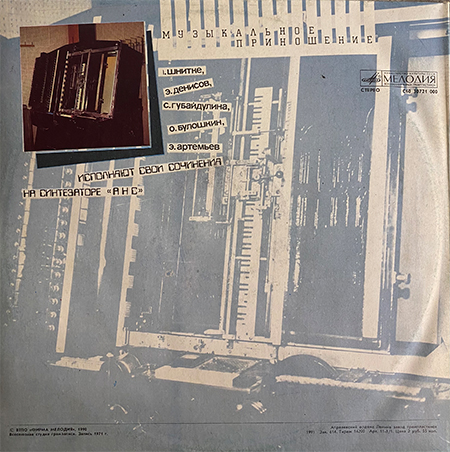
"Musical offering"
The success of Ans at the exhibition in Genoa helped the opening of the experimental studio of electronic music in Moscow. Upon the return of the synthesizer from Italy, Yevgeny Murzin knocked out a premises for him in the Skryabin Museum-apartment. “On the ground floor of the house there was a large communal apartment. Murzin through his ties - and he was very penetrating - achieved her resettlement, - says Kreichi. - Its residents were given individual apartments - they were terribly satisfied. And the communal apartment was rebuilt under the studio - they made a concert hall, a room for Ansa, and the synthesizer moved there. ” Having finished with his career in the defense industry and having left the Military Research Institute, Evgeny Murzin resigned in the rank of colonel and became the director of the electronic music studio, which began work in 1966. It took seven years to prove that his innovative tool has the right to life - alas, this happened to the very final of the thaw when the corridors of opportunities in all areas of activity in the country were rapidly collapsed. Associated with space and the future, ANS synthesizer could triumphantly fit into Soviet reality in the early 1960s in the wake of cosmic enthusiasm that covered the country. He gets a recognition of Yuri Gagarin in space in the year of flight, he could, as Murzin dreamed, go into serial production, and the branches of the electronic music studio would have appeared in the 12 largest cities of the USSR, which would give our country a unique electronics school and a completely different musical landscape. But only fantasies in the spirit of alternative history novels remain about this.
However, it was possible to achieve something in this area, although it was a small Tolik from the conceived by Murzin. In a short time, the studio in the Skryabin Museum gained international fame along with the e-music studio in Paris (created in 1942 by Pierre Sheffer), the West German studio in Cologne (where the Karlhainz Shtokhausen worked in the Columbia University (founded by Vladimir worked in the 50s. Usachevsky and Otto Lunning in 1958 ). The Russian emigrant Usachevsky, who is the founder of the American electronic school, was one of the first to visit its walls during his visit to the historical homeland. Following him in a mansion located in Arbat lanes, all the famous composers are noted, who were interested in the electronic sound and decided to travel to the USSR: Pierre Bulez, Luigi Dallapicol, Luigi Nono and Janis Ksenakis, who developed his own system of compilations for compilations and was slightly discouraged, having seen that in the Soviet His union was ahead of 20 years , and even without using a computer.
 © Archive Stanislav Kreichi
An indisputable advantage of the Moscow studio was ANS - a unique instrument that provided the almost limitless possibilities of sound synthesis for the experimenter. Around his brainchild, Yevgeny Murzin managed to collect the brilliant circle of composers who could reveal the potential of the tool. First, the studio settled young Eduard Artemyev, Stanislav Kreichi, Alexander Nemin, Sandor Callosh and Oleg Buloshkin. Since in the 1960s electronic music was considered part of the avant-garde front of academic music, future heroes of the avant-garde from the USSR soon appeared in the Scriabin mansion. The first to come loudly by Sofia Gubaidulin, who wrote music for cartoons and interested in exotic timbrems. “Gubaidulina’s interest in Ansu began while recording music for the cartoon“ Mowgli, ”Kreichi recalls. - There it was necessary to portray the ominous buzz of the swarm of wild bees. I coped brilliantly with this. Then Gubaidulina brought Alfred Schnita and Edison Denisov to the studio. ”
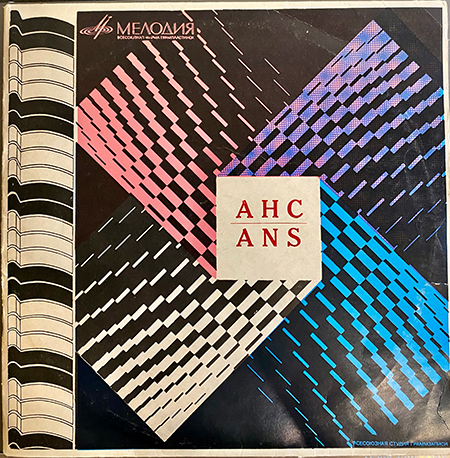
The first plate with music, invented and recorded on Ansa, went out at the Firm of the Melody Firm in 1969 . The disk-grand bore the lapidar name "Ans. Электронная музыка», знакомил советского слушателя с этим понятием в короткой сопроводительной статье, написанной языком научно-технических журналов, и был, по сути, рекламным проспектом студии: эклектичным собранием дебютов молодых композиторов, только начавших осваивать возможности нового инструмента. Альбом открывался впечатляющей сонорной композицией, написанной Артемьевым и Крейчи в качестве саундтрека к фильму «Космос»: она и до сих пор звучит весьма футуристично. Но дальше, чтобы не пугать неподготовленную аудиторию, электронная музыка возвращалась к традиции: хоральной прелюдии до мажор Баха, переложенной для АНСа Александром Немтиным, и легким эстрадным зарисовкам, сделанным Станиславом Крейчи с явным расчетом на одобрение любителей песни «Шумел камыш».
I.S. Бах. Хоральная прелюдия до мажор (переложение Александра Немтина)
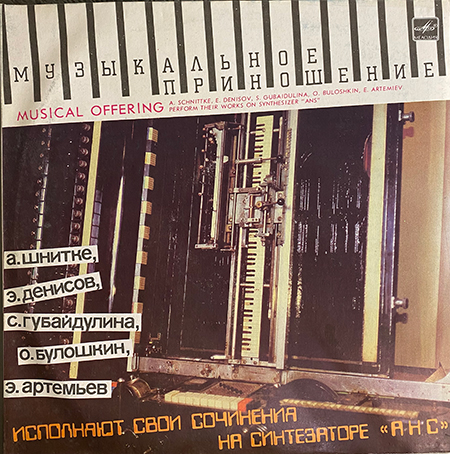
Евгений Мурзин гордился этим альбомом и показывал его всем гостям студии. Итальянский авангардист-революционер Луиджи Ноно счел этот диск слишком коммерческой работой, и тогда создатель АНСа задумал его более экспериментальное продолжение, предложив сделать по сочинению для синтезатора всем композиторам, интересовавшимся им, — в том числе и новообращенным Губайдулиной, Шнитке и Денисову. Надо сказать, что Евгений Мурзин оказался бóльшим авангардистом, чем эта святая троица советского авангарда. Он видел будущее музыки в создании новых ладов, интервалов, тембров и звуковых комплексов, да и вообще в радикальном изменении композиторских техник. У Губайдулиной, Шнитке и Денисова был другой взгляд на электронную музыку — более осторожный.
Альфред Шнитке. "Flow"
В динамичной композиции «Поток» Альфред Шнитке взял чистый тембр синусоидного тона, то есть как бы настоящий, первозданный голос АНСа, и, используя натуральные интервалы и старинную технику канона, превратил его в рев всесильной стихии, доходящий до пика и постепенно угасающий. Пьеса Эдисона Денисова «Пение птиц» представляет собой деликатный и красочный коллаж электронных кластеров и записанных в природе голосов птиц и шумов леса, который разворачивается в постимпрессионистскую картину, напоминающую о Дебюсси и Мессиане. София Губайдулина в сочинении « Vivente — non vivente » сталкивает звук живой, природный и звук электронный, искусственный, используя звучания АНСа, которые вступают в диалог с «подготовленным роялем», колоколами, человеческими голосами, смехом, вздохом и пением.
Авангардисты не зря осторожничали. Ресурсов влияния Мурзина не хватило: в 1971-м второй альбом с музыкой АНСа худсовет «Мелодии» счел слишком смелым и новаторским, и запись положили на полку. Она увидела свет лишь 20 лет спустя, в 1991-м , под названием «Музыкальное приношение». Возможно, именно поэтому герои советского авангарда — Губайдулина, Шнитке и Денисов — выполнили лишь по одной работе в этом жанре. Писать в стол для АНСа не было смысла. «Они были люди занятые, — считает Крейчи. — Их произведения не исполняли на концертах, и они жили за счет кино. Им надо было зарабатывать».
София Губайдулина. «Vivente — non vivente»
София Губайдулина объясняла это разочарованием в АНСе и электронном звуке. «Меня поначалу увлекла идея, что можно сочинять музыку, просто нарисовав что-то для синтезатора, то есть минуя исполнителей, — тогда это было актуально, — вспоминала она об этом позднее. — Но аппарат оказался ненадежным: слишком многое зависело от пленки, динамиков, всяких случайностей. Поэтому я переключилась на живые инструменты, особенно на не самые традиционные — тар, тамбур, дудук. А электроника стала мне мешать».
Роли апологетов АНСа достались Эдуарду Артемьеву и Станиславу Крейчи. Если музыка Эдуарда Артемьева, сделанная на АНСе, широко известна — это прославленные саундтреки к фильмам Андрея Тарковского «Солярис» и «Сталкер», повлиявшие на несколько поколений электронных продюсеров в России и мире, то работы Станислава Крейчи, сделанные для театра и кино, были изданы лейблом Electroshock Records только в 2000-х на компакт-дисках и стали раритетами. «АНС» и «Музыкальное приношение» — две пластинки, выпущенные «Мелодией», — тоже сейчас являются коллекционной редкостью.
 © Архив Станислава Крейчи
Гибель
В 1970-х в Студии электронной музыки продолжались эксперименты: она была редким оазисом свободомыслия в культурном ландшафте брежневской Москвы, местом творческих и духовных поисков. По крайней мере, так говорят непосредственные участники событий — композиторы Эдуард Артемьев и Владимир Мартынов , звукорежиссер Юрий Богданов . Но, увы, она просуществовала недолго. В 1972 году Мурзин скоропостижно умер, так и не реализовав свою мечту запустить синтезатор в серийное производство. После смерти создателя АНСа директором студии стал его заместитель Марк Малков, и она протянула еще несколько лет, но к 1980 году была закрыта, а созданные в ее стенах фонограммы были потеряны. «С закрытием Студии электронной музыки АНС передали филологическому факультету МГУ. Он стоял в студии звукозаписи, которая находилась в подвале здания журфака МГУ. Архивы студии погибли при пожаре, — вспоминает Крейчи. — Они находились в подвале, очаг возгорания был на несколько этажей выше. При тушении вылили 27 пожарных машин с водой. В залах и коридорах на следующий день вода стояла по колено. Сгорели чертежи и схемы АНСа, документальные архивы и аудио, но по счастливой случайности сам инструмент уцелел — вода в ту комнату, где он стоял, не пролилась».
Второй раз АНС чуть не погиб в начале 2000-х . По словам Крейчи, декан факультета «...хотел забрать себе студию, где стоял АНС, а филологи ее не отдавали. Она была специально построена с изоляцией от шумов, чтобы очень чисто записывать голос для исследований речи. Когда появились персональные компьютеры, необходимость в студии отпала. Но АНС там стоял. Ко мне приходили студенты из Гнесинки и консерватории — работать на нем. В 2003-м ректорат решил, что помещение используется не по назначению. Я об этом узнал случайно, вернувшись из летнего отпуска. Мне позвонил прораб строительного участка и сказал, что они ломают стены в студии, перестраивают помещение и чтобы я забирал ценные вещи, иначе они все это выкинут. Хорошо, что к этому времени мы много лет сотрудничали с “Термен-центром” при консерватории. Я сказал [главе “Термен-центра”] Андрею Смирнову , что АНС под угрозой, — он предложил перенести его к ним в консерваторию. Я за один день разобрал его на отдельные блоки — кстати, он легко разбирается, остается один легкий каркас. Мы достали машину, блоки погрузили и отвезли в консерваторию. А каркас работяги, которые ломали стены, перенесли на руках — я дал им по сотне. Жаль, что никто не снимал эту процессию на видео».
Coil. «ANS 1»
Об АНСе, доживающем свой век в музее Глинки уже без присмотра ушедшего на покой хранителя Крейчи, иногда вспоминают российские музыканты . К нему все еще приезжают — даже из-за границы, как это сделали в начале 2000-х участники культовой британской группы Coil . Однако это явно не та судьба, которую видел конструктор для своего детища и всего человечества, — он грезил ни много ни мало о новой звуковой вселенной. «Если бы у Евгения Мурзина получилось запустить АНС в серию, то у нас была бы другая история музыки в XX веке», — считает Станислав Крейчи.
По крайней мере, Мурзин попытался.