
Translated material
Of course, I am a skeleton
Alexey Navalny spoke in court and told how he leaves the hunger strike - but he was refused appeal. Report "Medusa"
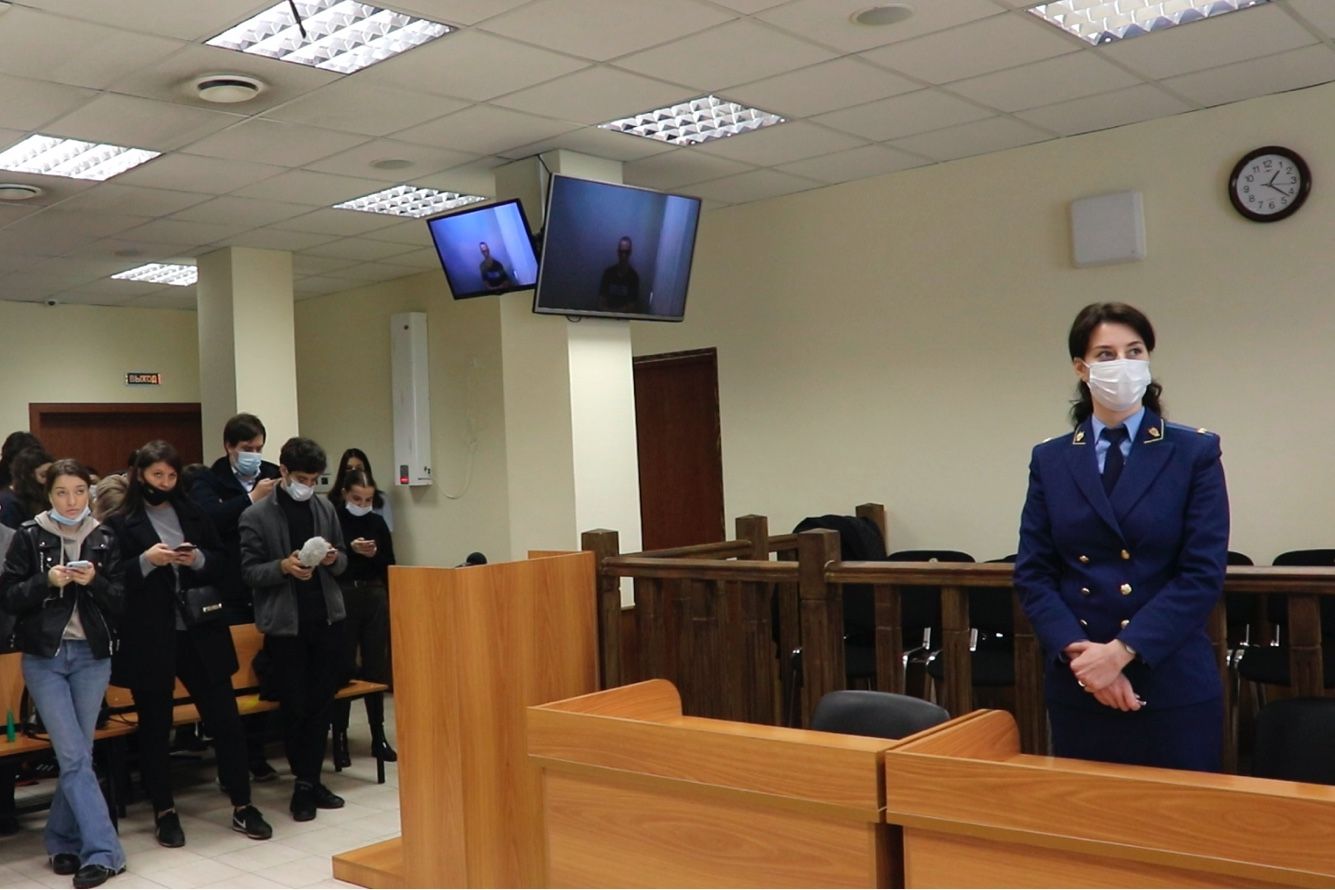
On Thursday, April 29, the Grandmother's District Court examined the appeal of the lawyers of the politician Alexei Navalny about the verdict of the justice of the peace Vera Akimova, who found him guilty of slander for the veteran of the Great Patriotic War Ignat Artemenko. The case was opened because of the opposition’s commentary under the video about voting for amendments to the Constitution. Navalny called him the heroes “sales holuis”, “traitors” and “people without conscience”. In the video, the veteran Ignat Artemenko starred. The court refused Navalny to appeal. And the politician himself at today's meeting told how he leaves the hunger strike, and once again said the last word.
On the day of the court, police officers in pairs are standing around the Grandmother's Court already for the quarter from the building. But there are no supporters of Navalny today, only journalists with cameras.
The meeting begins on time, at 11:00, the appeal is considered by Judge Natalya Kurysheva, and the prosecutor Ekaterina Frolova, who was the state prosecutor and in the court of first instance. Navalny is present in the video: it has a prison robe, he is very thin, under his eyes - brown shadows, and hollows are on the temples.
The judge announces the participants in the process and asks Navalny to get up. He says: “If I get up, you will not see my head,” and she does not insist. The judge announces his data - the year of birth, registration. “Yes, it seems that this is about me, or maybe about my evil double. Maybe good, ”says Navalny.
After that, he asks the judge this time not to interrupt him after each word, "as the woman did, who called herself a judge in the first instance." The judge, in response, also asks him not to interrupt and insert remarks only with its permission. After that, lawyer Vadim Kobzev asks to introduce a handwriting examination to the case. The judge gives the word to Navalny.
“In the case file, a huge number of signatures and any person shows that these signatures are forged,” he says. “The case was fabricated not only in essence, even the signatures are faked.”
The case of slander was listened to several meetings, and the victim Ignat Artemenko was not present on him. They tried to interrogate him on video conferences, but the interrogation was quickly interrupted, because the pensioner became ill, and he was called an ambulance. As a result, the written testimony of the front -line soldier was read out by the prosecutor Frolov. In addition - also remotely - the court interrogated the nurse of the veteran and his neighbor.
The judge reads the examination provided by Kobzev. It says that the expert checked 57 out of 62 signatures available in the case, and, in his opinion, five of them were made not by Artemenko, but by “different persons”. When the judge is finishing to read, Kobzev asks to appoint a handwriting examination of all 62 signatures of Artemenko on the originals of procedural documents in the expert center of the Ministry of Justice.
The prosecutor Frolov objects to the examination, saying that there are not enough reasons for this - an expert attracted by Navalny's lawyers, "was not warned of criminal liability and fulfilled the examination in two days."
After that, the judge goes to the deliberation room to make a decision on examination. After a little silence, Navalny says: "Julia, if you hear, get up, I will look at you."
From the first row, Julia Navalny rises in a black mask and a leather jacket.
“I'm terribly glad to see you,” says Navalny. - On a date, I weighed 74 kilograms, and now 72.
“72 are more than 74 to you,” Julia answers him.
“They took me to the bathhouse yesterday so that I looked decently, of course, the skeleton, I last weighed so much in the seventh grade,” Navalny continues. - I wrote a petition to be given 60 grams of carrots. Yesterday I ate four spoons of porridge, today is six, I'm waiting for ten. I'm going to grow a salad on the window, but then they will open a criminal case due to the fact that Navalny ate all the flowers. The apple has not yet been given an apple, although I ask for a piece of apple for four days, until I resolved the issue, apparently they ask Putin, but porridge - as much as you want.
- Will the stewed vegetables be given to you? - Julia asks him.
Alexey laughs:
- When, maybe I will win the battle for 60 grams of carrots, I will start the battle for the stewed vegetables. They offer me the broth constantly, but I am too early for me to eat broth. In general, they try, but they cannot add supravenotic things such as apple and carrots. But the porridge as much as you want, they bring me in the box, I put down three spoons, dilute with boiling water and eat. I have 570 calories according to the plan today. But no, I, 450, was 370 yesterday.
- And in Moscow there is still a mask regime? He asks unexpectedly. - Do they go to the metro in masks?
“Yes,” says Julia.
A few minutes later, the judge returns to the hall and reads the decision - to leave the application without satisfaction, there are no grounds for a handwriting examination.
After that, the judge asks if Navalny objects to consider the appeal without the victim. He does not mind.
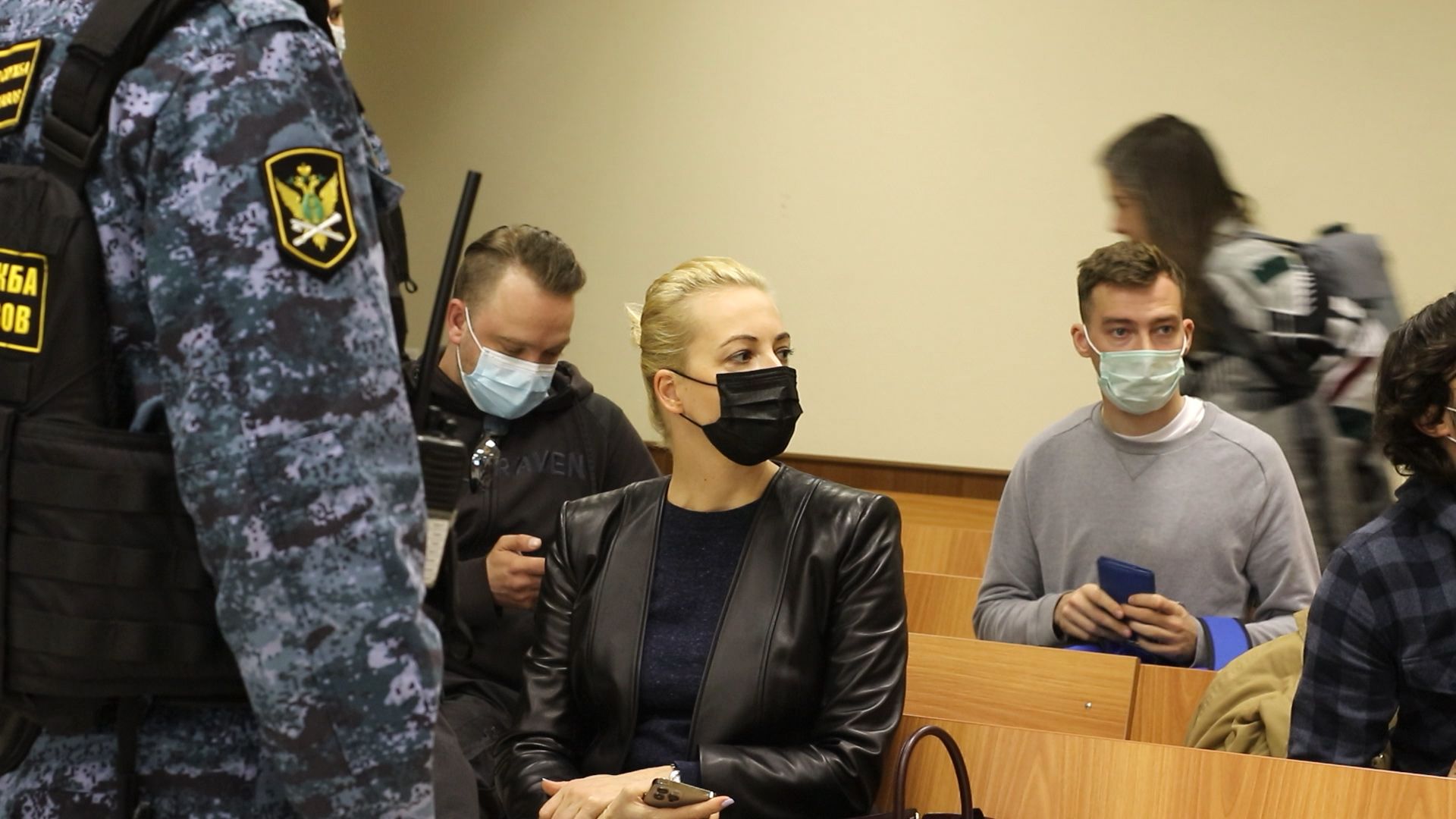
The judge reads the appeal of Kobzev, which refers to the decision of the European Court of Human Rights, which recognized the verdict in the case of "Yves Rocher" unreasonable. In the complaint, Kobzev also writes that when pronouncing the verdict, the rule of territorial jurisdiction was violated at the place of the crime. The lawyer indicates that the witnesses of the prosecution were in the period of acquaintance with the publication of Navalny outside the section of the magistrate court of the Yuzhnoye Medvedkovo district, so this court could not consider this case.
The defense of Navalny also stated that she did not know who was in Artemenko’s apartment at the time of his interrogation.
“The court hid the number of persons in the apartment and did not explain to them the rights and obligations,” Kobzev writes in a complaint. - The connection was established in such a way that it was impossible to understand the testimony, the prosecutor read out the text in front of him, which was not known who was written. Navalny expressed his evaluation judgment and called the “traitors” of the participants of the video in connection with their participation in the video, and not in connection with the personal biography. ”
After that, the judge reads the complaint of lawyer Mikhailova, but she warns the judge that the complaint is the same as that of Kobzev.
All this time Navalny is sitting, hanging his head to one side and seemed to doze off. When the judge asks him if he supports the petition of the lawyer, he replies that he supports. “The first time I see such a number of procedural violations, but apparently this is a new standard of Russian justice,” adds Navalny. “I demand to admit me innocent and immediately free me.”
After that, the prosecutor Frolov is expressed regarding the complaint. She says that the reference to the decision of the ECHR does not apply to the circumstances of the criminal case, and the statements of Navalny-slander, because they directly indicate that Artemenko participated in the video about amendments to the Constitution in order to get something from RT.
The judge announces the debate.
The prosecutor Frolov is acting.
- The defense of Navalny insists that the statement of judgments against the veteran of the Second World War is not false judgments, not facts, but evaluative judgments. Once again, I will give quotes: "The shame of the country, people without conscience, traitors." I do not see judgments in these words, I see peremptory statements, unreasonable accusations of betrayal, that is, in treason to the Motherland.
However, even an expert from the investigation in court called Navalny’s words “assessment”.
Then the prosecutor Frolov makes a long speech:
- Essentially, for a veteran, for a person who has passed the war, there is no accusation worse than the accusation of betrayal. Moreover, the accusation of betrayal sounded from a person who was twice found guilty of committing a criminal offense associated with fraud and deception. The “traitor” of the veteran of the Nazis was called a man who did not hide his neo -Nazi views, participating in neo -Nazi marches and conferences. A person who consistently inspired his supporters to discredit the victory of our people in the Great Patriotic War, to paint the Motherland Mother monument, to publish photographs of Nazi criminals among people of the “Immortal Regiment”, to rejoice from the death of the co-chair of the “Immortal Regiment” of Vasily Lanovoy. In a word, on the blasphemy that the defendant builds into the system.
The traitor is an assessment judgment, says his defender. But in the minds of most Russian citizens, the traitor is the worst criminal, and betrayal is a crime that cannot be forgiven. As you can’t forgive and insult a person who, at the age of 15, went to the front to defend his homeland, their fellow countrymen. Not only contemporaries, but also you and me, those who happened to live in peacetime. Although, perhaps, he dreamed of a different, opposite outcome of that war. If he considers the winners a shame of that country, then whom he considers the heroes? Why didn’t the convict still apologize to Ignat Sergeyevich? The answer is obvious - because he always knew who and what he accuses. He did it consciously and deliberately. Pursuing the terrible vile goal - to discredit Ignat Sergeyevich and all war veterans and the victory itself, the value of which is fundamental for our society.
At the end of his speech, the prosecutor asks to leave Navalny’s appeal, and the verdict of the justice of the judicial section of the 321 district of Medvedkovo of February 20 is unchanged. ”
After that, the judge gives Navalny the last word. It lasts not much longer than the prosecutor’s speech - about five minutes. ("Medusa" has already given the decoding of the last word of Alexei Navalny). In it, he compares President Vladimir Putin with the “naked king”, calls his management “mediocre”, and the authorities of the “occupier”, which deprived Russians of education, health care and prospects.
Then the judge Kurysheva still interrupts him and asks to speak on the materials of the criminal case. “Do not forget, this is not a political tribune, this is the last word,” she says.
Navalny agrees the last words at the same time: “Your power is quite successful, because for 20 years you managed to rob our people living in this country, to deprive him of the future and export their wealth. But this will end sooner or later. I have everything, thanks. ”
The judge goes to the advisory room for a sentence, it takes her about 20 minutes. She returns and reads the decision: to leave the sentence unchanged, the appeal. The court decision can be appealed to a higher instance.
Anastasia Yakreva