
Translated material
Why was Medusa recognized as a “foreign agent”? And who is behind this? We (for now) know two versions
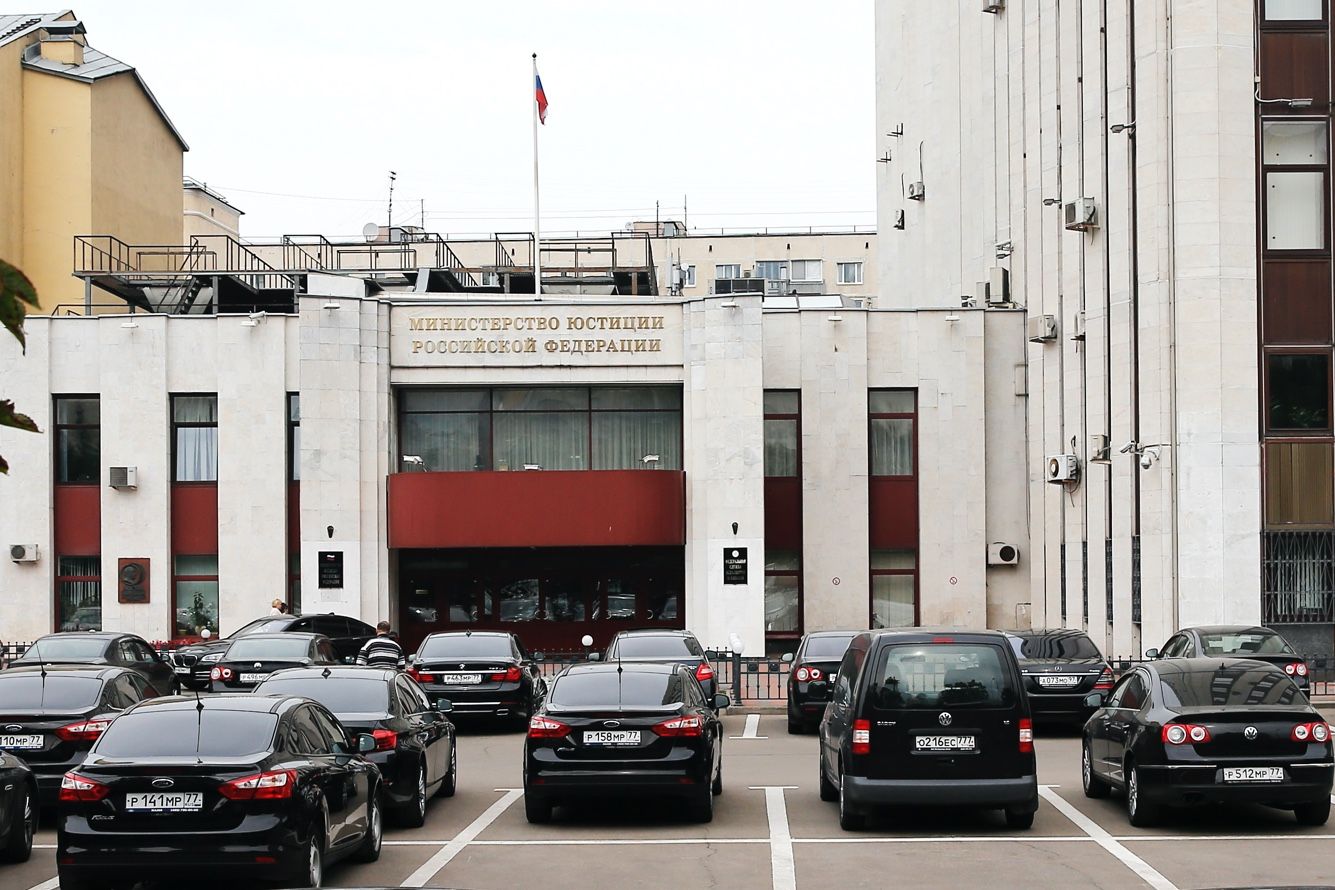
On April 23, the Russian authorities recognized the Medusa Media Media - a foreign agent. Now our readers are forced to constantly see the warning that they have the material of the “foreign -agent”. The very existence of Medusa is under threat, because we have lost advertisers. Medusa asked the Ministry of Justice, who introduced the publication to the list of “foreign agents” on what basis this happened - the department promised to answer within seven days. The Ministry of Justice’s employees answered the requests of other media outlets more quickly: the Novaya Gazeta said that Medusa meets all the criteria of the Law on foreign agents, and the “rain” - that the unnamed state authorities confirmed the foreign financing of Medusa. Medusa correspondents decided to independently find answers to the main questions: why such a decision was made now, what are his reasons and who was his initiator.
Version No. 1: “Medusa” was introduced into the “foreign agents” in response to Latvia pursued by Sputnik
“What is there - Medusa has already blocked in response to the locking of Russian sites by Latvia? No? Why? " -wrote the editor-in-chief of RT Margarita Simonyan in her telegram channel on April 1, 2021. The day before, RT representatives said that in Latvia they blocked the website of the Russia Today channel in Russian. In three weeks, on April 23, the Ministry of Justice brought Medusa to the register of “foreign media - foreign agents”. “The Ministry of Justice of the approval of the rays,” Simonyan supported this news. And soon the text that the “Medusa” “escaped with a slight fright” was repostating from the Sputnik close foreign country that compared to their situation .
At the “Medusa” request about the reasons for the inclusion of the publication in the register of “foreign agents” in the Ministry of Justice, they promised to answer within seven days. However, the ministry responded to a similar request from the rain channel, saying that this was done “on the basis of documents received from state authorities of the Russian Federation,” in particular, “confirming foreign financing” “Medusa Project” (Sia Medusa, which issues Medusa, was registered in Latvia, and this is public information).
As explained in the Ministry of Justice of the Novaya Gazeta, to include in the register of the media-“foreign agents” there are enough execution of three criteria : registering the publisher in foreign jurisdiction, receiving funding from abroad and the dissemination of information in Russia (that is, on the Internet in Russian).
It turns out that any foreign media that produces materials in Russian falls under these criteria. However, before the Medusa’s inclusion in the Feet-Agents Register, only the Voice of America radio company, the 11th media of the Radio Liberty group, which are financed by the US government, as well as the Czech Medium-Orient Government, financed by the Open Society Institute, the regional billionaire, George Soros,
The budgets of these, in fact, non -profit organizations allow them to continue work, ignoring the inclusion in the list of “foreign agents”: for the media from the Radio Liberty group, administrative fines for non -compliance with the “Inoagent” reached the amount of 71.5 million rubles by early April.
According to the law, the Ministry of Justice brings foreign media in the register of “foreign agents” in agreement with the Ministry of Foreign Affairs. The official representative of the Ministry of Foreign Affairs of the Russian Federation Maria Zakharova to questions about the position of the Ministry of Foreign Affairs in relation to the publication and the reasons for entering the “Medusa” in the list of “foreign agents” replied: “We do not comment on the process of interagency coordination of documents, but we can say that we complied with the requirements of this law. The recognition of the media or journalist by the “Ino -agent” does not affect the work with him from the Foreign Ministry - as before, respond to requests, give comments, accredit to events. ”
According to Zakharova, the "Medusa" is recognized as an "ino -agent" only because "corresponds to the criteria of the law" - and there are no other reasons for this.
The Russian Foreign Ministry did not have any problems with the Medusa registered in Latvia, Zakharova said in a conversation with the New Gazeta , and added that “she always treated the publication as the media; I have not heard any complaints on their part <...>. "
In mid -April, Maria Zakharova at a briefing was indignant at the persecution of Russian media in Latvia. In particular, she cited as an example that on April 14, the Latvian state security service summoned for interrogation to present the status of a suspect five journalists who collaborate with the Russian Sputnik Latvia and the Russian -speaking news agency BaltNews (part of the MIA Russia Today).
They became suspects under Article 84 of Part 1 of the Criminal Law on Violation of the Sanctions. The punishment under this article is up to five years in prison. Seven more authors of Sputnik Latvia and BaltNews received the status of suspects under the same article in December 2020, writes Sputnik Latvia.
The pretext for the strict actions of Latvia in relation to the media of the MIA Russia Today group and their journalists were European sanctions against the general director of MIA Dmitry Kiselev . In the summer of 2020, the National Council of Latvia in Electronic Media banned the broadcast of seven RT channels in the country, substantiating this with a “violation of the economic sanctions of the European Union”, since, according to the Council, the television channels are “under control” Dmitry Kiselev.
Kiselev connection with RT
The Russia Today, the basis of the current RT channel group, was established in 2005 by the State Agency "RIA Novosti" for broadcasting on various countries of the world. Its editor -in -chief was Margarita Simonyan. Dmitry Kiselev at that time worked as the host of the Vesti+program “Russia”. But in 2013, RIA Novosti was liquidated, and in its place the International Information Agency (MIA) was created, whose general director Dmitry Kiselev was the general director. In the same 2013, Kiselev appointed Margarita Simonyan, the editor -in -chief of MIA Today, who still holds this position, combining it with a similar post in Russia Today, as well as since 2014 with the post of editor -in -chief of the Sputnik news agency, established by the Russia Today MIA Today. All these organizations are funded from the Russian budget. Thus, Formally, Dmitry Kiselev and Russia Today are not related to each other: Kiselev is only the general director of the company, who became the successor to the founder of RT, and the formal head of Margarita Simonyan in two projects (MIA Russia Today and the Sputnik agency established by this organization).
“We regard the criminal prosecution of journalists in this country (Latvia) as a frank violation of international law regarding the freedom of expression and the principle of pluralism of the media,” Zakharova said at a briefing on April 15.
Two sources of Medusa, close to the administration of the President of Russia, argue that it was the problems of the MIA Russia Today and RT in Latvia that caused the Ministry of Justice to solve the Latvian publication Medusa, and the initiative came from the administration of the President of Russia.
“Simonyan asked [the first deputy head of the Presidential Administration of Aleksey] Gromov , so that Medusa is brought into foreign agents for Sputnik in Latvia. This was the last straw for her, and Gromov had to execute the KPI to combat foreign influence, ”so one of the interlocutors of Medusa explains the logic of this decision.
Margarita Simonyan herself, to the question of Medusa, answered her role in this story as follows: “The only case when I intervened in the fate of Medusa and its employees is the Case Golunov . Latvia made the rest with you. So ask her. ” (After the detention of Ivan Golunov, Simonyan wrote in her telegram channel: “What needs to be done right now is to let Golunov go under house arrest. Given the health and in general. And then to present evidence to the society-if any. To make the end of this proceedings not in a smelly cell, but at least at home.”)
Version No. 2: Russian Security Council for “blockade” of foreign media
However, other Medusa interlocutors say that the reasons for its introduction to the list of “foreign agents” could not be related to Latvia and the conflict around the Russia Today MIA - and that other foreign media working in Russia may soon face a similar problem.
The source close to the government claims that the “blockade” of foreign media was discussed at a recent operational meeting of the president with permanent members of the Security Council , where they talked about “media with foreign financing in Russian”. It is assumed that most of them should receive the status of "foreign -agent".
According to the interlocutor of Medusa, there are no such clear media outlets, but, first of all, the media with foreign public financing are considered to be such: for example, BBC. “Gromov could indicate that“ Medusa ”is not such a media, but he didn’t do this,” the interlocutor summarizes.
Another source close to the council confirms that at the last meeting with members of the Security Council, foreign media were really discussed, but not in the context of their “blockade”.
“It was about information exchange and that the media should be distinguished from the instruments of special services,” says the interlocutor of Medusa. However, according to the source, there are people who consider Meduzu and other foreign publications precisely the “instrument of special services”.
The position of the Security Council and specific instructions are brought to ministries and officials, a source in Russian state bodies, familiar with the content of such orders, told Medusa.
After the publication of the Medusa material, she received a response from the Ministry of Justice. He does not explain anything, but we give it completely: “For a request from 04.28.2021 on the inclusion of foreign media that perform the functions of a foreign agent in the register, we report the following. On the basis of documents received from authorized state authorities of the Russian Federation, confirming the compliance of the signs of a foreign media performing the functions of a foreign agent established by the Law of the Russian Federation dated December 27, 1991 No. 2124-1 “On Mass Media”, 04/23/2021, a legal entity registered in the Latvian Republic, SIA “Medusa Project “(Registration number 40103797863, registration date 06/10/2014) is included in the register. The decision on the inclusion of information on the specified legal entity was made by the Ministry of Justice of the Russian Federation in accordance with the requirements of the legislation of the Russian Federation. ”
Authors: Tatyana Lysova , Svetlana Reiters , Andrey Peretsev and Alexey Kovalev