
Translated material
Daily magazine: waited
See the collapse of those who closed you. A few days after the August putsch, I came to the Old Square in Moscow. It was deserted there - not a single person. The doors of the dissolved Central Committee of the CPSU are locked. Windows have already managed to be covered with dust. An unforgettable sight. In the Soviet system, it was a center of power. But the system itself has ceased to exist. And society - regardless of political views - was happy about the happy deliverance from the annoying and having risen to all the authorities. Revolution! And the revolution is a folk element that involves this whirlpool and those who were not going to overthrow anything at all.
How many times will it be surprised later: where did all those who participated in rallies, demonstrations go, who required changes? After all, these were hundreds of thousands of people, if not millions ... And for a democratic platform in the elections, less and less votes every year. Disappointed in democracy? More precisely, it will be said that among those who escorted Soviet power on the last journey, there were very few democratically thinking. What did the rest celebrated?
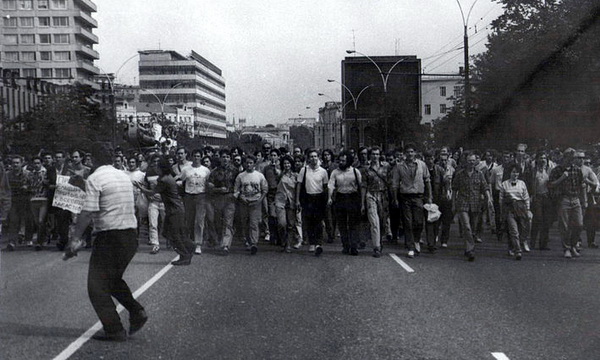
The Soviet government disappeared, everything disappeared - the Central Committee, the regional committees, the city committees, the district committees! In those days, the bosses behaved unusually - warning, even ingratiatingly. This was neither before nor after. They were afraid! All the leaders and masters of life, who commanded the people, lost their seats. Yesterday they were the owners of the country, and today - no one and nothing! And this is the real holiday: to see the collapse of those who closed you ...
The first Russian government: "either in winter they will eat or put it in the spring." 1991 put a few democratic wing to the position of the winning side. The absolute minority suddenly turned out to be power. The narrow circle of young politicians and economists took over the management of the country, having no mechanism or practical program for this. They intended to conduct a long struggle in the role of the opposition, which would allow them to prepare for a new role. But the cloth-loser provoked a revolution that cleared the political space. “We did not have a reform plan,” says Gennady Burbulis, who was then the closest ally of Russian President Boris Yeltsin, “we were not ready for such forced, super -reliable decisions and actions. We were not allowed to evolve answers to historical challenges. ”
In December 1991, Russian President Boris Yeltsin inherited not only the Kremlin cabinet of his defeated rival of the USSR President Mikhail Gorbachev, but also the entire load of unresolved problems. The difficult situation in the economy. The shops are empty. The mood is gloomy. The stock of patience in people seemed to be exhausted. They no longer wanted to hear promises. Yeltsin had to act, and act immediately. “There were few people who wanted to come to the government at that time,” recalled Yegor Gaidar. - Many of those whom I then invited, called, persuaded, refused. The first joke about our government is characteristic. He sounded like this: the new government will eat like potatoes in the winter, or put it in the spring. ”
Why did the president instruct the country's economy Yegor Gaidar? Of course, the magic of the famous surname acted on Yeltsin. He was pleased to see the grandson of Arkady Gaidar next to him. But Boris Nikolaevich is not such a sentimental person to subordinate personnel decisions to the command of the soul. He felt in Yegor Timurovich what was opened much later - firmness, perseverance and the ability to achieve the goal. 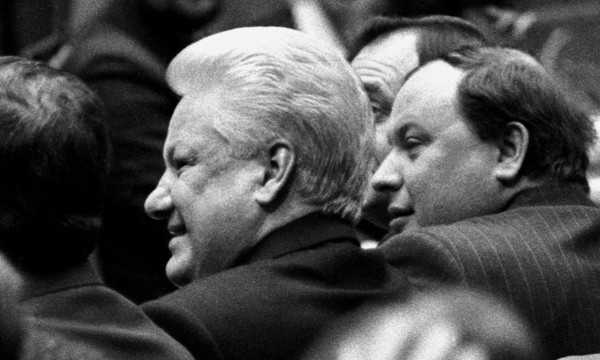
From the expectation of the country's quick transformation to a bitter disappointment . On January 2, 1992, prices were exempted for everything except bread, milk, alcohol, utilities, transport, oil, gas and electricity. The restrictions on imports were canceled, and this allowed the stores to fill. On January 29, the president signed a decree “On Freedom of Trade”, which canceled the state monopoly on trade. And this finally ended with a shortage of goods. But the country, seeing the price tags, gasped.
Egor Timurovich made the impossible: he began to reform the economy and, in spite of everything, continued these reforms. Six months later, it was obvious that the very essence of Russian life had changed. Over time, it will become clear that the Gaidar reforms were marvelous. The market economy has earned. However, Gaidar reforms gave rise to illusory expectations of quick transformation. But hopes did not materialize and were replaced by bitter disappointment. The euphoria of the first period of the new Russia was so strong that then the country was seized by real depression - from the consciousness of its own powerlessness. Money and power again went to someone else. And there is no strength to change.
Boris Nemtsov, the then governor of the Nizhny Novgorod region, told how Yeltsin arrived in the city, talked with people who were outraged by prices, got into the car and doomedly said: “Lord, what I did ...” The loss of folk love was unbearable for him. At the Congress of People's Deputies, Kemerovo Aman-Geldy Tuleyev threw Yeltsin: “Boris Nikolaevich, you deceived the Russians. You have already destroyed everything that can be destroyed. There is nothing more to destroy. ”
If the Gaidar government was allowed to work longer, they would have escaped many difficulties that the country later faced ... And so the reform period dragged on for many years. Departing from the post of president, Yeltsin apologized to the fellow citizens for the fact that "many dreams did not come true."
Loss of reliability and hopes . The adaptation to the new rules of life turned out to be incredibly complicated. The most painful is not even the loss of savings, but the loss of reliability of being. The state no longer guaranteed work and salary, obtaining education and free housing. In Soviet times, the apartment had been waiting for decades (many did not wait), but there was hope ... It was difficult to reconcile with the loss of the usual social status. What was recently considered honorable has ceased to be so. Veterans of state security organs or professional party workers found that their profession is not so honorable. Lawyers are more important than officers.
Incredibly successful and suddenly rich young (and not very young) people were not perceived as deserving respect. The former hierarchy was preserved in the ideas of society: those who serve the state are significant. Trade, service, business classes of second -grade. People who achieved success caused anger and envy. It was believed that you can get rich only by an unrighteous way.
Fight from behind the trough . I remember how indignant and angry deprived of the authorities were. One of the employees of the CPSU Central Committee wrote with hatred about recent colleagues who in 1991 crossed the side of the Russian authorities: “Both of my former good comrades in the apparatus. On this day, we were on different sides - not barricades, but troughs. They - from the one where they take, and I - where they take it away. " The excommunication from the trough was short -lived. It, as they say, did not have time to cool. The system of distribution of goods based on personal connections easily adapted to new conditions. The new one consisted in the fact that the joys opened, about which Soviet officials could not even dream. The position began to be considered as an instrument of earning very big money.
The richest were former directors who quietly privatized entire industries. What they managed by position turned into their personal property. The main commercial banks were created even before Gaidar with Chubais. They own the director of the largest state -owned enterprises. They pumped budget money to their banks, which they disposed of. They avoided publicity, so they remained unknown, and the hatred of society fell on others.
Clan capitalism was formed . Its characteristic features are opaque and close fusion with the state apparatus. In such a system, officials dispose of budget funds in favor of certain economic clans. Clans control markets and do not allow competitors. In close cooperation with security forces. Bureaucracy has turned into a caste, ineffective and corrupted by the incredible capabilities of personal enrichment.
You won’t earn much without connections on all floors of the bureaucratic mechanism: large managers give out a lot of money, and officials are more expensive every year to evaluate their services to business. The appearance of the oligarchs would be impossible if each of them had not stood the powerful of this world, who received their share. Not a business bought power in Russia, but the government has grown a big business that subjugated itself.
Many are in amazement where so many bandits and prochindes came from, connecting their appearance with democracy and reforms. All these people did not fall off the moon. They grew up and formed in the Soviet system. Would it be more precisely that it will be noticed that the destruction of morals occurred long before the changes in our lives?
At first, people supported the new government and voted for democratically tuned politicians not because they completely shared their political and moral values, but because they promised to arrange everything, to establish life for general pleasure. We like to quote a phrase from the popular film "Brother-2": "Who is right, he has power." No, in our country different: who has power, is right. In 1991, seeing how the Soviet government collapsed, many mistakenly decided that a new one had defeated the old power. They were in a hurry to join her. Quickly, quickly making sure that the new people in power are not power at all, they fell off.
“Could it be different”? And those who frankly rejoiced at the fall of power in 1991, and those who were sitting at home in those days had one thing in common. They looked impatiently when everything would work out in the country. We watched with interest the actors. They were annoyed, seeing that it was not very good. But they did not hit the finger on the finger. Of all the sad words that you can say, the most sad: "Everything could be different." Remembering 1991, you can’t say: everything could be different. It’s just that then we did not know that from the abyss that fell a century ago to get out, tearing the elbows and knees into the blood, for a long time. And then you can collapse back.
The end of 1991 is not only the time when the Soviet Union broke up. At the same time, a new Russian state was born. The management system and interaction between the authorities and society was formed. The traditions of political life, relations within the establishment, the ruling class were laid. 1991 is a time of moral protest against the previous system. The freedom and the right to dispose of their life have changed their life changed the country. The spiritual space itself was cleaned and revived. Russia has returned from what was lost in 1917. Democratic transformations and liberal reforms laid the base for serious economic successes.
But ... a miracle did not happen: the big policy is based on sophisticated intrigues, and even good goals are achieved by low -powered means. And officials at high posts are guided by ordinary human feelings - envy, self -interest, and power. That is why dubious principles so often triumphed, bad traditions developed, especially in personnel policy. The struggle for posts and influence, for a lot of money, for the proximity to the first person tearing out the young Russian power.
In 1991, democrats won, but not democracy. It should have been created for a long time and methodically. And the rushing new government chose to rely on the state apparatus preserved from Soviet power, which seemed a very pragmatic decision. The reformers have completely focused on the economy and paid little attention to the change in the judicial system (therefore, today judges consider themselves part of the punitive apparatus), law enforcement agencies, and in general, politics - while it should be helped by the formation of parties and local self -government.
The most important institutions of the Soviet system remained unchanged . Life has preserved the former hierarchy: only one who serves the authorities is significant. And many agree in advance that the apparatus, that is, the authorities, senior officials, has every right to command. Ready to endure, obey. Vote correctly. Out to strangers. Praise your own. How ordered ...
The court, the prosecutor’s office, the department of state security, the internal affairs bodies were preserved as instruments of control over the country. For some time, while the highest posts were occupied by people with democratic beliefs, these structures seemed to be in lethargy, were in sleeping mode. Prosecutors and investigators, Chekists and policemen, pushed by revolutionary changes to the side, with resentment and irritation, and even with poorly hidden hatred, followed the activities of young reformers. They waited for their time to come again. Waited.
Original text is published on the site History of the New Russia
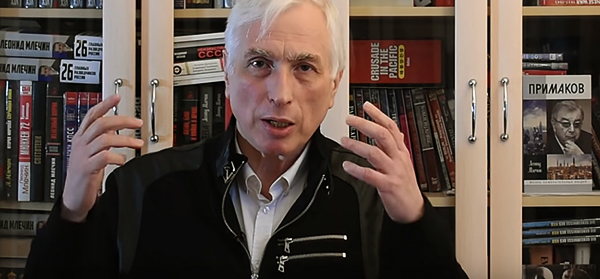
Photo: 1. Screenshot YouTube channel "History of Leonid Mlechin"
2. Wikipedia.org/inivan Simochkin according to CC3.0 license
3. Boris Yeltsin and Yegor Gaidar (1992)/ Alexey Sazonov - Source: Yeltsincenter.ru
