
Translated material
American dream in Moscow
The Gogol Center staged a performance based on Hunter Thompson’s cult novel “Fear and Aversion in Las Vegas”
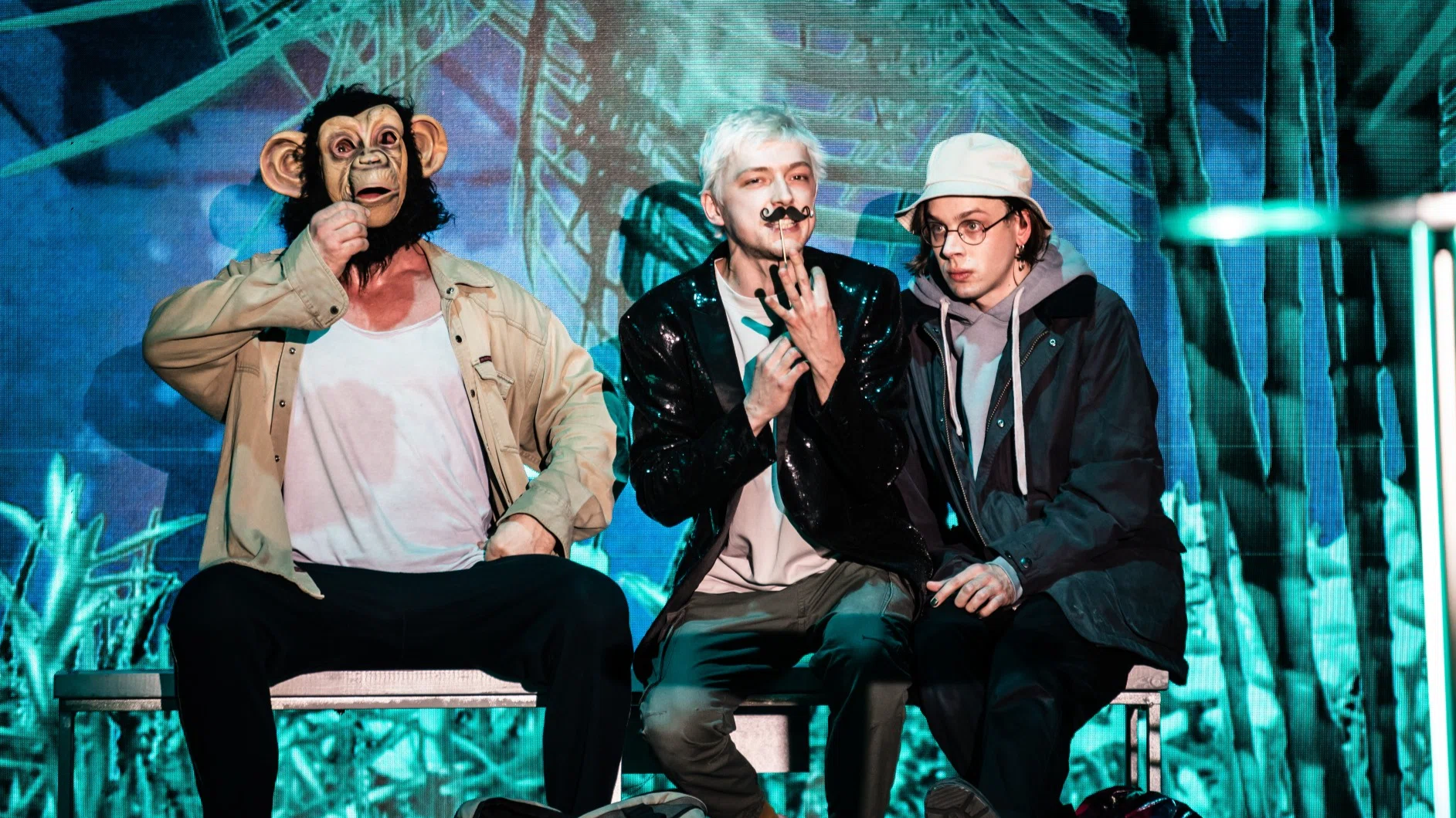
Tickets for the play “Fear and Disgust in Moscow” began to be sold a month before the premiere, but after a couple of minutes they had already finished - they all were bought. So the interest in the adaptation of the novel by the founder of the gonzo-journalism is genuine. However, from the work of Thompson, the performance inherited only the form of Road Muy and the principles of this very gonzo-journalism, in which there is no objective view of reality, and in the center of the narrative-the personality of the reporter. Therefore, an original play was created, reflecting the fears and disgust of modern Muscovites in a psychedelic vein.
According to the author Yegor Prokopyev and director Philip Avdeev, the modern younger generation is too far from Thompson’s ideas: we did not have an “American dream”, nor Woodstock, nor Las Vegas.
In addition, we have the Americans of the sixties and Thompson, in particular, there is one fundamental difference:
They lived quickly, trying to take the maximum from life, and modern young people, on the contrary, live measuredly, constantly thinking and philosophizing. Therefore, it was important to adapt the play not only to the realities of modern Moscow, but also for our mentality. This performance could only arise in the Gogol Center, as in the epicenter of youth culture, and the same young people created it as the heroes of the performance. It is interesting that the twenty-six-year-old Yegor Prokopyev has recently worked as an administrator at the Gogol Center, so his involvement in the performance, this, is a kind, the embodiment of the Moscow Dream.
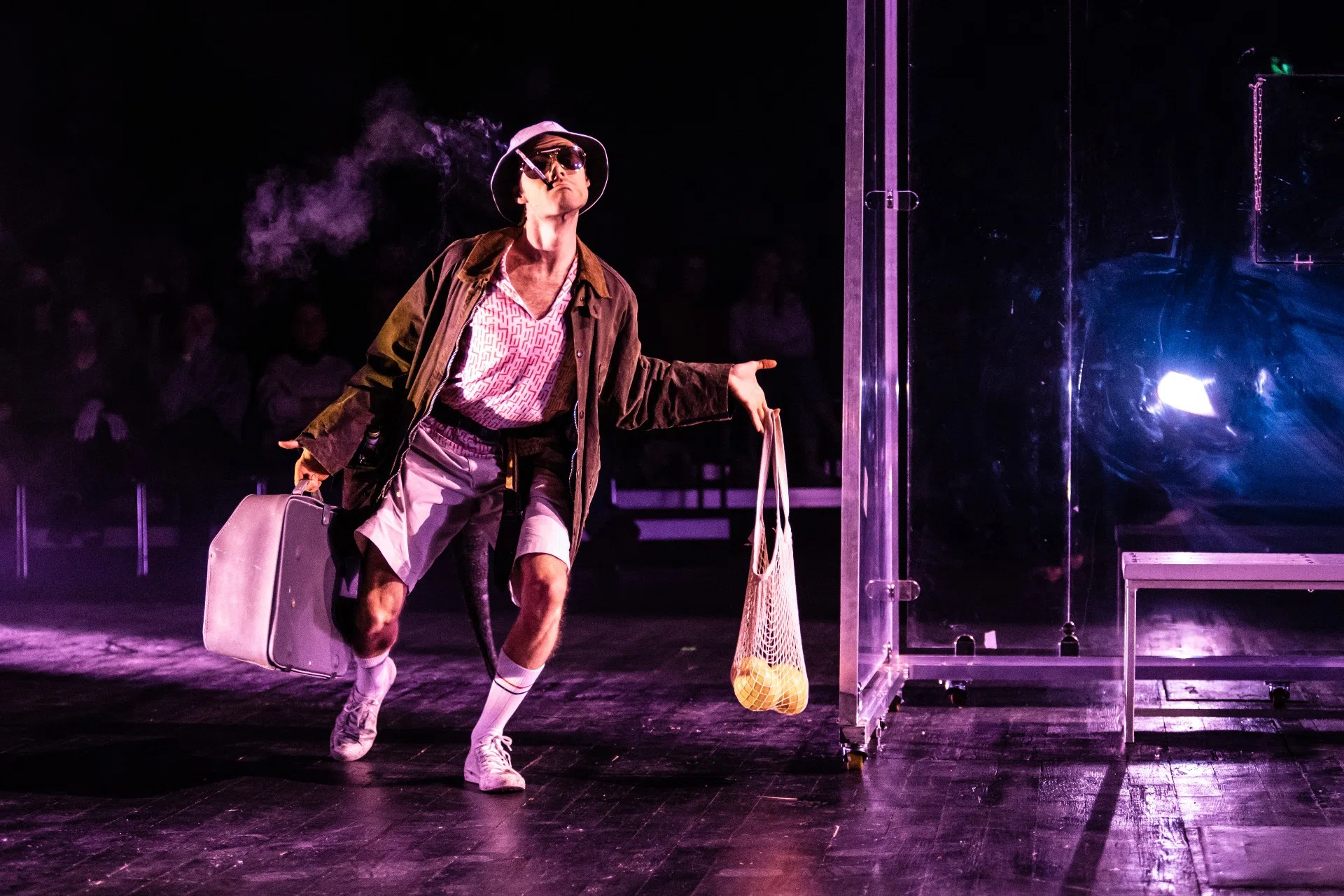
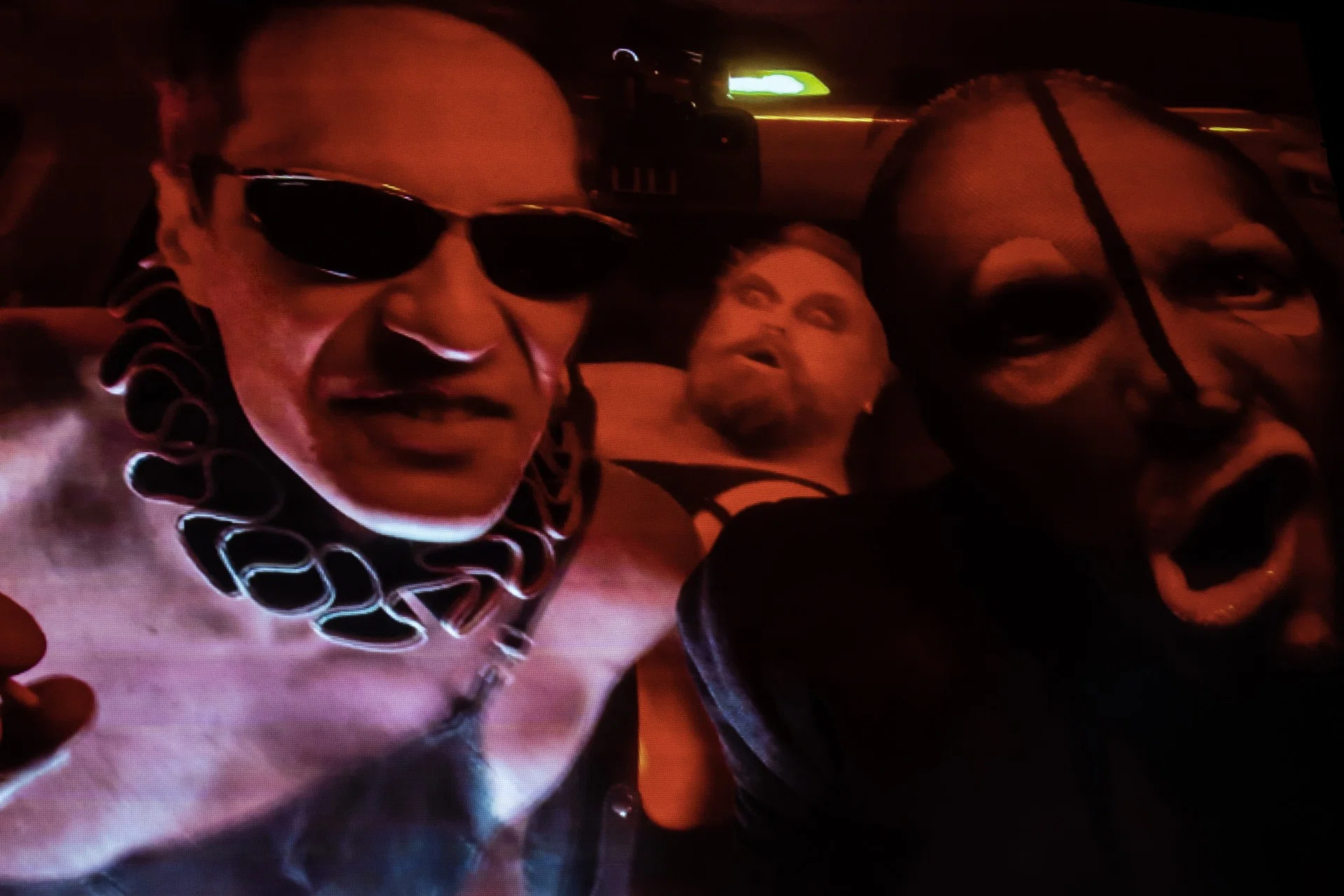
Two opposite Moscow worlds encounter the play: the world of secular parties and the world of ordinary people who live in the subway, Cheburechnaya and sleeping areas of the capital. The prototypes of the Thompson Raul Duke and Dr. Gonzo are young journalist Phil (Vasily Mikhailov) and his friend Sanya (Alexander Gorchilin). Everything begins in the spirit of Moscow drug addicts - with the search for a bookmark, and since the “income” the life of the main characters has been changing forever. Surprisingly, the whole performance heroes really drive in a car, and not to any, but to Kio Rio, which transforms in a taxi, then into a police car, then in something else.
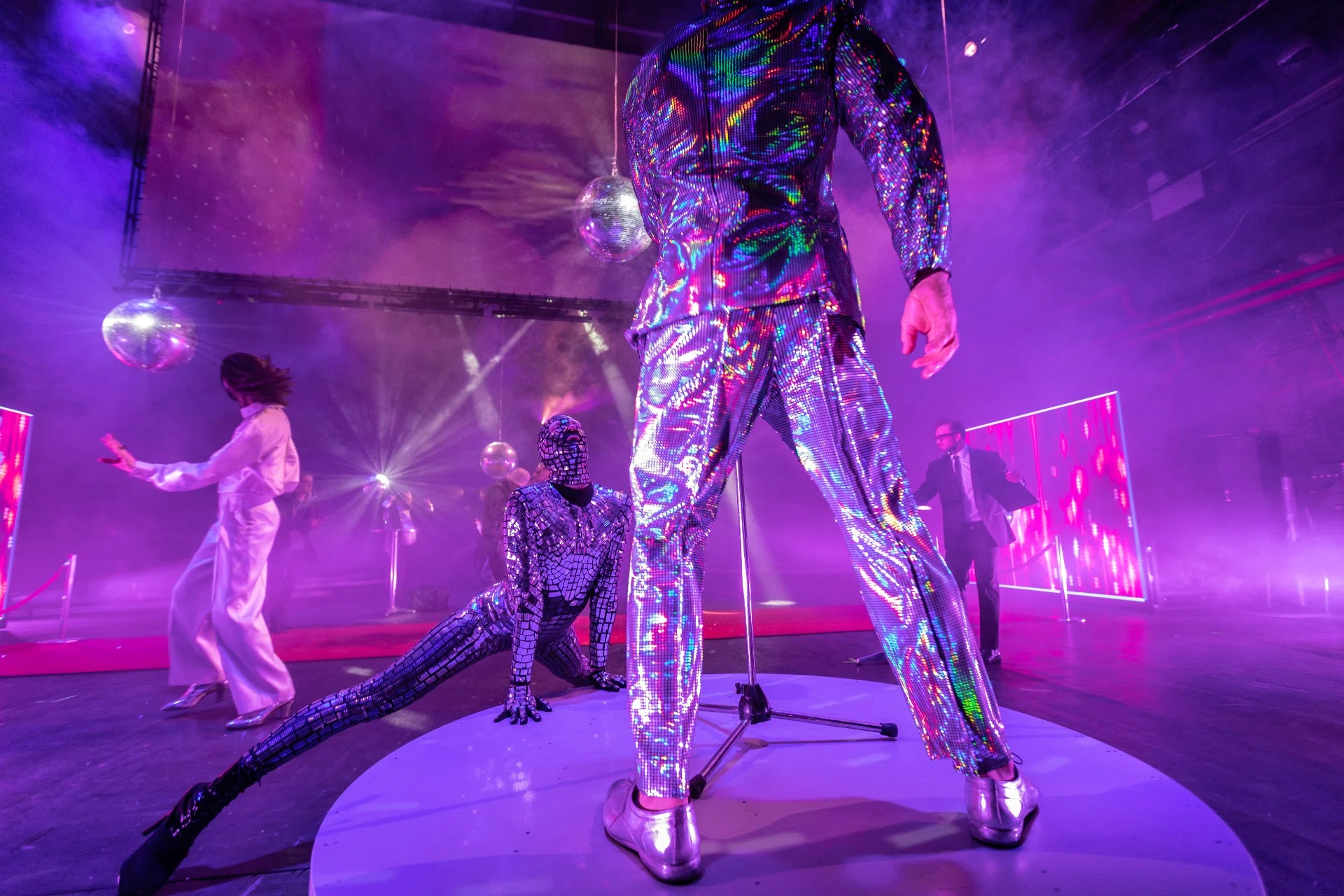
During all this psychedelic triple, Phil is also trying to write a report, though not about Mint 400 motorcycle racing, like Thompson, but about a secular party. And for all my dislike for glamorous partying, I would repeat the party at the Gogol Center. Here, this contingent of people is so believable and ironically shown that it is impossible to restrain laughter. At the same time, you feel complete involvement in the process, there is no doubt that you are part of the party. The most famous scenes from the famous film adaptation of the novel by director Terry Gilam are, of course, scenes with hallucinations. It would seem that it is almost impossible to portray them on the stage, but the director Philip Avdeev copes with this task, even begin to doubt that he came to the play completely sober.
From the monastery of the richest people in Moscow, heroes fall into the world of ordinary people - in Cheburechnaya. And, oddly enough, it is here, among homeless people and drunks, deep philosophical ideas, thoughts of love and eternity are born, which immediately stumble about the reality of being. The star of this scene, of course, is Vladimir Epifantsev. He has not played in the theater for a long time. And this return, of course, is triumphal. Almost after each of his scene - a flurry of applause.
Epifantsev in the play became the personification of the people in their various hypostases: here he is a drunk, thinking about the essence of being, then a harsh colonel, grandmother, doctor, addict ...
But not only Vladimir Epifantsev constantly changes its roles in the play, this is a general trend, thanks to which the director leaves the objective view of reality, and the viewer sees the entire Russian people in projection. Well, the psychedelic note in this is certainly present.
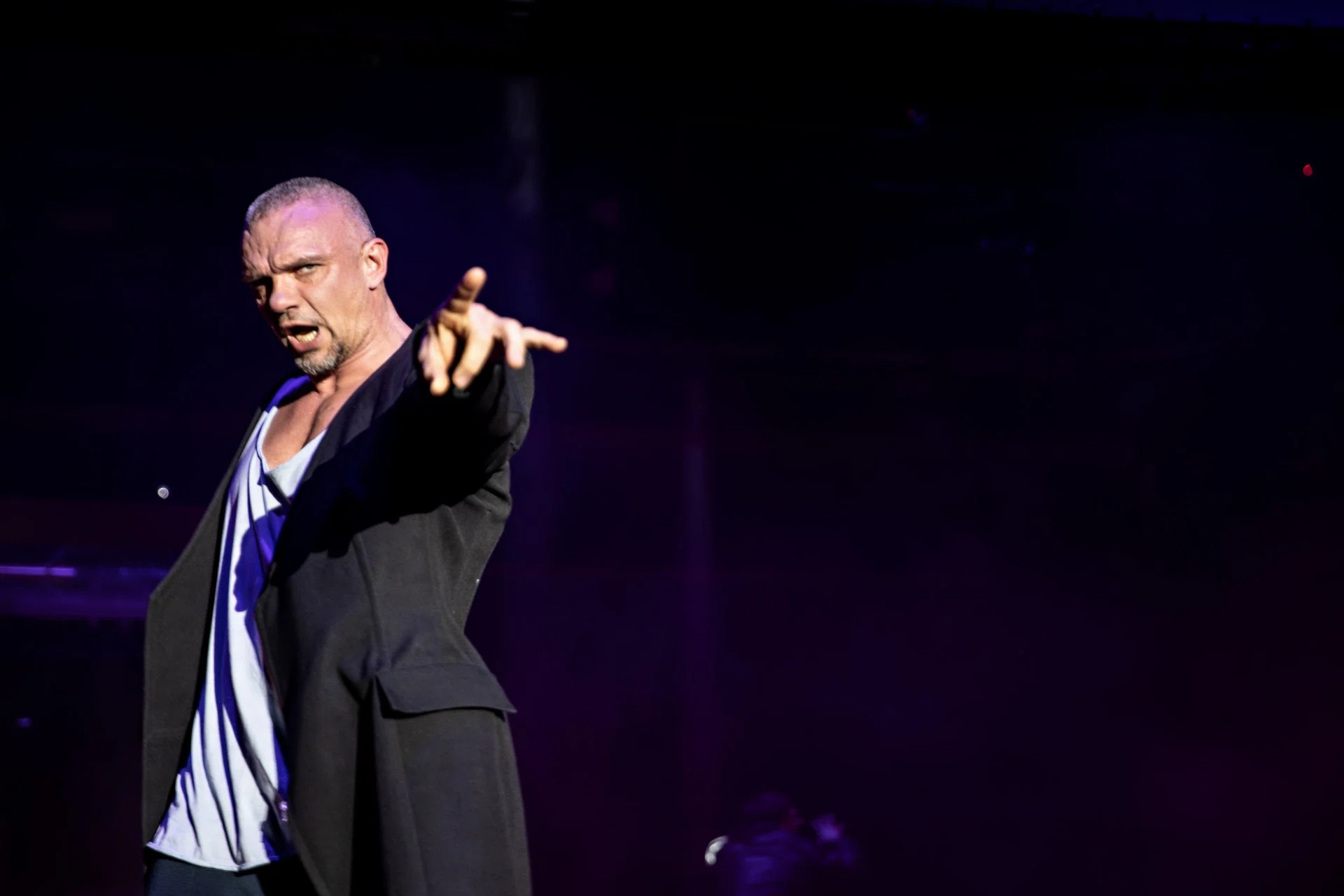
Interestingly, Philip Avdeev in the play acts not only as a director, but also as an artist. He plays the role of Thompson himself, who looks at everything that happens from the side, and sometimes comes to the main character in his hallucinations. Its function in the play can be compared with what the puppeteer does, we constantly hear his voice, sometimes we even see him, and he involuntarily controls our consciousness and consciousness of the heroes.
Despite the fact that throughout almost the entire performance, heroes are under the influence of psychotropic substances, the topic of drugs in the performance is optional. Even visually, this process boils down to the fact that young people inhale a certain smoke from a road bag. Fear and disgust are not us under the influence of something, we ourselves. Just with the help of this technique, it is most simply to expose a person and see his essence. As for dependencies, absolutely any person is subject to them in one way or another, whether it be drugs, alcohol, cigarettes or a banal piece of cake. The authors of the performance, in turn, constantly remind the audience that drugs are evil.
“New” spoke with the director of the performance by Philip Avdeev about how this material was taken into the work, how the adaptation of the text under modern realities and his own gonzo-journalist investigation took place:
- How did you have the idea to put this material?
- For a long time and painfully I was looking for what to put, I thought that it might be interesting now. And this material in the theater wandered for a long time, initially Kirill Serebrennikov himself was about to put it, it was before his arrest and all these terrible events. Then they forgot about “fear and despair”, and when I was looking for what to put, Kirill Semenovich reminded me of him and offered to try to do it. At first I thought that this was a very complex material for embodiment on the stage, but when my playwright Yegor Prokopyev found each other and began to create a play from scratch, we realized that it was not necessary to put Hunter Thompson’s novel, but the impression of the novel and our own impressions of the city and ourselves.
- How did you adapt the novel and what did you want to achieve in the first place?
- Yegor and I created the play together. Each scene was separately dismantled, observed people who could become prototypes of heroes. We studied, collected our impressions from different places. So the canvas and the structure of the performance were created. It is clear that as a basis we took two heroes who go all this path, as is the case in the book, and the rest of the surroundings, all kinds of trips and their experiences were created by finding what we hear in the city.
- Egor Prokopyev used to work as an administrator at Gogol-Center. How did it happen that he became a playwright in him?
-He worked as an administrator and still worked with me in the White Shum ( a newspaper launched by the actors of the Gogol Center. - Ed .) As a journalist. Then Yegor decided to stop being an administrator and went to Kirill Semenovich, gave him one of his texts. And when I was looking for a playwright, Cyril told me that the guy with his play approached him, it was very well written, but we will not put it. Try to chat with him, maybe he will suit you as a playwright. And we were already familiar with him, only I did not know that he was writing plays. Egor and I talked and realized that we were on the same wavelength, think and worry about the same thing. From that moment on, we started this long and thorny path-to write the play turned out to be the most difficult stage of our work, because when you create something from scratch, all the gates are open in front of you, but you need to take only what is needed. We constantly rewritten and changed fragments of the text, even when rehearsals have already begun.
-In the annotation to the play, it is written that you conducted your own gonzo-journalist investigation, during which you visited secular rarats, cheburechnaya and public baths. How did this affect the play?
- There are literary quotes from the conversation in the play that I overheard in a public bath.
The whole scene in which men talk about love, women, life and vodka, one way or another consists of what we heard somewhere.
Of course, then we developed these stories, but the basis of this scene is observing the real men of our country. We tried to understand what bothers, turns and scares a variety of people in our city today.
And at the party we just came and watched it through the prism of the performance. This scene is not entirely written off from some event, rather, our feelings from the place where we were.
- Tickets for all premiere days were bought in just a couple of minutes. How is such a stir?
The Gogol Center always quickly buy tickets, but here we are all a little stunned. Perhaps because we have less prime minister this season than usual. In connection with Pandemia and with other circumstances. In addition, we have an unusual cast. There are invited artists: Volodya Epifantsev, participant in the show "Dancing" Nastya Vydro.
- And how was the cast selected?
It was also a long and painful moment, at first the composition was more, but then we began to reduce it. We wanted every artist to play a huge number of roles, and a kaleidoscope of changeable images was present on the stage. Kirill Semenovich also helped, advised something. We accurately understood that the invited artists were needed, we needed new energy. Volodya Epiphants came to my mind because I understood that he could become our heart -based residential performance. I persuaded him to agree for a very long time, since he did not play on the stage of the theater for a very long time. This is his cambek to the theater. But I am very glad that the team gathered exactly what it is now.
- In the play you act as an actor, play the role of Thompson himself. Was it an initial idea?
- Yes, we initially came up with it. The idea was such that I am a separate character in this performance. But I regretted it a million times, it was very difficult to simultaneously put and understand that I needed to play something. As an artist, I jumped into the performance literally in the last days of rehearsals.
Katya Tararak - especially for "New"