
Translated material
A transgender man - a barbell of Lorel Hubbard will perform at the Olympics for the first time
She succeeded in big sports after the transplant. They tried to interfere with her participation in the competition more than once
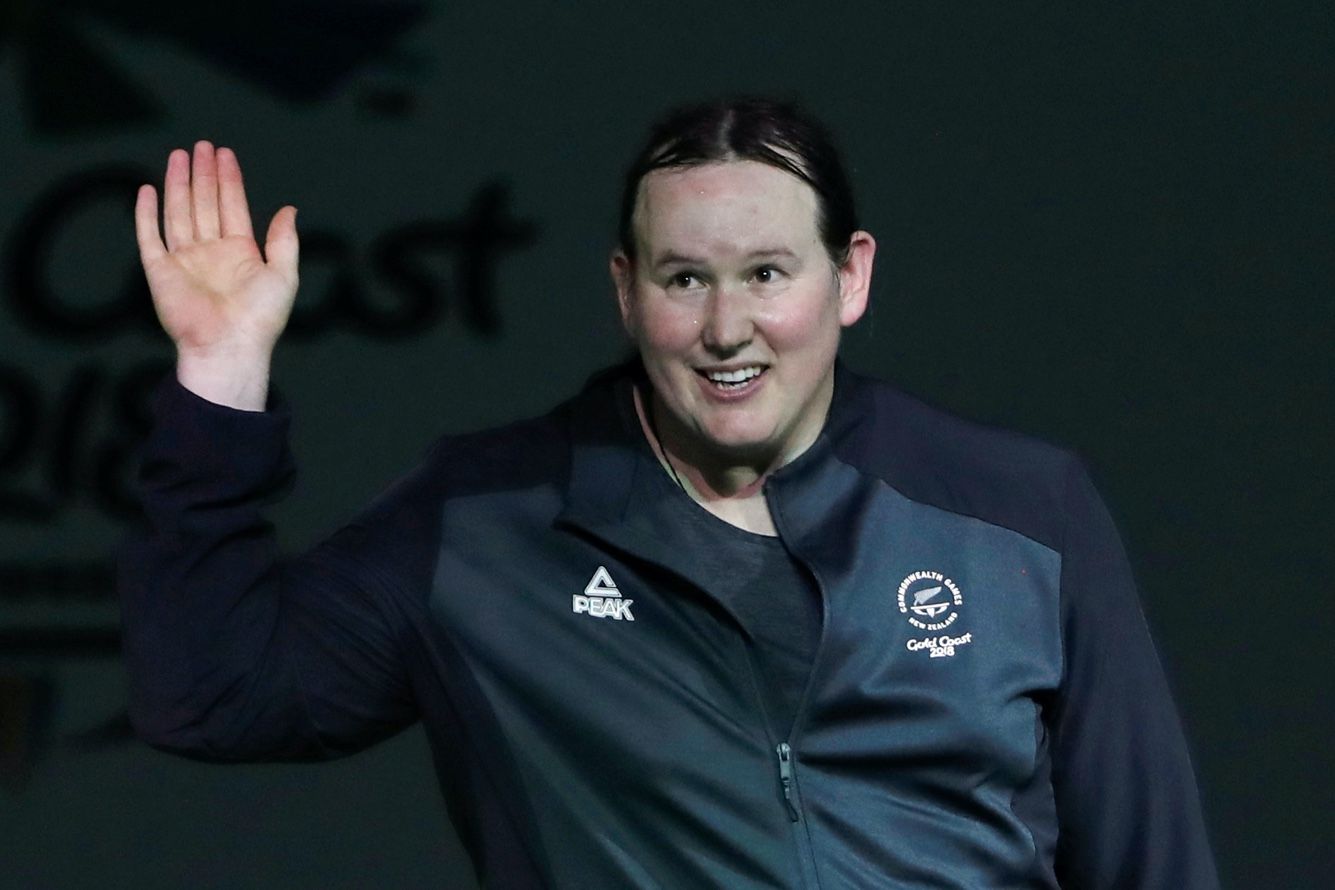
The transgender weightlifter from New Zealand Laurel Hubbard, which performs in the heavyweight weight category (over 87 kilograms), secured a ticket to the Olympic Games in Tokyo, reported by Inside the Games. If Hubbard goes to the Olympics, she will become the first transgender person to participate in the games.
So far, the rifle player is officially included in the Olympic team of New Zealand. But the source of The Guardian in the International Building Federation confirmed that it will automatically pass the qualifications for games, since the selection rules for them were simplified due to a large number of canceled competitions during the pandemic period.
The Olympic Committee of New Zealand also confirmed that the revision of the system of selection of the International Athletics Federation “will most likely allow a number of New Zealand weightlifters, including the transgender athlete Lorel Hubbard” to go to Tokyo. “In the team of New Zealand, the culture of care, involvement and respect for everyone is strong,” the committee noted.
The Olympics will be held in Tokyo from July 23 to August 8. Now Hubbard takes 16th place in the world ranking of the bar in its weight category. But at least six rivals who overtake her in the ranking will not be able to perform at the Olympics-including Russian Tatyana Kashirina, who was removed from the competition due to suspicions of using doping.
The best result of the Hubbard for qualifications is 285 kilograms . This makes her a real contender for a medal in Tokyo, writes The Guardian. It is worth noting that the 43-year-old shoulder player will also become the most age-related weightlifter at the upcoming Olympiad.
Transgender athletes are allowed to perform at the Olympiads. If their level of testosterone does not exceed the permissible threshold
Since 2016, the International Olympic Committee (IOC) allowed transgender athletes to perform at any competition, including the Olympics, regardless of whether a person had done any operations. The athlete must confirm that his level of testosterone did not exceed the level of 10 nanomol per liter over the past year. The level of hormones Hubbard, which under the transplant passed hormone therapy, meets this requirement.
But some researchers , including from New Zealand University, believe that even taking into account the restrictions of the IOC, the level of testosterone in transgender athletes remains higher than their rivals, and gives them physical advantages. It would be most honest to create a separate category for such athletes in competitions, they believed at the University of Otago.
Hubbard tried to interfere with participation in competitions. She herself said that she did not want to teach anyone to observe the rights of transgender people
Lorel Hubbard is the daughter of a New Zealand businessman and former mayor of Auckland Dick Hubbard. She made a transgender transition in 2012, at the age of 35. Prior to this, she participated in heavy athletics competitions in New Zealand, but did not take off the international level tournaments. After the transition, in 2017, Hubbard took silver at the World Cup. In 2018, she was considered the main contender for gold at the Commonwealth Games , but was forced to withdraw from the competition due to the injury of the elbow. Hubbard feared that she would have to end her career, but she was able to return to the sport and showed the sixth result at the world championship in 2019.
Hubbard has repeatedly faced criticism and attempts to prevent her participation in competitions. The trainer of the barlife Tim Surdes said that “no one wanted her victory” at the 2017 World Cup. In 2018, the Australian heavy athletics Federation unsuccessfully demanded to remove the athlete from the Commonwealth games, referring to her physical advantages. In 2019, when the Hubbard took a gold medal at the Pacific Games in Samoa, ahead of the Samoan Bedel of Figayu Staers, the Prime Minister of Samoa Tuilaep Sailel Malilegaoi said that Hubbard could not be allowed to competition. “Regardless of how we look at this, he is a man,” the prime minister said . Two public organizations - the New Zealand “Speak Up For Women” and the British Fair Play For Women - demanded to tighten the rules for participation in competitions for transgender athletes.
Hubbard herself practically does not communicate with the press. She gave the last large interview in 2017, winning silver at the World Cup. “The rules that allowed me to participate in competitions first entered into force in 2003. They are known as the Stockholm consensus of the IOC [about the athletes who made a transgender transition], but I think that even 10 years ago the world may have not been ready for such an athlete as I ... and, perhaps, is not ready now, ”said the weightlifter. She admitted that she did not want to “pretend to be a robot” and pretend that she was not concerned about condemnation, but stated that she was not going to teach anyone to observe the rights of transgender people: “I am not here to change the world. I just want to be myself and do what I am doing. "
Before Hubbard, the main character of the dispute about women's sports was the runner of Caster Semen. She changed her profile to stay an athlete
Disputes about the rules for athletes with a high level of testosterone have been going on for more than a year. The most famous heroine of such discussions is the runner from South Africa Caster Semen. In 2009, she won the World Cup for 800 meters, after which the International Association of Athletics Federations (IAAF) forced her to take a check for the definition of gender. The then head of IAAF Pierre Weiss said that Semyon "is obvious, a woman, but perhaps not 100%." The athlete had to take hormonal drugs, which, as reported , negatively influenced her sporting results.
Nevertheless, the runner won gold at the 2012 and 2016 Olympics and became the world champion in 2017. In 2018, IAAF tightened the rules for the admission of athletes with the features of flooring to races at distances from 400 to 1,500 meters. The maximum permissible level of testosterone from 10 to 5 nanomol per liter was reduced for them (IAAF explained this by the fact that the level of male hormone in the blood of most women does not exceed 1.79 nanomol per liter). Those who had this level above should reduce it with a medical method for admission to competitions.
Semyon refused to comply with the requirements of IAAF and tried to challenge them in court. Until she managed to win a single claim. Semena, previously won in races at 400, 800 and 1500 meters, switched to longer distances. At the Olympics in Tokyo, she hopes to perform at a distance of 5000 meters.
Olga Korelina