
Translated material
Doc and an angel
Field surgeon Doc Paul Kennedy and Nurse Angel Marion Soms - representatives of the "greatest generation" of America
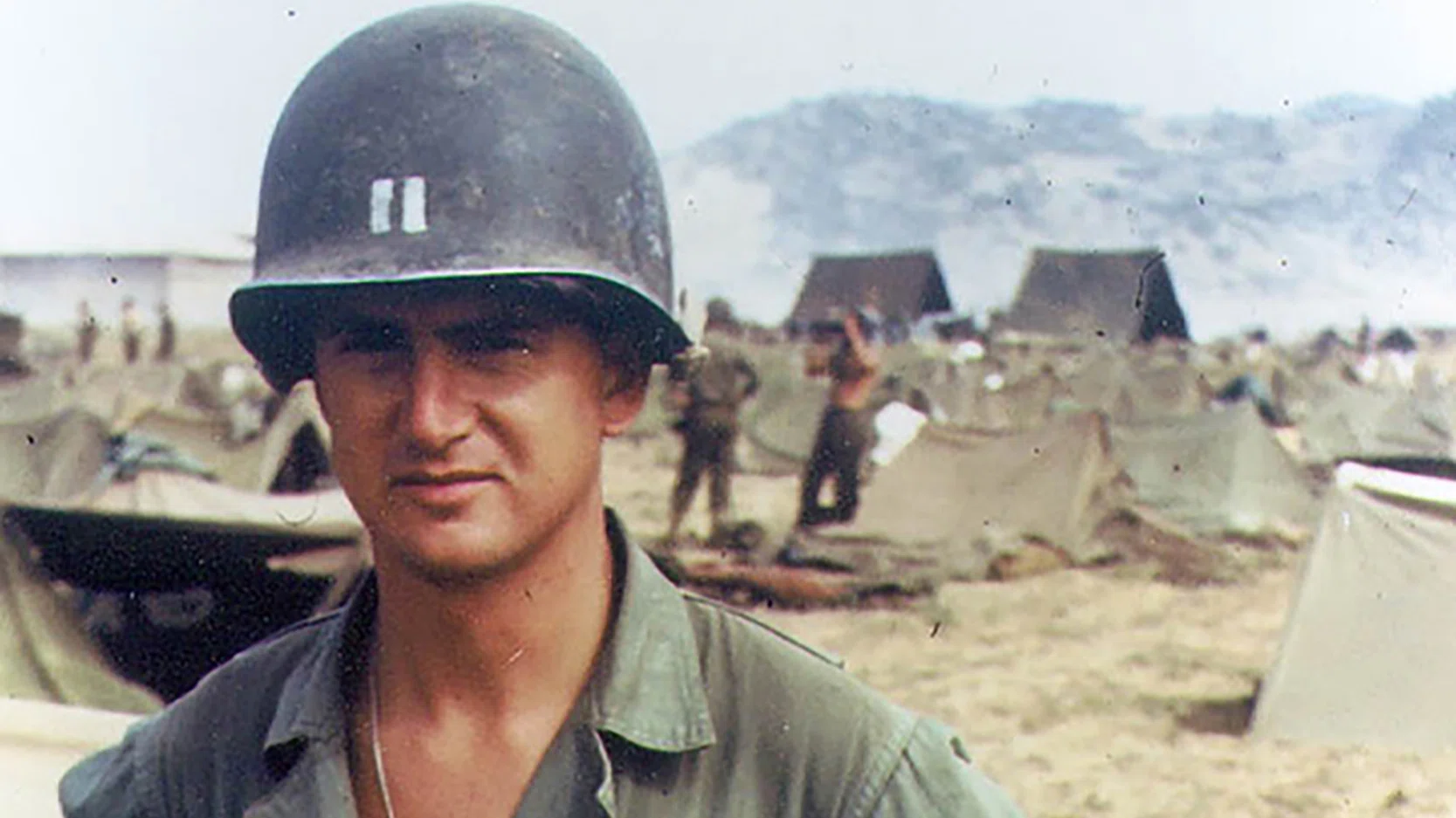
At first, American soldiers chuckled at military doctors, when they, on the front line instead of weapons - machine guns, rifles and pistols, put on a helmet from the sign of the Red Cross. They were called "pushers of pills". The sign of the Red Cross was supposed to defend doctors in battle, but did the Wehrmacht soldiers always remembered the Geneva Convention?
But, as Steven Embrose writes in the book “Civil Soldiers”, very soon military doctors from the target of ridicule turned into their favorite and revered figures. They assisted the wounded, often exposing themselves to great danger. After a short inspection, if necessary, a tourniquet was applied, morphine was introduced, the wound was cleaned and sprinkled with sulfamide powder, and the wounded soldier was taken out of the battlefield.
Doctors abandoned the Red Cross on the helmet during the Vietnamese War, because it became a target for snipers, and then the doctors were given weapons for self -defense. But during the Second World War, American field doctors were not armed. In those years, in the American army, a battalion of 400 to 500 people usually had about thirty doctors and their assistants. For courage and dedication instead of the ironic nickname “pushers of pills”, field doctors received a brief and respectful treatment from American soldiers: dock.
Dedicated to those who save peace and country from pandemia
Dock
In 2016, University Press of Kentucky published the book “Surgeon on the battlefield. Life and death on the advanced Second World War ”, compiled on the basis of Paul's diaries Andrew Kennedy. The book was prepared by the youngest son of Dr. Christopher Kennedy as a tribute to his father, who died in 1993 and because of Parkinson's illness, forced to abandon surgical work ahead of schedule. And as a tribute to the memory of the whole generation of Americans, which the famous journalist Tom Brookau called the "greatest generation" in the history of the country.
Paul Kennedy never talked about the Second World War. After the death of his father, Christopher Kennedy discovered his diaries and military photographs. Paul Kennedy took more than 1,500 pictures, most of which were manifested and carefully marked, but never printed. Diaries, reports and photo documents together made up a book - a living story of the captain of the US Army Medical Corps in World War II.
Kennedy was 30 years old when he and his colleagues in the 2nd auxiliary surgical group sailed from the New York harbor to North Africa in November 1942. He was already married, had two young children, and his wife Marion was waiting for the third. As Christopher Kennedy writes in the preface, when his father said goodbye to his wife on the Kamp Kilmer base, he still did not know where they were sent and whether they were sent for a long time. Only two days later, in the middle of the ocean, doctors reported that they were sent to Africa.
Paul Kennedy learned about the birth of a third child with a delay of 2 weeks from an ad on the torn page of the Stars and Stripes army newspaper.
A typical American, he poorly imagined the rest of the world and wildly missed the family. In the first relatively calm period of service in Casablanca, escaping from boredom, he began to write a diary, mentally addressing his wife.
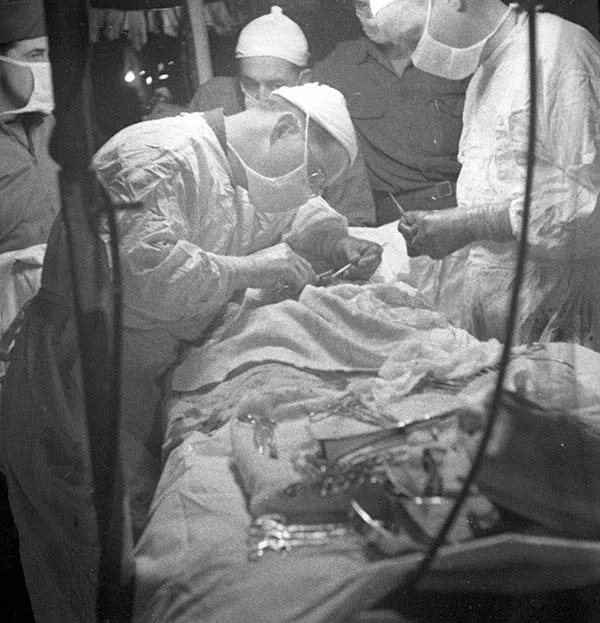
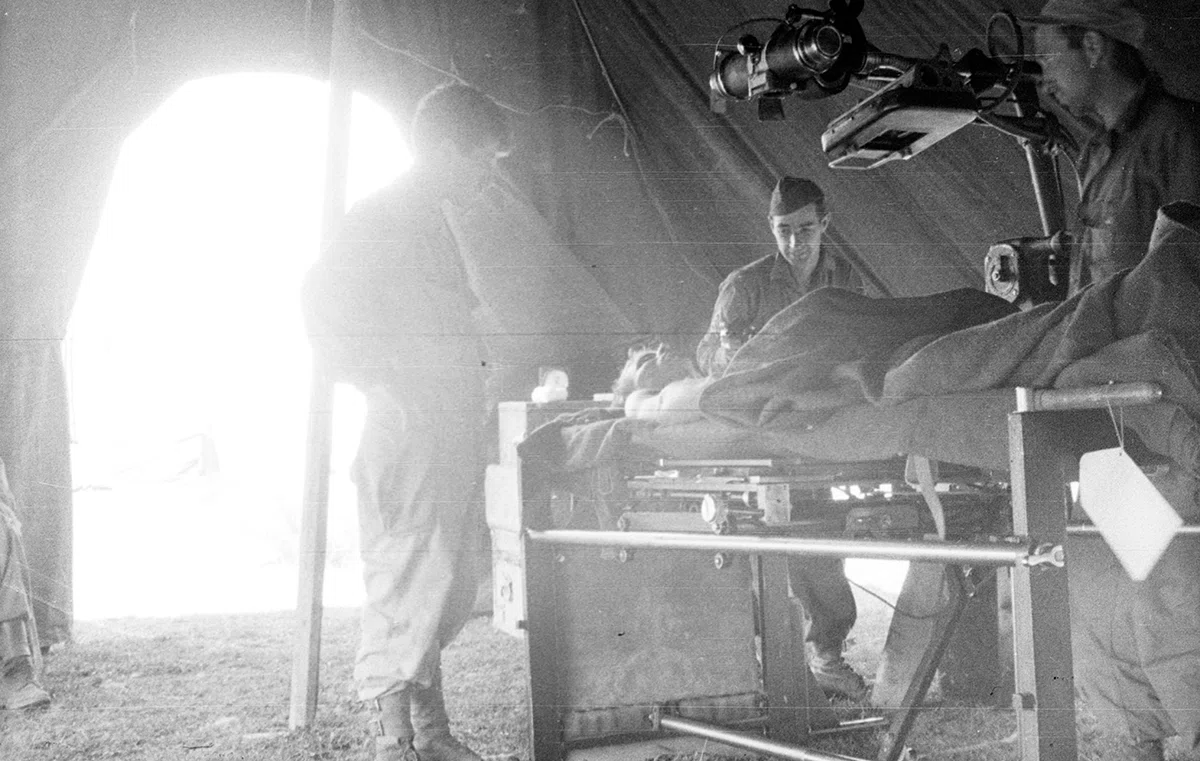
A book compiled from personal records, medical details of 355 operations, illustrations and photos of Kennedy is a longing for the house, boredom, loneliness, fatigue, and sometimes fear. The life of a military surgeon is in the constant movement, which was required to work in field hospitals. The hospital included the headquarters and three platoons that could work independently. Kennedy and his colleagues conducted sleepless nights, saving the wounded soldiers.
Kennedy participated in the most fierce military operations of the Americans in Europe - the Lavina operation, in the attack on Anzio, the Dragoon operation. He entered the Dachau concentration camp two days after his release. But his diaries describe life without drama, represent a war without pathos, shading the ordinary among a large fire.
Excerpts from the book “Combat Surgeon. Life and death on the advanced Second World War ”, University Press of Kentucky, 2016.
“On Tuesday, May 30, 1944, today went to bed in the afternoon - and I should already return to work, now 23.30, I did not sleep a damn - I just can’t sleep during the day. I will become an old man if this thing lasts a long time. And, for all rumors, ours very soon prepare to start a new offensive on Rome. Now I need a vacation, not work. There are all kinds of assumptions regarding what will happen to our unit when Rome falls, they say about Southern France, England, Yugoslavia and India. I suppose it will be England.Thursday, June 1, 1944, the progress at the front was good, but the losses are high. We still do not see the worst cases now, because the field hospitals broke forward. It is expected that we will soon go to one of them. The last couple of days, simple surgical interventions have been performed here, they are monotonous and tedious. ”
According to the youngest son Christopher, the editor of the book: “He was young, relatively inexperienced as a surgeon and faced medical cases of such seriousness and complexity, which is rarely encountered in ordinary civil practice in peacetime. For almost three years he lived a nomad, moving along with the front. He was uncomfortable, dirty, hot, cold and, most importantly, lonely. He missed my mother terribly; He really wanted to see his children. Physical inconvenience associated with living for the most part in tents, almost constant mobility, was added to the pain of loneliness, so as not to lag behind the front. Two things helped: mail and work. Mail was his only connection with everything that he loved so much. He lived at the expense of letters from the house, although, as he often said, after reading it became worse. Hundreds of wounded boys entered the life of this lonely surgeon, bored around the house. The wounds that he treated were terrible; The boys he cared about were mutilated and crippled. There, in the cold deadly setting of the modern war, they received terrible injuries, because of which they found themselves on the operating room in some cold, dirty temporary field hospital and were in the care of my father, which saved them. ”
Of course, the records of the surgeon Kennedy are artless, in some ways naive, not to compare in artistic perception with the military prose of Hemingway and Remarque, but Kennedy himself could become the hero of their stories and stories.
Another passage from the book:
“Sunday, June 4, 1944 stood up at 6.30 in the morning (a good night vacation) - ate pancakes, and then went on weapons transport to our new place. The number of Jerry broken cars ( so contemptuously the Americans called the Germans, as they called the Fritsi on our side of the front . - A.P. ), guns, etc. - The dumb tribute to the work of our aviation. The roads are simply covered with fragments - large tanks with barrels, stupidly directed into the ground, which looked terribly powerful, but now seem dead. Valmonton, measles and labiko are shot, and nothing remained of them. We settled down near Palenrina on highway No. 6. The work is already going on - the guys say these are arergard battles. Jerry is on the run, and some of our troops are already on the outskirts of Rome.Monday, June 5, 1944, the work seems to follow us wherever we go. Cases in abundance. Now we are the most advanced field hospital. Three new teams were invited to help, and they became very welcome guests. Rome in our hands was yesterday. Obviously, Jerry intends to run. The tanks walked here all day in one continuous stream - last night they had talked. I am sure that very soon they will impress someone. The war goes fast - it's good, I want to go home so.
June 6, 1944, Tuesday, Rome. I was worried. Fresh traces of the war on the way that leads to Rome are burnt tanks, guns, dead horses - and people returning to their homes. Rome seems to be a beautiful city. Small destruction, pretty people - much cleaner than Italians in the south - more like a city in the States. He saw the cathedral of St. Peter and knelt at the grave of St. Peter. This is a magnificent church, strong and tall. Persistent as Catholicism. We crossed the Tiber, saw the Colosseum and the Roman forum. It was the Rome we were waiting. By the way, today the second front has opened ( the allies landed in Normandy. - A.P. ). ”
“A good diary can resurrect the dead with force, inaccessible to even the most gifted doctor,” Rick Atkinson wrote in a review of the book. - Paul E. Kennedy was an outstanding surgeon, but it was his diary about the three -year war in North Africa, Italy and Western Europe that resurrects an era that passed more than seventy years ago. The absolute reliability of his narrative makes him one of the most convincing anti -war stories about the Second World War. ”
As a surgeon in a small mobile medical team under the command of Dr. Gordon Madding, and later at the head of his own team
Dr. Kennedy operated on 475 American soldiers, allies, prisoners of war and prisoners of fascist camps.
Kennedy demobilized with honor and received the Order of the Bronze Star. After that, decades of successful work by a surgeon in hospitals in Buffalo and Stanford universities, participation in the creation of the first pacemakers in 1965 and the first successful implantation of a pacemaker on the western coast of the United States were waiting for him. After the death of the surgeon, Kennedy, a speech in his memory, was the legendary American Democrat, Tom Lantos, a congress. Congressman from California, a native of Budapest, a prisoner of Nazi camps, noted that Kennedy became an example of courage and love for his colleagues, family and friends.
Angel
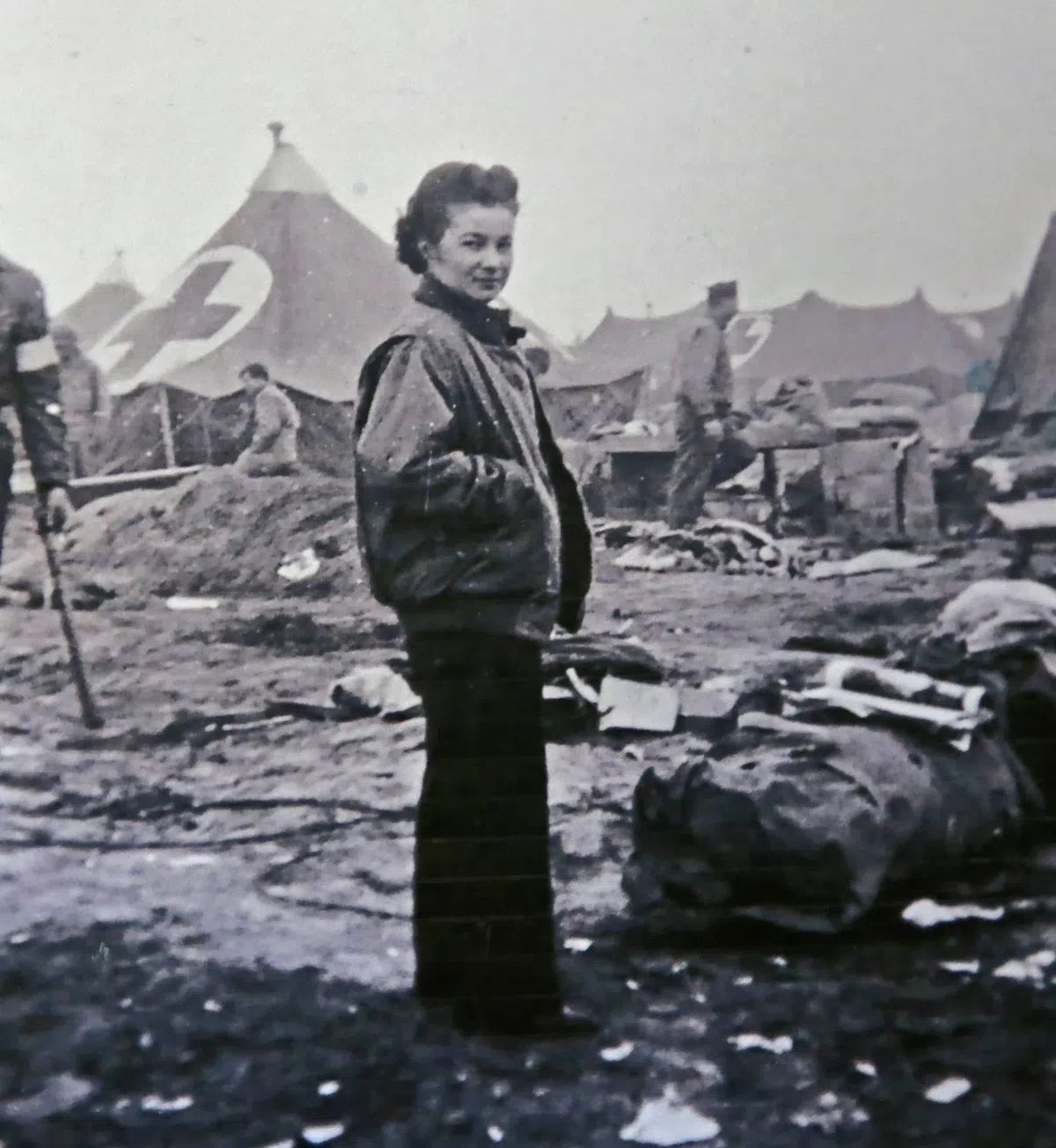
During the Second World War “angels” in the American army, nurses were called. Over 60 thousand Americans served in the army of army nurses. Sixteen people died in the war. Sixty -seven were captured. More than six hundred women were awarded. And in total, during the Second World War, about 400 thousand American women served in the armed forces and about 500 died.
In this war, the nurses worked closer to the front line, in the "evacuation chains" they served under shelling in field and evacuation hospitals, in hospital trains, on hospital ships and medical transport aircraft.
Doc - surgeon Paul Kennedy and nurse Marion "Nan" Malik could meet. The nurse Marion (so, by the way, was called the wife of the surgeon) Malik, in marriage - Soos, they called "Angel Antio." There, in the Italian Antio, in 1944, in the fields of one of the most dramatic battles of the Second World War, Paul Kennedy was also located. Most likely, they intersected. But whether they were familiar, you can’t ask anymore. The surgeon died in 1993, the nurse lived for 101 years and died in 2018.
The native of Ohio, Marion Soms already worked as a nurse when, in the wake of patriotism after the defeat of the American fleet in Pearl Harbor, she voluntarily entered the Corps of Army Nurses. After military training in the Woodro Wilson hospital in Virginia in the spring of 1943, she was sent to North Africa to the opening of a field hospital in the city of Oran. By the way, from North Africa, the war began with Tunisia for the dock by Kennedy.
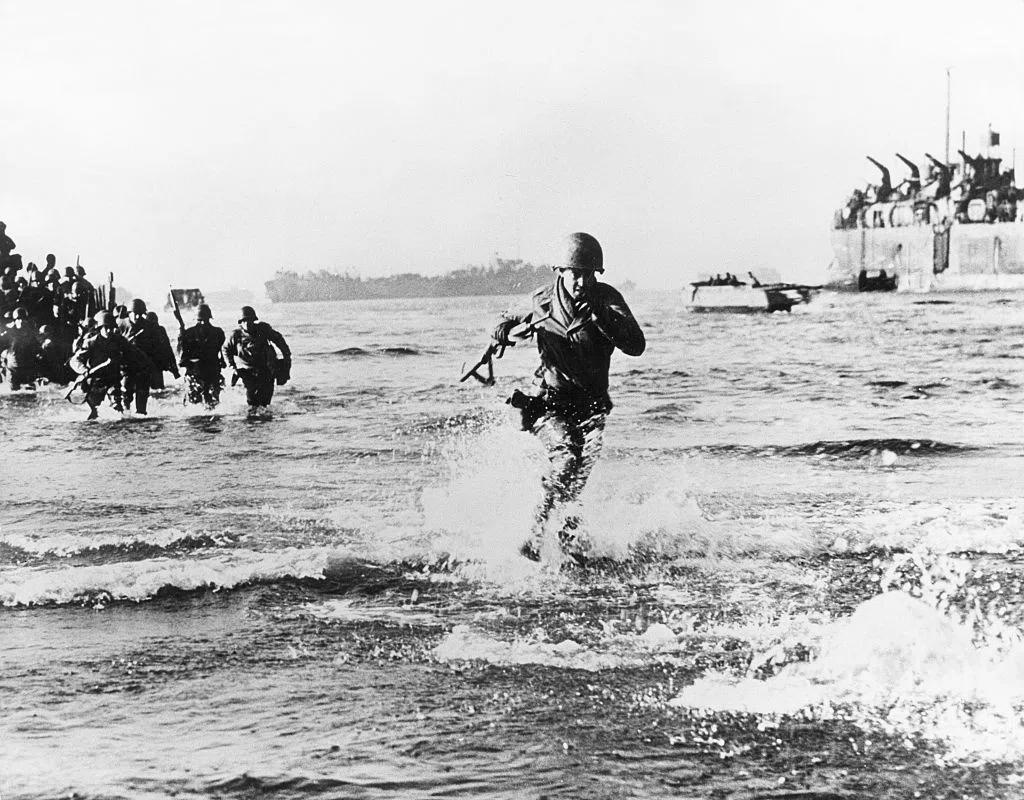
Today, Anzio is a small resort town on the west coast of Italy, about 30 miles south of Rome. In 1944, he became the place of one of the most exhausting battles of the war. The union landing of 36 thousand people landed in Anzio on January 22 as part of the Schingle operation. The goal is to knock the Germans from Rome. But while the allies unfolded, the Germans strengthened this area with troops and brought down a flurry of fire on the landing. It took the Americans for more than four months to tighten the reinforcement of 100 thousand and, finally, break out of Anzio.
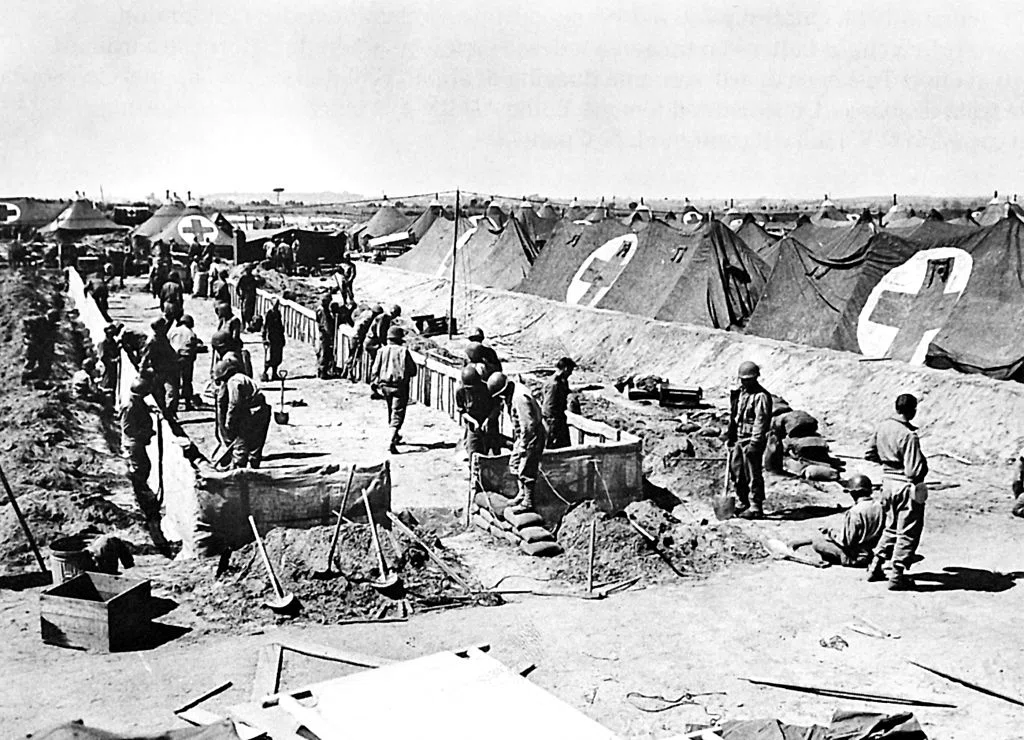
The landing was on the bridgehead under constant artillery fire and under the bombs until May 44. The tents of the field hospital, marked by large red crosses on a white circle, did not become safe asylum for military doctors.
Contrary to the obligations under the Geneva Convention, German aircraft deliberately fired at field hospitals. The Americans called the Antio "half of the Ara Hell."
Soms served in Naples in the 21st evacuation hospital and herself volunteered to go to Anzio. “It was here that I felt necessary,” she said in an interview with Indystar in 2018, two months before his death. She quickly got used to it in a new place, and one of the orderlies gave her the nickname "Fast."
The former surgical nurse recalls events on February 7, 1944 with tears in her eyes. She stayed in the 95th evacuation hospital for only a couple of days, when the senior nurse Blanche Sigman ordered her and another orderly to dig a trench under a bed in a tent. This saved her life.
The German pilot, persecuted by British fighters, dropped five bombs right at the hospital. The nurse and the orderly jumped into the newly dug trench filled with cold water. “The earth was just shaking, I was in that pit, and it seemed that the earth would fall asleep and I would not get out,” recalled Soms. When the bombing stopped, they got out. “There was nothing there at all. The tent was completely demolished. To this day, I can’t talk about this, because then, before the bombing, I just made a bypass and talked with the soldiers who were my patients. ” In one of the boxes in her apartment as a souvenir about the day, which she considers her second birth, 74 years old Soms kept three rusty jagged shrapnel.
But on that day it was necessary to move on, restore the hospital, regroup the medical staff, take care of the wounded and dying. As a result of the bombing, 29 tents were destroyed. 26 people were killed and 64 injured. Among the dead are three nurses, two medical staff, a red cross worker, 14 soldiers and six patients. One of the dead was Lieutenant Blanche Sigman. She was one of two American nurses who received a silver star.
About 200 army nurses took part in the battle of Anzio, providing assistance to 33 thousand patients. Soms received a letter of honor for “outstanding and selfless work under incessant fire” and the informal title of “Angel of Antion”.
The nurse ended the war in France. The war brought her to her future husband John Som. They met in North Africa and got married in France in 1946. “He served in the warehouse of the military base, carefully watched as we, nurses, jump from the truck, and chose me. So we met, ”Soms recalled.
They settled in Indianapolis and lived in marriage for 48 years, they had two children and two grandchildren. Marion Soms continued her career as a nurse in the local Wishard hospital.
She would have gone as a volunteer to the front, asked the journalist of the newspaper Indystar Dous Mitchell. “I would like this,” the Angel Antio said resolutely.
“God gave me strength so that I could be near and help people.” I think that the opportunity to help soldiers is a blessing. This is the best part of my life. ”
Doc was burdened in the war and was eager to home, the angel understood his mission as a blessing, but both of them, the representatives of the almost completely gone “greatest generation” of America, along with Soviet doctors, without killing, but saving life, helped stop the greatest misfortune in the history of the 20th century.
They don’t say here - “we can repeat”, recalling the second world. They say - "never again."
Washington