
Translated material
"Perceive equal"
President of the Children's Trans-Hockey League Anastasia Baradacheva-on the formation of adaptive hockey in the country and the attitude of people around with disabilities

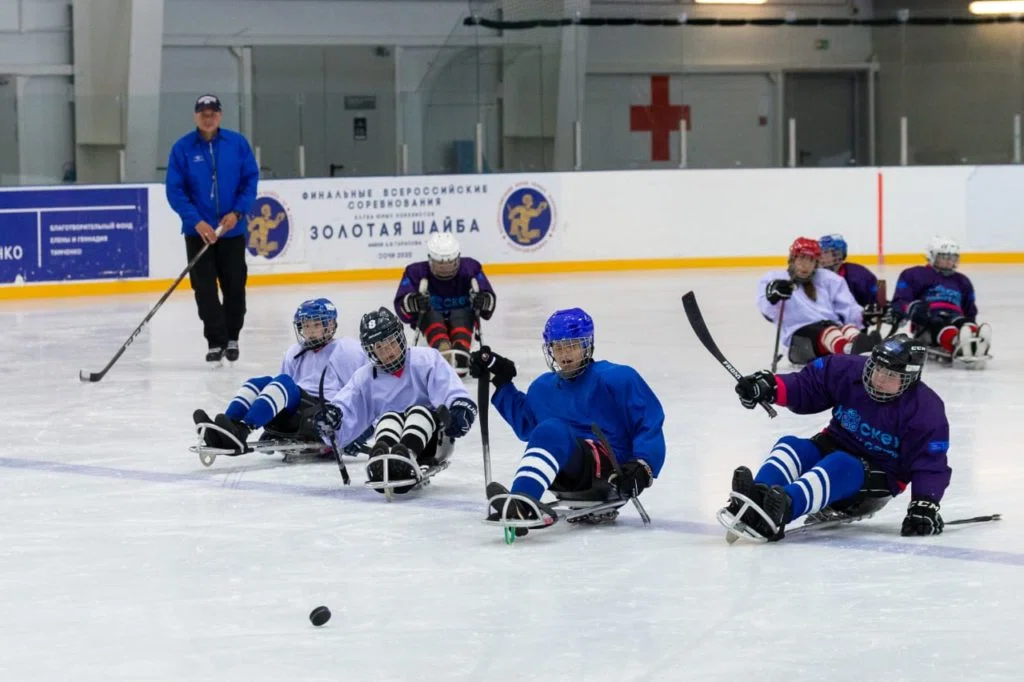
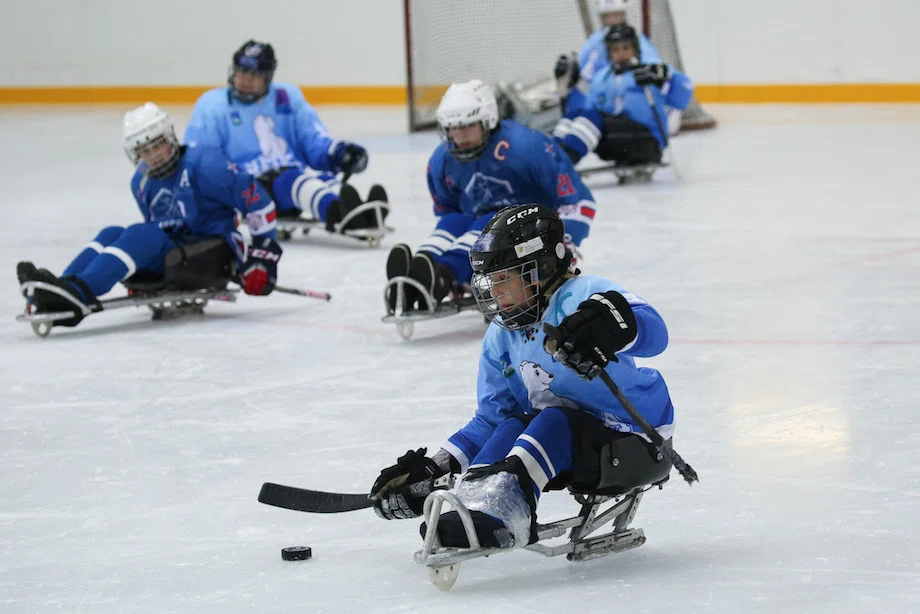
In the Nizhny Novgorod region, the third festival of children's adaptive hockey Hockey Family Fest was completed, in which 29 teams from different regions of the country took part - from the Leningrad region to Sakhalin. The competition was organized by the Children's Transfer-Hockey League (League), who became the winner of the federal competition “ You are in the game ” in 2021. Competitions were held in three disciplines: in the next-paralympic sport (athletes play on sledges); in hockey for the blind (players are guided by ear); As well as in special hockey for children with Down syndrome and autistic spectrum disorders.
In an interview with Novaya Gazeta, League President Anastasia Baradacheva tells how a children's trace-Hockey appeared in Russia, what opportunities are opened for young athletes, as well as about his view of solving problems in communication for people with disabilities.
- You yourself play hockey, are you sick?
- I do not play. It seems to me that I love more children than hockey. (Laughs.) The main thing is that they like it themselves.
- In 2016, a league appeared in Russia. What preceded this?
- In 2014, our national team first performed at the Paralympics, and residents of Russia could get acquainted with adaptive hockey. At that time, there was only one youth team from the Tula region-Ladoga. It was created by the Timchenko Foundation. My husband’s activity was connected with this team, we found a tournament in Canada, agreed with the director that we would bring the guys to play.
And we were struck by how much this direction was developed in Canada: a large number of teams, about fifty only in Ontario.
Interested in why this game is so developed for them, but in Russia it was not.
They began to communicate with Canadian and American coaches, parents. During these meetings, an understanding came: in order for the discipline to take root, you need to change the attitude towards it. Children's trace-Hockey in the understanding of foreigners turned out to be a necessary healthy leisure for the children. The children themselves attended training in order to have fun. Festivals are a family hobby, where the whole family acts as fans. And in principle, this attitude helps both rehabilitation and social adaptation. It became clear that it was necessary to create conditions so that this sport becomes affordable and interesting. With this thought, we returned from Canada, after a month after registering a children's trace-Hockey league.
- Was this project a large -scale even at the plan of the idea?
- Abroad we saw how much it could be massively: the example stood before his eyes. I wanted any child to have the opportunity to visit the section next to the house if desired. It is important not the number of teams, but the availability of the game. In my opinion, each person doesn’t matter whether it is an adult or a child - there should always be a choice. If you want to draw, sing, engage in swimming - there should be an opportunity. If you are interested in hockey, there should be a place where you can play it.
- How did the organization organize then what difficulties had to face?
- After they confidently stated: “That's it! We will engage in trace-Hockey ”, faced with the fact that we need inventory-sled and clubs. Sani were produced only in the USA and Canada, about 140 thousand rubles per unit. Plus the main equipment. We did not have such means, so for a year we were engaged in the search for manufacturers and partners in Russia to establish production. All our guys drive on Russian sleigh, the Tula manufacturer. They cost three or four times cheaper than Canadian. For the category of the guys who are engaged in us, the functionality of these sledges is quite enough. Such a solution made it possible to make a trace-Hockey more affordable.
Also, of course, certain stereotypes interfered: that hockey is a traumatic sport. And the parents were afraid. But there is protective equipment.
The ice, of course, is expensive, but absolutely all our guys are engaged in ordinary skating rinks that are in any city. The main thing is to find an opportunity for such children for classes to be given ice. Somewhere, the leaders of the teams from their organization are paid for him, somewhere they give them free to ride. If the ice platform is large, the ice is divided in half.
- I know from your parents what you are helping with the inventory.
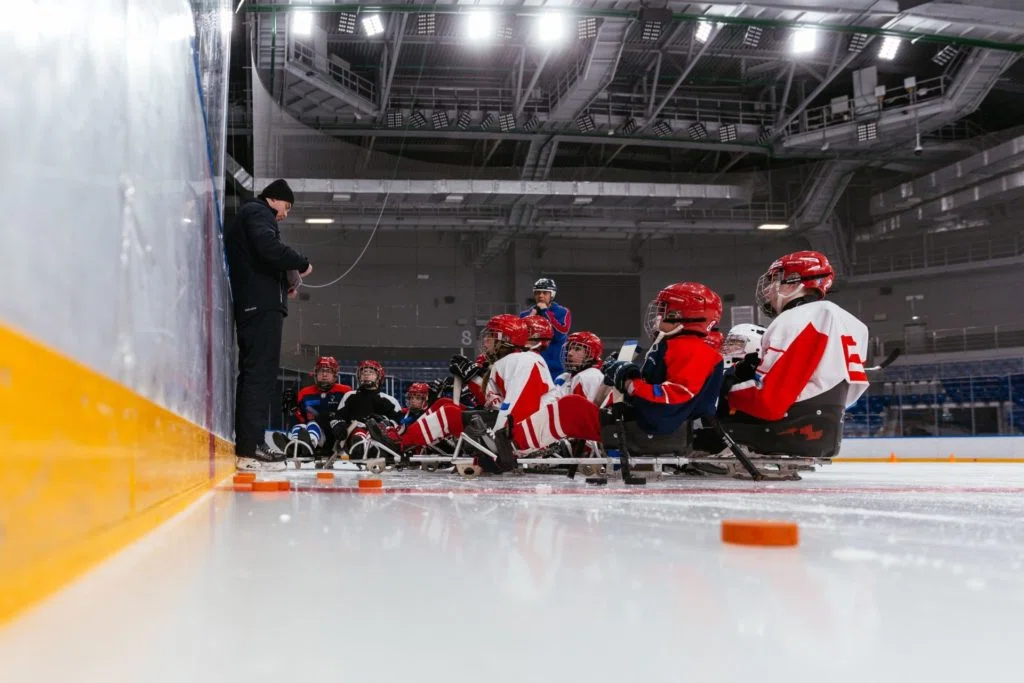
- Yes. Once a year we hold a Grants contest with the Timchenko Foundation, namely to support initiatives - when new teams are created. We allocate funding to purchase equipment, equipment, start the section of the section so that the guys can start training. If a person has the education of the Institute of Physical Education and Sports, but not adaptive physical education, he must be trained. We have a special training program for coaches, judges and even volunteers - Pushers (assistants during the game). Everyone should understand the specifics of working with such children.
- I talked with the guys - disabilities in vision and their parents: as they explained to me, it was even more difficult for them to come to training for the first time. How were the first players recruited, where they were looking for, how many wanted at first?
- They used all the possible ways: they gave ads in the newspapers, invited children from boarding schools, offered through schools. Making friends with their parents from abroad, agreed with them about the interview. Translated foreign materials in this direction. At the forums and exhibitions on the problem, they showed videos, photos of the guys.
You can tell a lot, but only when you try it yourself, can you feel. We began to arrange open master classes. The name was to try. They put on a hockey helmet on the guys, handed the clubs, let them out onto the ice, and - their eyes lit up. They began to ask mothers to allow them to be engaged, they could not resist.
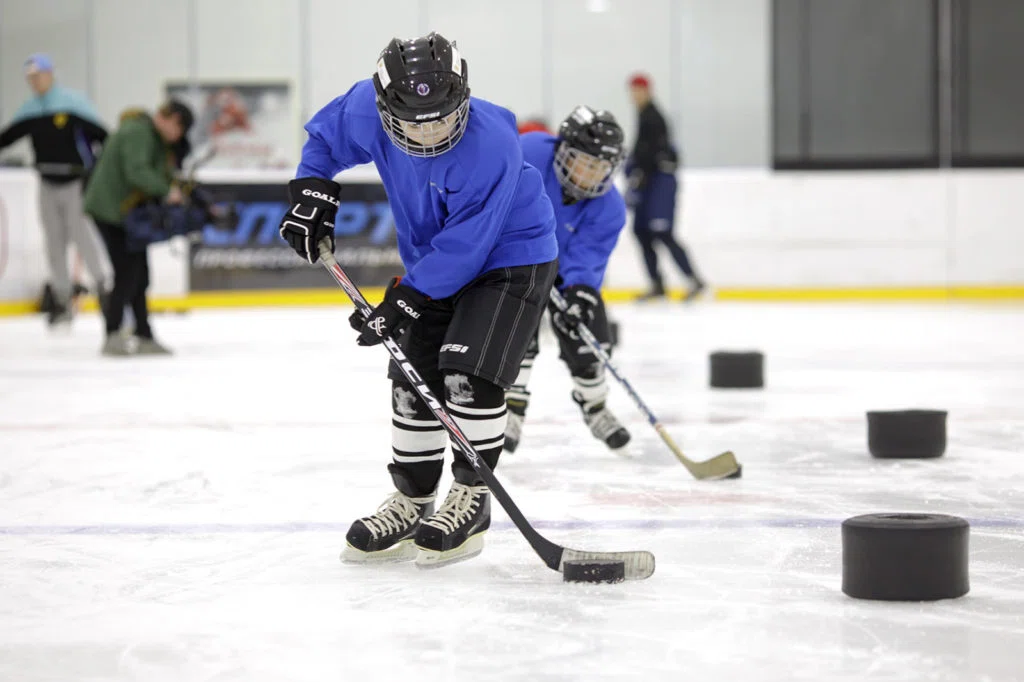
There is no selection here, as in professional sport, except for boys, girls are engaged. The capabilities of the team are limited only to the presence of inventory in order to accept new players.
There are no restrictions on opportunities - there are guys showing the results, and there are those for whom these are new friends and game.
Support for the team, the opportunity to see the world, get acquainted with new people.
- When was the first festival held?
- The first three years were engaged in the creation of the first teams. The first festival was held in St. Petersburg, then ten teams participated. The scale is growing: compared to the first festival, the number of teams has now increased three times. But if we talk about our position to the approach of the organization of the event, for the children the holiday should be spectacular. So that these emotions inspire them for further training. To motivate them to work, grow over yourself for a whole year and get to this festival again, show your successes. Therefore, in addition to the competition, there are many activities in the program - for example, famous hockey players come, for parents there are yoga, seminars, movie shows. This, of course, is very costly, but thanks to partners, in particular, the Fonbet BC, which has been the general partner of the festival for three years, we did. If not for them, this would hardly have been possible.
- How did you decide to add programs for children with autism and Down syndrome?
- It was the next step. For four years, engaged in trace-Hockey, they remembered that there are adaptive disciplines that allow children to play with other violations. Sani for children with autistic spectrum disorders, with Down syndrome, special training techniques are provided for classes with them. There are no winners in special hockey, the main thing is to establish children's communication with each other. They play great, but do not set strict rules and tasks in front of them. The specifics of preparing a coach is aimed at understanding the psychology of children. There are stereotypes that we broke: that children with disabilities cannot play hockey, that children with intellectual features cannot work in the team at all. Both doctors and parents note positive dynamics in the behavior and development of children.
In hockey for the blind, there are nuances: players are guided by sound, the goalkeeper can only be completely devoid of vision.
According to international standards, he is put on a blindfold. An ordinary rubber washer is replaced by a large, 14 cm in diameter, half. It has eight ball bearings. She rattles from touch, and the guys ride on the ice, focusing on sound. The judge has a special whistle with several signals - to explain when an attack or attack occurs.
- People at the festival note that sport gives children communicative skills. What, in your opinion, could be taken additional steps to expand the interaction of children with disabilities and the outside world?
- If you do not take into account the infrastructure that in most cases NPOs cannot influence, then many projects in our time improve the standard of living of such people: social networks, many companies began to hire people with disabilities. I hope we will come to the fact that sooner or later people will stop drawing a parallel to each other and such people, they will look at a specific person primarily as a person. A good example of the Moscow trace-Hockey team "Spartak", which is engaged in one ice complex with athletes without disability: recently I saw how the chockeistic boys at ease, relaxedly let them forward in a boy’s locker room in a stroller: "Sanka, pass!" I was impressed by the ease of communication. It was noticeable: comfortable to both sides. I shared my supervision with the director, to which he replied: "You know, they stopped noticing them." At first, the children could not take their eyes off peers in strollers, did not understand how to relate: tried to regret and help when not necessary. And now they do not notice them. Not because they ignore, but because they perceive equal to themselves. And this is the most important thing.
By the way, we will organize a hockey inclusive camp every summer.
- Is this also the practice of Canada?
- No, as far as we know, this is the only precedent in world sports practice. They come to our camp from different countries: Japan, America, several European states. This is a summer sports camp for children with parents. There are detachments for both children without disability, and with the present. The training processes are different, but leisure is general. They learn to communicate with each other, understand how to interact with each other. And it is not clear to whom this format gives more benefit. If you talked with the guys with disabilities (addresses me. - K.K.), then you noticed that they are open for communication.
I am sure that when the chockest guys grow up, they will more correctly understand life.
- Where is the camp?
- We do not have our own base. When we are looking for a new place, we try to find one where life is in full swing. In order for people to see, get used to it.
- This is due to in each team one vacant place for people without pronounced health problems?
- No, there were just those who wanted. The boy, an ordinary hockey player, helped volunteers and at some point wanted to try to sit in a sled-he liked it.
- The number of teams is growing. Children, among other things, are driven by the desire to become paralympics ...
- We immediately warn all parents that there are stringent requirements in professional sports. Strong people, albeit with a defeat of the musculoskeletal system or with amputation, should play in a professional trace-hock. Guys who can make a professional career in this sport, in our teams no more than 15%. We try to explain this fact to everyone who comes again in order to exclude situations when parents nourish the illusions and, not wanting to, deceive children that they will certainly become paralympic champions. But we take everyone. Our position: there is physical data or not, but for each child this experience will remain a bright page in life. It will give opportunities, open other interests. Hockey is just a tool.
- And those 15% of children who have professional sport in the future? How can the league help them?
- For them, we have a separate project, carried out in conjunction with the Russian Hockey Federation, is called the “Youth team”. Suitable for criteria for international competitions, the guys, after reaching 14 years, go there. We regularly train them, once a year we take them to foreign competitions so that they get game practice with athletes from other countries. Perhaps these are just future paralympians who will represent our country at the Paralympic Games.
- What expenses in this case need to be prepared for parents?
- We cover the costs of ice rental, coaching, the entire training program. Fees, participation. As a rule, parents need to pay for the transfer to the place of fees.
- What are your plans for the next year or until the next festival?
- 2020 showed that making plans is a dangerous business. We set a goal - to strengthen the position of this sport so that the direction develops further. We very much expect that our work will finally be noticed in state structures, because we understand that with such a growth rate of growth to us, a small non-profit organization, will not be able to cope soon.