
Translated material
Forward, in the USSR
Professor of Free University Ekaterina Mishina on the return of the Soviet court at the level of legislation and law enforcement practice
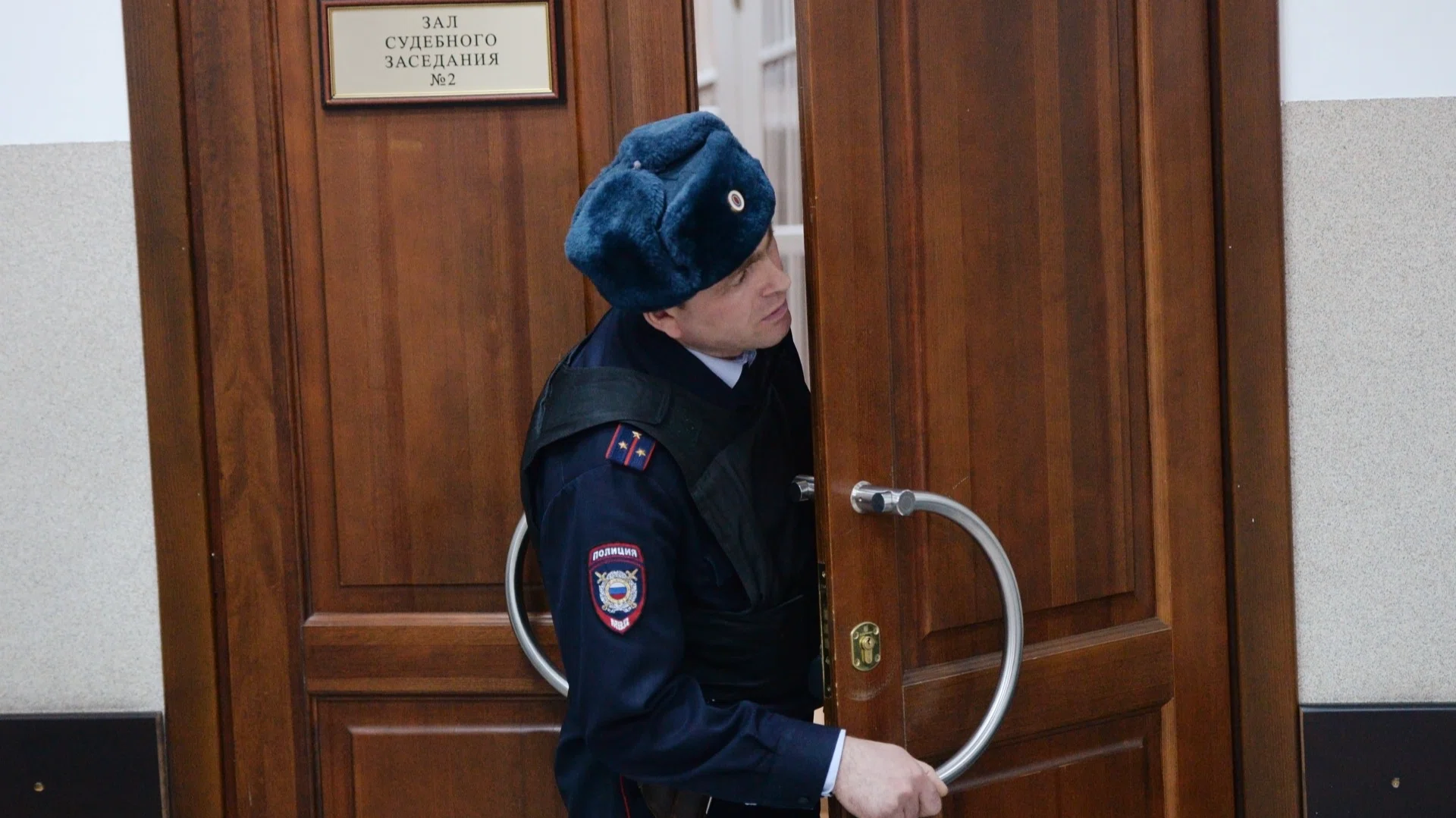
In the last decade, Russian rule -making and Russian law enforcement clearly demonstrate that the wind of changes now blow in a completely different direction. Desovetization, one of the key tasks of the post -Soviet transformation, has not just ceased to be a priority - it disappeared from the agenda. And our steam locomotive now flies forward, but backward, into the Soviet past.
You can call different dates for the beginning of the process of resiovetization. But the most clearly this trend has been indicated since the beginning of the 2010s. And not just designated, but became mainstream. All the changes that occurred during this period are bricks used in the construction of the wall, which Russia began to fenced off from generally recognized democratic principles and principles and norms of international law. At the same time, the worst traditions and practices of the first decades of Soviet power began to revive. Moreover, the initiators of these changes return the country during the class struggle, when the enemies of both outside and inside, and these enemies should be exposed and neutralized. Here are just some of these changes.
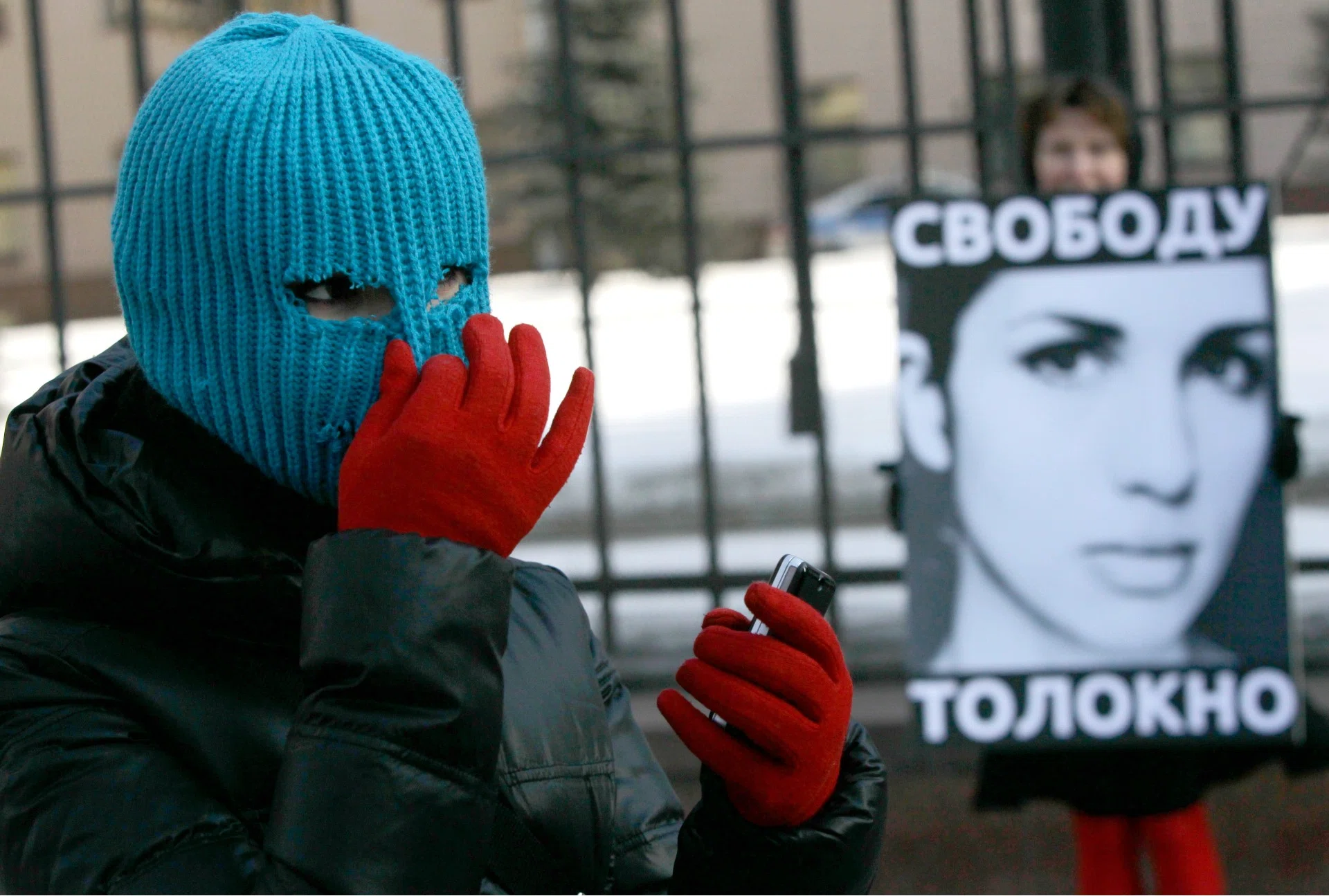
2012 very vividly the revival of early Soviet criminal law approaches was manifested in the case of the members of the Pussy Riot group, sentenced to two years in prison under Part 2 of Art. 213 "Hooliganism" of the Criminal Code of the Russian Federation for the conduct of punk-grab in the Cathedral of Christ the Savior. If the act were qualified properly, the defendants had to pay a maximum of a thousand rubles of a fine. It was such a sanction that was provided for by the editorial office of Part 2 of Art. 5.26 Administrative Code of the Russian Federation ("Insulting the religious feelings of citizens ..."). And it was precisely this act that Pussy Riot was committed in the Cathedral of Christ the Savior, in other words, that there was an administrative offense, that is, an unlawful, guilty action, characterized by a significantly lower degree of public danger than a crime. But the political component of the punk mayobor motivated law enforcement officers to ignore the composition of the administrative offense in the Code of Administrative Offenses and apply the article “hooliganism” of the Criminal Code of the Russian Federation. And the Russian judicial machine has committed an act of law enforcement in strict accordance with the provisions of Art. 24 of the Criminal Code of 1922, which says: "When determining the punishment measure, the degree and nature of the danger of both the criminal and the crime committed by him are taken into account."
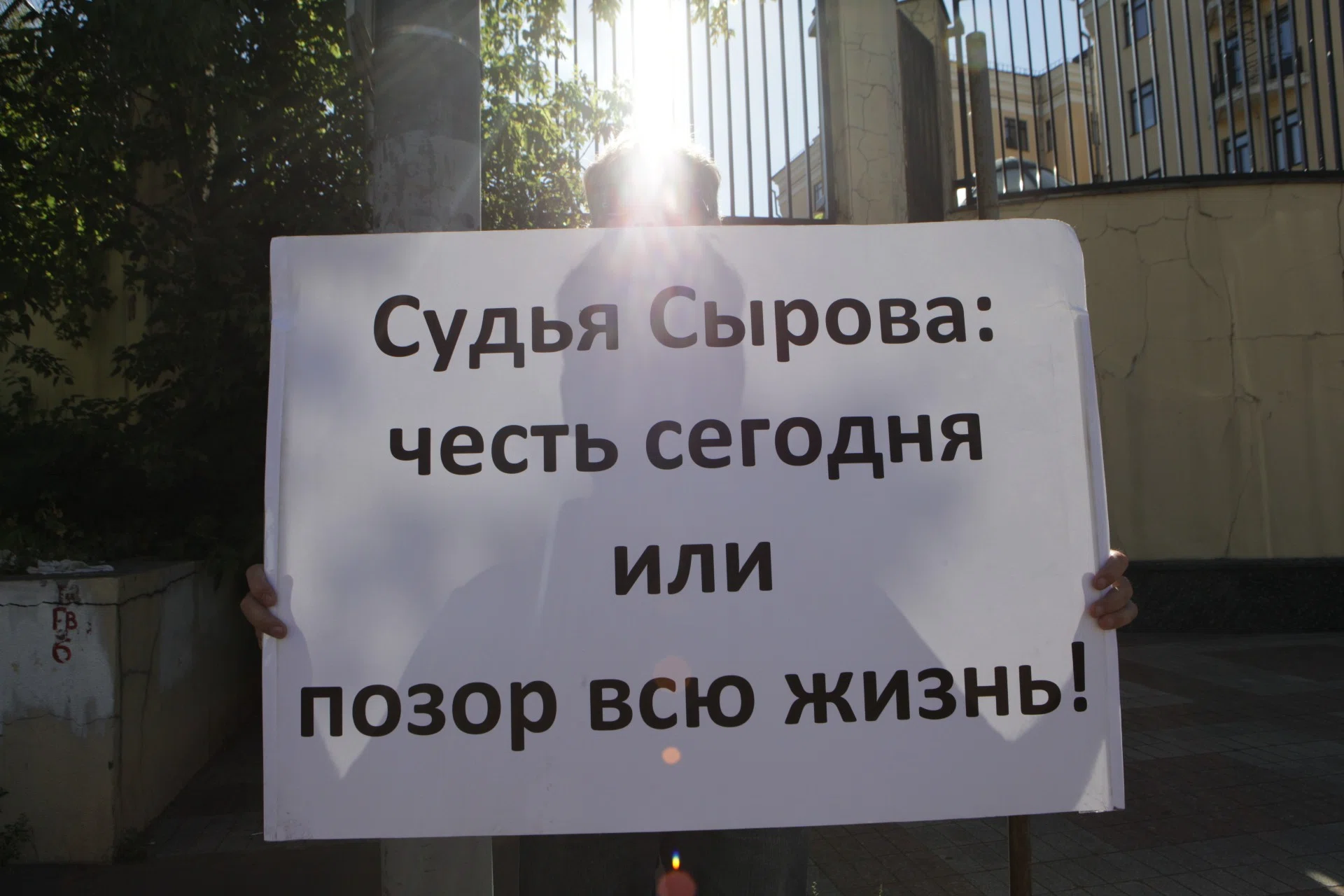
Incorrect qualifications, a unilateral and prejudice study of the evidence, coupled with the statement of Judge Marina Syrova that the behavior of the accused in the courtroom should be interpreted as another evidence of their guilt, provided the required result: Pussy Riot participants were not guilty for what they actually did, but in the best traditions of early Soviet criminal justice - as socially hazardous persons. And the judge’s statement regarding the behavior of the defendants as evidence of their guilt is also great greetings from the early Bolshevism, namely from the Regulation on the People's Court of the RSFSR of November 30, 1918, Art. 24: “The People’s Court is not constrained by any formal evidence and depends on the circumstances of the case to allow certain evidence or to demand them from third parties for which such a requirement is mandatory.”
July 2012 in the Federal Laws “On Non -Profit Organizations” and “On Public Associations” a number of amendments and additions were introduced, which returned the term “foreign agent” that had returned to wide use. From this moment, according to the new paragraph 6 of Art. 2 of the Federal Law “On NPOs”, Russian NPOs began to be considered as foreign agents receiving “money and other property from foreign states, their state bodies, international and foreign organizations, foreign citizens, stateless persons or persons authorized by them and (or) from Russian legal entities receiving funds and other property from foreign sources” and participating “including in the interests of foreign sources, in a political activities carried out on the territory of the Russian Federation . "
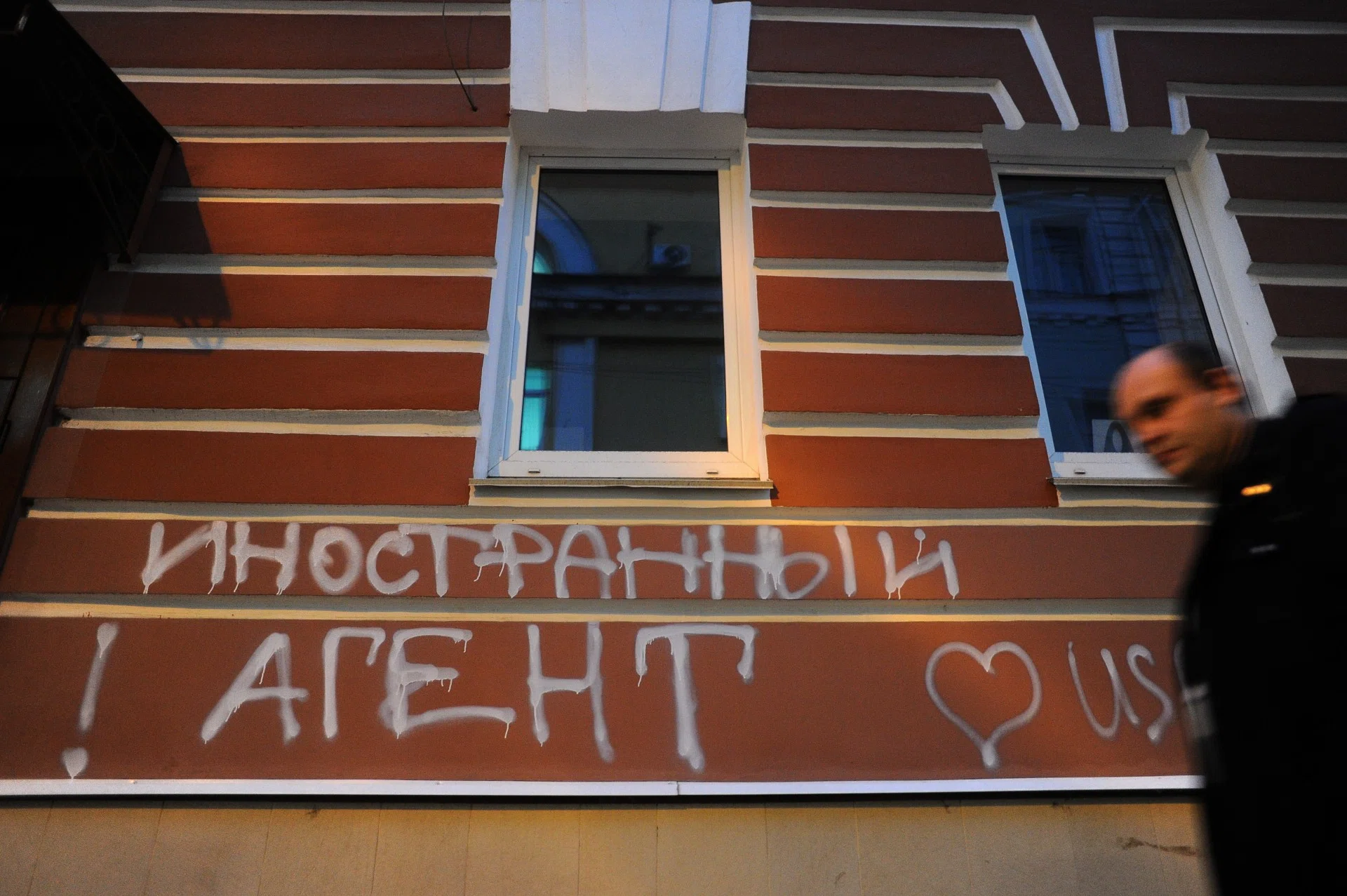
On April 8, 2014, in Decree No. 10-P, the Constitutional Court not only recognized the amendments on foreign agents constitutional, but also explained to doubtful that the “foreign agent” is actually a very good term: “The legislative structure of the non-profit organization that performs the functions of a foreign agent does not imply a negative assessment of such an organization from the state, is not designed to form a negative attitude to the political activity and the political activity and the political activity and the political activity and the It cannot be perceived as a manifestation of distrust or desire to discredit such a non -profit organization and (or) the purpose of its activity. ”
In May 2014, a new corpus delicti appeared in the Criminal Code of Russia - “Rehabilitation of Nazism”. The disposition of this article includes the formulation of " the spread of knowingly false information about the activities of the USSR during the Second World War, committed publicly."
Russian citizens are brought to criminal liability for the “falsification of history” mainly under this article, and the number of sentences is slowly but consistently growing. In 2020, additional risks appeared for those who dare to critically speak about Russian and Soviet history. Amendments to the Constitution establish that “the Russian Federation honors the memory of the defenders of the Fatherland, and ensures the protection of historical truth. Determining the meaning of the feat of the people when protecting the Fatherland is not allowed. ” The same summer, the Investigative Committee of the Russian Federation decided to create a special unit for the investigation of crimes related to falsification of history. In April 2021, the article was supplemented and changed, in particular, new signs of acts were added, including:
committing a group of persons, a group of persons by prior conspiracy or an organized group;
completion using information and telecommunication networks, including the Internet;
Humiliation of the honor and dignity of the veteran of the Great Patriotic War, committed publicly.
Obviously, these amendments will institute criminal cases under this article on an even wider circle of persons.
In 2014 , Art. 212.1 “Repeated violation of the established procedure for organizing or holding a meeting, rally, demonstration, procession or picket” , which is increasingly called the “Dadin” article: the first under Art. 212.1 was convicted by activist Ildar Dadin. The “Dadinskaya” art was sharply criticized; Many of it considered it contrary to the basic law of the country and the European Convention on Human Rights. Henry Reznik directly pointed out that the article is obviously unconstitutional and that no multiplicity and repeatability of administrative offenses gives reason to consider them a crime, that is, an act with a substantially higher degree of public danger. Criticism remained unanswered, because the legislator is already beginning to be considered the implementation of constitutional freedom of assembly as a crime directed against the state.

It is very significant that the maximum term of punishment under the "Dadin" article is up to five years in prison, that is, it is a crime of moderate severity. The same maximum punishment of the Criminal Code of the Russian Federation provides for the murder of two or more persons committed in a state of affect (part 2 of article 107 of the Criminal Code of the Russian Federation). It is even more significant that the maximum punishment for torture without aggravating circumstances (part 1 of article 117) - up to three years in prison; Thus, this is a crime of small severity. In other words, from the point of view of the Russian legislator of the 21st century, the torture of a person is less dangerous for society than a repeated violation of the rules of organization or rallies, processions and demonstrations that already begins to be considered as a crime against the state. And this is another similarity with the norms of early Soviet criminal law, according to which crimes against the state had a greater public danger than crimes against the individual.
As in the Pussy Riot case, for law enforcement agencies, the main thing was not what the offender committed, but Dadin himself as a “socially dangerous element”. Again, the situation developed according to the scenario of the first Soviet Criminal Code, which instructed judges in determining the punishment to take into account the degree and nature of the danger of both the criminal itself and the crime committed by him. The sentence was made “on socialist legal awareness”: the prosecutor asked for two years in prison for the defendant, but Judge Natalya Dudar considered it insufficient and sentenced Ildar Dadin to the three years of the colony.
In December 2014 A bill was introduced into the Duma, testifying to the ongoing struggle against the external enemy. "On the introduction of measures to protect the national economy and restrict the activities of legal entities and citizens of aggressors in the Russian Federation." A very indicative definition of aggressors: the aggressor country is understood as a foreign state (unification of foreign states), which takes restrictive measures (sanctions) in relation to the Russian Federation, citizens of the Russian Federation and Russian legal entities. ” The bill was ultimately rejected, but the sediment, as they say, remained.
In 2015, the Criminal Code appeared designed to combat the external enemy of Art. 284.1 “The implementation of activities on the territory of the Russian Federation of a foreign or international non -governmental organization, in respect of which a decision was made to recognize the undesirable in the territory of the Russian Federation of its activities.” Until six years of imprisonment, a serious crime according to Art. 15 of the Criminal Code.
In the same 2015 The process of creating legislative, and subsequently the constitutional foundations for evading Russia's execution of its international legal obligations. First, a mechanism appeared from the execution of decisions of the ECHR, adopted on the basis of the provisions of international treaties of the Russian Federation in their interpretation, which contradicts the Constitution of the Russian Federation (amendments to the FKZ on the Constitutional Court).
In 2020, these provisions already became part of the Constitution along with the new authority of the KS to resolve the issue of the possibility of execution of the decision of a foreign or international (interstate) court, a foreign or international arbitration court (arbitration) imposing duties on the Russian Federation, if this decision contradicts the basics of the public law and order of the Russian Federation.
Recently signed by the President, the amendments on educational activities are also aimed at protecting against the enemy and the prevention of foreign intervention.
So in 2021, the desire to return the country back during the period of isolationism and the struggle against the external and internal enemy, unfortunately, remains.
One of the latest examples is DOXA. The DOXA posted before the protests on January 23, 2021 Video in support of schoolchildren and students on which the administration presses, on January 26 was deleted at the request of Roskomnadzor. On April 14, four DOXA employees were detained, and they were charged under Art. 151.2 of the Criminal Code.
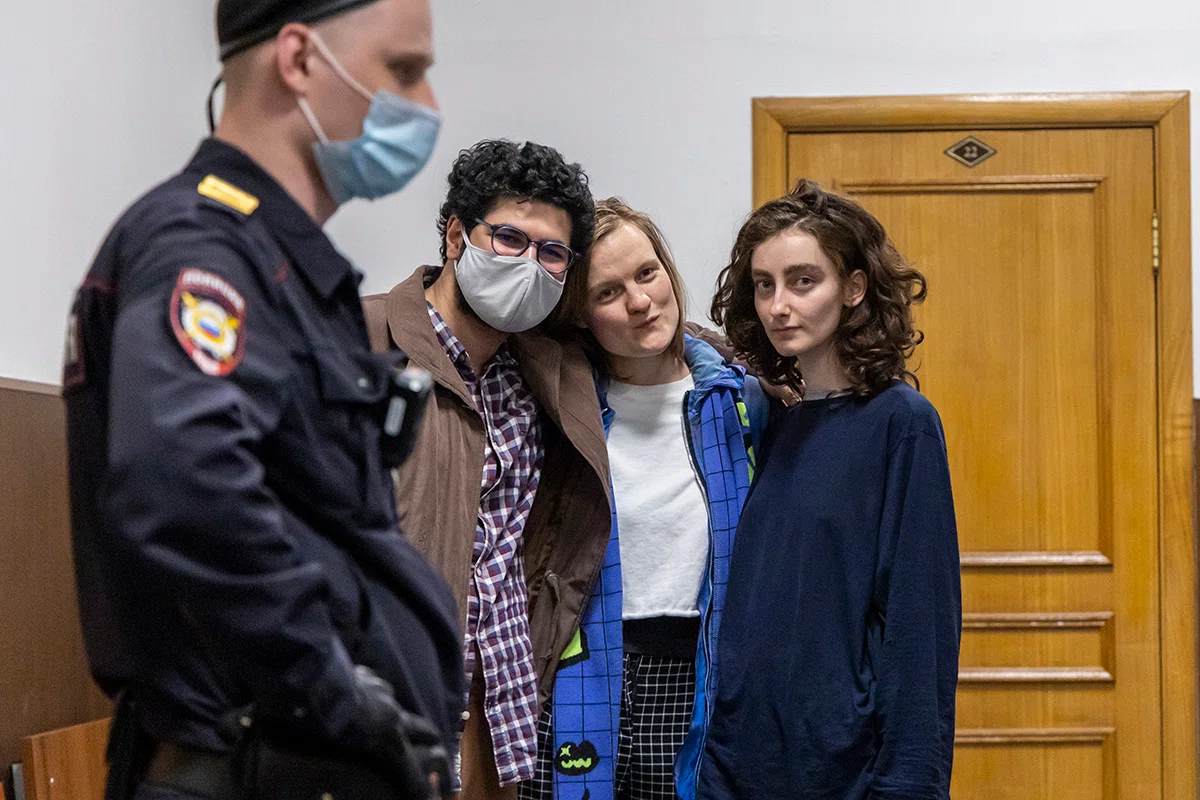
It is quite obvious that the video with calls not to be afraid of the pressure of the administration of educational institutions does not have signs of the objective side of Art. 151.2 of the Criminal Code "The involvement of a minor in the commission of actions that pose a danger to the life of a minor." According to Part 1 of this article, such actions are performed by persuasion, proposals, promises, deception, threats or other ways committed by a person who has reached the age of eighteen, in the absence of signs of declension to commit suicide - but not by clarification.
The involvement of Russian children and adolescents in criminal activity by DOXA editors, according to the investigating authorities, was committed through the manufacture and publication of a video. The video said that due to actions in support of Alexei Navalny universities and schools threaten students with expulsion, put pressure on teachers, teachers and parents. Students were called not to be afraid, not to stay away. “This is our legal right to express a protest in any peaceful way,” the video says.
Art. 31 of the Russian Constitution says the same thing - citizens of the Russian Federation have the right to gather peacefully, without weapons, to hold meetings, rallies and demonstrations, processions and picket. The video emphasized that it is not necessary to go to rallies: you can become a volunteer of a human rights organization or launch an independent student initiative. This is such a recognizable brand of Russian law enforcement - the implementation of the constitutional right to a peaceful protest from the moment the “Dadinskaya” article of the Criminal Code is considered by law enforcement as a socially dangerous act.
Another similarity with the case of Ildar Dadin is the appearance of the judge of Natalia Dudar already known to us. It was she who decided to choose the preventive measure of Alla Gutnikova and Armen Araman. But Judge Dudar is not just a recognizable brand. This is, so to speak, an effective manager from the judicial corporation. It was she who authorized and extended the arrests of Platon Lebedev and Alexei Pichugin in the Yukos case. In 2013, she recognized the criminal case against Alexei and Oleg Navalny legal. It was she who authorized the wiretapping of five employees of the Corruption Foundation ( the organization was included in the Minoust on the list of foreign agents ). And in 2021 her services were again in demand.
The Doha case showed that another well -known Soviet principle is returning - the principle of analogy. According to this principle, if action or inaction was considered a socially dangerous act, but this composition of the crime was not provided for by the current criminal law, this did not mean the impossibility of criminal prosecution for the commission of such an act. Here, a judge spoke on the advance, who was to find the composition of the crime in the current Soviet legislation, similar, similar, in certain signs resembling or similar to a perfect action (inaction). This norm was to be applied in a particular case.
This is exactly what the Basmanny Court did on April 14, returning to Russian law enforcement a directly prohibited Part 2 of Art. 3 of the Criminal Code of the Russian Federation the principle of analogy.
And the attraction Back to the USSR, meanwhile, continues its work. In early May, the next bill was included in the Duma and included in the spring session plan, which also contains the familiar features of early Bolshevism - the deprivation of passive suffrage and the principle of retroactive force of the law.
Of course, I wanted to write "we are stocking up with popcorn and we are waiting." But what is popcorn in the Soviet Union? And hematogen from the neighboring pharmacy will probably come off.