Translated material
The story of passion
Collectors became the heroes of the new project "Art hunters", opened in the Moscow Museum of Russian Impressionism
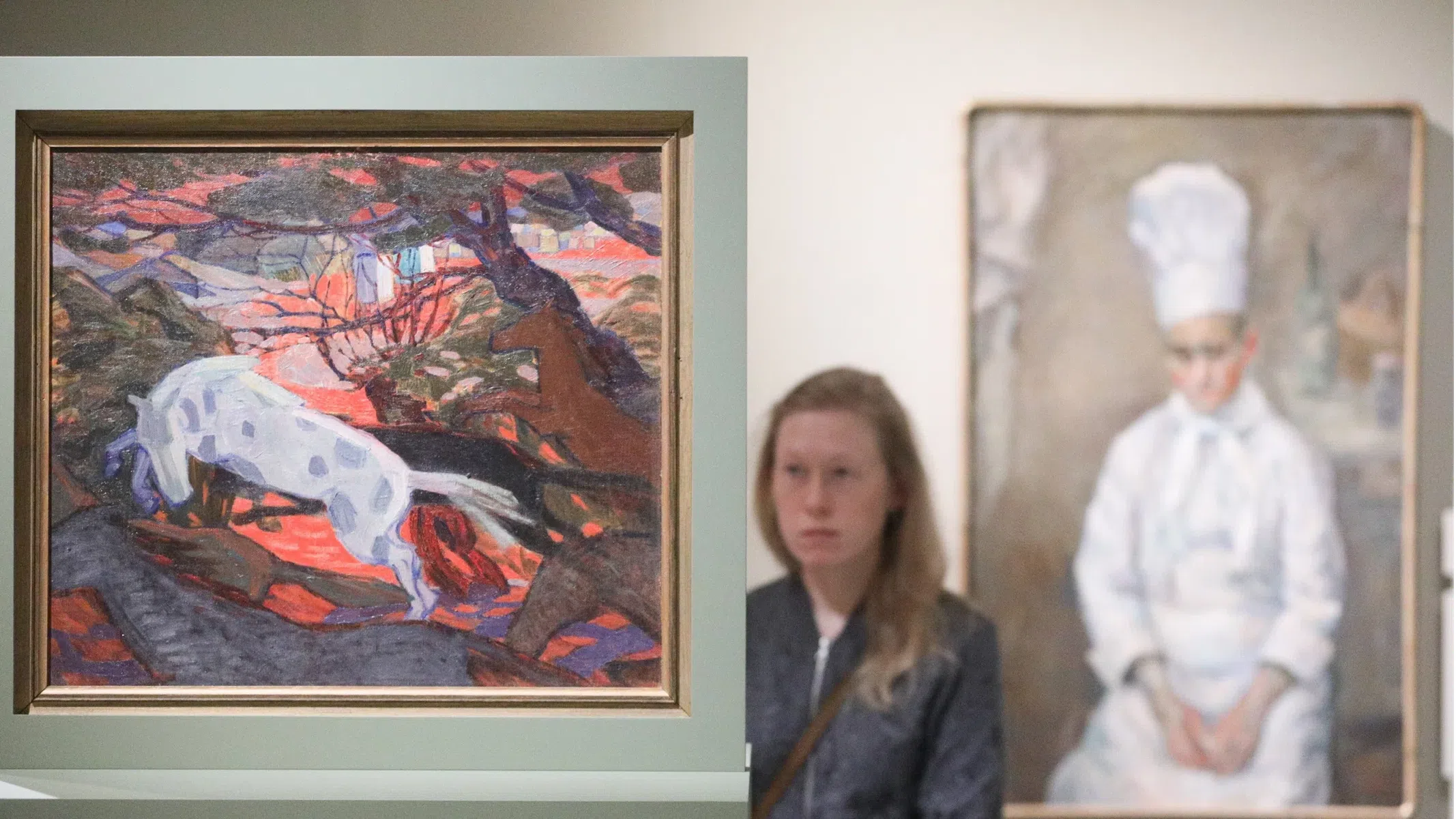
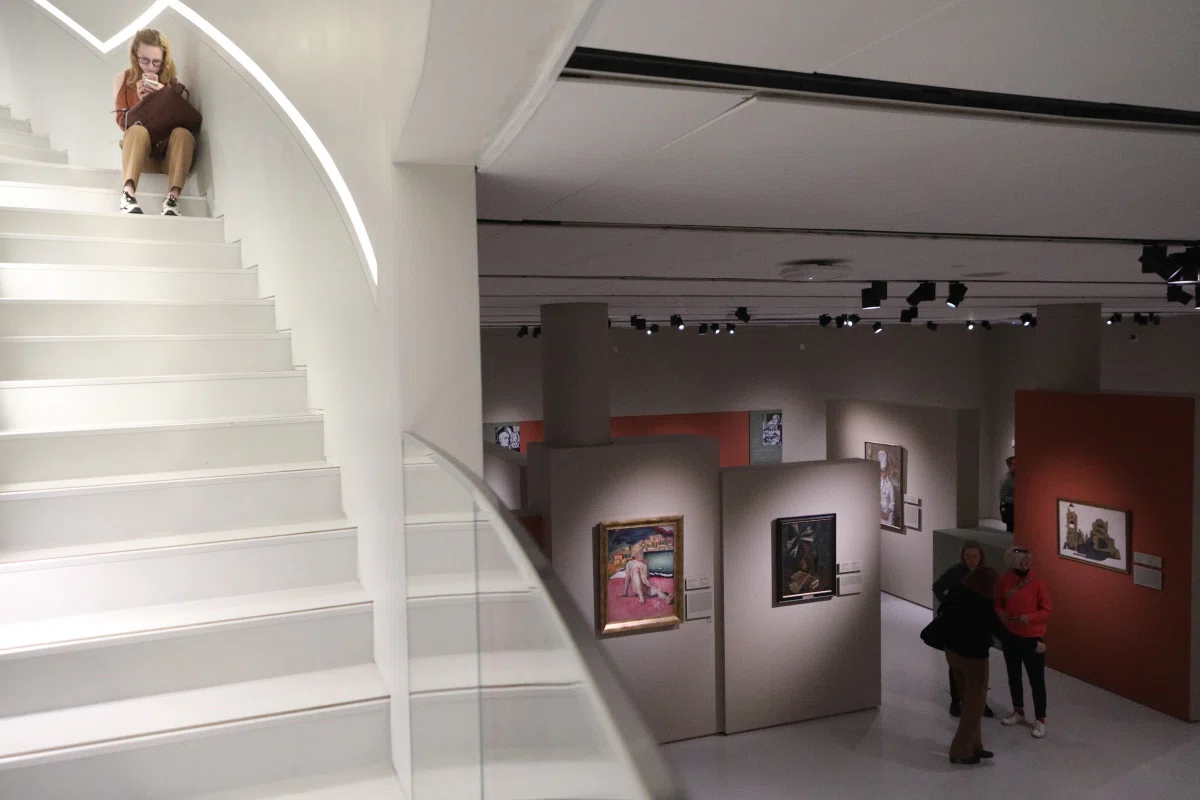
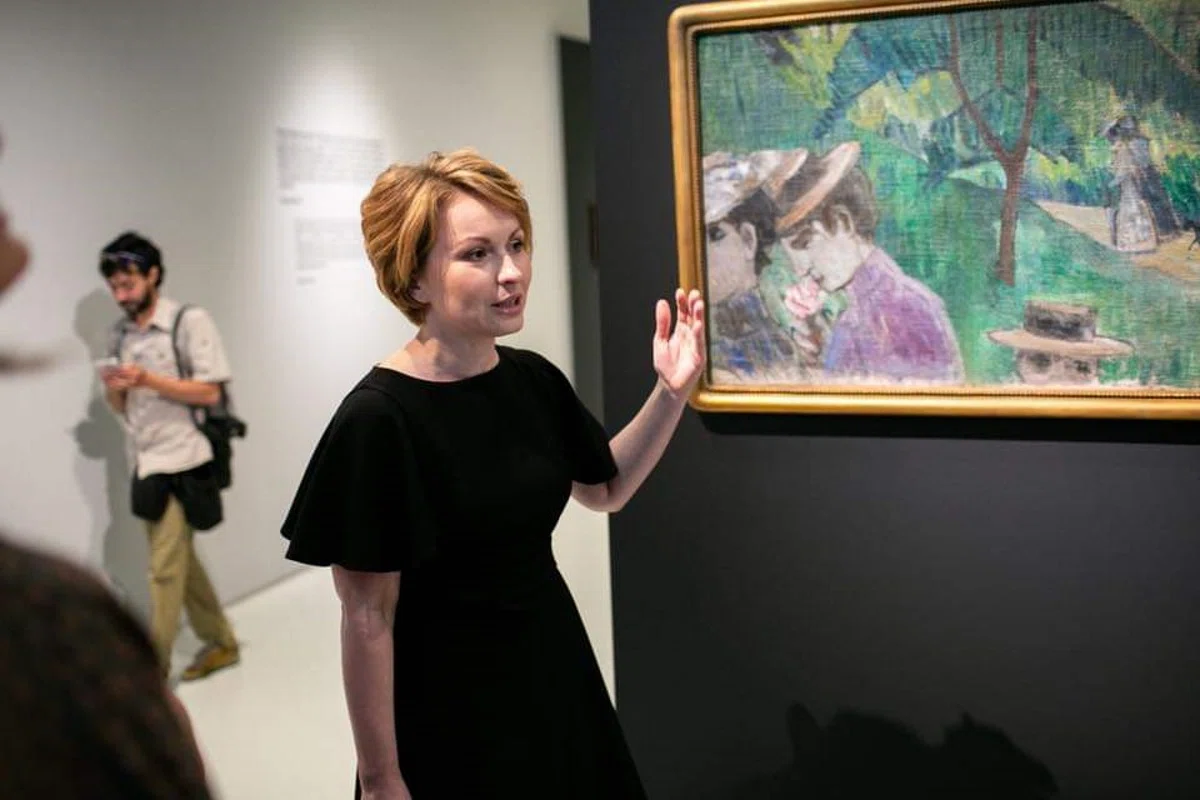
Life on the verge of a foul - so you can briefly determine the place of the collector in Soviet society. An exhibition at the Moscow Museum of Russian Impressionism, prepared with the St. Petersburg KGallery, introduces the fate of 14 collectors of post -war Soviet history. Some of them were successful citizens in the country of the temporarily defeated socialism - doctors and diplomats, engineers and economists, historians and agricultural people; Others are formally unemployed, sitters and prisoners. They were united by a passion for gathering, and they were collected not by Nalbandan with Gerasimov, but sometimes the authors are almost forbidden: the Russian avant -garde of the beginning of the century, emigrants and renegades, whom the state museums were not welcomed. The exhibition at the former Bolshevik factory united the works of Dobuzhinsky and Sinezubov, Boris Grigoryev and Falk, Kandinsky and Puni, Yavlensky and Shagal.
Talents and fans came together in one space. On the one hand, the early self-portrait of Petrov-Vodkin and the late-Golovina from the meeting of the St. Petersburg historian Sigismund Valka (1887–1975), on the other-“Landscape with the Pond” by Natalia Goncharova and “Silumort with Pravda” David Sterenberg from the collection of legendary Igor Sanovich (1923–2010). His kopecks in Khrushchev on the outskirts of the capital were literally clogged with art, the paintings hung even in the toilet. Pictures of his apartment have been preserved - they decorate the catalog as photographs of the Soviet world by Igor Kalmin decorate the exhibition itself: the atmosphere of time woven from slogans and poverty is unforgettable.
But even better it is conveyed by the biographies of collectors, perfectly prescribed by Sofia Baghdasarova. Involuntarily, the saga about the victims and executioners of the Soviet era is developing. Here is the fate of Igor Afanasyev (1904–1969), a monitor engineer, one of the founders of domestic petrochemistry. He was arrested twice, for the first time the collection was confiscated, the books were sent to the public library, some of the works sold from the auction was in Kyiv. The second collection he collected was saved by one of his friends. After the liberation and removal of the convictions, Afanasyev miraculously found and bought part of the first meeting, began to collect again, but was afraid of a new arrest until the end of his life. In Moscow, the canvases of Sudeikin, Petrov-Vodkin and Vladimir Lebedev are now showing him (they were friends with the latter).
But others were not afraid of little: people with an ambiguous reputation can be worried only for a posthumous reputation. Among those at the exhibition on Leningradsky Prospekt, the former Deputy Minister of Foreign Affairs Vladimir Semenov, who worked after the war in Berlin, - Molotov affectionately called him “our Gauleiter in Germany”; The suppression of the 1953 uprising is his business, not in vain, although he died a pensioner in Cologne, in 1992 he was deprived of the title of honorary citizen Berlin. But the taste is excellent: blacksmiths, tapes, Yakulov with a portrait of Alice Coonen. No worse and the meeting of Nikolai Timofeev with the work of the museum level from Boris Grigoryev to Nikolai Kalmakov. Major General, chief psychiatrist and forensic psychiatric expert of the USSR Armed Forces, he participated in a pre-trial examination of dissidents, many considered him the culprit of his troubles. One of the issues of the human rights “Chronicle of current events” quoted the forever relevant fragment of the article by Timofeev, which maintained a diagnosis of sluggish schizophrenia: “dissent can be caused by brain disease when the pathological process develops very slowly, softly, and its other signs for the time being (sometimes before the crime act) remain inconspicuous.” How many were sent on this basis to the specialists?
In an effort for objectivity, the authors of the catalog write that the arrested General Grigorenko was grateful to Timofeev for the attitude during the examination, but this is half the truth, the commentary lacks details. In the memoirs of Grigorenko, the final disappointment in the figure of Timofeev was described - he tried to break mentally healthy people. “When I saw the signature of Professor N.N. Timofeeva, under a false answer, Western psychiatrists under the document, which stated that in the USSR there is not a single normal person who would be imprisoned in a psychiatric hospital, I realized that N.N. Timofeev is the same as the Lunts, the Morozovs, Snezhnevsky, and bears the same responsibility like them. ”
If we take into account that most of the collection of Timofeev made up, apparently, work from the collection of the famous bibliophil Alexander Burtsev, who was shot with his wife in 1938 (Timofeev actually hid the collection from his contemporaries) , his personality raises questions. The choice of names is the work of the curator, although the absence of, say, provincial collectors are annoying, but in Kazan, for example, there were bright characters, like Vasily Jaegerev; Sergey Grigoryanz was not enough-he was convicted in 1975 for anti-Soviet propaganda and speculation, although no collector will live without commodity-budget relations. In the catalog, Valery Dudakov talks about this in detail. It is a pity that the conversation itself is not shown in the halls in the record, it could become the beginning of a video archive dedicated to Soviet collecting - Atlantis, which disappears before our eyes. Moreover, the fate of the new collectors is understandable: after Peter Aven began to create a museum in Riga for the collection collected in Russia, there were no illusions left.
Until August 29.
Anastasia Vinokurova, the curator of the exhibition: "Kostaki trained his eyes before coming to the vanguard."
- The Soviet government did not particularly love collectors, but among them there are many odious figures, like Semenov.
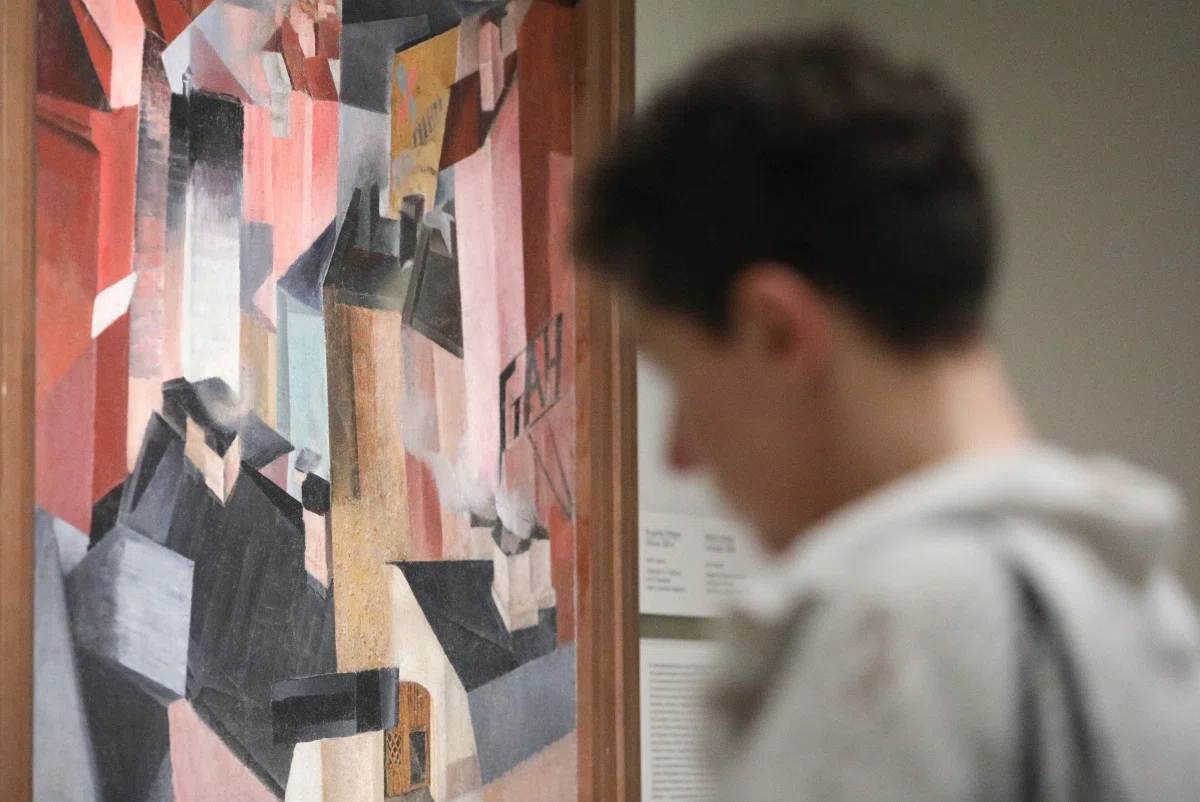
- The task was not to show the personality of collectors and their roles in history, but, above all, meetings. Semenov’s collection was extraordinary at that time. In his unpublished memoirs-part of them is posted on the Internet-he writes that the exhibition for the 30th anniversary of the Moscow Region influenced his interests in art. He began to collect on the advice of Dr. Myasnikov, these were interior items, cozy, chamber, and then switched to Falk and Russian avant -garde, including Lentulov’s things - he had five or six large works of the “Bubnoye Valet” in the living room in the house on the embankment, including “View of the New Jerusalem”. Therefore, I wanted to introduce him not as a politician, but as a collector.
- How typical is the amateurism for representatives of the authorities who are addicted to art?
-Many collectors pass such stages, even in the 90s many began with figurative painting, with the authors of the Union of Russian Artists. There is a definition - “they begin with artists“ native speech ”: understandable art, although it is easy to make a mistake, these things are faked and faked, but the taste is formed gradually, they come to the vanguard gradually. Kostaki also began with old European masters, but when he saw the bright colors of Rosanova, he felt as if the windows were opened, the light penetrated into his dark interiors. He trained his eyes before coming to the vanguard, which stunned him and, one might say, enslaved. One of the heroes of our exhibition Valery Alexandrovich Dudakov also began with the union the Union of Russian Artists, Yuon and Vinogradov.
Of course, there were more collectors, and the circle of their interests was wider. There were those who bought available in commission stores. But at the exhibition I wanted to show the Russian modernism of the first third of the twentieth century, collectors who collected not thanks to, but contrary to the information from pre -revolutionary publications. Representatives of the same “world of art” after the war were accused of cosmopolitanism, then Benoit was stamped, not to mention Malevich and Grigoryev. Basically, they were excluded from the main expositions, their work were in funds.
- Did the world of collectors with criminal have closed?
- Criminal is an important part of collector. Things were aroused back in the late 60s. The case of collectors from the old Arbat is known, Anatoly Bonner wrote in detail about him in his book. The director of the commission store Semyon I needle forced collectors to pay the percentage for the right to access things immediately after they are examined by representatives of the museums, an additional commission was taken for the purchase or sale of things.
In the 80s-the case of collectors and a commission store on Dmitrov Street. 60 people were under investigation, some collections were confiscated, then returned, the case scattered with the advent of Gorbachev: the accused had nothing to present.
- Can we talk about the depth of the state of the state in relation to collectors? What annoyed, except for the freedom of uncontrolled gathering?
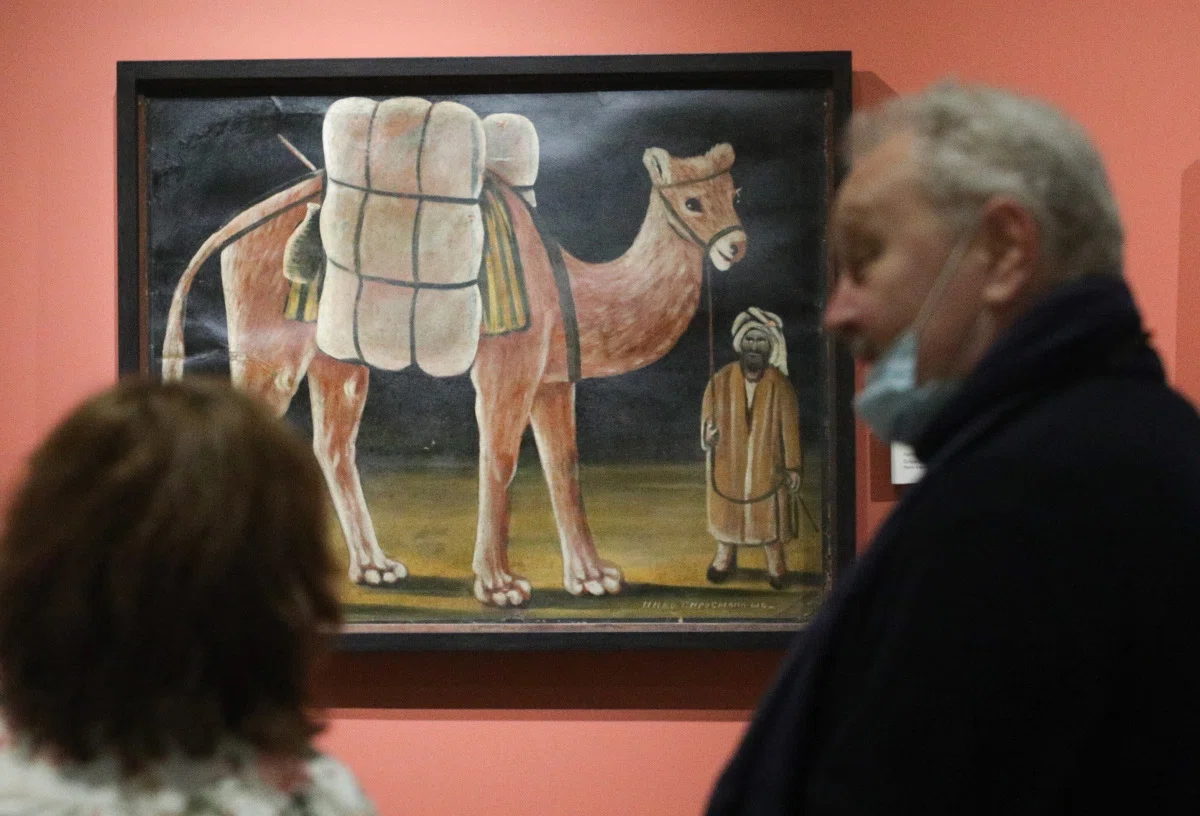
- Collectors were not always limited to exchanges, like Igor Sanovich, for example, exchanged ten patterns of Shagal for one work of Pirosmani. Surely there were sales, and private trade was banned.
- Are there any statistics on confiscated collections, how many there were?
- Immediately recall the collection of Ruslanova, after the arrest of the singer she was transferred to the Tretyakov Gallery, then returned. After the liberation and justification of Sergei Grigoryan, part of the meeting was also returned to him. And the thirties still have to be engaged in, they require additional research.