
Translated material
The State Duma finally adopted the law on the increase in fines for the disclosure of personal data of the security forces
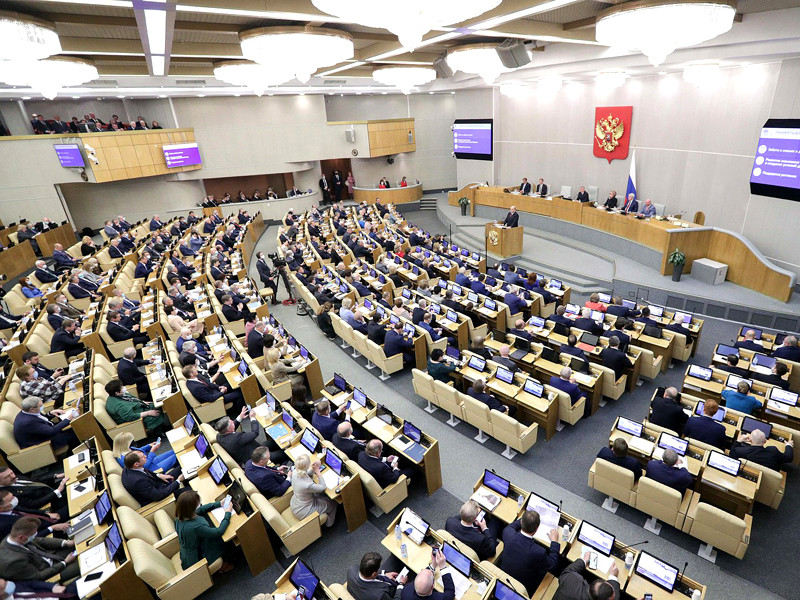
The State Duma in the final third reading adopted a law that significantly increases fines for the disclosure of personal data of security forces, judges, prosecutors and investigators. As reported on the website of the lower house of parliament, the changes are made to Article 13.14 of the Code of Administrative Offenses ("Disclosure of information with limited access"). For the disclosure of personal data of security forces, fines for individuals increase from 1 thousand rubles to 10 thousand rubles, for officials - from 5 thousand rubles to 50 thousand rubles, for legal entities - up to 200 thousand rubles.
The fines are also increased under Article 17.13 of the Code of Administrative Offenses (“Disclosure of security measures applied to law enforcement or regulatory authorities”): up to 70 thousand rubles for citizens, up to 300 thousand rubles for officials, for legal entities - up to 500 thousand rubles.
In addition, the deputies adopted in third reading a law tightening criminal liability in cases of disclosing these security forces received using their official position. Changes are made to Article 320 of the Criminal Code. The accused under this article faces up to 200 thousand rubles of a fine, 480 hours of compulsory work, two years of restriction of freedom or arrest up to four months.
The draft amendments, which increases the fines for the disclosure of information, the access to which is limited by law, was made in September 2020 by United Russia Vasily Piskarev and Dmitry Vyatkin. In February of this year, a group of deputies, led by Piskarev, proposed to introduce criminal liability for the disclosure of information about security measures applied to law enforcement or regulatory authorities (on changing their place of residence, replacing documents, etc.), as well as his loved ones.
It was again about the responsibility of the person to whom this information became known in connection with his official activity. Otherwise, the disclosure of such data is punishable only if this act is committed "in order to obstruct the official activity of the" employee.
By the second reading of the draft amendments to the Code of Administrative Offenses, Piskarev proposed supplementing the Code with the new article 13.14.1, which introduces the punishment for "receiving information with limited access in any illegal way." The fine for this will be up to 10 thousand rubles. for individuals and up to 200 thousand rubles. For legal entities.
In addition, the deputy proposed to increase fines for "violation of the state protection of the requirements for the confidentiality of information about the protected persons and their property" (Article 17.13 of the Administrative Code) from the current 500 rubles. up to 70 thousand rubles. For citizens, up to 300 thousand rubles. for officials. The deputy also proposed to punish officials with disqualification for up to three years, and for legal entities to introduce a fine of up to half a million rubles.
Moreover, Piskarev proposed adding to Art. 17.13 The second part, which provides for the punishment for the collection, transfer ("distribution, provision, access") of personal data of military personnel, judges, prosecutors, employees of the Ministry of Internal Affairs, FSB, FSO, SVR, SK, Rosgvardiy, FSSIN, FSSP and customs "in connection with the implementation of their official activities or the implementation of public debt", as well as their personal data close. For citizens, the fine will be up to 40 thousand rubles, for officials - up to 100 thousand rubles. (or disqualification for up to three years), for individual entrepreneurs - up to 200 thousand rubles. And for legal entities - up to 300 thousand rubles.
The explanatory note to the bill states that the reason for its appearance was the expanding practice of unauthorized publication of information about the facts, events and circumstances of the private life of law enforcement officials. According to the authors, the goals of such actions "are often not the obstruction of the official activities of law enforcement officials, but other aspirations (self -interest, revenge, PR, etc.)." The relevant committee was supported by amendments, only the representative of the LDPR Sergey Ivanov and a member of the Communist Party Yuri Sinelshchikov opposed.
Sergei Ivanov believes that the new initiative violates the right of citizens to receive information, and ordinary citizens can fall under the bill - for example, for repost in social networks of information of a journalistic investigation containing personal data of security forces. The deputy believes that the bill was caused by events in Belarus, where protesters against President Alexander Lukashenko created a Telegram channel to publish personal data of security forces who participated in the suppression of protests.
In Russia, attempts were also made deanonyming the security forces who took part in the dispersal of unauthorized rallies related to elections to the Moscow City Duma in 2019. And at the end of 2020, investigations were published regarding the alleged poisoning of Alexei Navalny and based on the analysis of data on air travel and telephone conversations of law enforcement agencies. In this regard, at least two criminal cases of trading information from the service database "The search-magistral" were instituted, and police officers from Samara and St. Petersburg were accused of exceeding official powers and their abuse (Article 286 and Article 285 of the Criminal Code).
The editor of the Internet publication Sota Vision, Alexei Obukhov, said that new amendments to the Code of Administrative Offenses will not affect the regular issue of investigations - "many information is in the public domain, the main thing is to be able to look for." Other journalists note that new prohibitions will only lead to the transition of investigators to independent and foreign blog platforms, and the investigators themselves will continue their activities by moving abroad.