
Translated material
The United States imposed sanctions against ex-president of Albania and his family
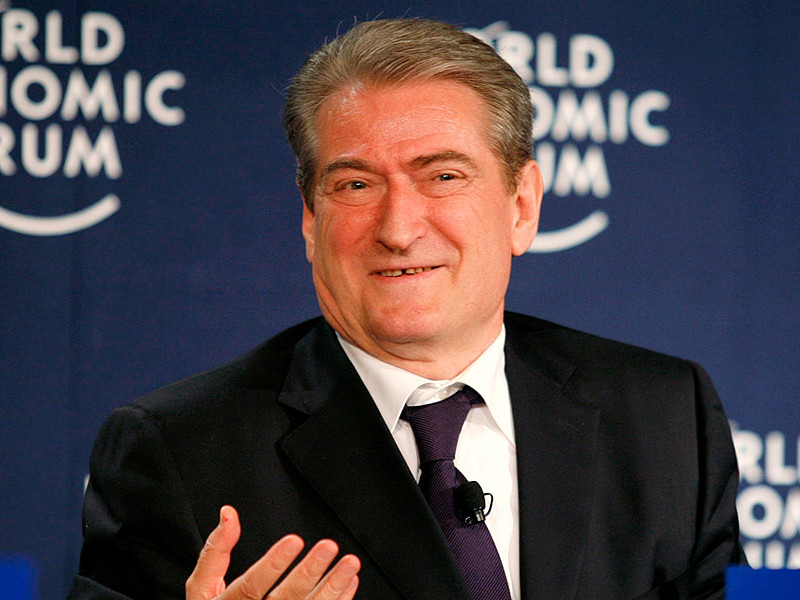
The United States imposed sanctions against the former president and Prime Minister of Albania Sali Berishi on suspicion of corruption. This is stated in the widespread statement by US Secretary of State Anthony Blinken. Sanctions also apply to relatives of the Albanian politician. "I announce the inclusion [in the sanctions list] of the former president and Prime Minister of Albania Sali Berishi in connection with his participation in large-scale corruption. As Prime Minister, he was involved in corruption, for example, in the assignment of state funds, interference in public processes, including the use of his power for himself and enriching his political allies and family members," it is noted In the text .
According to the Secretary of State, the inclusion of Berisha in the sanctions list confirms the "commitment of the USA to support political reforms that are of key importance for the Albanian democratic institutions," TASS reports.
The ex-president and members of his family (his wife Liri, the son of Shkelsen and daughter Argita) are prohibited from entering the territory of the United States.
Sali Berisha in his youth studied medicine at the University of Tirans, who graduated in 1967. In the 1970s, Berisha received recognition as a leading researcher in the field of cardiology in Albania and became a professor of cardiology at the University of Tirans. In 1978, he received the United Nations scholarship on education, science and culture (UNESCO) for nine months of advanced training in Paris.
In an interview with the newspaper "League of Albanian writers", also published in the international press, Berisha demanded that obstacles on the path to freedom of thought and word, provide Albanians with the right to freely move around the country and abroad. At a meeting of the country's intellectuals in August 1990, convened by President Ramiz Aliya, Berisha called on the Albanian party of labor to cancel the third article of the communist constitution, which proclaimed the hegemony of this party. He also called on to observe human rights, develop a new democratic constitution and remove all the monuments to Joseph Stalin in the country.
In December 1990, Berisha on the first day joined a series of student demonstrations that forced the government to approve the creation of a multi -party system. Berisha became the leader of the Democratic Party of Albania, the first and largest of the new opposition parties.
In 1992, Sali Berisha became the first freely chosen head of state and the first non -communist head of Albania in 53 years. In Albania, privatization and a number of reforms were carried out, after which the economic situation in the country has radically improved.
In 1997, after accusations of financial fraud, Berisha resigned. But already in 1998, supporters of the Democratic Party, during the riots, captured the building of the parliament and the building of state television and radio Albania. The authorities described these actions as a coup d'etat, but Berish was not charged.
In 2005, Sali Berisha led the coalition of five legal parties in the parliamentary elections. As a result, his supporters and allies received the majority in parliament (74 out of 140 seats). Sali Berisha himself became Prime Minister of Albania.
On January 21, 2011, in a tyrant against the backdrop of a political crisis, clashes of protesters with the police began. Law enforcement agencies were first used by tear gas, wateringles and rubber bullets, and then firearms. Demonstrators threw policemen, bottles, sticks and incendiary bombs.
During the clashes, three people died, another 55 were injured. All the victims were shot by the police from small -caliber weapons. One person was killed when the demonstrators tried to storm the government’s house, DW reported.
In 2013, after the defeat of his party in the parliamentary elections, Sali Berisha left the post of leader of the Democratic Party, but remained in parliament.