
Translated material
The romantic of the prison
An excerpt from the book about the Soviet dissident Valeria Abramkina to his 75th anniversary
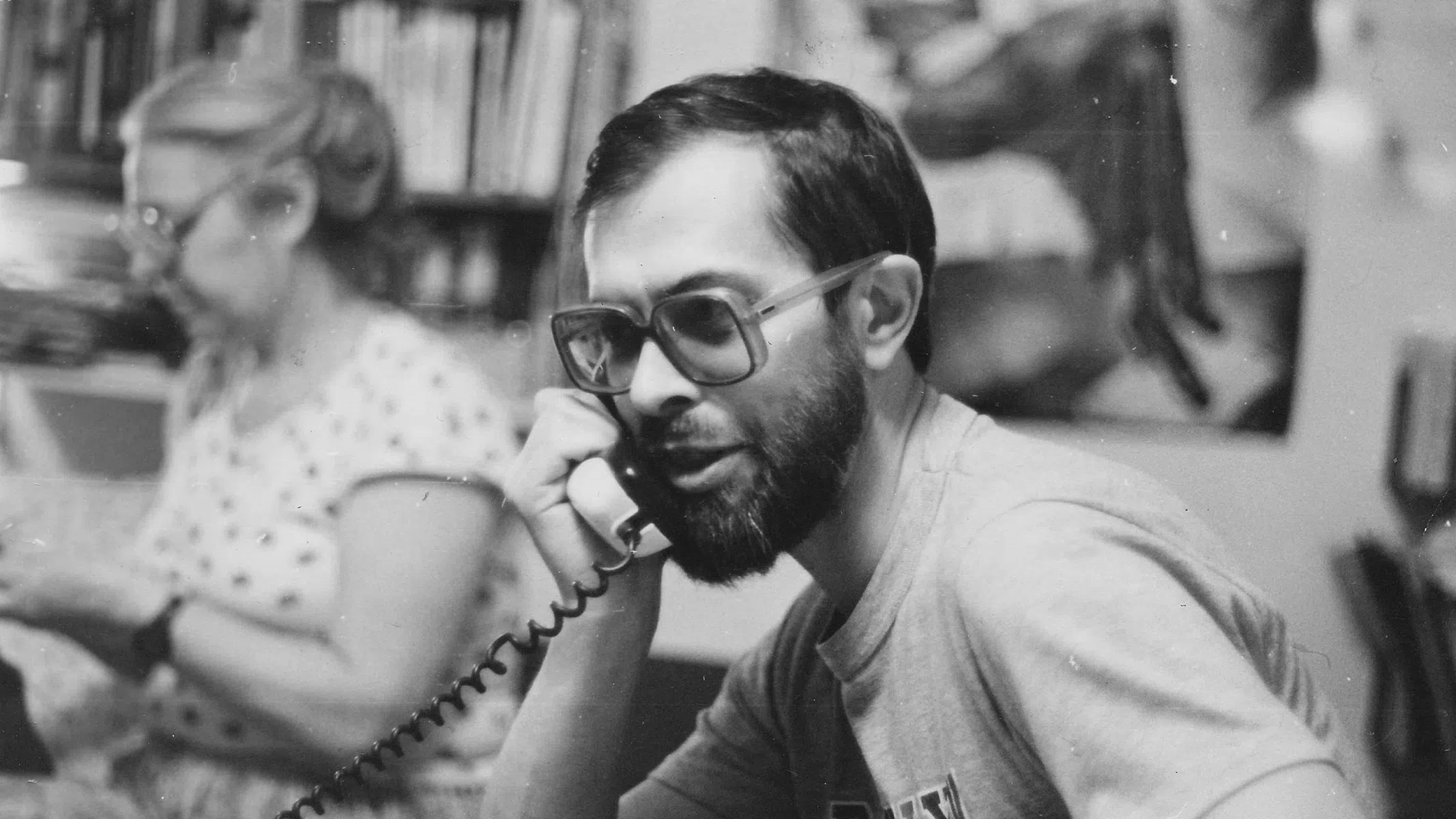
On May 19, it could have turned 75 to the Russian prison reform, a well -known Soviet dissident Valery Abramkin. Technician by education, he was a real intelligent. Over his 66 years he managed to live a few lives. The first “life” is dissidentity, a feeling of impossibility of conformism, unwillingness to integrate into the system, protest against lies and doubles. The second "life" is six years in captivity for anti -Soviet. And finally, the third is the life of a prison reformer who managed to help hundreds of Russian prisoners who created the Center for Assistance to the Reform of Criminal Justice and until the last day fighting for the humanization of the penitentiary system of Russia. Don Quixote? No. Ideal and romantic. More precisely, the "romantic of the prison." That is how Abramkin’s friends and colleagues called the book specially dedicated the other day and a book specially for the day of his birth, which collected memories, as well as his articles, prison diaries, stories, poems and interviews.
Today, “New” publishes an excerpt - memories of Abramkin, journalist Zoe Sveta, ally, friend and one of the authors of the book.
Free person in a non -free country
I met Abramkin in the early 1990s. This time for him, as for many people of his generation, was the most productive, effective and “gold” sometimes. Abramkin was going to carry out the global reform of the Russian penitentiary system. To do this, he needed the experience of other countries where the prison system was not a gulag. He invited me to go with him to Paris by his translator. And for a month we went in prison, talked with experts, with prison visits - the prototype of the Russian Public Supervisory Commission (PMC). Then it never occurred to me that almost twenty years later I would become the same prison visitor, only in Moscow, and not in Paris.
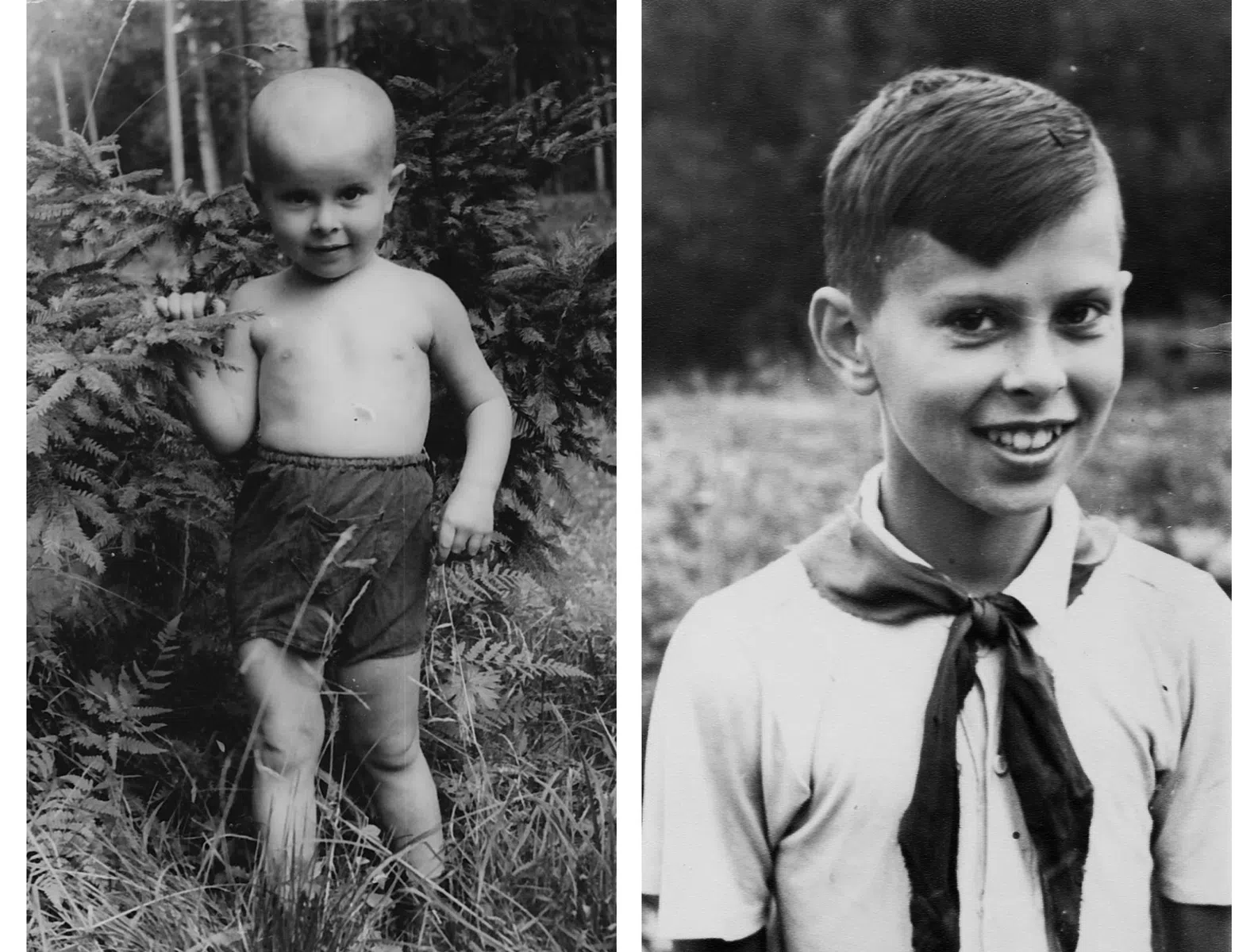
Abramkin hit right away. He was an unusually charming, charismatic, deep man and at the same time witty and ironic in relation to himself. And there was an amazing freedom in him. This sense of freedom, of course, appeared in him for a long time, even before prison.
Abramkin was from the breed of people whom Andrei Amalrik, the author of the book “Will the Soviet Union last until 1984?”, Called “free people in a non -free country”.
Abramkin came to the dissident movement from the KSP (club of amateur song). In the sixties and seventies of the last century, it was one of the most free sites. Abramkina’s wife Katya recalls how the most important adventure in his life began: “Valera has two red diplomas: a chemical and technological technical school and Mendeleevsky Institute. But he received the main education in the Lenin Library, where he began to go, still studying at a technical school. In addition to the reading room, he received an education in a smoking room, where very interesting people gathered and conversations were conducted on a variety of topics. There was a real "thaw."
His admission to the institute coincided with the advent of informal creative communities in technical universities. We had it MHTI-Film (Moscow Chemical Technology Institute) and PCP. Moreover, the Moscow Art Theater even had a room with equipment, and ceshells gathered there, who mainly led the bard songs: the text was projected in the hall on the screen, and Volodya Kucherov sang on the stage with a guitar. Then they began to invite bards and performers from other universities. At some point, Seryozha Chesnokov from MEFU proposed to unite in a city club. The party and the government were instructed to look after the club and instructed the Komsomol committees, district committees and city committees. The texts of the songs began to be “linked”, Galich was not allowed to sing (sometimes it was possible not to indicate the author). When I came to the KSP in the fall of 1968, Valera was the chairman of the institute club and actively participated in the organization of the city. And once a year, general ranges in the forest were held, for which at first 100 people gathered. These were entertainment meetings with breakfast contests, games, songs from bonfires and cabbage on a big stage. Sang Gaudeamus igitur; We Shall Overcome; "Rub the hands, friends" Okudzhava; Vizbor, Kukina, Nikitin. "
The KSP, as an informal student association, was quickly interested in both the Komsomol committee and the KGB.
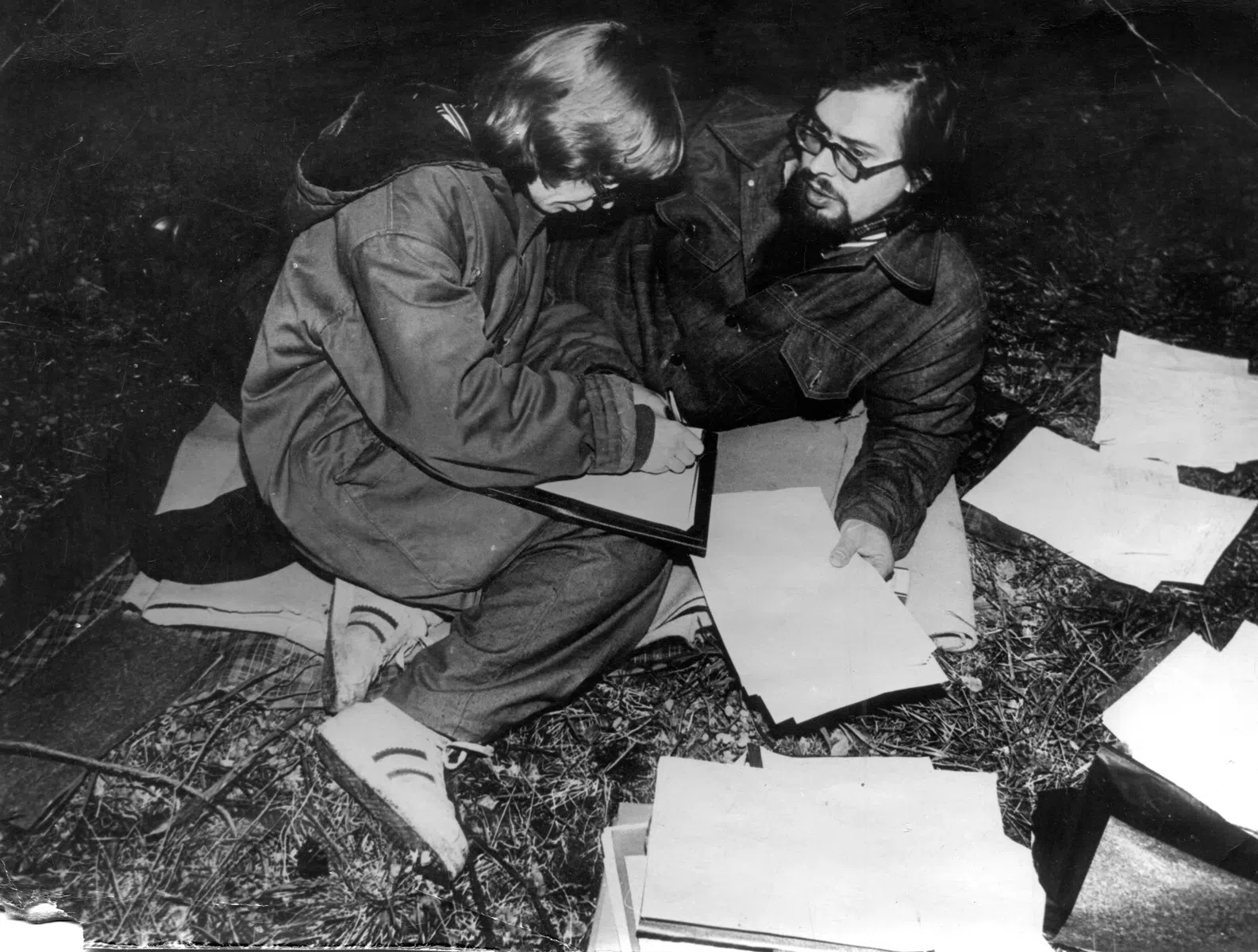
Abramkin was expelled from the Komsomol, in those days it was a signal for expulsion from the institute. But by some miracle, they did not drive him out of the institute, he received his red diploma, after which he went to work in a “closed box” at the Ministry of Medium Engineering. He continued to actively participate in the KSP, although he did not play the guitar himself and did not sing songs. The texts written by him, which were read on the flows of the KSP, walked with a bang. <...>
Taking an active part in the KSP, Abramkin was rapidly moving in another, more dangerous direction for power.
Katya Abramkina recalls:
“The number of people who want to sing not pop songs was rapidly increasing. It was already difficult to choose a clearing in the forest to place everyone, it was necessary to classify the rampant venue and “cut off the tails”. And Valera proposed to be divided into "bushes" by interests. He was supported. So a bush of okarts appeared (“Association of the open window”). Of course, lovers of Harms, Vvedensky, Zabolotsky and others joined us. Such an association did not really fit into the framework of the KSP. It was a club of amateur song, where they sang beautifully, they played better and better on the guitars, sang in electric trains, in the subway ... And the thaw is already over, control over informal organizations intensified. Among the club activists, opinions were divided: the majority believed that it was better to continue to expand the song movement without annoying the control organizations forbidden authors and acute social performances ... and Valera chose to go free swimming. So “Sundays” appeared: also in the forest, a few, without censorship. Poets not printed in official publications, non-conformists (Slava Sysoev, Joseph Kiblitsky), some bards (Petya Starchik, Vitya Luferov, Alik Mirzayan), hippies, gypsies, foreign journalists, which were not printed in official publications.For several such meetings, a considerable number of works have accumulated, which later entered the collection "Sunday". And Valera continued to write texts (“A man with a kerosene lamp” is already a work of art based on the anti -utopia of Campanella, “Girl and Tigrush” ...), continued to collect the texts of Harms (in 1975, we managed to go to Leningrad to my mother’s girlfriend, who worked as the secretary of the writers and was able to find the guardians of the archives of Daniil Ivanovich. The result. Our meetings were a large collection in Samizdat and two anniversary evenings in Moscow). ”
Pretty soon, these informal meetings and collections of Sunday came into the view of the KGB. In the fall of 1976, Abramkin was called for a preventive conversation, under the threat of dismissal of his supervisor was forced to write a statement from the “mailbox” of his own free will. There were only three years to the prison.
In the spring of 1978, the first issue of the Samizdat magazine “Search” was published, into which the texts from closed already due to the persecution of the “Resurrection” collection migrated. <...> Vladimir Voinovich, Yuri Dombrovsky, Grigory Pomerantz and many others were printed in the magazine. While information about the “search” did not appear in the West, the KGB did not touch the editorial office, but as soon as Peter Egides and Yuri Grimm (members of the “searches” editorial) were interviewed by the Radio “German Wave”, as the KGB immediately took up the creators of the magazine. In April 1979, Abramkin was called to the Moscow prosecutor's office and warned that if the next issue of the magazine was released, he would be arrested.
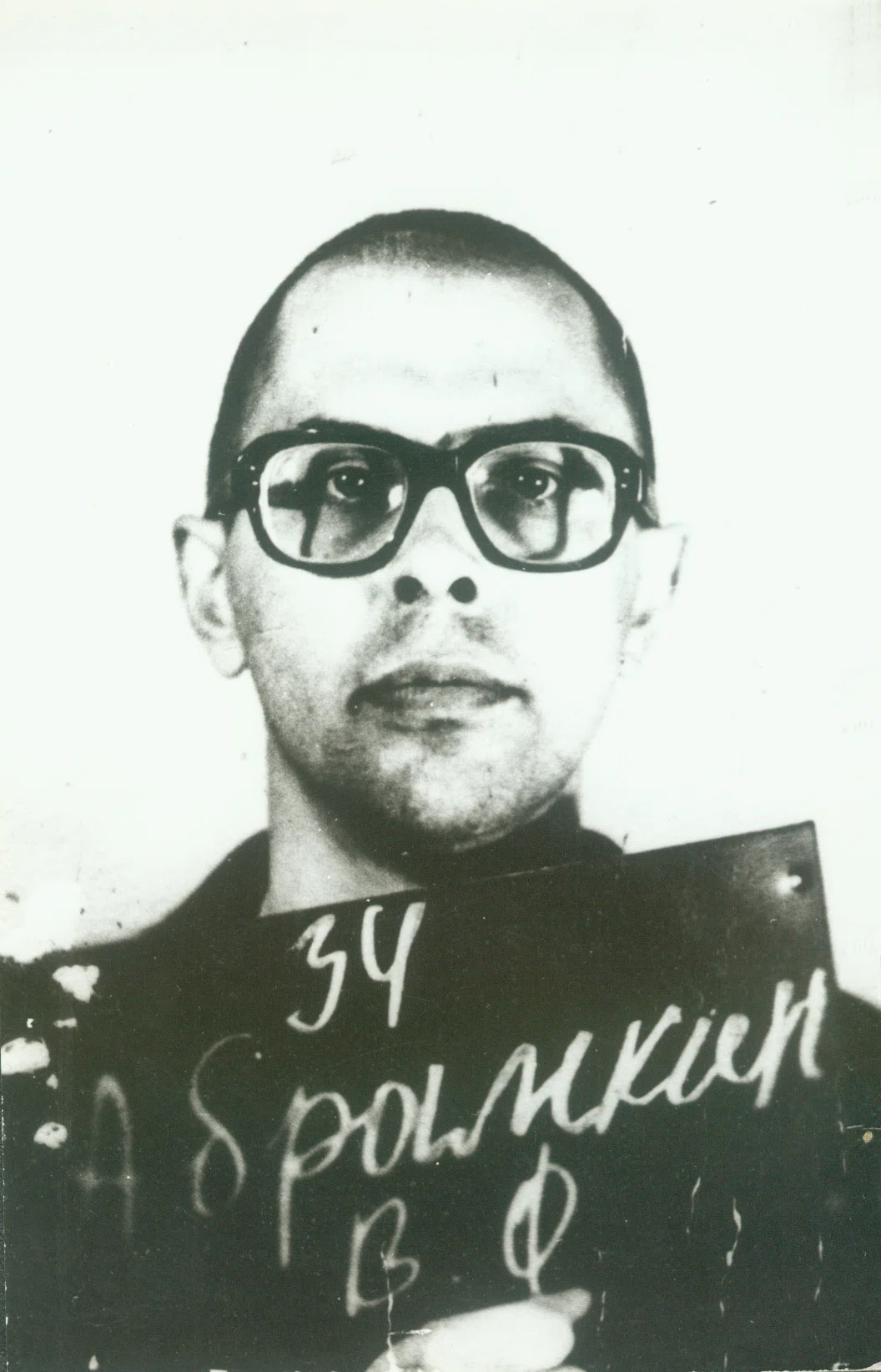
At the editorial board, he announced: “Even if they threatened me with execution - what's the difference. We should not proceed from their threats, but from our duty ... ”He was arrested in nine months, on December 4, 1979. In an interview that he gave twenty years after his arrest, Abramkin recalled how he represented the consequences of the arrest: “It will be difficult, there will be suffering, separation from his wife, children, close friends,” but “this is the fact that the prison is a completely different world” - he could not imagine this then. At the beginning of the term, even in a pre -trial detention center, he declared hunger strikes, he was put in a punishment cell, he rebelled. Already going into the will, he compared his prison experience not with Shalamovsky or Solzhenitsynsky. It feels closest to Dostoevsky’s “dead house”. The feeling of prison for Abramkin is a crazy house, and chaos, and space. He speaks in detail about this in the interviews and texts that you will find in this book.
The first term is three years of colony of general regime under the article 190 (“Distribution of slanderous fabrications that defeat the Soviet social and state system”).
Sit in Altai. Two days before the end of the term against Abramkin, a new business was opened: because he transferred information about the violation of human rights to the will. The second term was serving in the Krasnoyarsk Territory - already in the zone of strict regime. There he became infected with tuberculosis.
Abramkin never complained. <...>
Abramkin was released from the camp in 1985 and lived in the village under the supervision, working at a school for mentally retarded children. Assessing himself after six years of isolation, he said that he left the camp with a completely different person, with the feeling that "they could break anyone and if they did not break, then they did not want to."
A gradually desperate, half -depressive state was replaced by confidence that this situation and the prison system must be changed. And Abramkin began to change.
I remember our conversations after visiting the French prisons, which, of course, were completely not ideal both in terms of everyday conditions, and in boring, and gloomy - some of them were located in old buildings, which were already unspoken to life, but Abramkin noted and noticed how these prisons were distinguished from the Soviet and later - the prison staff did not set their tasks to humiliate the prisoners. The French Vertukhas understood their ministry in these "dead houses" as ensuring isolation for those whom the courts considered criminals. The prison in their understanding was not a place of correction for the prisoners, but only a temporary haven, but they did not “attribute these people from accounts”; Already in prison, it was a question of resocialization after liberation, and this topic was Very important and interesting to Abramkin. He was the first of the Russian human rights activists to talk about the need to adapt prisoners after going out.
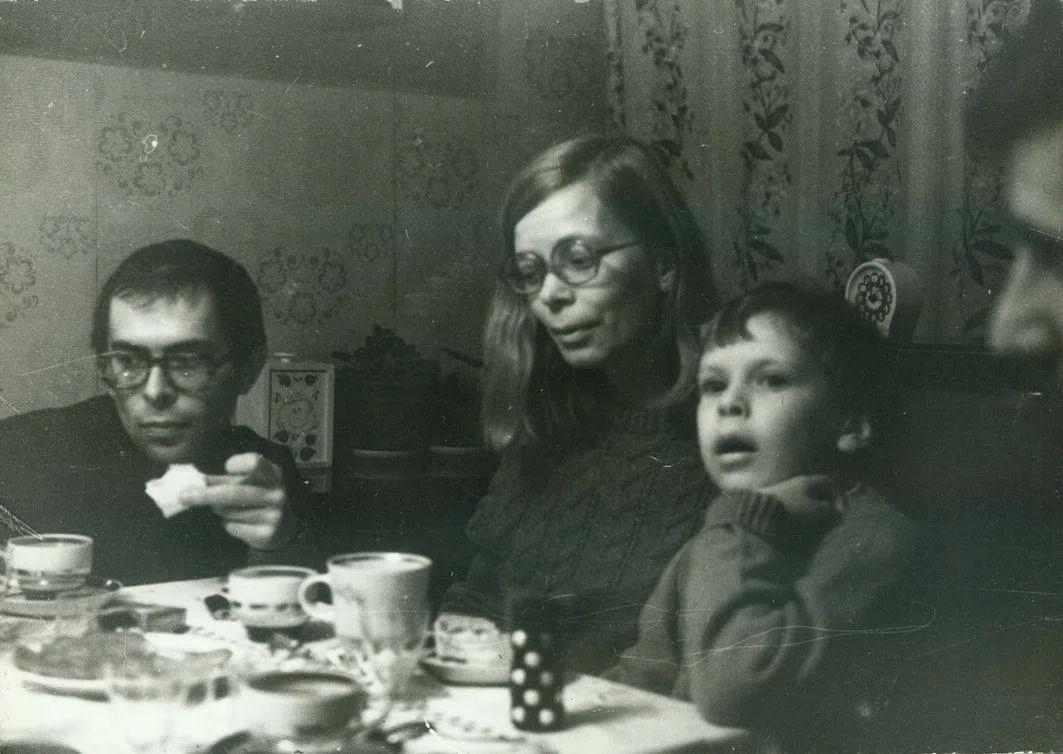
But here we got to the main question: why did I call Abramkin the "romantic prison"? What does it mean? Someone will decide that he romanticized the prison and prison orders. But this is not so. True, Valera talked a lot and wrote about the prison subculture, about prisoner laws, but he knew the price to them, without idealizing them at all, and judged them quite soberly. He was occupied by prison authorities, he met some of them in the zone: “A thief in law is, as a rule, by kind of man-an-ascetic. It seems to him not as difficult as us. I remember such an episode. We are sitting in a schizo (and earlier in a schizo we fed every other day, there you experience constant hunger), and now they give bread. The most authoritative prisoner - “correct thieves” - the first breaks this ration. I always want to take a hump, I know, but he took the smallest piece. ”
Since then, the situation in prison has changed in many ways, and judging by what we hear from today's sidella, such a romantic image of prison authorities described by Abramkin has also changed. I wonder what Valera would say about them today? Would he think in the same way as twenty years ago, that only the Zekkovsky order, in contrast to the order established by the prison administration, allows the prisoner to preserve himself as a person? Or would he criticize his former heroes for getting closer to the jailers than before? God news.
Abramkin was not only a romantic, but also a prison philosopher, he thought a lot about how everything should be arranged there, and not only from a material point of view, but also from the point of view of inner life, from the point of view of traditional culture. His thoughts on this topic will be useful to today's prison’s studies, and all those who are interested in how this closed world is arranged, where, as the state from the democratic turns into authoritarian and totalitarian, more and more people who, it would seem, should never have been there.
But, of course, Abramkin’s main concern was not only a prison subculture. First of all, he was interested in how to reform the prison. He was a great humanist, and in this sense he romanticized the prison, believing that in this a damned place on Earth can establish fair orders.
In the nineties and up to the middle of the two thousandth Public Center for Promoting the Reform of Criminal Justice, created by Abramkin, he worked closely with lawmakers. Abramkin himself participated in the development and promotion of many important laws to humanize the prison system. He managed to ensure that under some articles of the Criminal Code the terms of punishment were reduced. Abramkin believed that after three and a half years of imprisonment, the prisoner’s psyche is changing irreversibly, so the courts should give more than three years only in the case of really dangerous crimes for society.
Another of its constant and beloved topics: the topic of reducing the prison population. In 1991, the number of prisoners in Russia was about a million people.
Today, the prison population has almost doubled. This is not to say that this is directly the merit of Abramkin, but if you read his old texts, it is clear that it was his ideas that legislators and prison practices adopted.
The main idea of Abramkin is his “slogan” “return the prison to the people.” <...> He talked about the openness of the prison for representatives of civil society, believing that the prison should not exist on its own, in a vacuum. Volunteers should come to prison who could track violations of the rights of prisoners and fight them.
This idea was embodied in the Law on Public Control, adopted in 2008. In accordance with this law, public observation commissions were formed, whose members received the right to visit pre -trial detention centers and colonies. The famous weekly radio program “Clouds”, which entered the Rossiya Radio, was also devoted to the prison in the prison in the life of Russian society and was closed in 2016. The idea of radio broadcasts came to Abramkin in the head in the last months of his term in the Krasnoyarsk Territory when he was sitting alone. He understood: we need to come up with a program that would become a "thread connecting the prisoner with the free world."
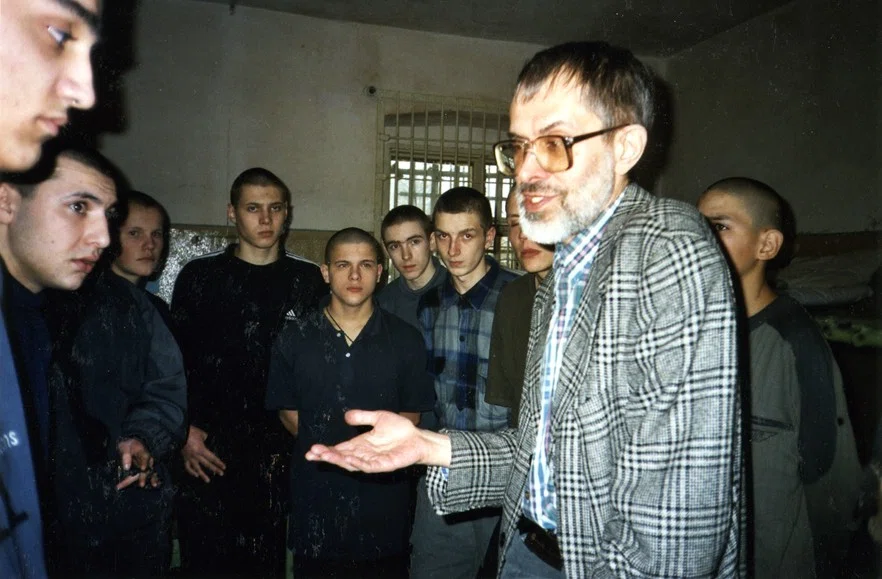
The transfer was unusually popular among prisoners and their relatives, for many she became a real outlet, they knew about her in many colonies. Abramkin came letters. The restoration of the connections between the prison and the will, the participation of civil society in the life of prisoners is the same “return of the prison to the people”, the education of mercy and compassion for prisoners, which was completely lost in the Soviet Union and is absent in present -day Russia.
And in this sense, Abramkin, of course, continued the mission of Dr. Gaaz, whom he loved and revered.
In relations with the authorities, Abramkin adhered to the same views as his idol: "Dr. Gaaz once said:" It is not a shame to kneel down in front of those in power. " It’s not a shame if you ask not for yourself, but for a person inarly, humiliated, suffering. To ask for yourself (to make, “present”, etc.), it’s a shame and standing on the legs or on the pedestal of your own vanity. ”
But the human rights activist Abramkin did not consider himself: “I hope that I belong to a certain“ correct ”(this is in the prison language) to a community in which both Andrei Dmitrievich, Yuri Orlov, and Sergey Adamovich ( Kovalev . - Z.S. ), and Dr. Gaaz, and Serafim Sarovsky (along with the Life“ Bear ”), and Dr. Yanushka Korchak ...”
And Abramkin was a poet.
Here are my beloved Abramki poems.
They are not only about prison.
They are about hope.
Written in the fall of 1976 and are dedicated to the poet Vera Matveeva.
Close all the windows and glass we sequent paper.
We’ll dilute gouache. Draw on the first glass
Spring Sun, oblique horizon behind the ravine,
Fluffy cloud, river and forest in the distance.
Close the second window with a green pattern -
Let the branches of the trees hang to the ground;
Put the grass, draw a blue track
To the gray bench under the crowns of old LIPs.
And in the third window there will be a lake. White fog
Cover the body of trembling water from the cold
And in the shaking fog, we will leave barely distinguishable
The light of the house on stilts and the trace of the stunned star.
Finish work, and after tea cooled
We turn the grid of long -forgotten roads
And we will not even start when we hear behind the back,
As a hassular boot grows through the door of iron.
Then, leaving nothing from our work,
Not at all from vodka, rather drunk from the pogrom,
They will not see black gratings behind the windows,
They will not see the gray wall behind the windows.
The spring sun will be behind our windows
And a house on piles in the fog by the very water.
Behind our windows a cheerful sun will flare up,
A path, a bench and the light of a burnt star.
And, squeezing his white wings to the limit,
We will rush down and explode near the ground.
And it will become clear why we closed all the windows,
Заклеили стекла бумагой, гуашь развели.
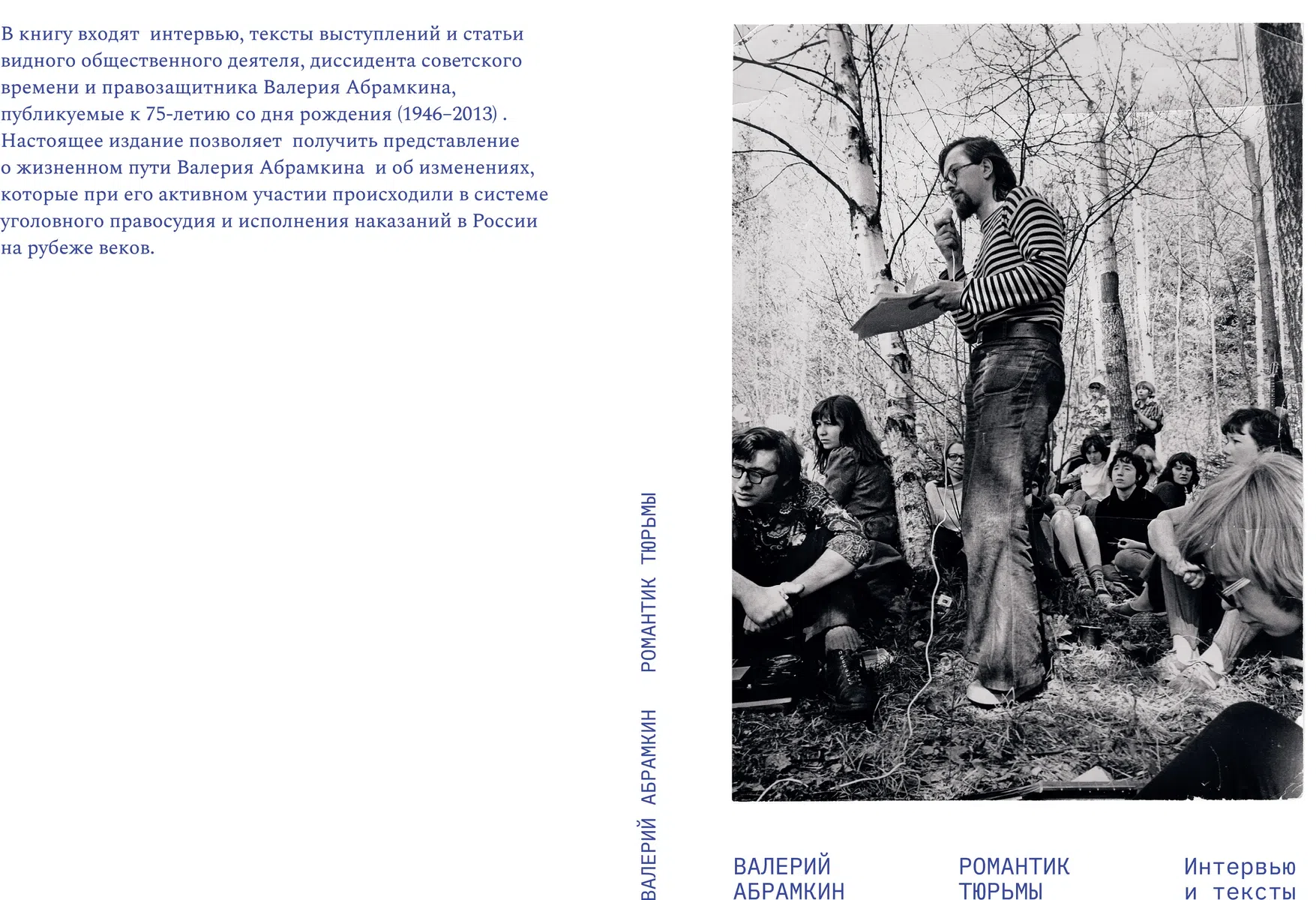
Книгу можно найти в книжном магазине «Фаланстер» и в Центре содействия реформе уголовного правосудия.