
Translated material
Mishustin's silence
Government plan to save the economy and real poverty: which the Prime Minister will not talk about
It is risky to comment on the Prime Minister's report to the State Duma. And who am I to discuss his high statements? I can only re-read his report and add a few words where the prime minister for some reason said nothing.
The most amazing thing in the report is the deaf mention of the “national action plan that ensures the restoration of employment and incomes of the population, the growth of the economy and long -term structural changes in the economy” (hereinafter - the “plan”).
No, of course, the prime minister said that the “plan” “united both the task of adaptation to the current situation and the purpose of the further development of our country. Its main result should be the exit of the Russian economy to growth trajectory. Work on the implementation of the plan is actively. More than half of the events have already been completed. ” And that's it.
It would be logical right from the “plan” and start - so we planned it, did that, but in the end it turned out what happened. Moreover, the “plan” was approved at a meeting of the Government of the Russian Federation, on September 23, 2020 and is available for familiarization. On the website of the Ministry of Economic Development there is a presentation with a detailed description of the process of execution of the “plan” (accepted-produced-paid). But nothing is said about the degree of effectiveness of all these measures - except that the first page of the presentation says that the Russian economy passed 2020 better than other countries. This is true - and quarantine was relatively short -lived, and oil prices and metals rose rapidly,
And the citizens did not go abroad, saving 20 billion dollars of foreign exchange earnings (by ridiculous coincidence, all the anti -crisis measures of the authorities cost about the same amount).
The prime minister in his speech listed for a long time various measures taken by the government, but for some reason he did not mention the indicators of achieving the goals of the “plan”. However, with a certain exception.
An exception to confirm the rule
The first point in the “plan” was spelled out “Sustainable growth of real cash incomes of the population”. And even with indicators. (True, they have to achieve them at the end of 2021, but why not summarize the intermediate results?)
The indicators there were the same:
an increase in real salary at a level of at least 2% in annual calculus;
a decrease in the share of the population with income below the subsistence minimum in 2021 in relation to the previous year;
growth in retail turnover at a level of at least 2.5% in annual calculus;
The increase in the volume of paid services to the population at a level of at least 3% in annual calculus.
So what are we have with income?
“I will say only one figure that we have an increase in real income plus 3%,” the prime minister said, emphasizing that “this is an absolute figure.” “Of course, there are questions related to inflation, the cost of the consumer basket, but we kept the growth - plus 3%.”
Here Rosstat will not agree with the prime minister.
According to official figures , in 2020, the real disposable income of Russians fell by 3.2%. In the first quarter of 2021, the recession of income accelerated to 3.6% in annual terms.
The nominal income of citizens increased by 965 rubles, follows from the data of Rosstat. But this increase was depreciated by the acceleration of inflation (to the maximum since 2016).
On average, in the first quarter, people lived 32,612 rubles per month (about $ 14.5 per day); The workers received an average of 51,229 rubles per month (+2% in real terms), pensioners - 15,779 rubles.
The average per capita cash incomes of the first quarter, the same 32,612 rubles, really were 3%higher than in the first quarter of 2020. If desired, this can be called growth, but not real income, and even annual income. And the premiere should be well known about this.
You can, of course, joke here that the growth of official income of government members was 40%, and the total condition of the participants of the Russian Forbes list increased by 40%.
“We, share concern about the income of citizens and do everything necessary so that these income corresponds to the needs of people,” the prime minister said. Well, we can say that we now know these people.
On the way to poverty
But according to the results of 2020, the real incomes of the Russian citizens rolled away for at least 10 years, in dollar terms of salary at a minimum for 11 years. And this is no longer a reason for humor.
According to the results of the 1st quarter of 2021, the Russians received 14.3 trillion rubles of income, and 14.904 trillion was spent on the purchase of goods and services, it follows from the Rosstat.
Where did the money come from for expenses? Of the savings, which in three months decreased by 604.3 billion rubles. On average, 6.7 billion rubles a day, or 280 million rubles per hour. The Bank of Russia is “very concerned” with the situation with the deposits of the population in banks, the first deputy chairman of the regulator Dmitry Tulin said, speaking at the State Duma.
People no longer save.
Formally, the volume of ruble accounts of individuals in banks is growing - by 1.013 trillion rubles over the past 12 months. But this is about as much as banks paid people percent over the past year.
And more money is taken on credit - according to the Central Bank of the Russian Federation, for the 1st quarter, people borrowed 1.217 trillion rubles from banks. On average, debts grew by 13.5 billion rubles a day, or 563 million rubles per hour. April became a “record month”: in the hands of the population there were 1.3 trillion rubles of fresh loans-178% more than in the same month of 2020. On average, citizens gained a debt to banks at a speed of 43 billion rubles a day, or 1.8 billion rubles per hour.
The first deputy chairman of the Central Bank Ksenia Yudaeva, speaking to parliamentarians, "expressed anxiety by the rapid growth of the debt load of individuals." According to the Central Bank of the Russian Federation, the indicator of the castle of the population reached a historical maximum. At the beginning of 2021, citizens should be banks 11.7% of their income.
It is hard to believe that the prime minister was not aware of the growth of loans with which citizens plug holes in the family budget, but he did not say that.
Products and people
Maybe because these loans were supposed to help achieve other goals of the “plan” - the growth of trade and the volume of paid services?
But if so, then with these purposes it turned out not very well.
According to preliminary data from Rosstat, the GDP of the Russian Federation in the first quarter decreased by 1%. The volume of paid services to the population decreased by 4.3%, retail turnover - by 1.6%. And this is against the backdrop of prices.
In fact, this growth is very moderate. Inflation in Russia, as the Central Bank believes, in 2021 really is about 5.8% (year by year).
In 2020 it was 4.9%,
in 2019 - 3%,
in 2018 - 4.2%,
In 2017 - 3.8%.
In 2014–2016 Inflation on average was 10% per annum.
And before that, more or less kept at the level of 6.5%.
So in 2011–2021 Prices grew by about 6.1% per year. Unpleasant, but not catastrophic, the economist will say.
Yes, but people perceive today's rise in prices differently. It may be “on average” prices and rise by 5-6%. But, according to the same Rosstat, in April, food inflation in Russia amounted to 7.12%. It was she who also “slowed down” after 8.25% in March (record -free in six years). And in combination with a decrease in income and with the understanding that “it will not be better,” rewritten price tags irritate people much more.
True, the prime minister explained the reasons for the increase in prices for “greed” of individual manufacturers and sellers. After that, network retailers began to send letters to suppliers with the requirements not to raise prices, reinforcing them with threats of complaints to the supervisory authorities, etc. In response, suppliers - naturally - threatened with a reduction in the assortment.
This is a classic, at least insert into a textbook of economic theory.
A decrease in people's income turns into an increase in demand for cheap goods. Manufacturers, seeing an increase in demand, increase prices. Then the “Paradox of Giffen” works - people begin to abandon any products, except cheap ones, the demand for everything else is reduced, and the meaning in its production is lost. It is easier to rewrite price tags.
According to official figures
Bread has risen in price by 8.1% in annual terms,
cereals - by 12.4%,
chicken - by 15.1%,
fish - by 11.4%,
Sunflower oil - by 27.3%,
Eggs - by 31%,
Sugar - by 40.2%.
Why not expand the production of “cheap products”?
But why? It is easier to sell them abroad - food in the world is getting more expensive, the exchange price of wheat over the past 12 months has increased by 50%. Russia is a large grain exporter, against the backdrop of prices, export is growing here and “presses” the domestic market on both sides - and prices are rising, and the supply is reduced. And the poorer the people, the more they buy cheap products - and the stronger the increase in prices for them affects inflation.
Buyers still fall, more than now - they will not buy, more efficiently to bended with production facilities - we throw out of the assortment matrix everything that is between “cheap” and “expensive” products, and we only produce what we can sell.
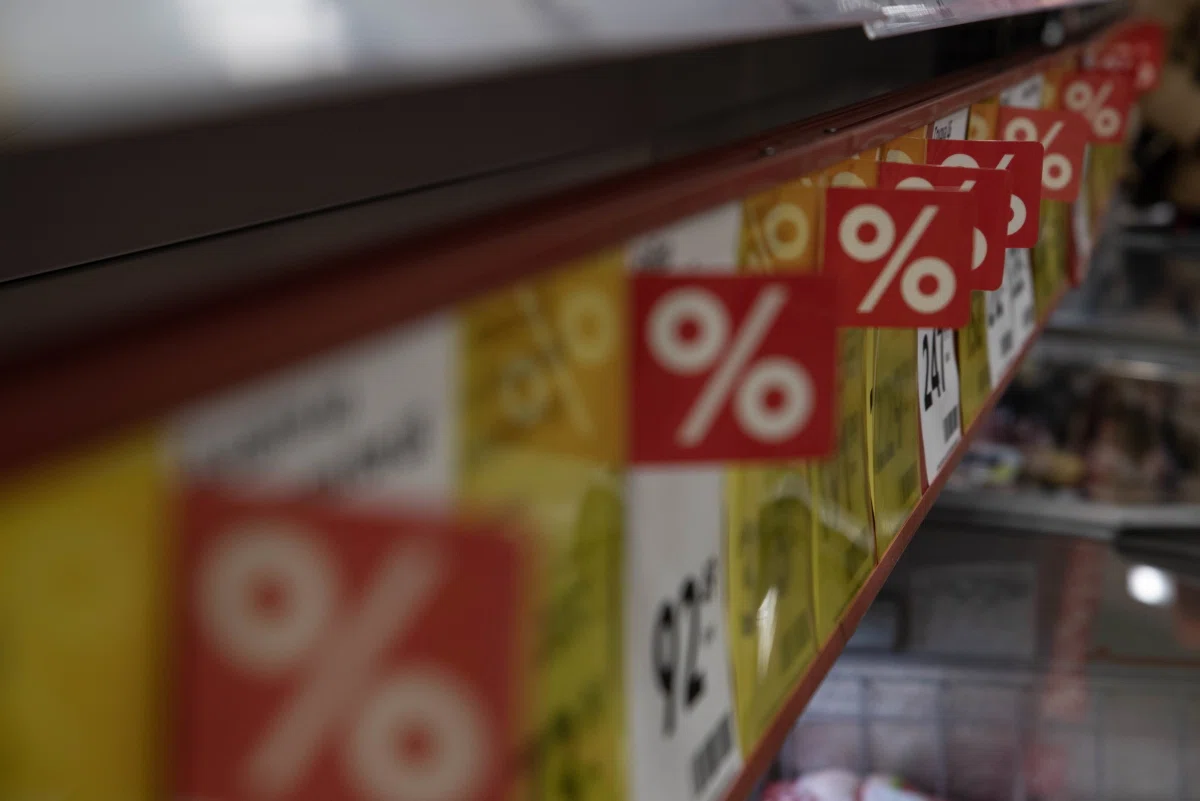
In a certain future, in this model we also have two types of stores - gastronomic boutiques and hyperdiscounters in which there are no “brands”, but there are “sugar”, “groats”, “oil and fat products”.
The news of the merger of the two largest retailers of the Magnit and Dixie, who bet on the “cheapness”, is, in fact, from this series.
(By the way, Soviet trade looked like by the mid-1980s-there were pyramids of canned sea cabbage in the windows, bones are in the meat department. At “state” prices. And at least the “collective farm markets” were stumbled on the shelves of “collective farm markets”-but expensive.)
The price of "breakthrough"
This, if anyone did not understand, the “industrial breakthrough”, which the prime minister spoke about, looks like that.
We reduce the income of people so that the industrial oligarchy has more money for reinvestment and overweight.
So the accompanying effects came. Purgery and growing price tags are a natural consequence of an “industrialized policy” and import restrictions. Yes, "domestic products." Only expensive. So that people have no money left to buy imported goods.
The prime minister is not cunning when he speaks of an “industrial breakthrough”. He just does not agree at how much this breakthrough was bought. A decrease in your income, which we, in fact, wrote about a year ago.
The Russian economy is “three -story”.
The upper floor - export enterprises (oil, ore, forest, metal rolling) exist "separately" from the rest of the economy. And everything is fine there. This also includes banks that feel excellent. Agricultural holdings focused on export, which are now bathing in money, also come here.
The middle floor is an oligarchic industry focused on the state order (including the military -industrial complex, housing and communal services, infrastructure), to maintain export industries (railways, energy, etc.). The authorities take care of them, and small profitability is compensated by low salaries of people.
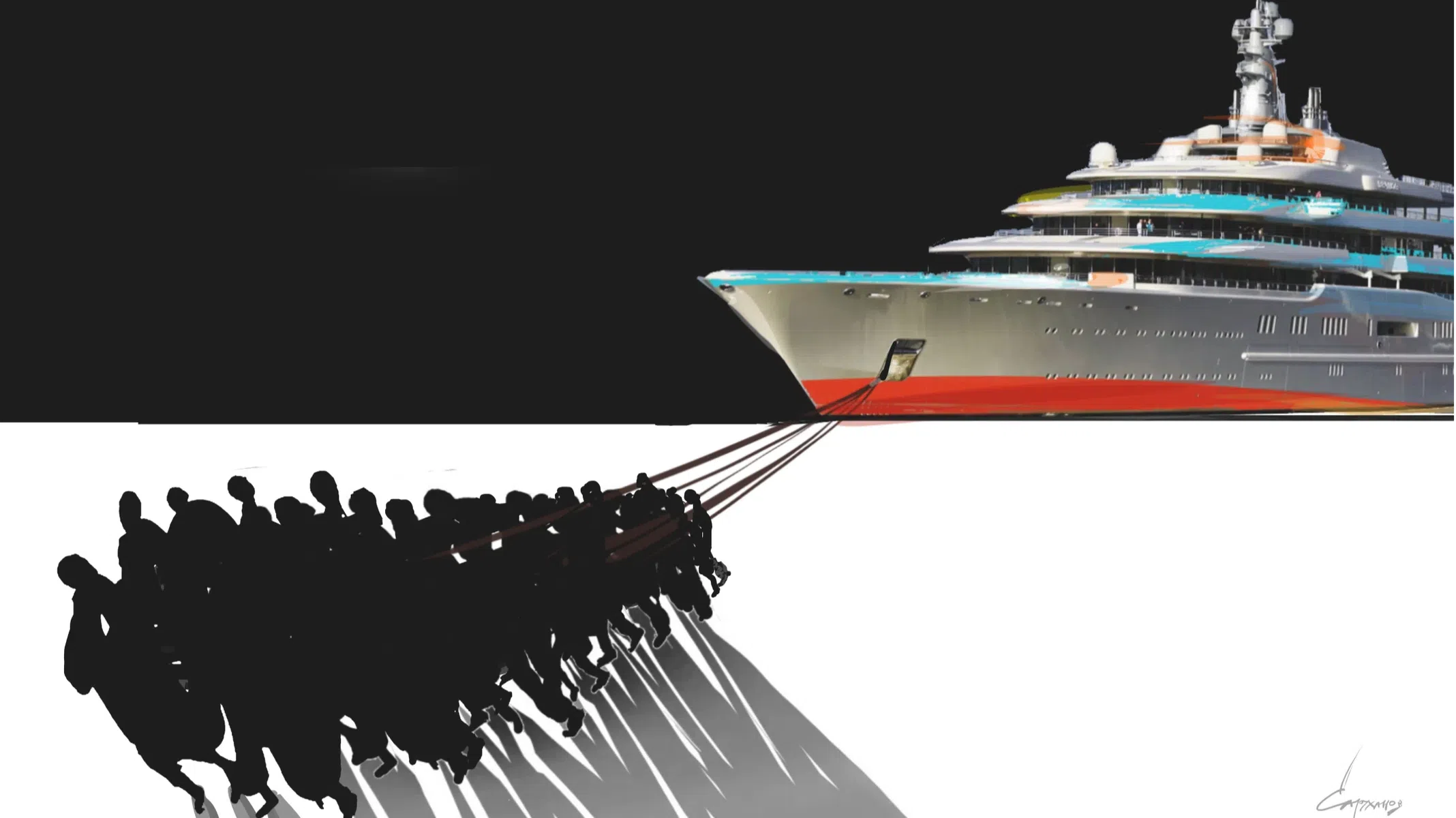
The lower floor is households and the consumer market. There is ordinary stagflation, as in a textbook. Prices are rising, income - no. Such “capitalism” from pictures in the Soviet journal Crocodile. This is a consequence of a government policy, thoughtful and consistent - to make people work for a minimum salary, buying "domestic". And due to this, to ensure an increase in the revenues of the apex - not just the same state of Russian billionaires exceeded a third of the country's economy - this is the real result of this (and not declarative) government plan. Only the prime minister did not say about this.
The frankness of the prime minister
But the prime minister made another remark, very characteristic and honest. About the fight against poverty.
This is what the Prime Minister said:
QUOTE
Mikhail Mishustin:
“Another difficult factor is a person’s desire to work. In principle, we talk about everything except one. Surely everyone knows: when there was not enough funds - <...> where they did not work. I myself personally worked as a loader ... And when we see that, for example, even in Moscow on the vacancies website more than hundred thousand, and people do not go to work ... This is also a question. <...> This is also a question of human responsibility for the opportunities that the state provides to him, for jobs that should be occupied. ”
In vain, some commentators are ironic over the words of the prime minister, they say, his statement can be understood as “the cause of poverty is the desire to work”. And then we work little? Russians work hard and a lot.
And I will answer - the prime minister said everything correctly! The cause of poverty is precisely the desire to work! Only we need to clarify here -
The reason for the poverty is the readiness of people to agree to the salary that employers offer.
Work for 25-30 thousand indicated on the official “Wizards sites” in cities outside the key agglomerations.
If people agree to such a fee for their work, then what should I be ashamed of, the boss thinks? Why pay more? Low salaries are an important mechanism for managing the profitability of industrial companies and the same “import substitution” that the government is proud of. So the prime minister correctly explained everything. We agree to work for four hundred dollars - therefore the poor.