
Translated material
Progress and apocalypse. How we fell in love with Andrei Sakharov and fell in love with a bomb
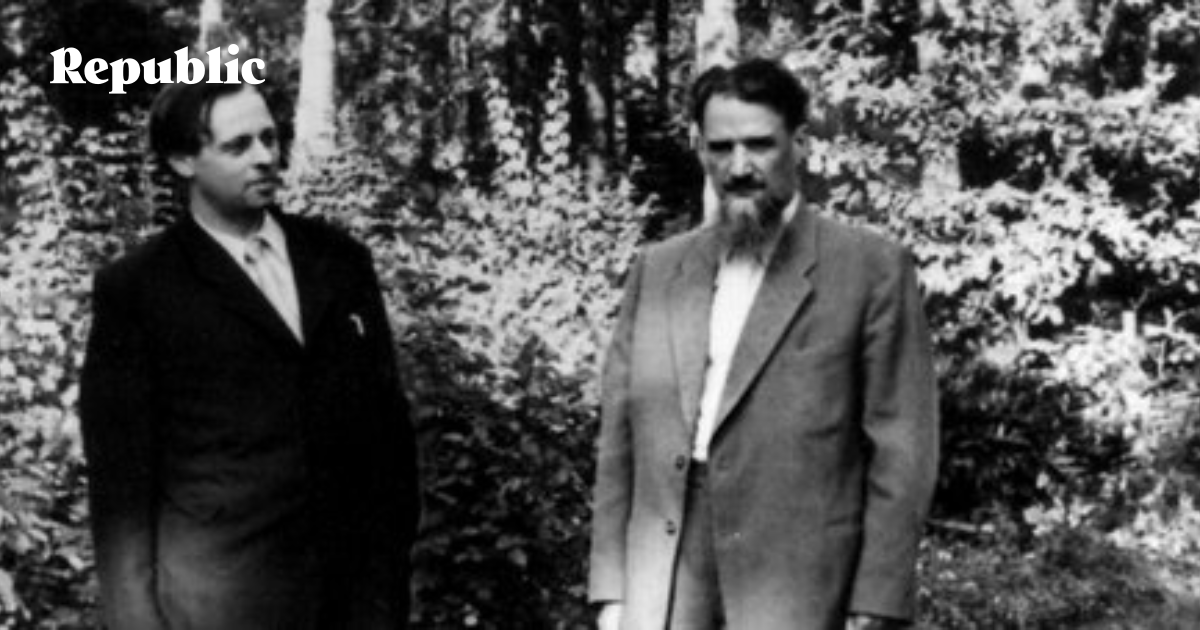
On the eve of the centenary of Andrei Sakharov (May 21), the author honestly asked himself: how was the image of an academician then perceived then, in 1989, at the first congress of people's deputies, the eyes of an ordinary Soviet teenager? Honestly, the first feeling is foreignness. The specific manner of speech (burdens the plus of hysteria, in places even the squeal of intonation) made Sakharov an ideal target for irrational hatred - from those who were captured by stereotypes about the “foreign essence of the intellectual”. But at the same time, some strange confidence was felt in Sakharov’s speech: as if he was talking on behalf of some kind of community-probably the Soviet scientific intelligentsia, which grew up in Stalinist sharashki and secret laboratories. This paradox was formulated by the philosopher Nelly Motroshilov: the country in the 1940s needed a bomb, only smart bombs could come up with a bomb, smart people needed freedom-therefore they were allowed, unlike the rest, to write out magazines from the United States and listen to jazz. (It is amazing - to come up with a bomb, you need to resolve jazz.) And now this “hidden”, the secret part of the Soviet project spoke - and demanded freedoms for everyone (and this is the best argument in favor of the intelligentsia). "Anti -people! .." - yes; But after all, a joke went in those years: “They say that the prices of meat will soon increase ... Croats ... vodka ... Well, no, Academician Sakharov will not allow this!”
Post -Soviet scholasticism
We owe to this annoying many to a person (as well as, of course, Mikhail Gorbachev) (which today looks like the implementation of Sakharov theses), as well as further global changes in Russia and the world. “Glasnity” is a word from the vocabulary of Sakharov. It is even surprised to cause how many events, films and exhibitions for the centenary of Sakharov in Russia are planned. There is one analogy. Like the medieval scholasts who, through religious dogmas, “dragged” Plato and Aristotle, as well as Sakharov today, enthusiasts raise the shield as the only “reasonable foundation” of the democratic Russia of the 1980s and 1990s. Sakharov is our last connection with humanism, humanity and generally universality in the new “dark centuries”, when there are no such authorities.
The main and most famous text of Sakharov still remains “thinking about progress, peaceful coexistence and intellectual freedom” . The brochure was written in 1967-1968, in the USSR it was published only in a closed (distributed among party officials) with a “political diary”, and then parted in Samizdat. Sakharov acts here as a futurist-he gives forecasts for the next 30–40 years (until the 2000s; in a similar genre the article “Peace in half a century”, 1974). It is interesting today to see what came true from his predictions and what not. In Soviet futurism (animated or literary), by default it was assumed that in a hundred years communism would be everywhere, including on other planets. But Sakharov is not Kir Bulychev, and his forecasts are completely different.
Subscribe to read the whole
Make a subscription Redefine.media to read Republic
Subscribe [you can pay for a Russian or foreign card. The subscription is extended automatically. You can unsubscribe at any time.]
Where are the money subscribers going