
Translated material
The man of the day: Grigory Chuhrai
Personal business
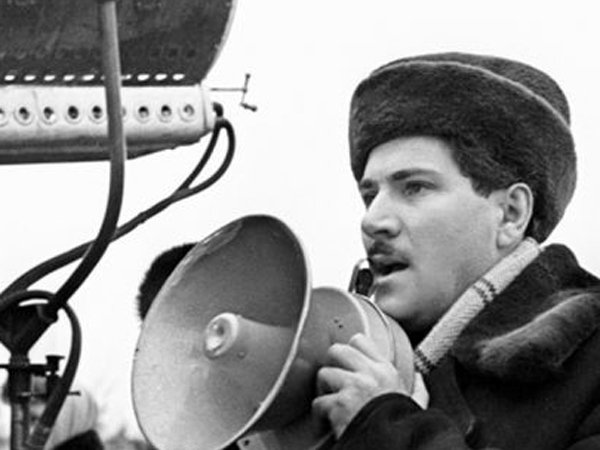
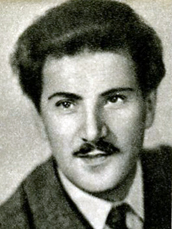
Grigory Naumovich Chuhrai (1921-2001) was born in Ukrainian Melitopol, in the family of Red Army soldiers Naum Zinovievich Rubanov and Claudia Petrovna Chuhrai. When he was three years old, his parents divorced, Grisha remained to live with his mother.
“My first children's memories are related to collectivization. I remember the Ukrainian village where my mother and I came to "eliminate the fist as a class." I saw how some people were taken out of the hut, put them on the carts and took away where it was taken away. Someone sobbed, someone cursed, someone in an undertone cursed Soviet power. I was sorry for those who cried. But my mother said that it was necessary, that these people are fists, world -eaters. I did not understand what the world -eaters were, but I believed to my mother that they were bad, ”said Chukhrai.
Escaping from hunger in Ukraine, he and her mother lived in Pyatigorsk, then in Baku, where Claudia Petrovna got a job in the police. After the start of repression in the Azerbaijani law enforcement agencies, they returned to Ukraine. Chukhrai's mother married the chairman of the collective farm Pavel Litvinenko. In 1935, both spouses were sent to Moscow for two -year courses at the Timiryazev Academy. At the end of the courses in 1938, they returned to Ukraine, and Gregory remained in the capital to graduate from school. Then Chuhrai, he said, “began to seriously think about the cinema”, impressed by the paintings “We are from Kronstadt”, “Shchors” and “Funny Guys”.
In 1939 he submitted documents to the VGIK and was admitted to exams, but he fell under the call - those who were 18 years old were ordered to go to a permanent place of residence and wait for the agenda. Chukhrai was called up in January 1940. He began the service in Mariupol by a cadet of a regimental school.
During the war he fought as part of the airborne units “in Ukraine, in Taman, defended Stalingrad, left the encirclement, jumped into the rear of the enemy, was wounded four times.” In December 1945 he was demobilized by wound.
“In the war, I did not become a hero, which were few,” said the director. - I was an ordinary soldier, and then an officer, who were millions. <...> In the war I was lucky: I had faithful friends who would not betray and would not throw in trouble. I could die a thousand times, but my injuries did not make me a cripple (in any case, outwardly). ”
He entered the VGIK, in 1953 he graduated from the director's faculty (workshop of Mikhail Romm and Sergey Yutkevich).
From the same year he worked as an assistant, and then the second director at the Kyiv film studio.
In 1955, he switched to Mosfilm, where he shot his first independent picture “Forty-First” with Isolde of Vytutsk and Oleg Strizhenov in the main roles. The film received a special award at the Cannes festival in 1957.
The next tape “Ballad of the Soldier” (1959) was the triumphal for the director. The film received 101 International Prize, which was a record for domestic cinema. Among the awards were two awards of the 1960 Cannes Film Festival and the Oscar nomination.
Chukhrai’s film “Clear Sky” (1961) about the attitude to prisoners in the Stalinist USSR received the main award at the Moscow Film Festival.
Grigory Chuhrai shot three more feature films-“Once upon a time, there were an old man with an old woman” (1965), “Zaadina” (1977) and “Life is beautiful” (1980). The latter was a joint production with Italian filmmakers.
From 1964 to 1976 he led the experimental creative association of Mosfilm. In 1966-1971 he taught at VGIK, headed the director's workshop.
In 1984 at the film studio. Gorky, together with Yuri Shvryrev, put the documentary “I will teach you to dream” dedicated to the director Mark Donskoy. After that, Chuhrai moved away from the directing.
Since 1965 he was the secretary of the Union of Cinematographers of the USSR.
Grigory Chuhrai died on October 28, 2001 at the age of 80.
 Grigory Naumovich Chukhrai kino- teatr.ru
What is famous
The classic of domestic cinema, whose world fame was brought by the paintings “Forty -First” and “Ballad of a Soldier”. Chuhrai was one of the first in Soviet cinema to spoke about the monstrous attitude towards prisoners in the USSR (Clean Heaven, 1961) and desertion during the war (“Tyanina”, 1977).
What you need to know about
The director taught a lot, also engaged in public and administrative work. In 1964-1976, he was the head of the Mosfilm experimental creative association. According to Chukhrai, it was "the first enterprise built on economic incentives for work."
“We shot films on our money earned by labor and talent and sharply limited officials to interfere with creativity. The studio gave artists the freedom of creativity, and cinema - such films as “The White Sun of the Deserts”, “Tabor goes into the sky”, “Slave of love”, “Ivan Vasilievich changing the profession”, “Twelve chairs”, “Do not grieve” and others, which included in the Golden Fund of Soviet Cinema, ”said Chukrai.
Direct speech
About the profession (Grigory Chuhrai, the book “ My War ”): “Having become a director, I believed that the film was an act, and tried not to do an act for which I would be ashamed. My films were loved by the audience. And officials from art did not love me. It is not true that they were all fools and ignoramuses. Many of them were educated and knowledgeable people, but their position in the totalitarian state demanded that they take into account the level of culture of the bosses. Therefore, they were rebuilt - they tried to guess that they might not like the authorities, and just in case they criticized everything that they could, officials, damage. There were also ignorant ignorants, these rude and atrocious, rudely intervened in the creative process.
For my first independent film "Forty -First" I was put on trial. For the "ballad of the soldier" they excluded from the party, they tried to put him in jail for the "clear sky", the studio leadership almost dispersed the "quagmire", but they wanted to deprive me of the right to profession. I did not complain to anyone, I did not ask anyone for help. I fought. And it turned out that many people came to my aid. My films received dozens of prestigious prizes at international festivals, and for the "Ballad of the Soldier" I received the Lenin Prize. But today I am not pleasing to me. I am pleased that the shot 30-40 years ago they still do not leave the screens. Hundreds of other films have long died, and mine still look and excite the viewer. ”
On the obstacles of Soviet officials ( New Gazeta , 2000):
- It is amazing how you were still allowed to make a “ballad about a soldier”, with such the main character - an ordinary soldier ...
-It was not so easy to achieve this. Fedorov, then head of the headquarters for the production of paintings, called me and said, they say, how so? You yourself were in Stalingrad? -And suddenly there is some kind of trifle: a boy, a girl, not a single battle scene ... But I said that I really want to make this film. I lost so many guys in the war, and Alyosha is a collective image, this is sacred to me. And he promised me not to hinder me. The estimate, however, was reduced five times, but still gave. How I worked in this picture with actors, Jeanne and Volodya, I never worked with anyone else. The least I taught them how to play, - just told what the guys were. I thought that if they understand this, it would be easy to work with them. And they understood. But since the picture was not made according to the canons of departmental aesthetics, many simply did not accept it.
- What are you?! After all, it was a total, deafening, universal success!
- Thanks to a happy coincidence: Khrushchev accidentally saw and said: "Send to Cannes." And so everyone shook terribly, they solved crosswords - will the authorities like it or will not like it? How to react? Nothing is clear.
- Well done Khrushchev. The picture was literally showered with prizes.
- I did not even know about some. Only recently Pavlik [Chukhrai, the son of the director] told me that they wanted to nominate the ballad and the Oscar. But then the Cold War was in full swing. Somehow I come to Baskakov, he was then the deputy minister of cinematography, and he sits, collapsing, smoking and shackles shaking into a luxurious silver ashtray in the form of Sombrero. I took a closer look - on the ashtray it was engraved "for the" ballad of a soldier "." I took and shook the ashtray. And he gave to Vale Yezhov, with whom we wrote "Ballad". "
About why he almost did not shoot at Brezhnev (“Soviet screen”, 1990; quote for “Kino-Theater.ru”): “There was a Khrushchev thaw, then Brezhnev frosts came. If during the thaw I was warmed by the hope of the revival of the country, and in this situation it was freely "sang", then Nadezhda died out, and I no longer knew what to sing about. <...> The script "People", which we wrote together with Efim Sever, was simply forbidden for me to shoot, they enrolled it in the category of pacifist (at that time the films did not complain about the war). They did not let me shoot Stalingrad. The film "Memory" did not like the head of the Main Political Directorate General Epishev, was banned for display in the army, and very soon he was removed from the screen. <...> I am talking about this in order to show that it became impossible to work honestly in the Brezhnev period. I did not want to lie or say half a truth. "
6 facts about Grigory Chukhrase
- He was awarded the Orders of the Red Star, Patriotic War of the I and II degree for military merits, the Czechoslovak Order "Partisan Star", as well as the medals "For the Defense of Stalingrad", "For the General of Vienna", "For the Victory of Germany".
- He was fond of technology, back in his school years " made primitive radio receivers. Already becoming a director, he could fix a watch or TV.
- Chukhrai’s favorite dish, according to his widow, was scrambled eggs. “In food and in everyday life, as a whole, the husband was unpretentious. The main thing for Grisha was his profession, to which he was passionate. He never sought to get something to himself, to improve the conditions. For example, we did not have a cottage, ”said Irina Chuhrai.
- The director released two books of the memoirs “My War” and “My Cinema”.
- In 1944, he married a teacher of Russian Irina Penkova (Chukhrai). She said : “In 1944, the registry office was visited only on sad reasons or in connection with the birth of a child. And there were almost no newlyweds. And then Grisha and I came. He was a paratrooper. After a very dangerous military operation, he flew to Essentuki, where I lived, especially to marry me. We went to the registry office on May 8. They crossed the threshold, and there the girls wash the floors. They asked us to walk a little while they finish the cleaning. But we have not returned that day. We came to the next - May 9 - and heard: "Oh, and we decided that you changed your mind!" They painted us. And we ran to take a picture as a keepsake. Then, in the basement, Grisha bought a bottle of wine, and we noted our event in a circle of loved ones - with my mother and aunt. And on the third day, the husband left to fight. Grisha and I are peers. April 14 [2016] I turned 95 years old. ”
- In 1946, the couple had a son Pavel Chukhrai, a famous Russian film director. In 1961 - daughter Elena, who graduated from the Faculty of Faculty of VGIK.
Materials about Grigory Chukhrase:
Biographical certificate RIA Novosti
Grigory Chuhrai "My War"