
Translated material
What is an environmental story?
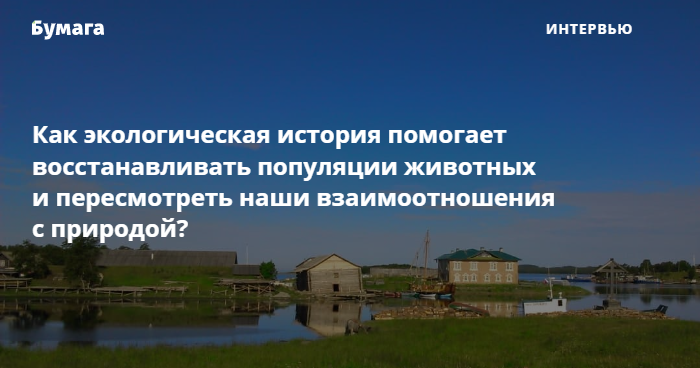
Why is an environmental history needed, how do they study the dynamics of animal populations with its help and how do these studies affect the future of nature?
On the eve of the Science Bar Hopping festival, which will be held on May 30, Paper spoke with the head of the Laboratory of Environmental and Technological History of the Center for Historical Studies of the Higher School of Economics in St. Petersburg, Julia Laus. She talked about expeditions for Solovki and the new book “ Place and Nature: Essay on the Ecological History of Russia ”.
The publication is based on a letter from our newsletter " What will happen to us ." We make it with the Rusnano group. Subscribe to the letters of scientists here .
Julia Lyus
Head of the Laboratory of Environmental and Technological History of the Center for Historical Research of the NRU HSE in St. Petersburg
How environmental history has become an independent science and when it began to be studied in Russia
- Environmental history is the history of the relationship of people and nature or people and the environment. It is important not to confuse the concept with the history of ecology that studies the ecology as a science.
For the first time, environmental history arose in the 1970s in the United States in the wake of Envainmentalism-an environmental movement aimed at strengthening environmental measures. In 1971, on the initiative of the UN, the Earth Day appeared, the organization of Greenpeace, and in 1972, the Apollo-17 crew took the famous Blue Marble picture (Apollo 17 crew took a photo of the earth called Blue Marble in December 1972-approx. Papers ). This image of a small blue planet has even closer to humanity closer to the understanding that the Earth is vulnerable and nature must be protected.
Historians did not stand aside and began to explore the documents of the past in order to understand how and why humanity turned out to be at the stage of active destruction of the environment in which it exists. In Russia, the first center of environmental history was opened in 2002 at the European University in St. Petersburg. I came to this area of research in the mid-1990s. The laboratory that I am leading now is engaged in the study of environmental and technological history. For us, it is fundamentally that these two aspects of history be examined hand in hand. Because everything that people do in nature and with nature happens with the help of technology. Even a stick in the hands of an ancient person is a technology. We understand how people interacted with nature for centuries, how we treated natural resources and what technologies used for this.
How scientists explore ecological history on the example of the Solovetsky Islands
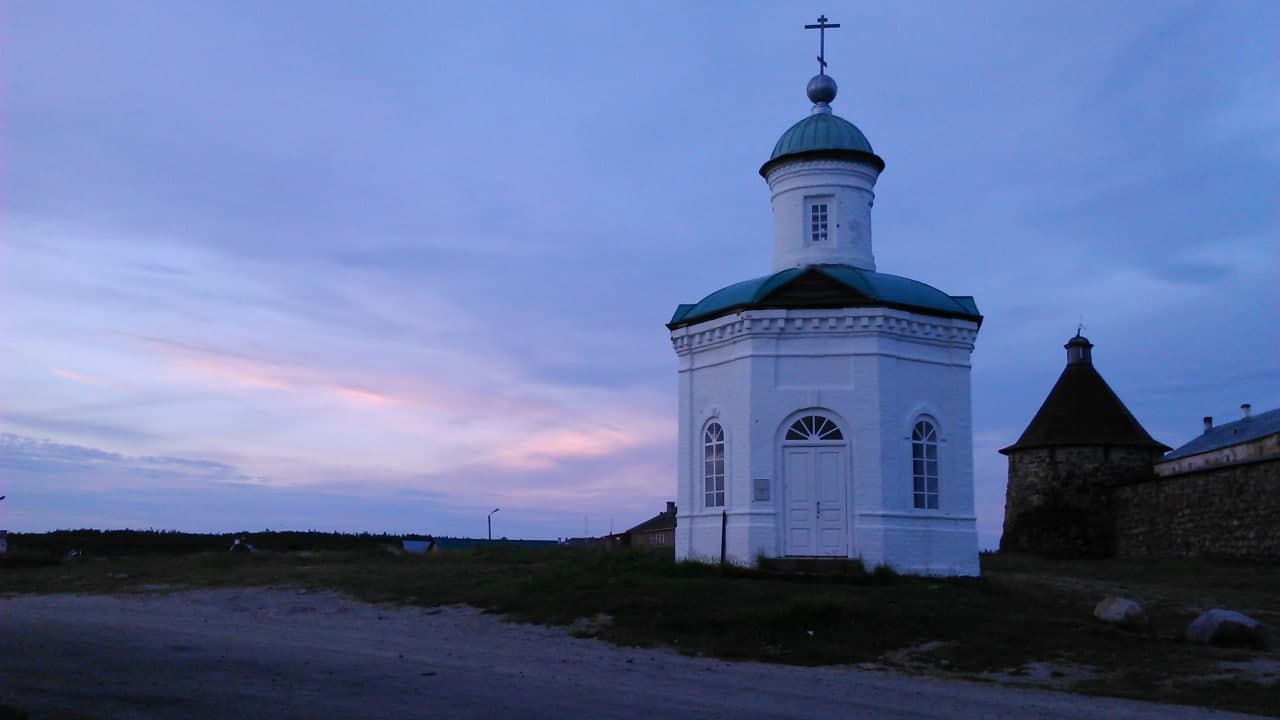
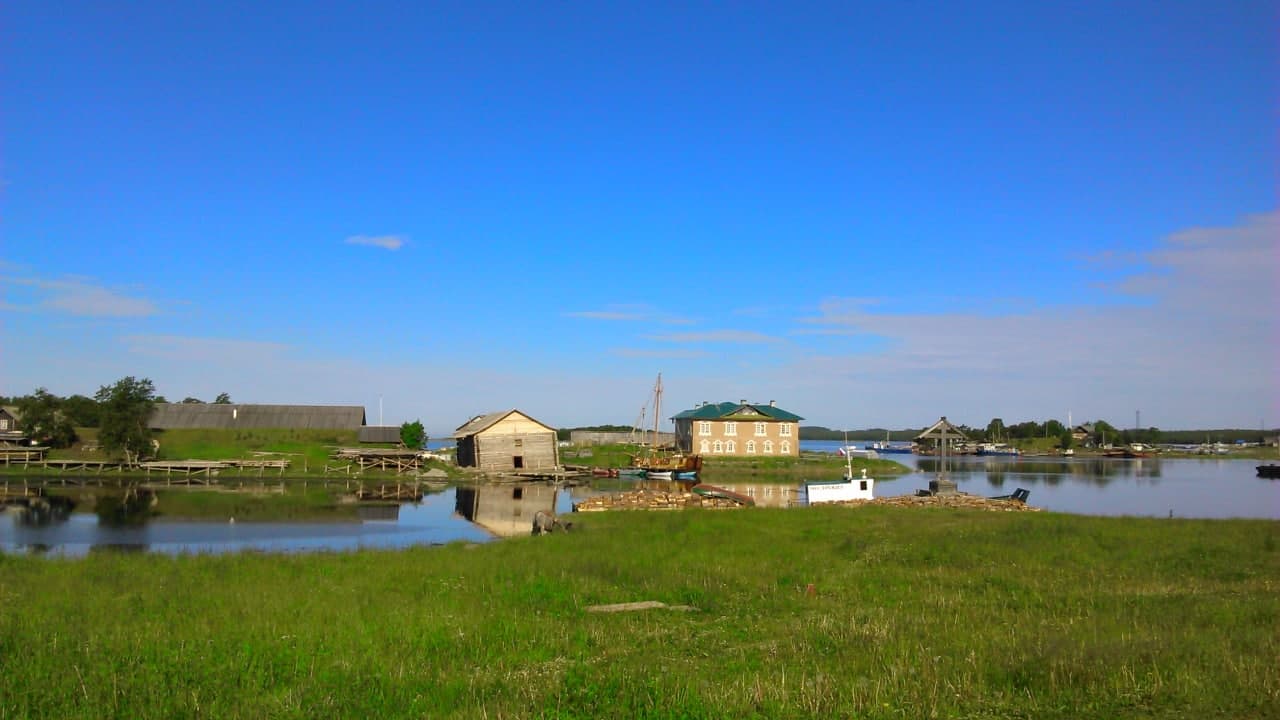
- My interest in the Solovetsky Islands (the Archipelago in the White Sea, consisting of six large islands - approx. “Papers” ) arose when I still worked as a marine biological biological station of the Zoological Institute of the Russian Academy of Sciences. Then I began to engage in history, including the study of marine research. In general, scientific knowledge about the populations of fish and other animals is not so extensive: the ranks that are at the disposal of scientists, as a rule, do not exceed 70-100 years. We, as historians, are studying the dynamics of animal populations from the moment that can restore historical documents. For example, in Russia there has been data on the White Sea since the 17th century - these are primarily archives of the Solovetsky Monastery.
We actively worked with such documents to understand what the situation was in the ecosystems of the White and Barents Seas. In 2010, the book “ The Sea is our field. Quantitative data on the fish crafts of white and the Barents Seas, XVII - early XX century. ". Including we were able to compare how the dynamics of fish catches changed depending on the changes in the climate throughout the XVII and XIX centuries. Based on historical data, we managed, for example, to conclude that in the warmer periods of salmon catchers - the main wealth of the northern seas - there were more.
In the new study “ Place and Nature: Essays on the Ecological History of Russia”, my colleague historian Alexei Kraikovsky decided to completely devote to the chapter about the Solovki of the Ecological History of the Islands - from the XVII century to the present day. In addition, it was important for us to trace the process of transformation of nature into the environment. As soon as nature becomes part of the process of human history, it transforms into the environment. And we described this on the example of Solovki.
Part of the work is devoted to spiritual communication of people with nature through art and culture, as well as the activities of scientists in Solovki. In addition, we collected the memoirs of visitors, from pilgrims to researchers and writers. And also examined modern problems, and tourism. In this aspect, it is very important to separate nature and the environment: you need to understand how, on the one hand, to maintain nature for spiritual use and research, and on the other, to restore order in the environment, having built a sewer for the village on the Solovetsky Island, for example.
Why to study environmental history is important for the future
- In order to plan the future, it is very important to know the past. Environmental history helps to understand how animal populations have changed, what happened to landscapes. And also - to evaluate and revise our relationships with nature, the environment and technologies.
I will give a more specific example of the work of an environmental historian. Suppose we need to restore the animal population. We know how many of them are left, but we do not understand whether it is a lot or a little. To do this, you need to rely on the so -called reference line: to know how many individuals were and how many were. This will help predict the further development of events. Our colleagues from the United States thus determined the reference line for the cod population. When the question arose about its restoration, it was necessary to understand how the number of individuals was reduced. Historians used the documents of fishing vessels in the mid -19th century and, using mathematical calculations, managed to find out that then there were about ten times more individuals.
I, in turn, participated in the preparation of management for buyers and sellers of fish products, in which we indicated which fish can be bought without harm to the population. For example, under the threat, due to the shift and poaching, there are populations of Tribat, macrourus and sea perch.
The organizers of the Science Bar Happing - the Fund of Infrastructure and Educational Programs ( Rusnano group ) and the St. Petersburg Media Company "Paper". Information partner of the Science Bar Hipping festival Evolution - " Poster ". The official social network of the festival is VKontakte .
This Sunday, May 30, the Science Bar Hopping will be held in St. Petersburg bars. The topic is the evolution of science. Scientists will tell you why to study the judicial system, why in antiquity people scared the eclipse of the Sun and how knowledge about the climate has developed over the past 2600 years. Join ! 🍹👨🎓🚀