
Translated material
Ladies' lands
As ex-minister Skrynnik, whose surname was mentioned in Russian and Swiss criminal cases, continues to earn millions with state money
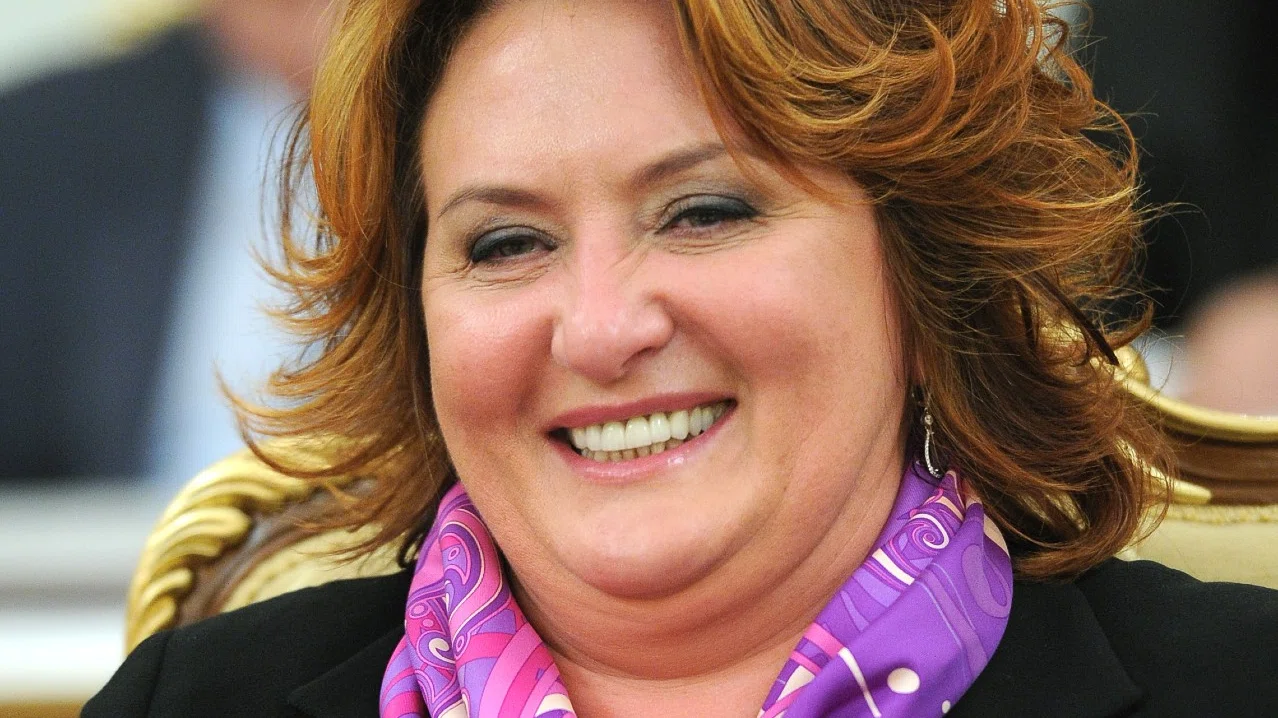
One of the most high-profile corruption scandals of the 2010s concerned agriculture and minister Elena Skrynnik, he was in no way inferior to the case of the Minister of Defense of Serdyukov, with the exception of spicy details. There are a lot of similar ones: there are ministers there and there, there and there, the structures subordinate to the ministries: Rosagrolysing and Obornservice, and in both cases the heads of departments escaped with a slight fright in the status of a witness. Serdyukov now feels good in a business related to the state. Less is known about Skrynnik. “New” decided to replenish this gap, as well as figure out what was the basis of criminal cases that Russian investigators and Swiss prosecutors were conducted.
In short, the former head of Rosagrolysing and the ex-minister of agriculture was suspected of a conflict of interests allegedly taking place: as the head of a state-owned company and then the ministry, it, according to the assumptions of the Swiss investigation and investigators, could directly or indirectly continue to participate in business, and its decisions could contribute to the enrichment of certain business structures .
A criminal case was opened in Russia on theft of funds in Rosagrolysing. And Skrynnik in 2012 left the post of minister against the backdrop of a scandal, but under a plausible pretext - a change in the composition of the government. And she moved to live in France, where she has a villa. However, she fell into disgrace. So much so that the highest certification commission even deprived her of the degree for the doubtfulness of the dissertation (“sovereign people” of such a caliber, as a rule, are protected from such trouble).
In the case of the theft of more than 1 billion rubles* from the State Corporation Rosagrolysing, which the official headed before arriving in the government - from 2001 to 2009, - Skrynnik was a witness. The facts of corruption in the state-owned company were identified in April 2012, one of the defendants was a former subordinate Skrynnik-ex-director of the Department of Administrative Work of the Ministry of Agriculture Oleg Donskoy. He disappeared abroad and was put on an international wanted list.
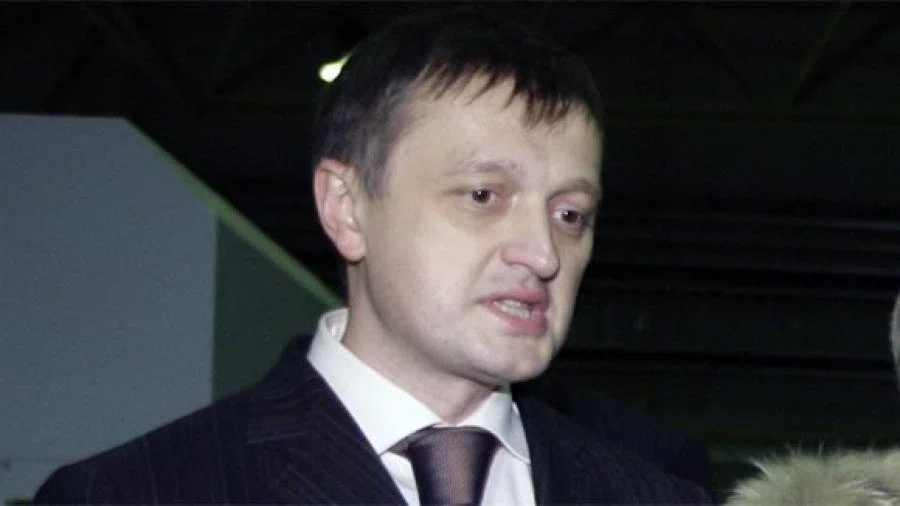
Then the claims appeared to the deputy Skrynnik in the ministry Alexei Bazhanov. He (which is also strange) was released from arrest in 2013, and the official safely disappeared abroad, was put on the international wanted list.
A criminal case was opened in Switzerland, and the means of Skrynnik and Alexei Bazhanov were frozen. In 2017, the Swiss criminal case was closed.
Now Skrynnik is a successful businesswoman.
Its structures have recently earned 503 million rubles in Russia, and it itself has acquired expensive real estate in Rublevka.
On the Cote d'Azur
SK Elena Borisovna did not charge. But the former official moved with her family to France, where she acquired Villa worth 10.8 million euros. This amount was called in an interview with Yevgeny Zelensky, adviser to the general director of Rosagrolysing (he came to the state corporation in 2010 and was also engaged in the investigation of the activities of previous management). Skrynnik herself recognized the fact of the presence of a “modest” foreign real estate in an interview with REN-TV.
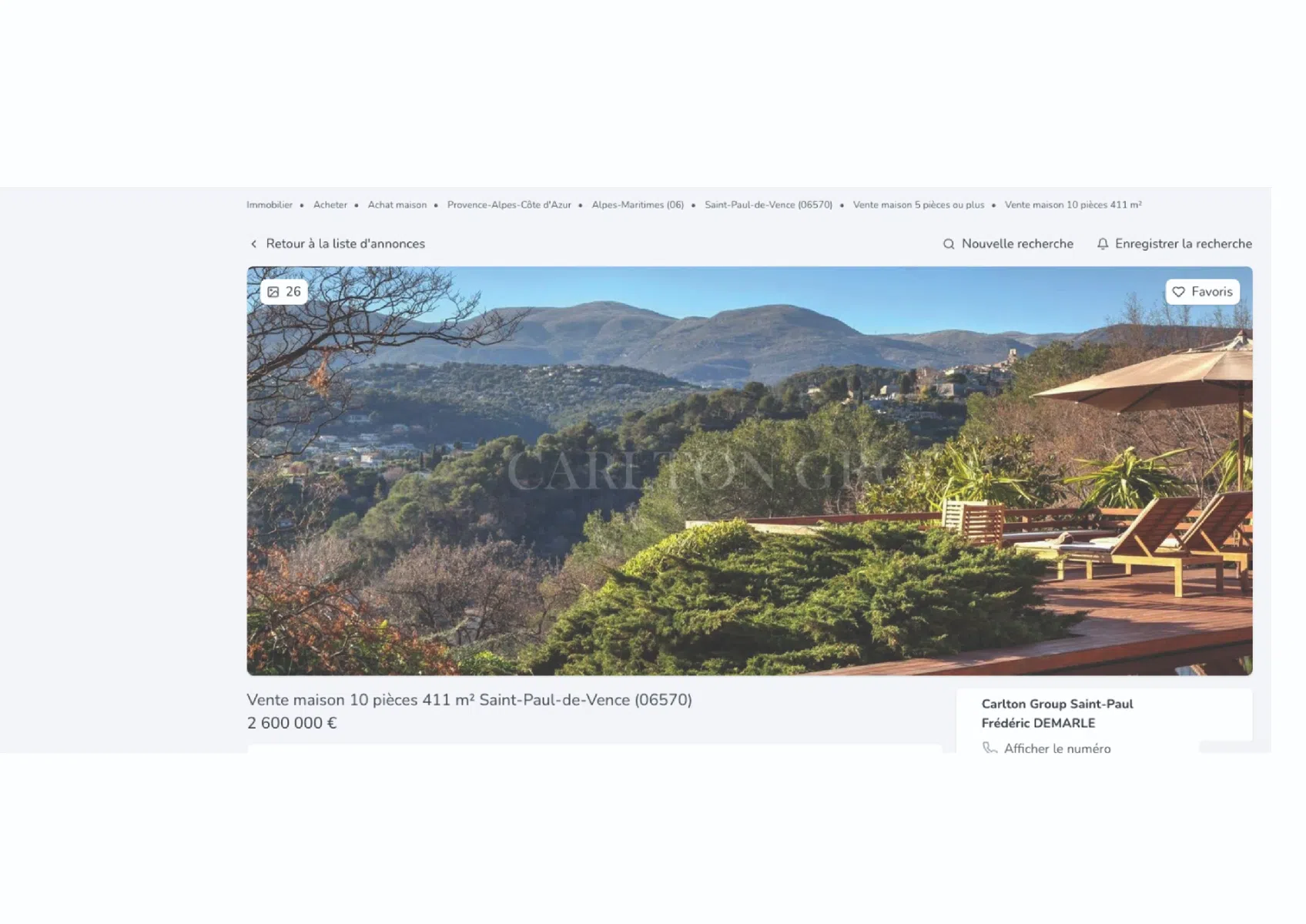
To manage the French villa, a man named Elena and Skrynnik’s surname back in November 2007 registered SCI Anastasia, having issued it for young Mikhail Kukuta and Irina Kukut (according to publications in the Russian media, it was made that Yuri Kukota could be a former husband of businesswoman). The headquarters of the company is located in the Saint-Paul-de-Wence commune on the Cote d'Azur of France. The prices for villas in this area, judging by the site for the sale of real estate Knight Frank, vary from 2 to 10 million euros (900 million rubles in terms of today's rate).
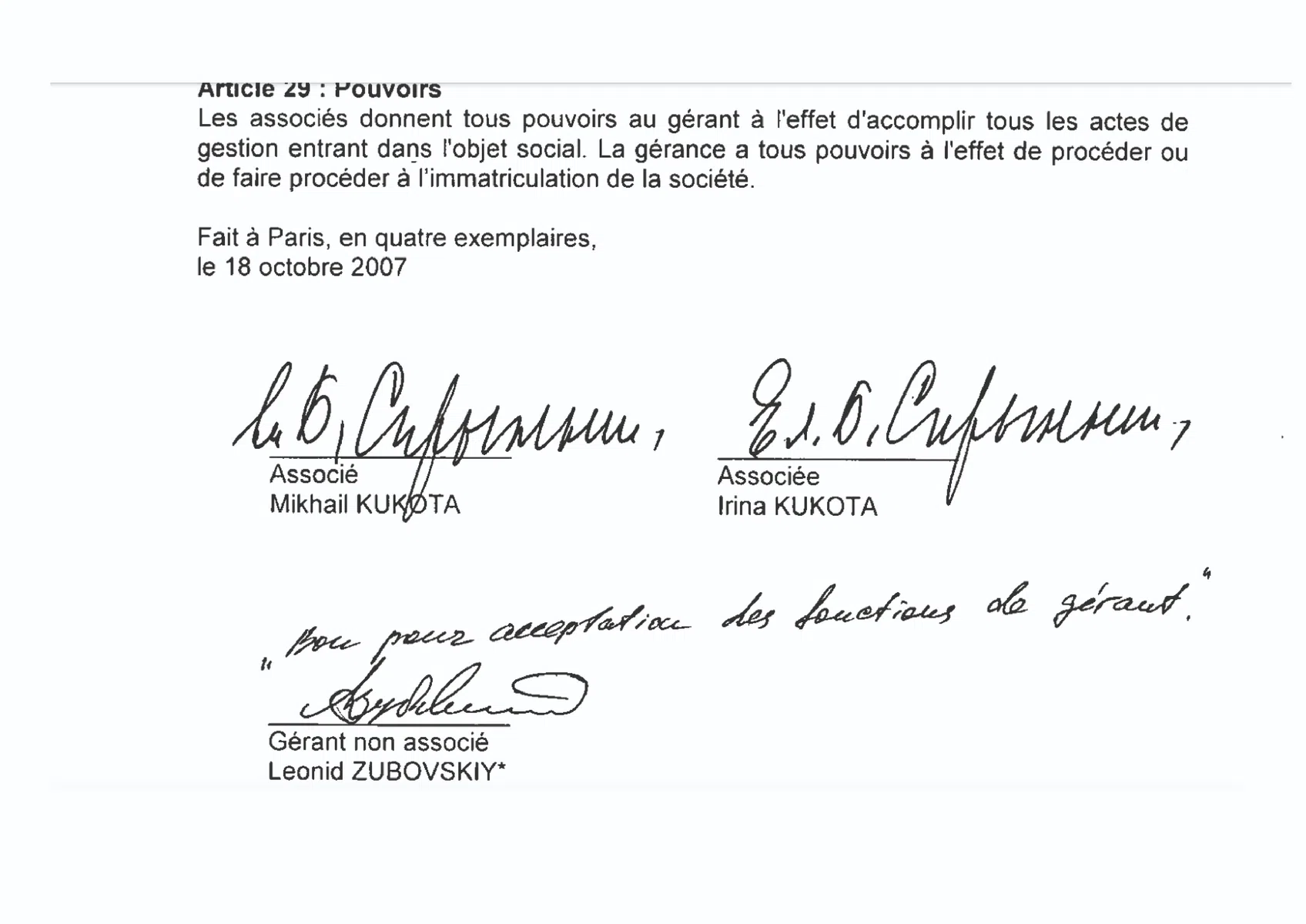
According to all the same adviser to the general director of Rosagrolyizing Yevgeny Zelensky, the main amount of the purchase of the villa was paid in cash. The official publicly assumed that the British company Brice-Baker Finance Limited, according to the materials of the Swiss criminal case, allegedly connected with Skrynnik, was used to withdraw money abroad. The New Gazeta found the statements of the documents of this company, one of the founders there is a certain Elena Skrynnik, and the documents have a similar signature.
The minister is under suspicion
In October 2015, the ex-minister became interested in the Federal Prosecutor's Office of Switzerland, which conducted an investigation on charges of laundering illegally acquired funds.
Acts of the Federal Prosecutor's Office of Switzerland on the closure of this case in 2017 fell into our hands.
From them it follows that the Swiss had information about the laundering of money made presumably Skrynnik and its proxies.
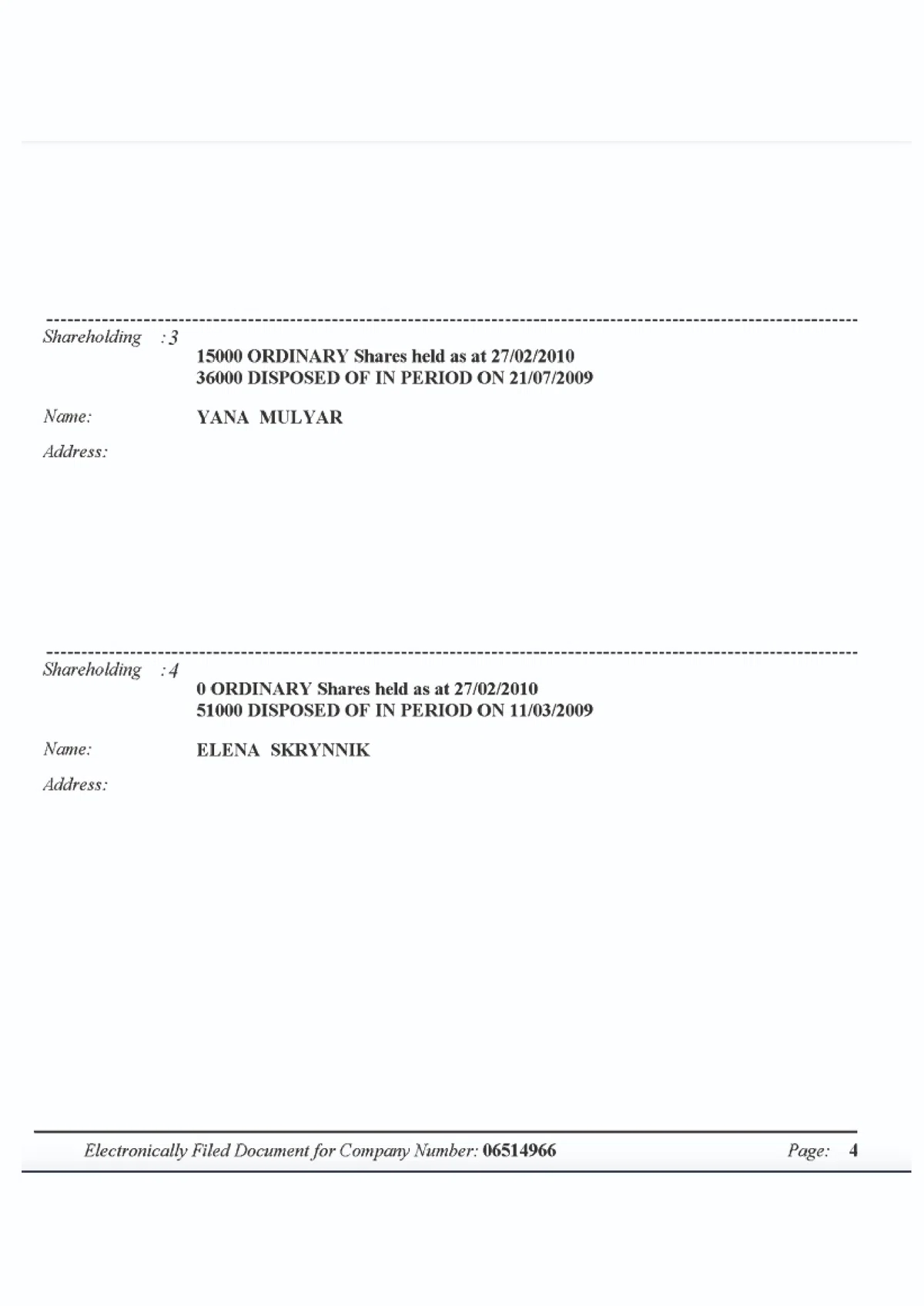
According to prosecutors, they allegedly disposed of funds to offshore companies, covering these operations with fictitious transactions. In addition, investigators had reason to assume that Skrynnik and associated persons could be related to the deceit of Swiss banks. The Swiss also found that the shares of the Saransky excavator plant passed into the hands of Skrynnik for about 1% of their market value.
We will not retell what became the Swiss from Russian open sources. It is interesting to understand what information that has not yet been published in Russia was collected by the Swiss about Skrynnik and its surroundings during searches and seizures of banking documents.
The reason for initiating a criminal case in Switzerland was the messages of banks that suspected in the transactions of their customers the potential lining of money.
Here we will talk about three episodes that Swiss prosecutors seemed dubious. The schemes were quite confusing, which in itself could no longer but cause suspicion. We indicate the names of the companies participating in the transactions as indicated in the Swiss documents - that is, by letter designations. However, it is not difficult to assume which business structures are hiding behind them. We made our assumptions in brackets.
Episode 1. Buying and sale of shares of Sareks
In 2008, Rosagrolysing concluded with the Sarax - the Saransky Excavation Plant - a contract for the supply of tractors for 730 million rubles.
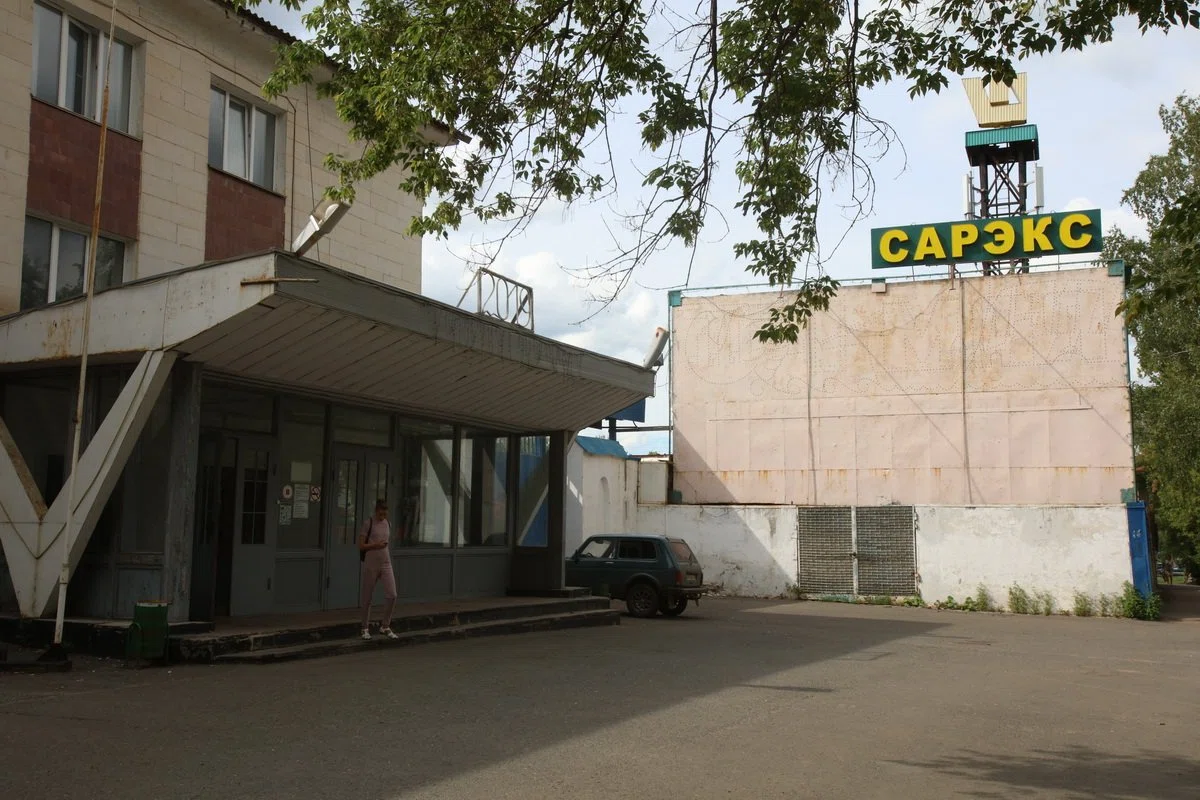
During the investigative actions, the Swiss found that Skrynnik allegedly submitted to the employees of banks in Switzerland as the owner of Sareks. She explained to them that she bought a plant around 2005 and planned to invest 10 million dollars in it, and then sell it to anyone. Recall: from 2001 to April 2009, Skrynnik heads the State Corporation Rosagrolysing, however, according to the contract, for some reason she was allowed to engage in personal business.
Skrynnik, according to the Swiss, owning Sarax through company A (presumably agroevrososyuz), replaced her people with a significant part of the positions in the top management. And thanks to the orders of Rosagrolysing, where Skrynnik worked, Sarex shares have increased significantly in price.
Shortly after the conclusion of contracts with Rosagrolysing, the share in Sareks decreased from 75 to 7.35% and was transferred to two offshores and one Swiss company. The structure of ownership in the part controlled, according to the Swiss investigation, Skrynnik, could look like this:
A (presumably agricultural union) - 7.35%;
N (presumably Medeq GmbH (Fleischmann, Dobler) - 23.9%;
Q (presumably Focus Time Finance Ltd) - 23.5%;
T (presumably Newdom Financial LTD) - 21%.
The Swiss found out how much these transactions cost. 536,660 dollars were paid in one package of shares. After another - 529 530 dollars. A little later, 23.9% of the shares were sold for $ 538 558. Skrynnik’s employees seemed to explain that she had made these transactions with the aim of further resale of shares.
The real assessment of the cost of Sareks at that time amounted to 112 million dollars. The price of transactions, according to prosecutors, was underestimated at least 50 times.
The Swiss found out that in 2009, the Sareks shares owned by Skrynnik were allegedly sold to firms under the control of two companies - U and V - about $ 50 million. The money was received after a number of auxiliary accounts and checks to the account of the same Q (presumably Focus Time Finance Ltd) in the BSI bank in Lugano.
But in 2009, the State Provine Skrynnik declared only 10.8 million rubles of income.
The company A (Agroevrososyuz) turned out to be bankrupt. The Swiss notes that the shares that were alienated by A had much more cost than they were paid. Therefore, the actions of Skrynnik, the prosecutors suggested, could lead to bankruptcy A , which could be a criminal offense (under Swiss laws).
In order to bring the case to the court, the Swiss, as they say, did not have enough legal assistance from Russia: they needed to get information about whether the financial situation was , and at the time of the transaction, they were just obliged to guess that the withdrawal of assets would lead to bankruptcy.
However, it seems that this is a complaint of the Swiss prosecutors is unable: the sale of an asset for $ 50 million for $ 1 million cannot but lead to bankruptcy, what other confirmations are needed ...
As is known from Russian sources, the Saransk Excavator Plant was eventually sold .
Episode 2. Elevator in Switzerland
Of the open sources, the Swiss prosecutors learned that Rosagrolysing in 2007-2009 concluded dozens of agreements with 3.4 billion rubles with the company R (allegedly “Elevator-Service”). In 2010, many of these agreements were canceled, although payment was already received from Rosagrolysing. At the same time, Rosagrolysing received goods for only 1.3 billion rubles.
The company R has transferred this money to a group of companies K (presumably Brice-Baker AG, who belonged to a person named Skrynnik, as we indicated above, Russian officials publicly spoke about it, expressing assumptions about the withdrawal of funds).
To merged with the n (presumably Medeq GmbH) already mentioned in the last episode and began to be called J (presumably Agro Construction AG).
According to the business plan of J , found during investigative actions, the company intended to supply Rosagrolysing paid by Rosagrolysing and made by the Brace-Baker by elevators allegedly not directly, but through the offshore (or “Zits-company”, as the Swiss say)-this is again known for the episode with the excavator plant Q (Focus Time Finance)-or through a group of companies K ("Bright Baker"). Due to these meaningless resale operations, a significant margin could arise.
During the investigative actions, three agreements were seized between R (elevator service) and J (AGRO Construction AG), with the help of which Rosagrolysing money could be started in Switzerland.
The total price of these agreements amounted to 5,685,157 euros. R (elevator-service) paid 3.3 million euros to the J (Agro Construction AG) in Lugano. There were no reliable documents on the supply of elevators, however, the Swiss investigation was found, in their opinion, forged documents on delivery. In addition, as the Swiss prosecutors assured, J (AGRO Construction AG) could purchase elevators from affiliated participants in companies at more favorable prices.
The investigation came to the conclusion: the Rosagrolysing funds, allegedly transferred at the direction of Skrynnik without appropriate security, R (elevator-service) could send a person under the name of Skrynnik to the companies of the group K (Brice-Baker, which could lead to theft.
Episode 3. Feed
From 2008 to 2012, about $ 20 million was received under the control of the Swiss prosecutors , according to the Swiss Prosecutors, under the control of Svitznik. The basis for the transfer of this money was contracts with offshore firms for the supply of animal feed in large volumes of animal feed.
Among other things, during the investigative actions, an agreement was discovered from 08.25.2009 between M2 and M2 for the supply of feed for $ 75 million. From 2008 to 2010, under this agreement, $ 2.49 million was received to the account of M.
However, the Swiss examination found that the contract was probably fabricated retroactively (no earlier than 03/02/2010) to explain the essence of this transaction to BSI BSI. Thus, the investigation established that there may be grounds for accusing the management of M of possible falsification of documents.
The Swiss connected the data of these examinations, searches and interrogations with large orders from Rosagrolysing.
Where did the money go
In total, in total, $ 140 million were received, according to Swiss prosecutors, hidden, according to the Swiss prosecutors. Swiss investigators found that Skrynnik spent about 100 million out of them, according to the Swiss data controlled by the firms controlled by it, money could go:
luxurious real estate (at least two property complexes);
purchase and financing of the Brothers Baker group;
purchase and financing J (presumably AGRO Construction AG);
buying several cars;
purchase and financing of dozens of zitsi companies;
Transfer 29 million francs to brother Skrynnik Leonid Novitsky;
Punishment of accounts outside Switzerland in the amount of $ 20 million.
37 million francs were not spent, they were arrested as part of a criminal case initiated in Switzerland.
In 2007, Skrynnik, as we have already said, registered the SCI Anastasia company to manage the villa on the Cote d'Azur. She also acquired in 2006 from the Lord Spiss Gofer in the name of Minors Mikhail and Irina Kukota 100% of the shares of SCI Carine, which a villa was recorded on the same Chemin de La Cairee Street in Saint-Paul de Wans. Carine shares are currently owned by Minor Mikhail and Irina Kukota, and the manager is a certain Dmitry Belonosov. (News at the disposal of “New” have the charters of firms and extracts from the registry, about family ties of the owners are also indicated in French documents, some details were also mentioned in the Russian press).
Brother Leonid lived beautifully
According to the Swiss prosecutors, in 2009-2013, 55 million dollars were received in the accounts of firms controlled by Leonid Novitsky as part of transactions that had no economic justification.
So, in 2009, according to the Swiss, 13.3 million euros were received on his accounts. In the written explanation presented by the investigation, Novitsky explained that this is supposedly the money from the sale of several companies belonging to him and that his adviser helped him “start” this money to Switzerland. Other money (transactions for $ 9.5 and 9.7 million) seemed to have appeared from the sale of land of 120 hectares and 500 hectares. Novitsky could not document this information.
He received another 29 million francs from his sister allegedly as a part of the sale of the Saransky Excavation Plant (Sareks) already mentioned by the company we already mentioned . At the same time, Novitsky was part of the management of a bankrupt agro -euro -union, performing simultaneously a significant function in state murals, which was led by a sister. And despite the obvious conflict of interests, he took part in the sale of Sareks’s shares, having received, according to the Swiss, enormous benefits. It was together with the defendants in the “Calle of Feed” that he held negotiations on the sale of shares V and U , being an adviser U in 2010-2012.
Received in accounts controlled by Novitsky, $ 55 million, according to the Swiss data, could be spent as follows:
purchase of luxurious real estate;
Real estate rental;
wasteful lifestyle;
car racing classes;
buying cars;
Acquisition and maintenance of dozens of zitsi companies.
The balance of 26 million francs was frozen in connection with the initiation of criminal proceedings in Switzerland.
There are no questions
After the transition to Rosagrolysing, Skrynnik, as stated, allegedly transferred all her Swiss businesses to a certain (the Swiss do not reveal the last name). The master knows about this that he and his brother Skrynnik Novitsky participated in the negotiations on the sale of Sareks’s shares, and it was his signature that is on a counterfeit agreement on the supply of feed.
Investigators of the Federal Prosecutor's Office argued that in fact businesses were not transferred to Mr. B, and he, receiving a salary of 20,000 francs a month, allegedly could continue to act in the interests of Skrynnik.
However, all this did not stop closing the criminal case with reference to the fact that the Russian side did not provide the missing documents.
And Russian law enforcement agencies was not at all interested in the activities of companies that the Swiss connected with Skrynnik. And this despite the fact that all arts with money, shares and real estate were carried out at a time when Elena Borisovna worked as the head of the state corporation and held the post of minister.
Now Madame Skrynnik is a successful businesswoman.
Medical business empire
In Switzerland, Skrynnik could also have commercial interests. The former official was credited with the possession of a medical clinic and a beauty salon in Montreo Clinique La Prairie, which are located on the shore of the largest lake of the Alpine Mountains - Geneva. Об этом публично говорили Ксения Собчак, Дмитрий Гудков, Олег Митволь и Александр Лебедев, который в интервью Business FM заявил, что готовит запрос в Берн с просьбой проверить, принадлежит ли бывшему министру сельского хозяйства элитная клиника La Prairie в курортном Монтрё. По его сведениям, Скрынник могут принадлежать и другие клиники.
Сама экс-министр утверждала , что к зарубежной клинике не имеет никакого отношения.
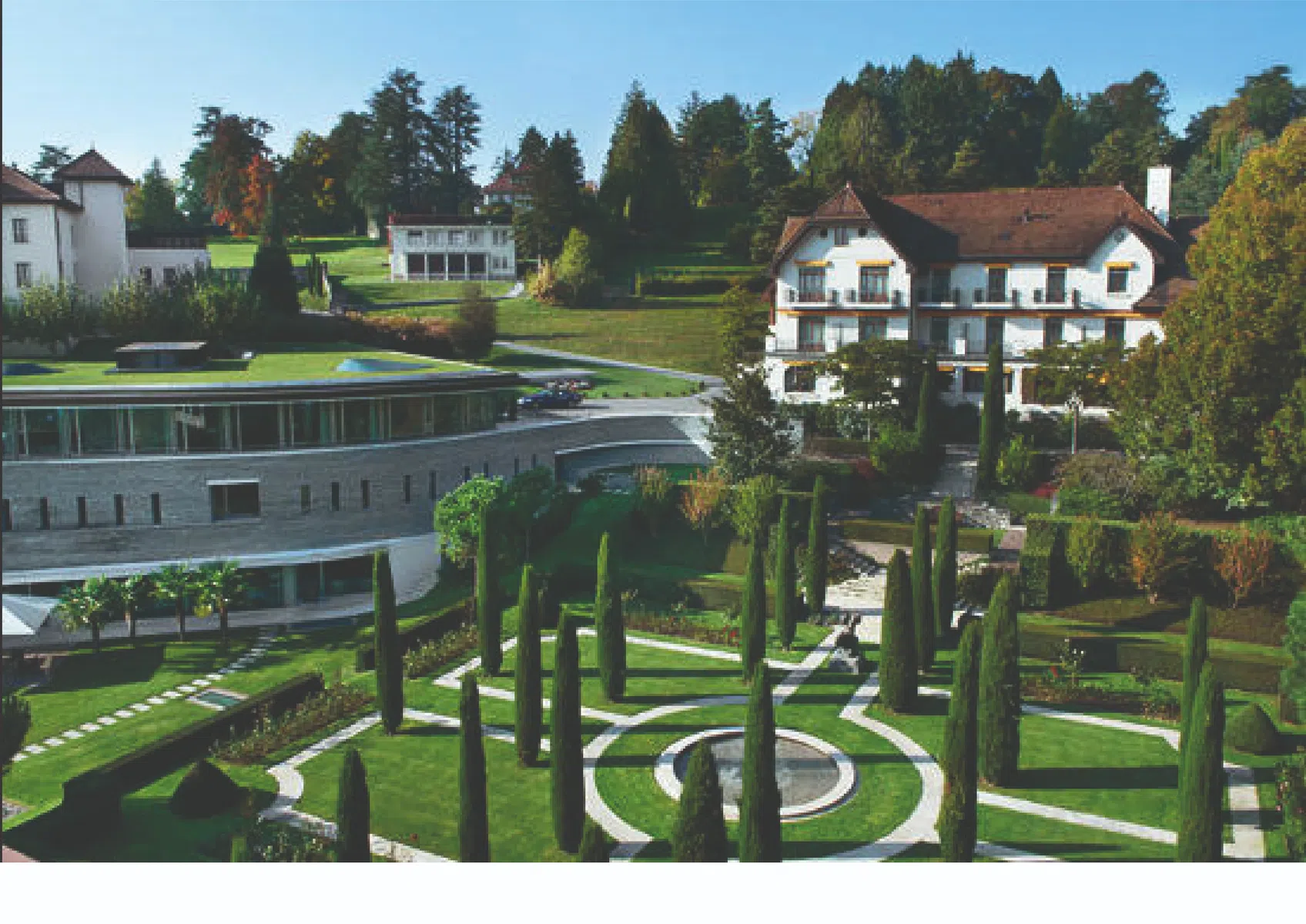
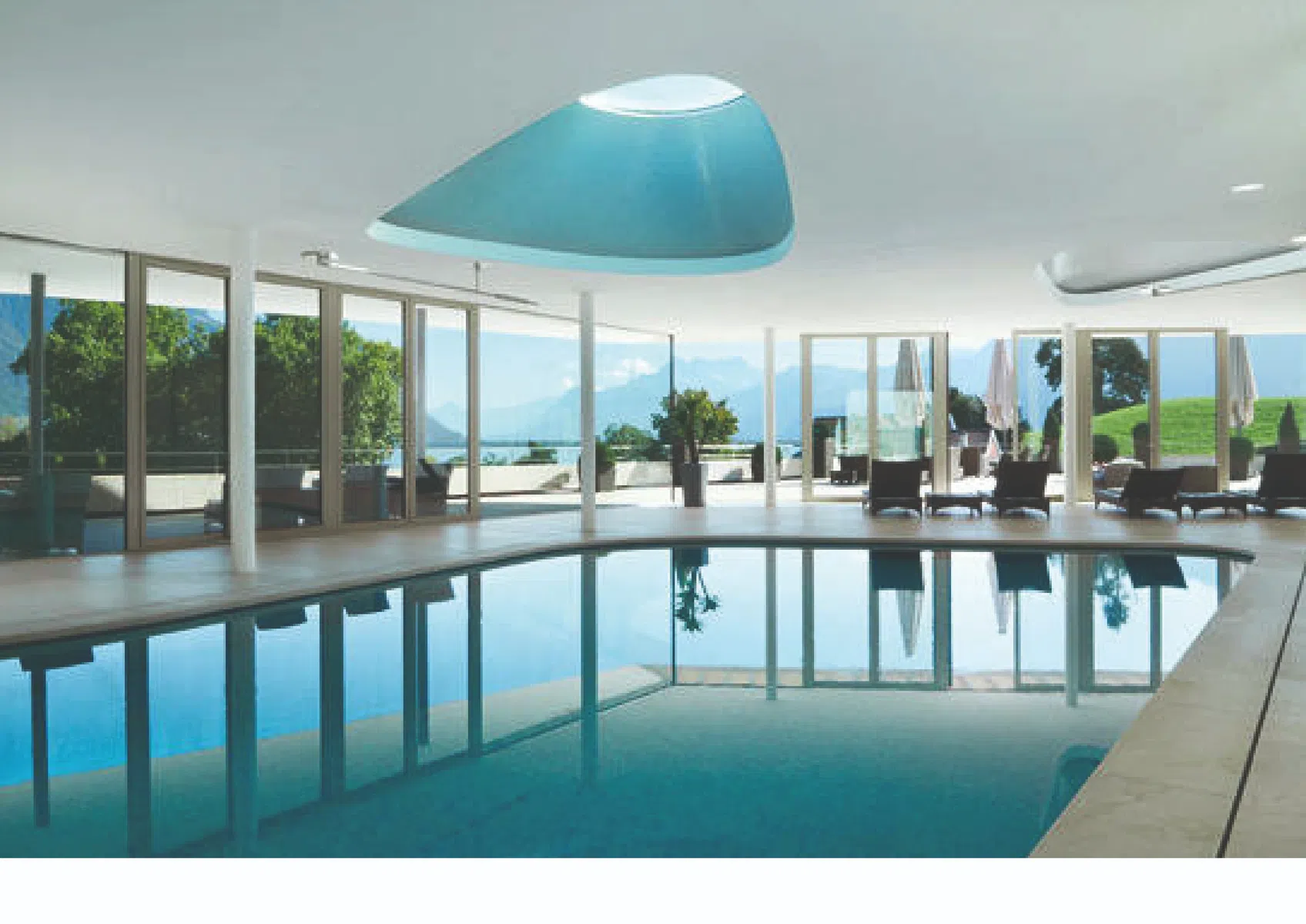
Но есть деталь. Эксклюзивным партнером медучреждения выступает компания Swiss Perfection (об этом говорится на официальных сайтах . В Москве Елена Скрынник учредила фирму с таким же названием — «Свисс Перфекшэн», с ней связан центр косметологии Stemphys на улице Гиляровского. (ООО «Эстетический центр «Свисс Перфекшэн», ИНН 7702316840, по данным базы СПАРК-Интерфакс. Скрынник является прямым владельцем компании с 2009 года.) Заведение именует себя институтом косметологии. Там оказывают различные услуги стоимостью до 190 тысяч рублей по омоложению кожи. На открытии центра выступал телеведущий Андрей Малахов.
Центр косметологии Скрынник и связанные с ним фирмы «Свисс Перфекшэн» и «Стемфис» зарабатывают на поставках медицинского оборудования. Закупают дорогостоящие аппараты для государственных учреждений. Этим, вероятно, и объясняется успех бизнес-модели экс-чиновницы — доступом к бюджетным деньгам.
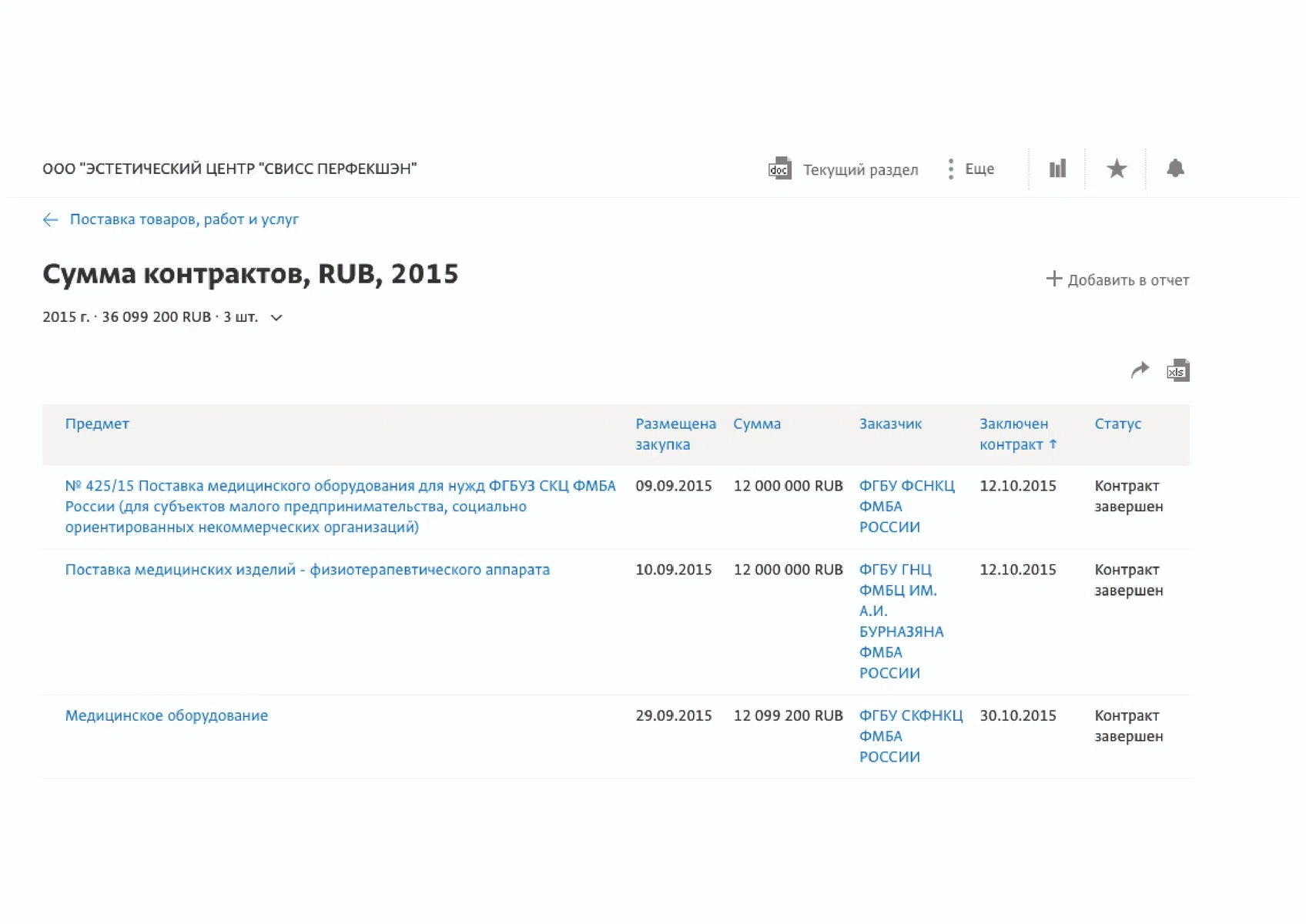
За последние пять лет компания «Стемфис», по данным о госзакупках, получила от госучреждений контрактов на 367,2 млн рублей, «Свисс Перфекшэн» — на 36 млн рублей.
Все контракты, за исключением одного, достались фирмам Скрынник от Федерального медико-биологического агентства (ФМБА), подведомственного правительству России и его структурам: ФГБУЗ «Медицинский центр «Юность», ФГБУ «Федеральный сибирский научно-клинический центра» Федеральный медицинский биофизический центр имени А.И. Бурназяна. И один контракт — от Минздрава.
Несмотря на регулярные транши бюджетных денег, «Стемфис» все последние годы показывает убытки, в 2020 году фирма ушла в минус на рекордные 162 млн рублей (по данным базы СПАРК).
Закупают у Скрынник физиотерапевтические аппараты с применением эндомассажа и магнитного поля по 4 миллиона рублей за штуку. Интересно, что на одном из аукционов по поставке оборудования для ФМБА заявились сразу обе компании Елены Скрынник, что, по идее, могло бы заинтересовать ФАС. Примечательно также, что в базе данных СПАРК в связи с бизнесами человека по фамилии Скрынник указываются два разных ИНН физического лица (№№ 773177900590 и 772501444759), что запрещено по правилам ФНС.
В 2020 году сотрудничество Скрынник с Федеральным медико-биологическим агентством неожиданно прекратилось. Это может быть связано со сменой руководителя учреждения. В феврале 2020-го ФМБА возглавила бывший министр здравоохранения Вероника Скворцова. До нее ведомством почти 15 лет управлял Владимир Уйба (сегодня занимает пост губернатора Коми), с которым Скрынник работала в 2011 году в межправительственной комиссии по торгово-экономическому и научно-техническому сотрудничеству со странами Америки.
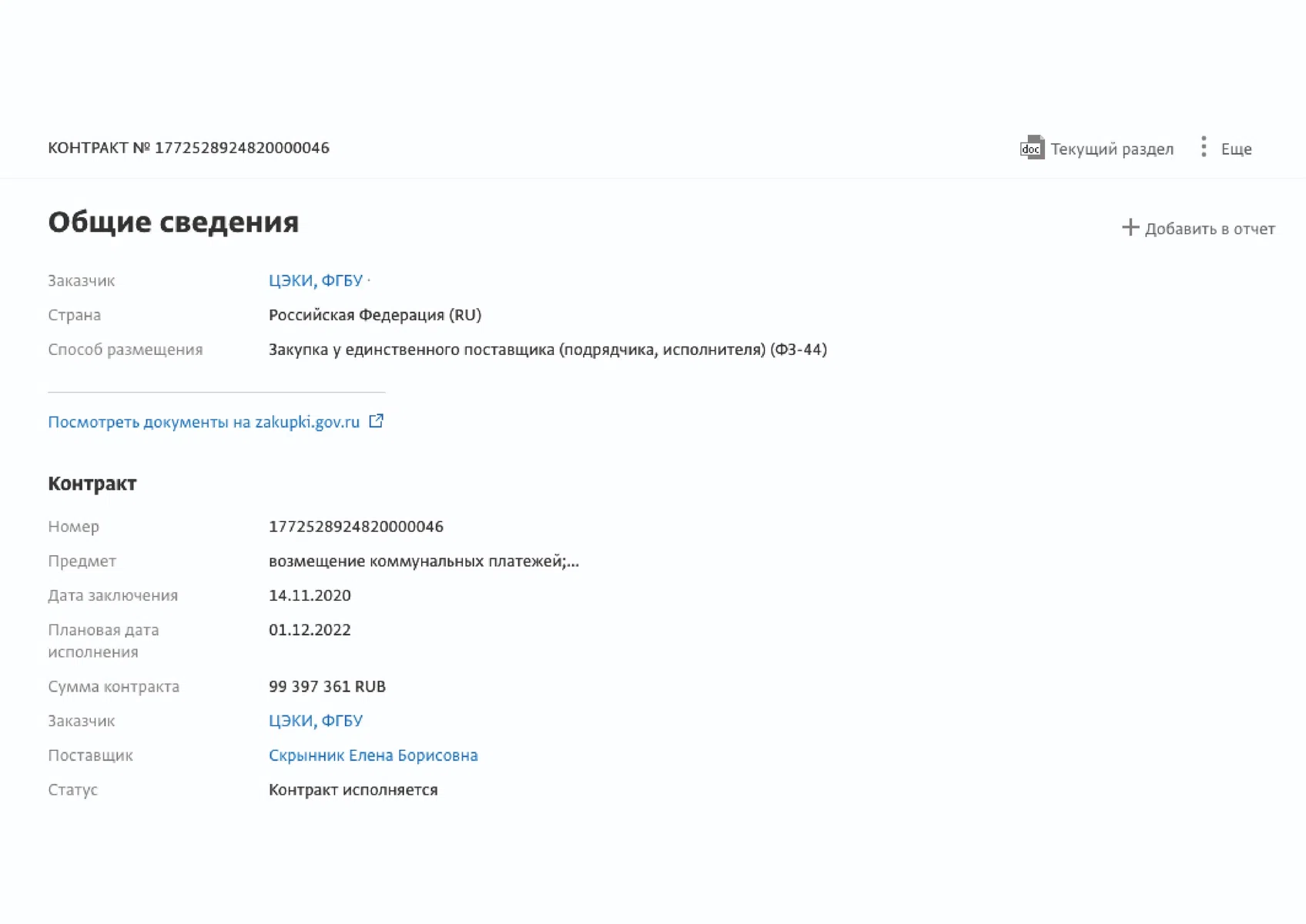
Елена Скрынник быстро нашла замену ФМБА. 14 ноября 2020 года экс-министр заключила контракт на 99,3 млн рублей в качестве индивидуального предпринимателя. Она сдала принадлежащее ей помещение в аренду до конца 2022 года в пользование ФГБУ «Центр экспертизы и координации информатизации», который подведомствен Минцифры России.
Дворец на Рублевке
В России Елена Скрынник не только зарабатывает миллионы, но и вкладывается в дорогостоящую недвижимость. В августе 2020-го она, судя по всему, приобрела апартаменты на 37-м этаже башни «Федерация» комплекса «Москва-Сити» площадью почти 2 тысячи квадратных метров. По сведениям «Собеседника», сделка обошлась в 700 млн рублей. В свободном доступе оказались и данные о проведенном аукционе по продаже этой недвижимости, принадлежавшей ранее обанкроченном банку «Западный», в которых упоминается фамилия Скрынник.
«Новая газета» также обнаружила принадлежащую Скрынник загородную недвижимость. Это поместье в элитном закрытом коттеджном поселке «Корабельные сосны» неподалеку от стародачного места Николина Гора у Рублево-Успенского шоссе в Подмосковье.
Поселок на 35 домовладений занимает территорию в 40 гектаров. По его периметру расставлены КПП с круглосуточной охраной. Дома здесь построены из монолита и кирпича, кровля — из металлочерепицы, внутренняя отделка выполнена из ценных пород древесины и натурального камня. Стоимость домов варьируется от 1,5 до 10 млн долларов (750 млн рублей в пересчете по сегодняшнему курсу).
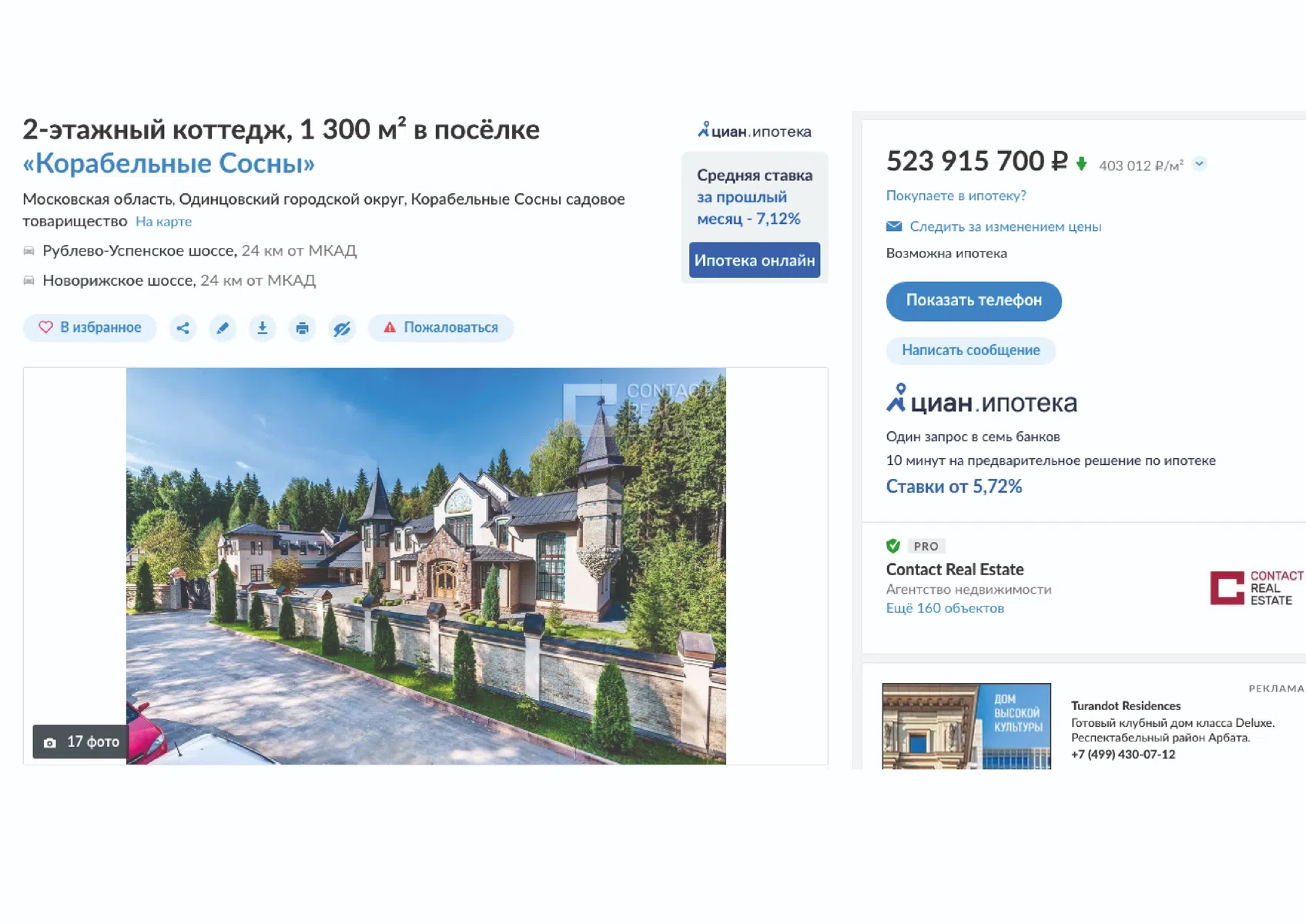
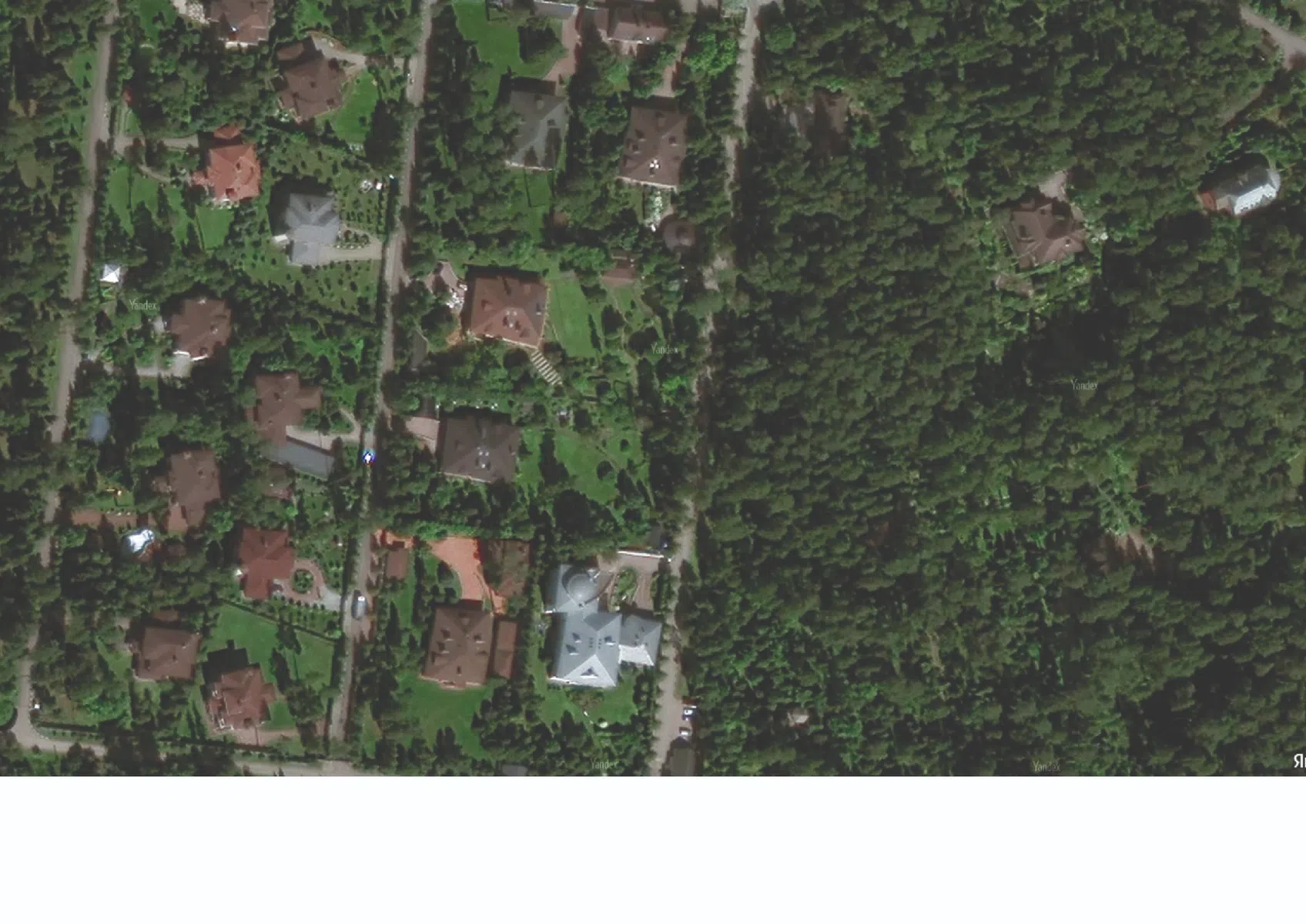
Сейчас в поселке продается всего два дома, один из них — площадью 1,3 тысячи кв. м со СПА-комплексом, включающим в себя 20-метровый бассейн и различные виды бань, домашний кинотеатр, гостевую туалетную комнату, каминный зал со спрятанным в зеркале телевизором, библиотеку с функцией кинозала, винный погреб с витражами и зимний сад. Цена вопроса — 524 млн рублей.
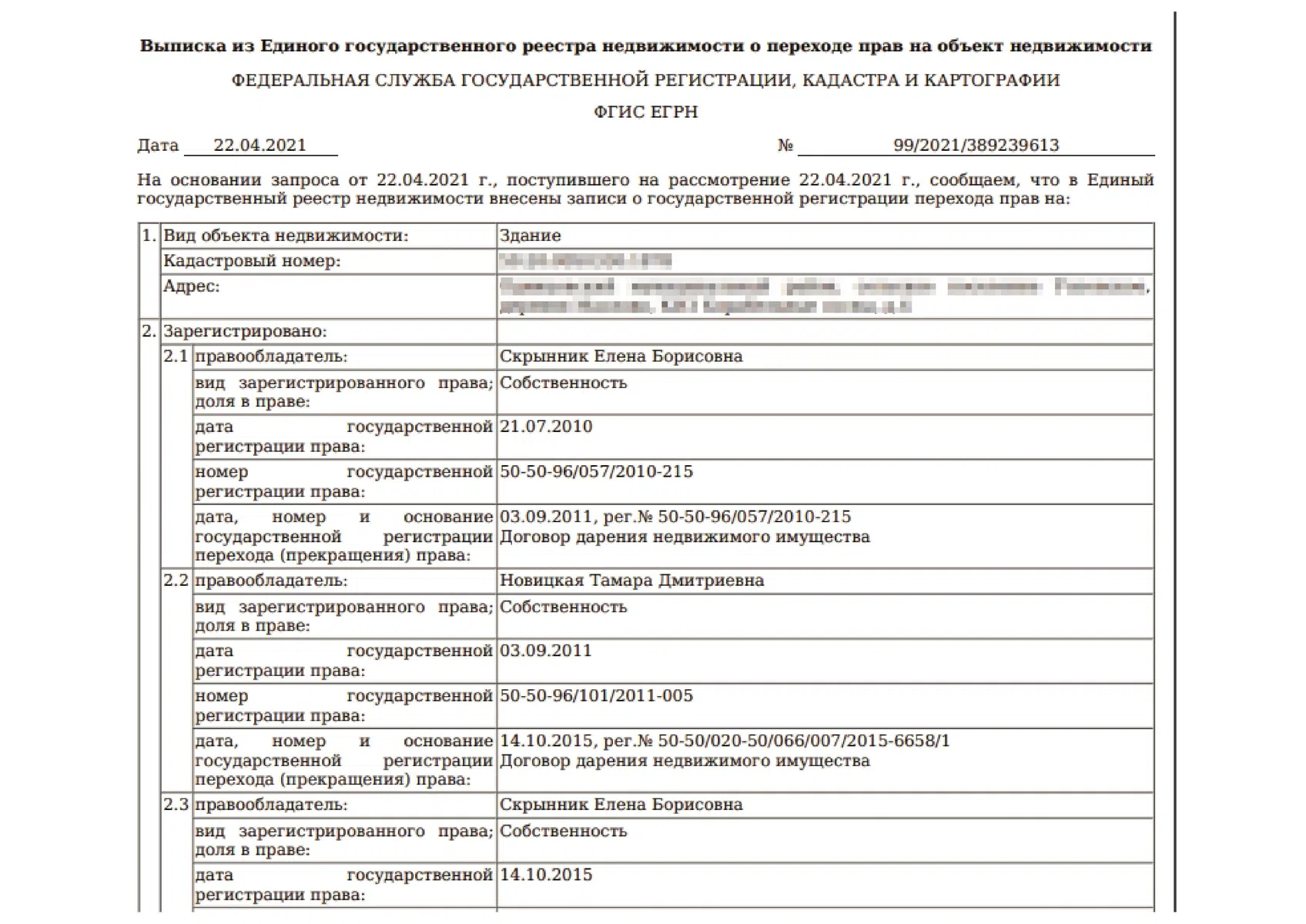
Кстати, «домик» Скрынник по площади даже превосходит это поместье, занимая 2,1 тысячи квадратных метров. С 2011 года он был оформлен на мать экс-министра Тамару Новицкую, но в конце 2015-го Елена Борисовна переписала его на себя.
Семье бывшей чиновнице также принадлежали квартира на Ленинском проспекте и жилье площадью почти 150 квадратов в новостройке на улице Минская рядом с Мосфильмовским прудом. Судя по данным компании ЦИАН, такое жилье может стоить около 70 млн рублей . Впрочем, судя по успеху бизнеса Елены Скрынник, это не такие уж большие деньги.
* Ущерб, по мнению нового руководства Росагролизинга, исчислялся десятками миллиардов рублей.
From the editorial office
«Новая газета» заблаговременно направила Елене Скрынник свои вопросы, но ответа не получила.