
Translated material
"There is no reality"
Fragment of the book "Pioner Talks": Artist Pavel Pepperstein speaks of true hallucinations, Carlson's skeleton and pop
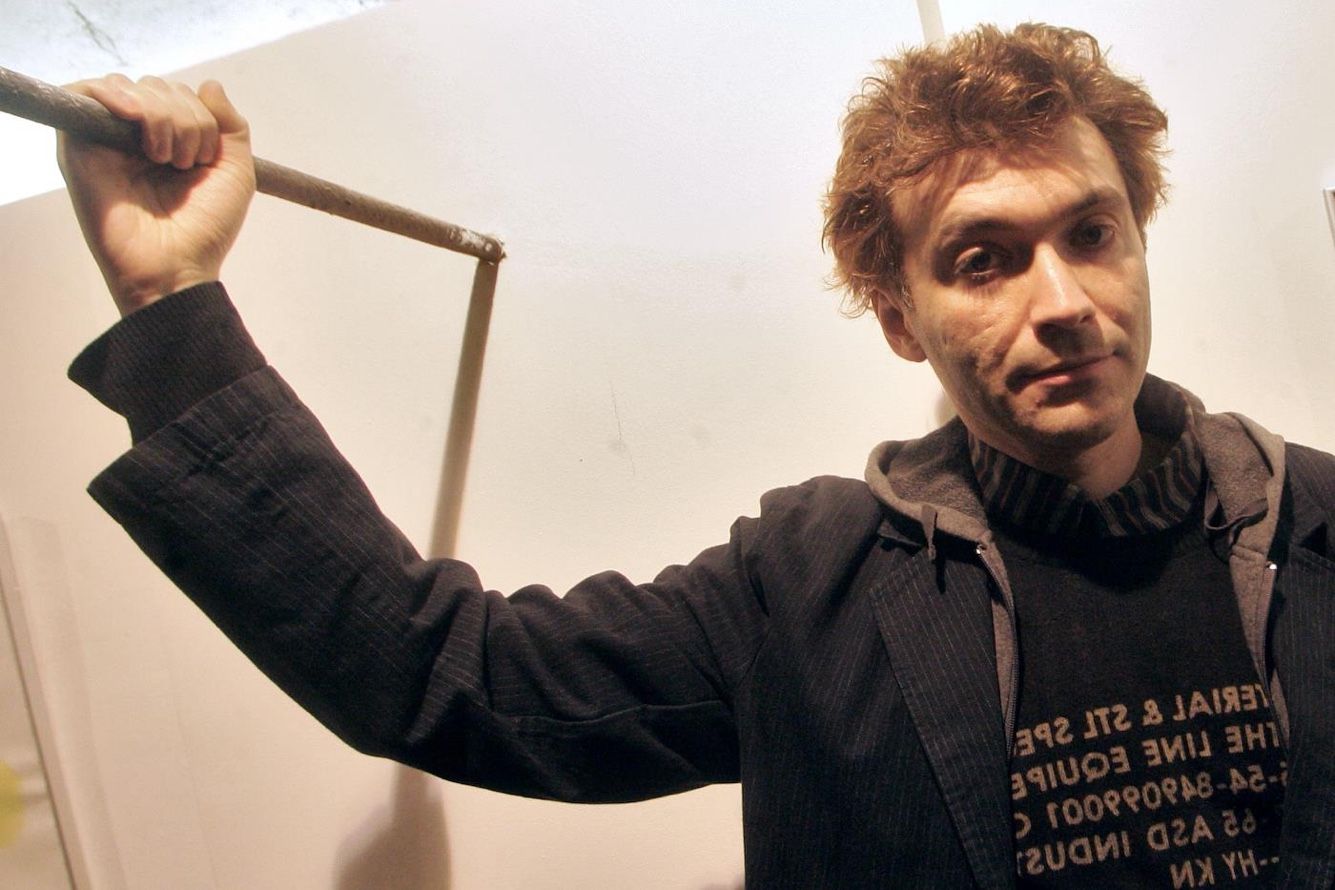
In the spring, the Pioner Talks interview was published at the Bomborr Publishing House. 30 conversations today about what awaits us tomorrow. ” The curator of the public program of the Moscow Cinema "Pioneer" Sergey Sdobnov gathered in the publication conversations with writers, directors, artists and other cultural figures. The collection includes conversations with Andrei Zvyagintsev, Roman Volobuev, Nigina Saifullaeva, Alexei Salnikov, Linor Goralik, Dmitry Glukhovsky and others. With the permission of the Medusa publishing house, he publishes the text of the conversation with the artist, writer and theoretician of contemporary art Pavel Pepperstein. In the Pioneer, a poet and literary critic Leo Oborin and art critic Tatyana Sokhava talked with him.
About true hallucinations, Peter Pena, attitude to death and their literary experiments
- Everyone loves you very much in the literary and art community, almost no one criticizes. Maybe you yourself are unhappy with yourself?
- I am very glad and grateful for being loved. I belong to the category of people for whom love is much more important than respect. And in response he is ready to love and not respect anyone. And my self -criticism is completely absent, as well as the opposite - self -generation.
- Do you remember when you first bought a picture from you?
- I was ten years old. The master appeared in the workshop of my dad, an unforgettable character of Paul Yolles, a man who for a long time held the post of State Secretary of the Swiss Confederation. Then we were friends with his family for a very long time. He came to look at his father's work and for some reason drew attention to an incomprehensible child who was present in the workshop. He asked: "Does this boy also draw something?" Dad showed my drawings, and the master said that he wanted to buy several works. It seemed to me a completely delusional proposal. I said: "Why buy, I will give you them!" To which Yollyo objected: “No, Pasha, I want this moment to be remembered forever, at that moment you become a commercial artist. When you write your memoirs, mention it for sure. ” Recently I wrote something like memoirs and described this scene. So thank you, Mr. Yolles. He is now in another world, but I have not forgotten this case and with pride I bear the “widely expanded banner of a commercial artist”, as they would say in the USSR.
-How did you participate in the artistic life of the 1990s?
-To be accurate, this process began back in the 1980s, its peak is the well-known “Pirestroika”. In the West there was an interest in our work, the need to unearth, discover some independent art, and it was found and even-it turned out to be well prepared for digging. Starting the year since 1988, a period of powerful "representation" has come. By that time, our group arose, she participated in large and prestigious exhibitions along with world -famous fashion artists - Richard Prince, Jeff Kuns and others. Did I participate in this process? Participated. Not that I strove to clearly commercialize, but at the same time I did not mind when some sales processes occurred. Although we offered something specific, very strange, the buyers were still ...
- They say that in the nineties the artist could earn crazy money ...
- I never felt crazy money, so far this has not happened. As an artist, I never earned a lot of money. But at the same time they turned around. It was not even necessary to earn them yourself, because the specifics of the 1990s consisted in the fact that many friends were involved in some business processes, and some of them had crazy money. At the same time, then we still did not relax at all, everyone was “hanging out” together.
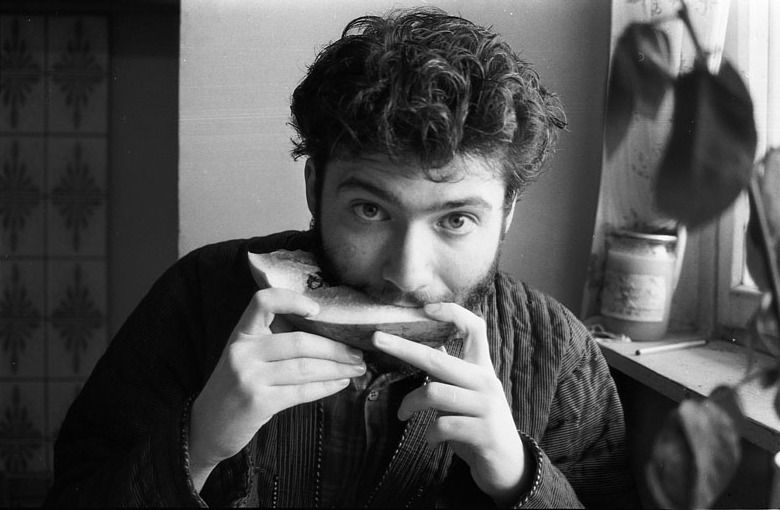
Those who are sharply rich, very responsibly “protruded” all the unbearable. Being poor artists, we constantly sat in expensive restaurants and caught all the “highs” of the rich in this world, not feeling the dangerous and painful aspects that our friends-businessmen had to experience. We were in a very greenhouse and pleasantly adventurous state. It did not seem to us that we ourselves should strive to acquire money or become super -affected artists. For some reason, we did not have such a thought.
- How do you evaluate the transformation of contemporary art into industry and over time almost to pop?
- Positive. I am generally very good about popping. She ceased to be underground practice, and there are two ways: either simply turn into something unnecessary and forgotten, or turn into goods and popes. Better, of course, the second.
- Let's talk about your literary activity. Your most famous novel “Mythogenic Lyubov Cast” was conceived as the most important project of the art group “Inspectorate“ Medical Hermers ””, which you included in the nineties ...
- Everything was not entirely true. I began to write this novel in 1987 in Prague, before I met my colleagues in Medgermeneutics. Initially, I wanted to write the whole novel with a pen and mascara on the dense sheets of Watman. Very beautiful handwriting, without making any drops and corrections. The novel was conceived as a masterpiece of calligraphy. I withstood about eight sheets in this mode, then I began to fix it and decided that if corrections crept into the text, then the project “collapsed”. And I forgot about him for three years. Then, already with Medgermeneutics, we often arranged exhibitions in Europe. And in Milan, I suddenly met my colleague and friend Seryozha Anufriev. We lived in the beautiful Arena Hotel near the ancient Roman ruins. Once, very amused, I began to tell Seryozha the plan of Roman. The novel was not supposed to be comic, but the story plunged us both into a state of ridiculous hysteria. At some point, we decided that we would write it together. We bought beautiful notebooks in different cities, constantly wrote a novel in different places for almost ten years. Apparently, we wanted to write what is called "Big Russian literature." It is clear that it is customary to write such novels in Italy or Switzerland, and we were then in these countries. And our longing for the homeland spilled in a foreign land on the pages of notebooks. In parallel, we arranged for all our friends a reading of freshly written chapters.
- Are these notebooks preserved?
- Certainly. I hope to ever sell them at the auction for fabulous amounts.
- And how are the picture and text combined in your work?
- Sometimes, just for acceleration of what is called, the picture is drawn, then a signature is made, then the signature grows, crawls to the next page, begins to live on its own, since the text is like mold or mushroom -shaped structure - it is self -produced.
- These practices are associated with the Moscow conceptual school, with the generation of Ilya Kabakov, Andrei Monastyrsky, your father Viktor Pivovarov. Do you think you have left the Moscow conceptual school?
- We did not strive for separation, but wanted the maximum “sticking”.
-In the 1990s, did you become part of an unofficial culture?
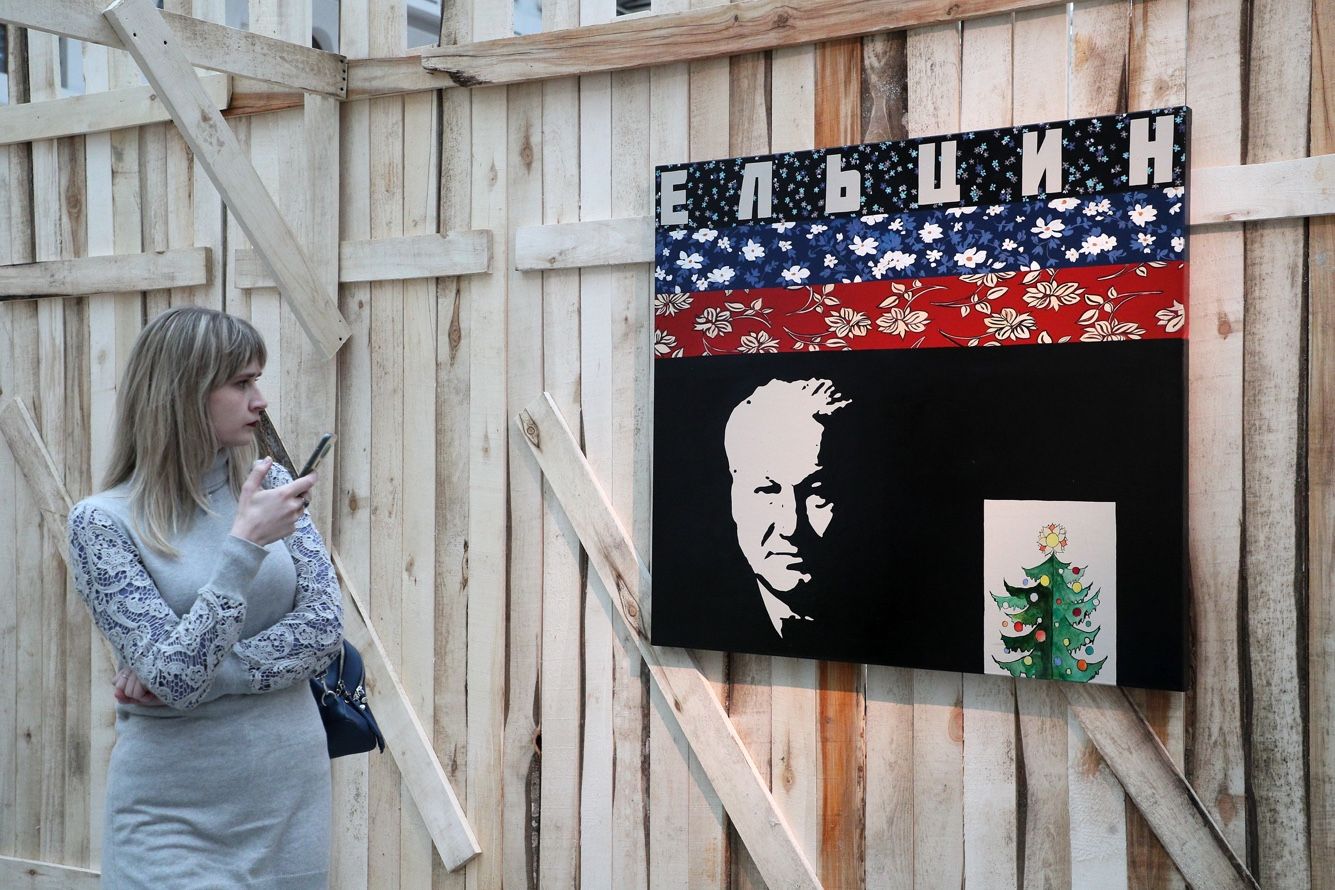
-It is better to start about the nineties a little earlier, since the 1980s. I ran between Moscow and Prague, while in Moscow my mother and I mainly lived in Peredelkino. It was very interesting there, because I grew up in the “bowels” of the phenomenon that was once called the “Moscow unofficial underground culture”. All already pronounced names: brewers, taverns, monastic, as well as the older generation: Igor Kholin, Henry Sapgir, Yuri Mamleev - it was a large circle that includes several generations of artists and writers. But at the same time, it was interesting for me to communicate with representatives of official Soviet culture. At one time, he made friends with Arseniy Tarkovsky on the basis of games of chess, he was in the house of Valentin Kataev. The world of "Soviet magnificent elders" also impressed me very much. Of course, a “flight into space” is a completely separate milestone, where Boris Yeltsin was the flight leader, and “astronauts” were all former residents of the USSR. Someone experienced a “flight” as a complete catastrophe, someone as a holiday and euphoria.
-You have a character of an investigator-starter in different texts. Why?
- You can recall the wonderful ancient times when I was part of the “Inspectorate“ Medical Hermeneutics ”.” We then called ourselves “inspectors”, which is very close to the concept of “investigator”. As Sigmund Freud said, "the main task of a person is a study." The investigator is between the researcher and the following.
The study is not only followed in the wake, but also leaves traces. One of these traces is the investigator as a cultural hero. The investigator Kursk is not just very old, but also, as it turns out, is immortal. In addition, he at some level understands that in reality he is not, that he is just a literary character, products of consciousness, on the one hand, tired of the detective genre, and on the other hand, who has humbled this genre with the infinity and inevitability of this genre.
- You probably had an ambition to add a new “great investigator” to the gallery of famous detectives? Sherlock Holmes, Erkul Poiro ...
- Well, yes, of course. There was such a playful thought.
- Does the figure of the investigator appear for the first time in the collection “Swastika and the Pentagon”?
- Yes. Kursk is also present in the collection "Military Stories", finds Ben Laden. Just in one of the stories of this collection, it turns out that the Kursk is immortal - the physically immortal investigator to Kursk was not yet in the history of the detective genre.
- Your world rests on the fantasides of the cities of the future at one end, which will make all of humanity happy, which will live before. Another end is the past of universal trust, carelessness, sexuality and eroticism, which is clearly nostalgic and constantly leaving us. Are you uniting these worlds?
- I would compare these worlds with fantasies with which a falling asleep child spoils my brain. He dreams, say, about the hit by the uninhabited island. One evening, before going to bed, he imagines a shipwreck, his arrangement on the island. The next evening, he creates a slightly different version of this fantasy. At the same time, fantasy plays the role of a conductor who should take the child into a dream, “euthanize” him. I am sure: we all remain such children.
- Regarding the children and the worlds created for them: in one of the texts of the new collection, you expose the worlds of Peter Pan ...
-Firstly, my “Pollyuk” on St. Petersburg Pan from childhood is due to the coincidence of our initials with him. In addition, I was always interested in the theme of “otherworldly infantilism” and the mystical gloom of some children's, outwardly harmless narratives. Remember Peter Pan: "Some boys are so curious that they fall out of strollers, after which they can no longer die."
It is clear that they have already died at the time of falling out of the stroller. As a child, I often experienced the condition of a deceased being. Now it arises in the happiest moments of my life. This is such a happy self -deception: I will not die, because I have already died, this unpleasant moment has been passed and you can now forget about it.
- And how do you feel about Michael Jackson, who periodically appears in your texts?
-He is important as the king of pop music, moreover, he appears in the role of the last universal king. This is the meaning of his marriage with the daughter of the previous king Elvis. This marriage matters inheritance of the throne. And, of course, inherent in Michael Dimio, tragedy, genius, its ecological protest, the myth of the child prodigy, the conflict of reproaching black to white, additional fairy -tale mythologization of white color. The tragic death of Michael Jackson in 2009 marks the end of the global, unified mass culture. After this event, the mass culture breaks up into a network of subcultures.
- Why do you have so many deaths in your prose?
-Due to an overabundance of deaths in life, their meaninglessness, devaluation. Film is a reversible death. The actor in the cinema falls and dies, then gets up and goes home. It also happens in children's games in the yard. So the effect of cards from “Alice in the Wonderland” arises, which at some point says: “After all, you are just a deck of cards! A deck of cards - nothing more! "
- With all this, when you read your texts, it seems that death and sex are described with ease. Your people connect and die quite easily. And what is it difficult for you or scary to write about?
- Death and sex are accompanied by anesthesia. I, as a kind of amateur anesthetist, am applying special "anesthetic forces." In this sense, I do not look like most modern authors who, on the contrary, want to aggravate a pain signal. I am trying in every possible way to introduce the reader into a state in which it is impossible to catch a pain signal.
“It seems your heroes feel almost nothing?”
- Still, they feel something, despite my efforts to completely anestize them.
- What are the "true hallucinations" that you are writing about?
- This is a psychiatric term. In psychiatry, two types of hallucinations are distinguished: Oyeroids and true hallucinations. Opeiroid is a hallucination that occurs behind closed centuries. A person closes his eyes, while he does not sleep, but sees subopy images. And true hallucinations, True Hallucinations, are woven into the fabric of reality. Their person observes open eyes, and he can not always draw a border between genuine reality and a hallucinatory effect.
-Can you talk about some important true hallucination for you?
- There were many of them. One of the remembered true hallucinations was somewhat reminiscent of the ending of “Don Juan”, when a commander comes to Zhuan and their fatal handshake occurs. At some point, I saw in reality a bulky creature of the “pseudo-river type”, clearly from the category of revived statues. And this creature ran into me, significantly, but silently demanding something. At some point, my hand was extended, or rather, a hand. In response, like the bold and insignificant Don Juan, I handed my own, and then the “piercing” of our connected hands occurred with lightning, almost a Hollywood shot. After that, I suddenly was left alone with a convulsively clenched fist, while with a reliable feeling that there was something in the fist. When I unclenched my palm with some difficulty, I saw that there was a small toy-a small astronaut, such once hung on Christmas trees. I thought: "How pleasantly this unpleasant adventure ended!"
-In your texts there is not only contempt, but a feeling of “superficial” gadgets that take away from something true. Do you resist the technology?
- I am not from the category of “opposing” anything characters. Here I would like to mention such an important difference as “white and black technique”, likening the difference between “white and black magic”. “White technique” is “holy” technique: air conditioning devices, a refrigerator. I adore air conditioning, refrigerator, washing machine, toaster. And there is an “evil” technique, “black” - all sorts of sound -reproducing “gadgets” and so on.
- It turns out, the white iPhone - mimifies?
- Many gadgets "flicker". Now almost all the technique has become “silver”, it is such a slip between “white” and “black”.
- Are you interested in politics?
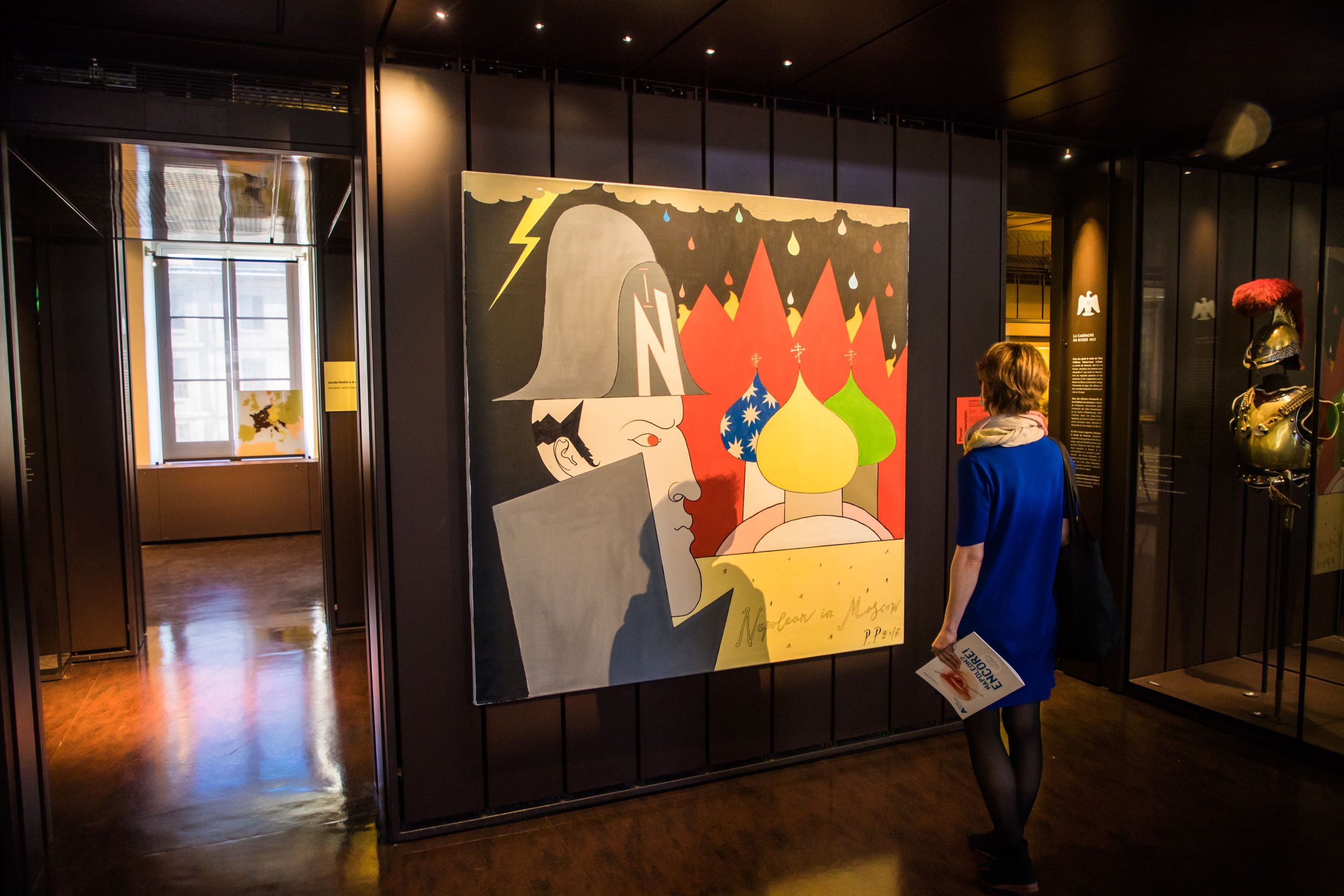
- If we talk about politics, then I was always curious how this area interacts with a hallucinatory reality. As a child, I had a subscription to the Crocodile magazine, and there I was interested in exclusively political caricatures. However, I was not politically engaged. I liked the imagery itself, a kind of horror that these pictures radiated: an icy old woman crawls out of the grave, squeezes an atomic bomb in his hands, the old woman says “Cold War”. We lived in the houses of creativity, it was such a completely magical, utopian socialist structure. Aunt always sat in the “dressing room”, there was a phone on which it was possible to call Moscow, and huge piles of newspapers lay. And I patiently leafed through these newspapers for hours in search of political cartoons, they didn’t come across so often! Each time in the space of the newspaper I saw a painted picture, I rejoiced as the native of the now forgotten characters, such as Forster, Rogers Smith, Pinochet, Zionism. For some reason, I loved all these characters. In the political caricature, there is something from the art of the European Middle Ages or an icon.
- How do you feel about the aging of the body and soul?
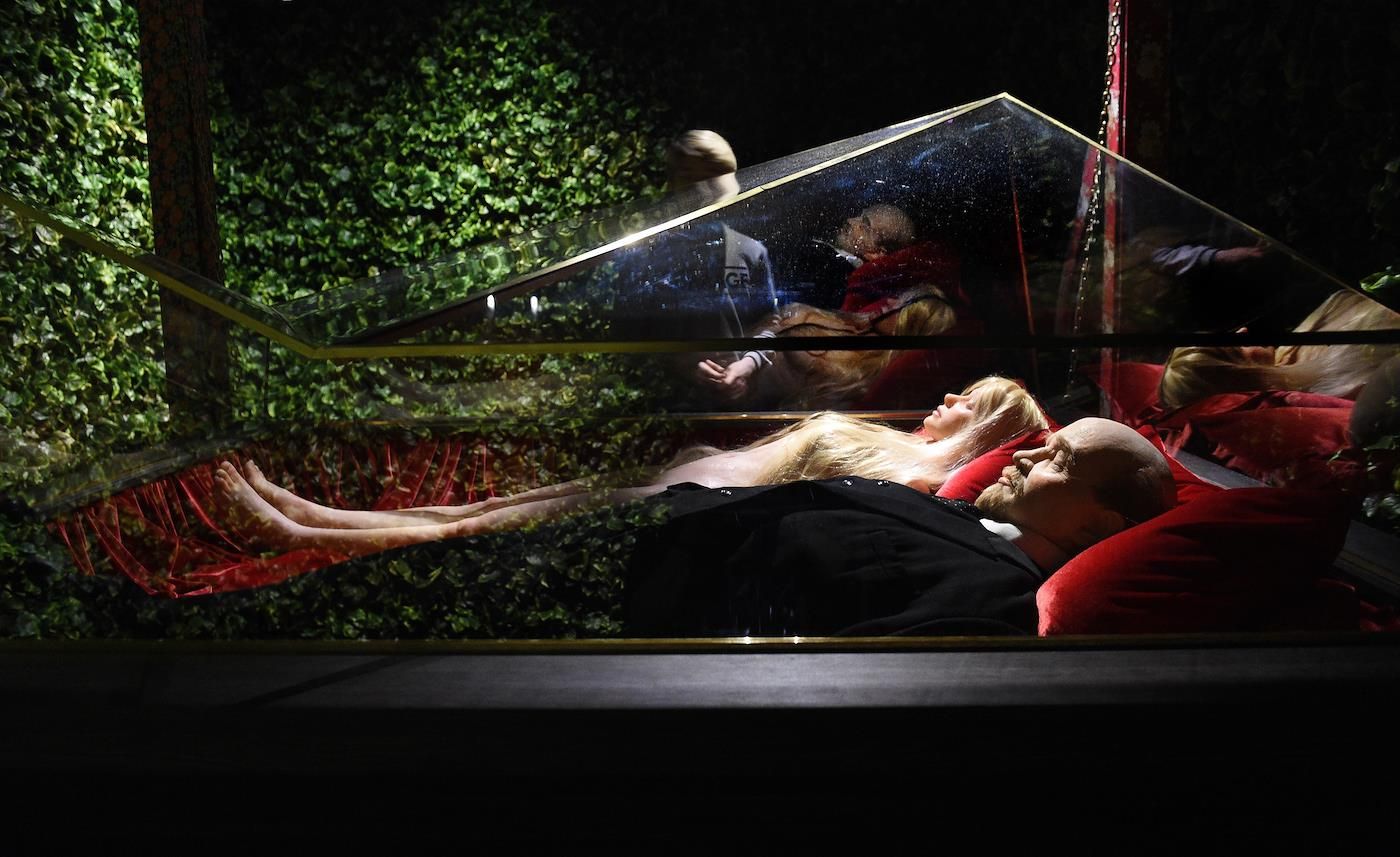
“Peter Pan, Michael Jackson - infantilism icons, icons of ignorance.” Peter Pan does not get old, he is immortal. Michael Jackson does not get old. He just dies. It’s not bad if the death is replaced by disappearance. When a person dies, instead of him there remains a very indecent object called "corpse". At the moment when the soul leaves this world, the body must completely disappear. And preferably without external participation. Сказать о человеке, что он умер, можно только после освидетельствования его мертвого тела. Возможно, эта неприязнь к мертвым телам мотивирована в моем случае какими-то генетическими еврейскими аспектами: известно, что у евреев погребение совершалось «бегом». Любая медитация на мертвое тело в еврейской традиции была предосудительной, что объясняется, видимо, жарким климатом Ближнего Востока и условиями полукочевого существования.
- How do you feel about feminism?
— Феминизм «взрослого типа» меня не привлекает, а подростковый мне очень нравится, я его всячески поддерживаю. Это такой оголтелый феминизм из разряда «Валить надо этих козлов!».
Если говорить серьезно, то я радикальный феминист. Я убежден, что довольно скоро никаких мужчин не будет. Вот и отлично, зачем они? У меня даже была выставка на эту тему — останутся женщины, а, для того чтобы им было приятно, возникнут автономные морские фаллосы, которые будут петь песни, рассказывать сказки, с ними можно будет общаться и заниматься любовью.
— Один из героев вашего романа «Странствие по таборам и монастырям», цыганский царь, попадает на съемки проекта Ильи Хржановского «Дау». Вы ведь и сами побывали на этих съемках и иронично про свой опыт рассказали в книге?
— В этом романе под соусом фантасмагорического повествования описано очень много реальных обстоятельств и кластеров. Один из таких кластеров — искусственные миры. Например, некий искусственный советский научно-исследовательский институт — ненастоящий, киношный, его создал Илья Хржановский в Харькове.
В какой-то момент он позвал меня участвовать. Мы с друзьями приехали в Харьков и провели на съемочной площадке ровно сутки. Мне там вообще ничего не понравилось, я в тот же вечер в ужасе вылетел оттуда, как пробка из бутылки с шампанским. Мы все сбежали. Было ощущение, что мы избежали чего-то жуткого. Это я говорю, исходя из наших собственных психем, а не к тому, что я в целом отношусь к этому плохо. Человек создал свой мир, и другие люди даже почувствовали в этом мире себя как дома и резвились в нем. Но это его мир, мир этих людей. С нашими мирами он вообще никак не совпадал.
— Почему вашему герою Дунаеву из «МЛК», который одновременно является Колобком, противостоит Карлсон как олицетворение фашистских сил? Ему пропеллер мешает ускользать? Почему он оказался «по ту сторону» баррикад?
— Да, Карлсон — это существо, которое охотится за ускользающими, в данной мифологической сетке, кромсает их своим пропеллером. Он выступает как один из западных магов. Соответственно, является олицетворением «Люфтваффе». Сквозь Запад медленно, но верно проступает Восток, это образ Шивы. Хотя он имеет и некоторые пересечения с буддизмом, потому что не стоит забывать, что пропеллер Карлсона запускается через пупок, а медитация на пупок — это важнейшая буддистская практика, так что роль пупка как некоторой точки силы очень важна, и стоит задуматься о том, как устроен внутренний мир Карлсона — не психологический, а физиологический, как устроен его скелет, каким образом пропеллер подсоединен к пупку. Я думаю, что впоследствии ученые будут заниматься этим вопросом, составлять схему скелета Карлсона.
— Вы были погружены в советскую индустрию детства через родителей, которые работали для советской литературы. Виктор Пивоваров рисовал детские иллюстрации, ваша мать писала стихи. В вашей прозе почти все мифологические или детские герои либо сразу всех убивают, кто рядом с ними, либо они такими авангардными становятся. Вот как вы с ними работаете и кто из героев, над которыми работали ваши родители, для вас, возможно, является важным персонажем?
— Очень важная тема — тема петли. Процесс превращения добрых, ласковых и нежных героев детского мира в злых существ придумал вовсе не я, а современная западная культура. И не только западная: достаточно произнести слово «Япония», чтобы понять, где еще это происходило. Это важный для нашего времени процесс — «триллеризация» сказки. Сказка изначально не предназначалась для детей, она была для всех. Затем, в XVIII веке, сказку стали вытеснять в детский мир. В XIX веке появилось мнение, что сказки рассказывают детям, поэтому многое отредактировали. Если почитать оригинальные произведения, хотя бы братьев Гримм, то там триллер на триллере. То же самое можно сказать и о русских сказках. Канон детской литературы составили уже «смягченные» версии первоисточника. Но позже запустился процесс некоторого возврата, который мы повсюду наблюдаем в массовой культуре.
Образы кровавых мишек придумал не Павел Пепперштейн. Я, скорее, возвращаю сказки в XIX век уже после того, как они осатанели и проявили свои жуткие разрушительные свойства, хочу втянуть их обратно в ласковый и нежный мир. Но придется принять их туда со «следами» их грехов и преступлений.
— Одна из моих любимых сцен в книге [«Странствие по таборам и монастырям»] — убийство художников Чепменов, братьев-близнецов, во время праздничного ужина после их выставки. Ужин проходит в инсталляции другого молодого китайского художника. То есть, по сути, они погружены в «матрешку» современного искусства. И в ней они умирают, не выходя в реальность. Вы сами в этой же матрешке?
— Не хотелось бы какие-то банальные вещи говорить, но придется: то, что когда-то называлось «большой культурой», в какой-то момент перестало существовать. Возможно, временно, но она в данный момент распалась на субкультуры. Эти субкультуры реализуются в виде кластеров, которые и описаны в этом романе.
Мы уже коснулись примера «киношного» кластера, и в числе прочих описан кластер современного искусства, как одна из таких «сект», существующих в современном мире и играющих важную роль в структуре современного мира. И конечно, эпицентром этой псевдорелигии является на данный момент Лондон. Один из важных «храмов» — галерея Тейт Модерн, где и происходит это ритуальное убийство.
— Вы описываете зоны, в которые люди обычно убегают от реальности: мир ролевиков с эльфами с автоматами, рейв-вечеринки, мастерскую художника. Как вы сами спасаетесь от реальности?
— Грубо говоря, никакой реальности нет. Это большой вопрос: от чего надо уходить? Просто создаются различные типы неких субреальностей. Если мы их не создаем, то за нас делает это кто-то другой, мы просто в них оказываемся. Можно полностью принадлежать той или иной субреальности, погрузиться в нее, а можно, как пытается этот роман показать, скользить между этими субреальностями, переходя из одной в другую. Для меня второй вариант предпочтительнее.
— Почему вы так часто используете в своей прозе двойников?
— Во-первых, я родился под знаком Близнецов по знаку Зодиака. Тема раздвоенности мне всегда была близка. А с другой стороны, мне хотелось взять предельно банальную тему, потому что трудно найти более «заезженную» тему в приключенческой литературе, чем тема близнецов или двойников. И мне кажется, что это — один из нравящихся в целом мне приемов, когда берется какая-то суперзаезженная тема, и в ней обнаруживается некий более или менее неожиданный источник удовольствия.
— Не кажется ли вам, что ваши «мифотворческие миры» пересекаются с какими-то пелевинскими историями?
— Пелевин — великолепный писатель-сатирик. Меня трудно назвать сатириком, точнее, можно даже сказать, что я «антисатирик». Скорее, меня можно отнести к немногочисленной категории «писателей-эйфоретиков». Про Пелевина такого точно не скажешь, он действительно язвит и обличает, указывает обществу на погрешности или иллюзии. Его любимая тема — «буддийская критика» иллюзорности всего. Я считаю это и так более или менее понятным, не особо заостряю на этом внимание. Скорее, речь идет о поисках «эйфорических» ощущений. Про Пелевина, я думаю, нельзя сказать, что это — писатель «в поисках счастья». А обо мне — можно.