
Translated material
"Rumors about the divorce" Sber "and Mail.Ru do not concern us." The head of Delivery Club about the disputes of shareholders, couriers and the capabilities of IPO
Unlike thousands of other businesses in Russia, Delivery Club did not lose on the pandemic, but acquired: according to the results of 2020, the revenue of the delivery service reached 10 billion rubles, which is 2.3 times more than in the “well-like” 2019. But a loss also grew, and scandals with a strike of couriers and rumors about the “divorce” of Sberus and Mail.ru Group forced to think about the cloudlessness of the future company. In an interview with The Bell, the General Director of Delivery Club Guvanch Donmes told how the service coped with a multiply increased stream of orders in the pandemic and accusations of a inhumanly high commission, which the company thinks about disputes of shareholders and prospects of IPO and why the Russians never smile.
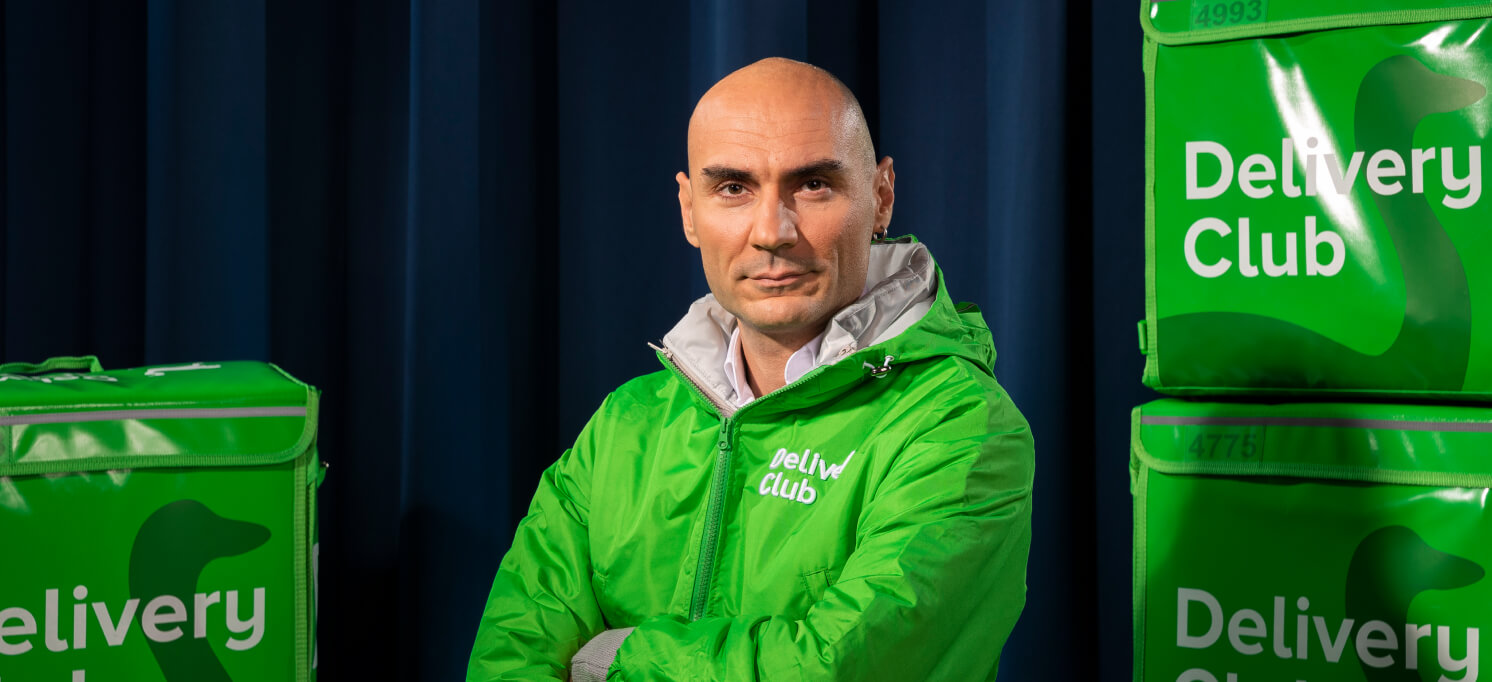
About the challenges of the pandemic
- Delivery Club is the very rare business in Russia for which Lokdown has become good news. Have you been ready for the fact that immediately after its announcement, the load on the service would take off to heaven?
- We were more ready than many other companies in Russia. We watched China, Europe, especially Italy and Spain. We talked with companies that are engaged in delivery in these countries, they shared experience with us. Thanks to this, in 2020 we held over 65% of the market for food delivery aggregators in Russia.
- What had to be rebuilt inside?
- First of all, we reacted in terms of safety of couriers and customers. One of the first in Russia was offered non -contact delivery, refused to pay cash. They worked together with Rospotrebnadzor to change the standards of hygiene and courier equipment for the entire industry. In addition, they accelerated the connection of restaurants to our platform - a lot of applications began to arrive after the announcement of the locaun.
- How many restaurateurs connected to you during the pandemic?
- At the very beginning of Lokdown, we had 15 thousand restaurants. This is the base that we have accumulated over 9 years of work in Russia. And over the year, Pandemia added another 20 thousand restaurants. And now we work with more than 40 thousand restaurants, that is, we have grown 2.5 times a year and a half. We also reduced the commission to 0% for restaurants that were connected to us during the coronavirus and delivered orders with their own couriers, doubled tips for our couriers: if you left the courier to tea during the Lokdown, we added the same at our own expense. We launched a support program for non -net restaurants to help independent small establishments, most strongly affected by the closing of the halls.
- How much did you spend on this?
- It was in support of restaurants that we invested 300 million rubles. But this is far from all. At the very beginning of the pandemic, we very quickly launched the Take Away service - orders for removal from restaurants that are connected to Delivery. They expanded the delivery zones for restaurants to increase the number of orders, because the roads were less than traffic and the car could be faster to anywhere in the city. They began to cooperate with the Sitimobile - customers asked us to deliver dishes from central restaurants to remote areas, and we connected taxi drivers to this. We launched delivery from grocery stores, pharmacies and pet stores. During this period, we accurately launched new products more than in the previous 10 years.
- You are talking a lot about the support of restaurants, but the restaurateurs themselves have repeatedly complained about the inhumanly high commission of aggregators during the pandemic.
- We understand that restaurants had a hard time during this period. And one of the points of our support was a decrease in the commission for them - if you hire your couriers, we took nothing at all for the presence on the platform. But in general, delivery is an additional business, we are not cannibalizing visitors in the hall. Remember yourself, for example, in bad weather. You order delivery so as not to go outside. If the restaurant did not deliver food, on this day he would simply have lost you as a client. If you planned a meeting in a restaurant, you will go to a restaurant. If you initially planned to spend time at home, then order food from this restaurant.
We communicate a lot with partners, with experts, to form them the right attitude towards delivery. This is not a threat to business, this is an opportunity to earn more, the opportunity to reduce purchase prices due to the growth of volumes during delivery development, etc. So when restaurants pay us a commission, they pay for an additional source of orders. To launch the delivery service yourself for most restaurants, especially for non -set establishments, is a long, expensive and difficult. We provide a turnkey service and, of course, want to get something for this. In addition, the price is determined by demand and supply. If restaurants did not see the benefits in working with aggregators, they would not be on the platform.
- But the restaurants had no choice in the pandemic: either to connect to the aggregators and survive thanks to delivery, or close. And there are not many aggregators in Russia that competition significantly regulates prices.
- Of course, everyone wants to pay for the product less than it is worth it. We saw this challenge, and we answered it. The zero commission for restaurants that have their own couriers, while the zero commission for orders of the discharge, reducing the rate of 35% to 25% if our couriers are delivered. One way or another, if the restaurants did not see the benefits in working with aggregators, if it were more profitable to create their own delivery service from scratch, they would not be with us. Now 40 thousand partners are working with Delivery - it means that our product suits them.
- What is laid down in this commission for restaurants? Why do they pay 20-35%, if I pay as a user as a user myself?
- The first is the audience. Additional orders that restaurants receive due to the presence on the platform. The second is the logistics service if the restaurant uses our delivery. And here is not only the costs of moving the courier from point A to point B, which really partially fit on the client, but also the work of the IT infrastructure, thanks to which the courier comes literally by click: 5-15 minutes-and he is in the restaurant. The third is a client service, support. We communicate with customers of restaurants connected to us as with our own. Food is a very delicate thing: if it does not come or is late, people are indignant. All client negativity in such cases we take upon ourselves.
This is only what is on the surface. And inside there are still a lot of technological layers that need to be supported - machine training, distribution systems that help to correctly disperse couriers around the city, etc.
About scandals with couriers and unwanted profit
- Another sensitive moment is relations with couriers. They were the main physical activity during the pandemic period, and they were not always satisfied with the conditions of working with you.
- Yes, indeed, it is to couriers that we owe the opportunity to get vital things in the midst of a pandemic, and for this we are immensely grateful to them. We supported them with reinforced security measures, doubled tips. But it is no secret that some mistakes were made. We tested new algorithms and not always correctly calculated our capabilities - couriers suffered from this. But understand, we had to act very quickly: the growth was crazy, we introduced innovations and checked the hypotheses on the go - otherwise it was simply impossible. Something we immediately rolled back, did not have time, and a negative reaction spilled into a public.
- Tell us about the situation with Delivery couriers strike . How is it over?
- There was an incident with our logistics contractor who did not pay couriers salary. At the same time, we, as a platform, were transferred to this contractor on our part in a timely manner. And in the end, they even did it twice: it was very important for us to pay the couriers in the first place, and then to understand. This case taught us that it is better to control logistics partners. Now we do this very carefully: we reduced their number, increased the base of self -employed couriers to pay them directly, monitor the satisfaction of the couriers with work, conducting a survey in the courier application.
“ Have you sued this contractor?”
- We just immediately terminated all the relationship with him. The contractor paid for the second time, the contractor returned in a pre -trial manner.
- After that actively illuminated strike, did you have problems with the couriers?
- No, nothing global. We pay a lot of attention to this part of the business and constantly analyze the values that we give couriers. What are these values now? The first is a quick connection to the system. The courier can start working with us on the day of handling. The second is flexibility. The courier himself chooses his schedule. He can work both the full day and combine with another work or study. Third - per hour we pay on average higher than other companies that hire people for hourly work. The courier needs only sneakers and a smartphone - and now he already has a stable job, the involvement in which he can regulate as he wants.
- The number of orders with the beginning of the pandemic has grown a multiple of you. Typically, this follows a sharp drop in the quality of the service. How did you have?
- The formula is a little more complicated, it consists of three components: the number of orders, the quality of the service and the price of the service. You can improve the first two indicators at the same time, but then the price will increase. What happened to Delivery in 2020, I consider almost a miracle. The number of orders has doubled, and the Contribution Profit indicator (operating profit to order. - Approx. The Bell ), which was negative, we reduced by 70%, and the service also remained at a good level: we did not increase during the Lockdown, but, on the contrary, reduced the average delivery time - it approached 30 minutes.
- Reducing 70% losses in each order is very cool. What did you donate for this?
- We were actively invested in technology: for example, in the already mentioned algorithmic system for the distribution of couriers. Previously, we painted manually delivery zones, and they looked just like circles. But the analyst team came to me and said that this part of the business can be optimized: to calculate the exact speed of couriers, take into account the features of the infrastructure of a particular area and thus determine how quickly couriers can move there. The algorithm has analyzed all this and drew new delivery zones - now they look like the wrong polygons.
Now let's count: we deliver about 250 thousand orders a day. If you reduce the delivery time of each by at least a minute, this will allow us to complete an additional 4 thousand orders per day. We also began to work more thoughtfully with discounts, but the main contribution to the reduction of costs to order is in technology.
- 2019 you finished with a loss of 5.3 billion rubles. Due to significant investments in technology, according to the results of 2020, did this figure increase?
-In 2020, the loss grew, but slightly [according to the SPARK, the loss of Delivery Club LLC amounted to 5.8 billion rubles-by 500 million rubles more than in 2019. - approx. The Bell ]. At the same time, in addition to investments in technology, we actively developed the direction of delivery of food products - this is a very promising niche, but now it requires investment. Plus, you need to look a little deeper at our restaurant business. It consists of two parts: the first is the marketplace, when the restaurant itself delivers the order, the second is the delivery of our couriers. In recent years, we have been actively developing our own logistics, this makes delivery faster, improves user experience, and increases the frequency of orders. Now we deliver more than 60% of orders with our couriers, three years ago their share was less than 20%.
But the fact is that the express delivery is without restricting the minimum check-and we, unlike the delivery by restaurant forces, do not have such a restriction-not at all a high-marine business. Let's see the example: I open the Delivery application, I choose the restaurant "Roll No. 1". Suppose I want to order one portion of rolls for 360 rubles for lunch. Delivery 39 rubles. We pay the courier 120 rubles per order plus 20 rubles per kilometer, in this case the courier will earn 160–180 rubles. So the commission that we receive from the restaurant will also go to pay for the work of the courier. And in the framework of this delivery, we will be either in the minus, or work to zero. But the very opportunity to simply open the application and without limiting the minimum check to order yourself coffee motivates with more probability to try the service and become its regular client.
- Does your plans have a profit?
- Certainly. We have an understanding of how to bring the business to a positive unit economy, and we will do it. In 2020, we decided to concentrate on the growth and technological development of the company - this required investment. Answering the question: specifically now, between the operating plus and growth, we choose growth, but this strategy in the near future will allow us to achieve much more from the point of view of the economy.
- That is, you already have a working formula for profit, you just don't want to use it?
- Yes, we know what to do, the only question is in priorities. Now we are in the planned balance between the rapid growth and improvement of unit economics. The delivery market from restaurants in Russia is still tiny, the delivery of products is even less, and it is more profitable for us to take most of them, and to think about profit a little later.
The formula consists of simple elements: to grow the volume of the main food delivery business, namely, attract new users and increase the frequency of orders, improve the quality of the service and develop new services. For example, the Take Away service is very popular - the weather is good, people have become more likely to go outside, but they still do not want to stay in the restaurant hall for a long time. More recently, we launched non -cash tips. Last year, we launched the delivery of products from stores, which also became a very popular pandemic. As a result, the services that are not related to the delivery from restaurants already bring us 10% of the revenue.
About competitors and poor Russia
- The delivery of products in the joint enterprise Sberus and Mail.ru is quite successfully engaged in the “scooter”, and a relatively recently purchased “kitchen in the area” delivers ready -made food in 15 minutes. Does this internal competition do not bother you?
- All these services are in Delivery Club, they do not interfere with each other, because they close different needs of the client. If you need a very quick delivery of products in 15 minutes, but with not such a wide range and a little more, the client chooses a “scooter”. If you need some very large order, you can arrange it in Auchan or Metro through Sbermarket-they will be brought during the day. You can order directly in the "magnet" or other national retailers-there the assortment as in the offline stores of these companies will already bring our couriers in 35–40 minutes. And so on.
- What do you plan to do with growing competition from outside? Recently there was a news that Ozon will take up food, launched many new small services that are eating part of the young audience, as it often prefers local independent players ...
- The fact that new players come to our niche and grow the market is wonderful and only to us to benefit. There is no person who is 100% loyal to one service. People have a choice, players are forced to improve the service - this is good. The client is our main boss. And competitors, whether giants or small applications, help us do our job better.
Am I afraid that competitors will win us? No, because I know what needs to be done in order to hold leadership in the market.
- You mentioned that your market share is now 67%. But a few years ago, you were 87%. What is this fall related to?
- Until 2017, Delivery did not have its own logistics service, the project itself was quite small. But there were few competitors. In 2016, Foodfox appeared, which was bought by Yandex, the company began to grow rapidly. Delivery did not immediately react to this. In 2019, management changed, including me, and we returned part of the lost share. Now we are working to increase it further.
- How are you in cities in addition to Moscow and St. Petersburg? Indeed, in Russia outside the capital, the standard of living and solvency of people is seriously lower.
- Yes, this is so, and it is not easy to grow geographically in Russia. But we confess the philosophy “Delivery for All” and reached not only the top 20 large cities, but also in very small settlements. Now the Delivery service is available more than 50 million people.
- How do you choose which cities to go, and where people are not yet ready to order food home?
- Of course, it is necessary that in every city of our presence there is a demand for delivery (income, Internet penetration, current performance of restaurants for delivery, etc.): our marketing team is studying in advance. You need to connect the minimum number of restaurants necessary for the work of the platform: a commercial team copes with this. And the third - you need to attract the attention of the consumer to a new opportunity: as a rule, in the regions this is best succeeded in the expense of discounts. This is a very painstaking work that we do before each exit to the new city.
- That is, by and large, access to the regions is a certain subsidized story for you? Вы это делаете, чтобы удержать долю рынка и увеличить узнаваемость бренда?
- No, this is not so. Мы инвестируем в регионы, чтобы зарабатывать. Естественно, когда мы только выходим в регион, экономика заказа у нас отрицательная, и в минусе она держится дольше, чем при выходе в крупные города. Но это все не критично и управляемо. В остальном наша экономика в других городах не отличается от экономики в Москве и Петербурге — естественно, выручка ниже, но юнит-экономика тоже положительная.
О «разводе» и IPO
— Вы сейчас входите в две большие экосистемы одновременно — «Сбер» и Mail. Расскажите, какая из них приносит вам больше пользователей?
— Мы не анализируем, получаем мы трафик из этой экосистемы или из той, просто не мыслим такими категориями, мы анализируем пользу конкретных инструментов. Пользователи приходят к нам, например, из «Еда ВКонтакте», входящей в Mail.ru Group, и благодаря программе «Спасибо» от «Сбера». Они могут подписаться и на «СберПрайм», и на VK Combo, и получать скидки на сервис Delivery там, где им будет удобно.
— А если возникает разногласие по каким-то внутренним вопросам, мнение какой из экосистем для вас более весомо? За кем финальное слово?
— Такого в принципе не может быть: все глобальные вопросы решаются на совете директоров количеством голосов. Если речь о каких-то текущих решениях, например, о смене алгоритма распределения курьеров, — их мы принимаем сами внутри команды, не согласовывая с акционерами. Это наша работа и наша ответственность.
— На совете директоров когда-нибудь сталкивались две непримиримые точки зрения?
— Конечно, дискуссии случаются, но в целом у нас очень дружелюбная атмосфера на совете директоров, и все всегда решается полюбовно. Я чувствую большое доверие и поддержку обоих акционеров, это очень помогает работать.
— В последнее время пресса много писала о как минимум о сложных отношениях акционеров СП, а как максимум — о потенциальном «разводе» «Сбера » и Mail. Известно ли вам что-нибудь об этом?
— Я слышал об этом. Но скажу две вещи. Во-первых, это никак не отражается на нашем бизнесе. У нас есть самостоятельная согласованная стратегия, есть план, по которому мы идем. Так что в целом эти слухи нас вообще не касаются. Во-вторых, мы их не комментируем. Потому что наша работа как Delivery Club — следовать согласованному с советом директоров плану и придерживаться нашей стратегии. Эти слухи — совершенно не фокус для моей команды.
— У Льва Хасиса, который занимается экосистемой со стороны « Сбера», большой опыт работы в ритейле. И он, насколько я знаю, очень верит в доставку, в фудтех, вообще в e-commerce в разных проявлениях. Он как-то помогает вам в принятии ежедневных решений?
— Вы правы, у господина Хасиса огромный опыт работы с бизнесом в России, и мы многое почерпнули от работы с ним как членом совета директоров. Некоторые видят только негатив, но я замечаю и много позитивных моментов и очень рад, что имею возможность работать с топ-менеджерами двух крупнейших экосистем в России.
— О каких негативных моментах вы говорите?
— Я имею в виду слухи вокруг СП. На самом деле все входящие в СП активы получают только пользу от работы с обоими акционерами. Вы можете это увидеть по тому, какой рывок совершили компании с момента создания СП.
— В прошлом августе Delivery должен был получить очередной транш инвестиций от акционеров СП со стороны «Сбера » , но в какой-то момент условия изменились, и акционеры от обеих экосистем платили пополам. Источники на рынке говорили, что это было связано с недовольством совета директоров результатами работы Delivery. Вы можете прокомментировать эту историю?
— Я не могу комментировать действия совета директоров, но могу опровергнуть информацию о том, что Delivery не достиг поставленных результатов. Мы в последние годы всегда перевыполняем поставленные KPI, идем по намеченному пути, и как руководитель компании я доволен этими результатами.
— Один из источников, близкий к экосистеме, рассказал нам, что Delivery Club действительно потенциальный «развод» не беспокоит, потому что компания готовится к самостоятельному IPO. Is it really so?
— IPO — это один из сценариев роста всего СП. Но какой-то потенциальной даты для выхода на биржу на совете директоров мы не обсуждали. Моя роль в компании как CEO — делать так, чтобы она развивалась и удерживала позицию лидера рынка. Это для меня фокус номер один. Когда СП только создавалось, акционеры проговаривали, что одним из возможных сценариев в будущем может стать выход СП на IPO. Но это решение будет за акционерами, я как генеральный директор не могу на него влиять.
В моей карьере уже были проведенные IPO: я выводил на Лондонскую биржу мастер-франшизу Domino's Pizza в России в июле 2017 года. И тогда я четко понял, что IPO — это комбинация множества вещей, которые должны сойтись в одной точке. Нужно найти подходящее время, правильное настроение рынка. Это может случиться, а может и не случиться, и я как руководитель не могу контролировать это. Но я могу контролировать сам бизнес. Просто делать то, что мы умеем, и развивать компанию.
О будущем фудтеха и российском менталитете
— Фудтех сегодня — понятие очень широкое. Стираются границы между доставкой готовой еды, продуктов, доставкой товаров первой необходимости, доставкой из аптек. Как, на ваш взгляд, будет выглядеть рынок доставки через 3–5 лет? И какое место на этом рынке будет занимать Delivery?
— Я вижу два больших тренда на рынке, которые в ближайшие годы, на мой взгляд, будут усиливаться. Первое — мы ясно видим, что доставка сама по себе как явление становится все более распространенной, люди привыкают к тому, что получать желаемое, не выходя из дома, — это удобно. Второе — скоро вообще исчезнут категории товаров, которые нельзя получить через доставку. Мы доставляем товары для животных, лекарства из аптек, косметику, цветы и продолжим расширять количество охваченных сфер. Рынок трансформируется, и мы удерживаем во всех его сегментах лидерскую позицию.
Пока мы будем держать руку на пульсе изменений, это останется неизменным. Я верю, что мы в самом начале пути. Но все-таки Delivery — это изначально сервис про еду, и основное наше внимание будет сосредоточено на вещах, которые помогают клиентам вкусно питаться.
— Вы довольно давно живете в России, но говорите только по-английски. Извините, если вопрос покажется некорректным, но вы принципиально не учите русский язык?
— [Говорит по-русски] Я на самом деле говорю и понимаю по-русски. Но у меня уровень Intermediate, а этого недостаточно для бизнес-переговоров. Чтобы выучить русский на том уровне, который позволит быть уверенным, что я точно пойму и транслирую все верно в разговорах с партнерами, нужно больше времени. Пока у меня его нет, я сосредоточен на бизнесе и семье.
— Как вам вообще в России? Вы довольны уровнем жизни здесь, вам близок наш менталитет?
— Я считаю, что Россия — это страна возможностей. Здесь очень много талантливых и способных людей. Если научиться вдохновлять русских, можно добиться невероятных результатов. Я работал во многих странах — в Швейцарии, в Турции. Моя жена — русская, я познакомился с ней в Швейцарии и влюбился в нее, а потом влюбился в Россию, когда мы вместе приехали сюда.
Я живу не в каком-то жилом комплексе для экспатов, я живу в обычном районе, в обычной квартире, мои дети ходят в государственный детский сад. Это очень важно для меня, потому что я хочу понимать наших клиентов. Я не очень хорошо знаю русский язык, но мне кажется, что я хорошо понимаю психологию русских людей. Многие иностранцы говорят, что здешний менталитет очень тяжелый, что русские никогда не улыбаются, а я отмечаю только положительные моменты. И поверьте, в вашей стране и культуре их крайне много.
Фото, использованные в материале: Delivery Club