
Translated material
Gulag with all amenities
A picture of the ideal world from the FSIN: private toilets and shower for pregnant women in all pre -trial detention centers and colonies of Russia. But only by 2030
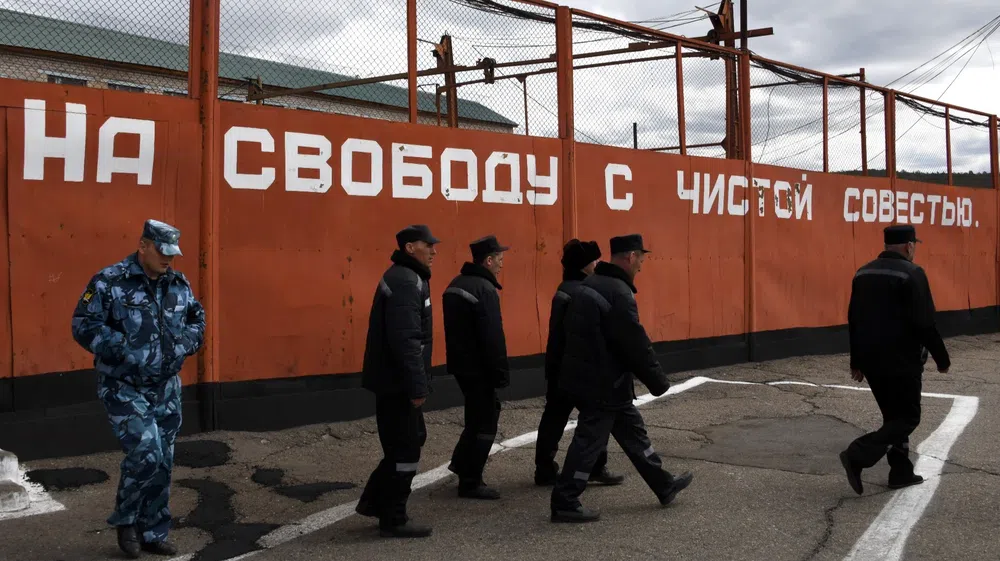
At the end of April, the government approved the "Concept of the Development of the Criminal Executive System of Russia for the period until 2030." This document was developed by the copyright team of the FSIN Research Institute, and later the document was finalized in the Ministry of Justice. A number of amendments were proposed by members of the Council under the President of the Russian Federation on the development of civil society and human rights. The concept is represented by the government as a “planning document” that defines the “goals and priority directions of development” of the penal system.
Thus, over the next decade, the Federal Penitentiary Service will report on promotion in these areas. Sociologist Iskander Yasaveev analyzed the concept from a criminological point of view and concluded that the document would not change the provision of cases with violence, torture, and non -ordering of medical care in investigative insulators and correctional colonies, since it retains the main line of this system - closeness from civil society.
The leitmotifs of the new concept are the words “improvement”, “improvement” and “increase”. The very essence of these words suggests that the Russian criminal-executive system successfully performs its tasks and needs only a gloss. At the same time, the need for “improvement” is justified by references to the “rights of prisoners”: suspects, accused and convicts. “Ensuring rights” is another leitmotif of this document, adjacent to the leitmotif “increase” (“increasing the efficiency of ensuring the rights of persons detained and serving sentences”).
However, the concept does not define and does not solve the fundamental problem regarding the rights of prisoners in the Russian criminal executive system.
The key circumstance contributing to a violation of human rights in investigative insulators and correctional colonies is the closeness, opacity of the institutions of the Federal Penitentiary Service, the impossibility of exercising civic control over what is happening in them. But the concept, despite statements about the need to “increase the level of interaction with civil society institutions”, does not provide for changes in the principles of the formation of public observation commissions (PMCs).
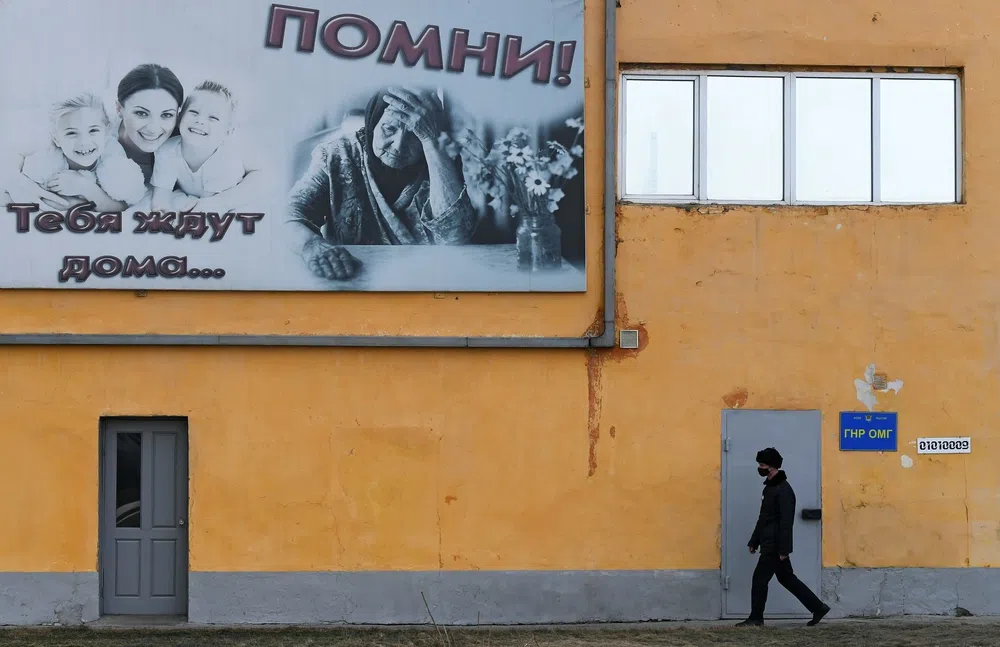
Currently, the Council of Public Chamber of Russia, completely loyal to the authorities and the Federal Service for the Penetration Service, is made by the decision on the composition of the PMC. In addition, public organizations recognized by foreign agents are deprived of the right to nominate candidates for the PMC. A number of authoritative human rights organizations: “Memorial”, “Public Verdict”, (included by the Ministry of Justice in the list of foreign agents) “Institute of Human Rights”, “For Human Rights” and others are already recognized as such. As a result, the recently formed public observation commissions are not independent of the authorities and regional departments of the FSIN, as a rule, they are “their own” in relation to the penal system, which are not interfering with what is happening with prisoners. Independent human rights defenders are gradually excluded from the PMC in the process of reforming the commissions.
The concept states: “Persons freed from places of imprisonment are not adapted to life in civilian society”, however, instead of expanding the possibilities for the rehabilitation and adaptation of prisoners, a new document helps to reduce these capabilities.
In particular, the concept involves "strengthening cooperation and expanding the participation of religious organizations related to the main traditional religions, in spiritual and moral education and education of convicts and persons detained."
But the Russian government refers to the number of “basic traditional religions” not Christianity as a whole, but only Orthodoxy.

Meanwhile, one of the few rehabilitation institutions of former prisoners in Russia are Protestant religious communities acting on the principle of “equal - equal”. Assistance to former prisoners - employment, housing, open, trusting and maintaining relations with other people - are provided in them by those who overcome serious life difficulties that arose after liberation. These communities were previously engaged in "prison service", their participants came to the colony, talked with prisoners, discussed their future with them. Their actions were an example of a “human attitude” to prisoners, the need for which prisoners so often speak in a research interview, but which, in their words, is almost completely absent from the administration and colonies. In documentary work on the situation of former prisoners, including the recent special report “Probation in Russian”, the channel “Editor” and the sociological film “Long Road Back” Dmitry Omelchenko, the actions of such communities that help former prisoners are shown. However, participants in the Protestant communities inform sociologists that the entrance to the colony is currently closed. The expression “main traditional religions” in the new concept of the development of the penal system enshrines the prevention of representatives of the Protestant communities into investigative insulators and colonies to communicate with prisoners.
The concept skillfully uses statistics that create a favorable impression of the penal system and the FSIN. Here, for example, is such a statement: “Compared to 2010, thanks to the effective provision of medical care, the introduction of modern methods of prevention, diagnosis, treatment and rehabilitation after transferring the most common diseases, a decrease in the mortality of convicts, suspected and accused of institutions of the penal system by 2 times (in 2010-4774 people, in 2020-2400 people)”. But after all, the number of prisoners, and this is indicated in the concept, has significantly reduced in ten years - from 864 thousand people to January 1, 2010 to 482.9 thousand by January 1, 2021.
It was this decrease that has become the main factor in a double decrease in the number of deaths.
Of course, the reduction in the number of prisoners over the past ten years is a very important positive trend in the penal system. However, this reduction was again not as a result of the “conducted state policy that expands the possibility of applying alternative criminal punishments that are not related to isolation from society,” as approved in the concept, but mainly due to a significant reduction in the number of recorded crimes during this period, including murders, robberies, robberies and theft. In 2010, 15,563 murders and assassination attempts were registered in Russia, in 2020-7695. The robbers in 2010 were registered 24,537, in 2020-5280, robberies in 2010-164,547, and in 2020-38,392.

The concept pays considerable attention to “improving the medical support of convicts and persons in custody”, but does not provide for fundamental changes in the organization of medical care to prisoners and the possibilities of monitoring medical supply from the outside. This means that non -ordering of medical care to prisoners and its extremely low quality will remain.
Some provisions of the concept indicate the backwardness of the FSIN in relation to hygiene and privacy standards. The new concept provides for the provision of pregnant women and women with young children with a daily shower. This means that so far there is no such possibility and that the rest will not be provided with the possibility of a daily shower. The concept is designed for a ten -year period.
It turns out that by 2030, Russian prisoners in general will still not have the opportunity to take souls daily? The concept also implies “ensuring privacy in the establishment of bathrooms in all institutions of the penal system”, confirming that they have not yet been separate-not separate. In addition, the concept has a provision on “improving ... the procedure for conducting inspections and searches of persons attending institutions of the penal system aimed at conducting these procedures in conditions that do not humiliate human dignity”. Thus, the concept confirms that visiting prisoners is accompanied by a humiliating search. Relatives of prisoners and the former prisoners themselves have been talking about this practice for many years, but the voices are almost not heard.
The new concept involves the “development of a network of correctional centers” for a “multiple increase in the placement of convicts to forced labor”. The expansion of forced labor is one of the main directions of the development of the penal system that caused a discussion in society on a return to the practices of the Gulag. The concept provides for the use of the labor of convicts “during the construction of large facilities, as well as the involvement of the territory of the Arctic zone of the Russian Federation from pollution (production and consumption waste) to the cleaning of the territory of the Arctic zone.” However, the referral to forced labor to “objects of the Arctic zone” contradicts the need to maintain ties with the family declared in the same concept. In addition, the direction of prisoners for forced labor in remote places almost completely eliminates the possibility of civil monitoring the exercise of the rights of prisoners.
One of the sections of the concept is dedicated to the testing, that is, "providing assistance to persons who are freed from places of imprisonment, in employment and domestic structure." But the probation, judging by how it is described in the concept, can be carried out by state bodies in the future in the same way as this is happening now, only in the reports. Moreover, the system of probation instead of providing former prisoners with worthy housing and work can become another mechanism for supervision of them. The only situation that does not cause any questions and comments: “The serving of criminal punishment in the conditions of isolation from society entails weakening, and often a complete breakdown of social ties, the loss of life skills in society, which affects the formation of a maladaptive orientation in behavior and, as a result, committing repeated crimes.” A logical conclusion from this situation is the need to develop alternatives to “isolation from society” as a punishment, but there is nothing in the concept of such a development.
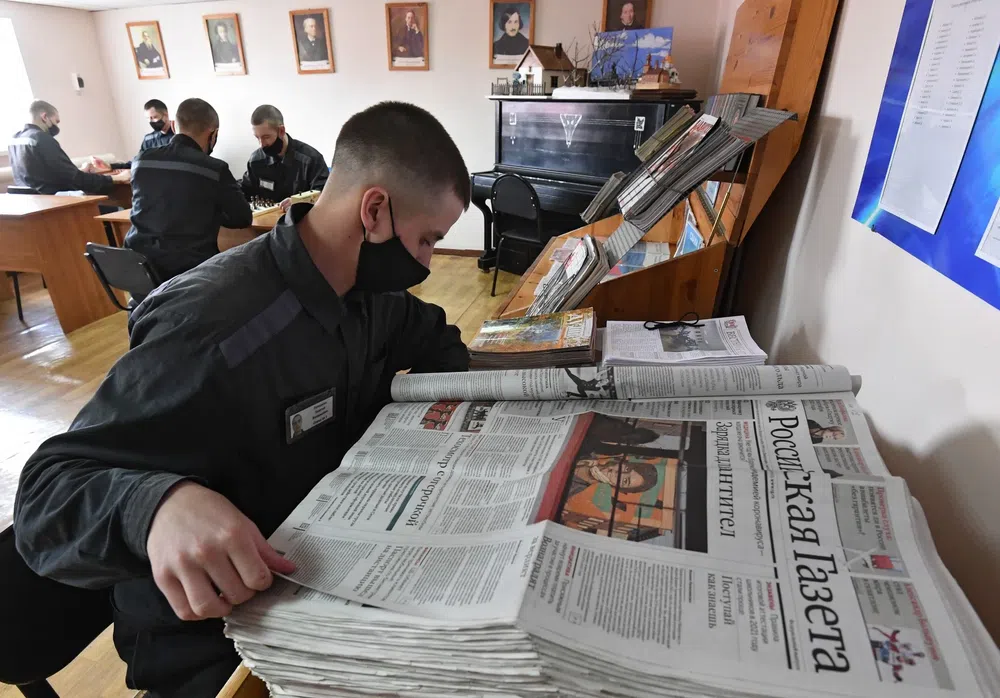
Finally, the new concept is still aimed at correcting convicts through the penal system. And this is utopia.
Modern criminological knowledge suggests that imprisonment has a correctional effect only in exceptional, very rare cases. Based on this, the current purpose of the penal system is not the correction of convicts who is unattainable, but the development of alternatives to the prison and minimizing the harm caused by punishment, in particular, by imprisonment. It is such ideas and steps - the development of other forms of punishment that are not related to imprisonment, and the maximum possible reduction in the harmful effects of the prison - would be in the interests of citizens, and not the presentation of old ideas in a new form, which is the adopted concept.
In relation to the penitentiary system, a lot of modern expressions are used in the concept, including “digital transformation”, but the situation remains the same: it is an extremely closed, inaccessible system of institutions with unworthy conditions of detention, lack of respect for prisoners, torture, press khats, many shadow and corruption practices. The new concept confirms that this system cannot change itself, the current government cannot do this.