
Translated material
Love defeats death
An excerpt from the book “Dante, who saw God:“ Divine Comedy ”for everyone”
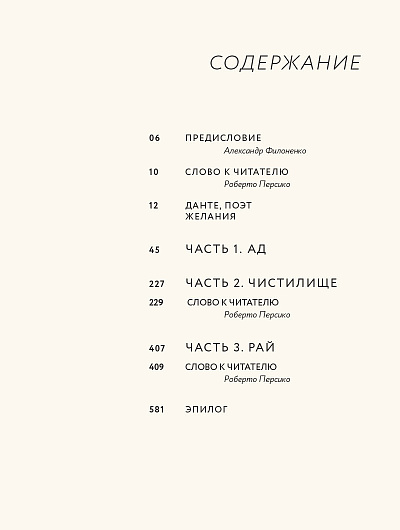
The Publishing House "Nikaya" released a detailed guide by the Great Poem of Dante, composed by the Christian teacher and writer Franco Nembrini. We publish a fragment of the introductory chapter that the “Divine Comedy” is a story about the possibility of saving human life through love, quite earthly, but at the same time heavenly-Eneal.Franco Nembrini. Dante, who saw God: “Divine Comedy” for everyone. M.: Nikaya, 2021. Translation from Italian N. Tyukalova, A. Demicheva, E. Brovko, O. Gurevich and E. Sycheva. Content
 It is difficult for us to get up in the morning, look in the mirror and ask such questions, it is difficult for us to believe that happiness and good are necessary, and the desire is insurmountable; We are not affected by the desire to love and inability to love, it is difficult for us to imagine the horizons of true friendship and look at the versatility of life. And all because people suffer and die, and even if they do not die, they are sure that absolutely everything is permeated by death. It is difficult to recognize this pain, drama and tension in yourself, it is difficult to wish and look for something that could save us from this death, which constrained everything around.
This feeling, this consciousness is unfamiliar to us, we live in a world that claims the opposite: “Leave it, all this nonsense, think about today's day, Carpe Diem - catch the day , enjoy what you bring home today.”
We’ll think about those times when for a guy for twenty years it was absolutely natural, waking up in the morning, going around the city, carrying a question in his heart, and this helped him live, made him feel like a person, not animals: “The food for which I was only born.” The same can be said by the words of Dante: “You are not created for the animal share, / but for the valor and to the knowledge of birth” - you were born to know the truth! And even more! Not only in order to know her by the mind, but in order to meet her and love her truly in order to hug her. After all, if truth exists, it gives the form to all relations, it is a realized good. Moreover, having known the truth, we love reality, since it is a container of truth; Then time can become creative, positive, and you can feel that life is useful for yourself and for history.
When I am talking about "desire", I mean three things. All of them are so rooted in a person, so inseparable from his essence that they could be called three personality dimensions corresponding to three dimensions of the Divine personality. What are these three dimensions? Three theological virtues, that is, the virtues of God: faith, hope and love. Faith - knowledge of truth, love - the embodiment of truth in life, and the hope that this embodiment will have a positive impact on the future.
To know the truth, to love reality, to live hope, that is, the usefulness of time is what the heart of a person craves. How did I teach me in kindergarten a monkhin sister: “Why did the Lord create us? To know him, love him and serve him in this life and enjoy it in paradise. ” We are created for this: is there something more important in life, what needs to be learned and what needs to be understood? I say this is not for pious believers: I would repeat everything already said to anyone, regardless of his attitude to religion, as I do at school. I say to the guys: “Tell me that you would answer the following question: there is something more important in life than these three things, do you know about anything more important for cognition and understanding?”
And even such a clear atheist as a lawyer, arguing about the difference between human and animal, in the famous poem “Tombs” (1806) writes about this: “Since the passionate / from high altars of the Ludskoye animal / called for compassion, priests” . People turned from animals into people on the day when they thought about fate. “Sacrons,” or altars, is a matter of religion, “marriages” is a problem of attachment, a matter of life mission of a man and a woman, “courts” - a problem of justice, politics, and social good. When these three components appeared, a man appeared. Foscolo does not speak openly about this, because he is an atheist, but veiledly confirms that a person was created in the image and likeness of God, from faith, hope and love.
It is no coincidence that the first six songs of the “Divine Comedy” are built around this topic: the first song is a prologue to the whole work, the following three are related to the problem of fate (they talk about the position that a person should be occupied in order to fully survive the “adventure” of life); The fifth song is the theme of love (the story of Paolo and Francesch) and, finally, in the sixth is a matter of politics. Already from this we can conclude: “Divine Comedy” - that the salvation of life is possible, Dante says that life can be accomplishment, satisfaction of human thirst for happiness.
From this begins Dante. So, imagine a young man of twenty -two to twenty -three years, who goes through Florence in the morning, remembering these three issues. First: can the purpose of life be good? The second: there is a girl who is madly like (he was 9 years old when he first saw her), I want to be with her, because I feel that she will be good for me. Third: can my life be useful for my city, my friends, for this dying world?
Imagine now that for young people who awakened from sleep, it was familiar to think about it. When I will talk about Dante about what I was about now, he immediately wrote to friends, because they clearly understood that if the nature of life is an incessant desire, then to share this joy is the essence of all true friendship, as Dante says in one of the most famous sonnets: “Oh, if b, Gvido, Lapo, you and I, / are subject to hidden charming, erupted in the sea so much so, so that you want it to be desired. / Block the winds of the winds, / so that Fortune, jealousy of the hide, / did not prevent a light date from it. ” The accomplishment of life, the accomplishment of friendship is an increase in desire: there can be no other definition of friendship. Who is your real friend? Anyone who maintains a spark of desire in you and allows him to grow, from your communication the desire to be together only intensifies.
The whole story, the whole universe and the whole paradise is nothing but a continuous movement. And it is no accident, describing the nature of paradise at the beginning and end of the final part of the “Divine Comedy”, Dante uses the corresponding verbs: “Paradise” opens up with the words “Glory to the one who moves everyone” and ends: “Love that moves the sun and stars”. Dante’s choice of words is always unknown: here it is the verb “drives”. The “movement” opens and closes the “paradise”, that is, determines it. Why are things in motion? Thanks to the desire, the desire for good and happiness, and only its fulfillment can be the greatest expression of this desire.
Life is a tireless movement to the highest good. An enduring desire that awakens and exalts life makes it a worthy living.
One fine day, the young man hurries along the streets of Florence, overwhelmed by these three desires, and meets her . The girl is eighteen years old, he has long been watching her, but the day comes when she comes up, and the unforeseen happens: she turns to him. In other words, a saving greeting gives him (according to the poetry of that time, the greeting of a woman meant a “wish for health” to the one whom she greeted). His joy has no limit, because she said “yes”, the girl with whom he, because of his modesty and bashfulness, did not dare to speak, moreover, seeing her, pressed against the wall and lowered his eyes so as not to meet her gaze, but only to observe fuel. And she smiled at him and actually did not even greet - but there was enough simple smile, she accepted the challenge of the relationship. This changes his life, he spends the days in solitude: "I retired to try to understand how such an incredible event could happen to me." And he begins to write poetry and send them to his friends.
Cavalcanti answers him with a loud sonnet, because he understands: what happened to Dante differs from what is happening to other people is something more. He writes to him: "You saw the limits of hope." He seems to say: “Dante, it seems to me that you were lucky enough to see the truth with a capital letter, take care of it and tell us about it.” Subsequently, two friends will part, but then Cavalcanti realized that Dante illuminated the most amazing foreboding that was possible in a person’s life.
Let us ask ourselves: what is incredible, fantastic can happen to a person created from flesh and bones, with one of us, what kind of fantastic thing is?
If we really realized the desire that fills us, the desire for truth, good, beauty; If we understood that these benefits, truth and beauty could only coincide with infinity, with what we call God (we will use this word for convenience); If at the same time our feeling for a particular woman, a particular girl would remain as true, strong and true, then what could have happened in a person’s life, which could radically change her? A sudden discovery or foreboding that this woman is an embodiment (we use this word, because you can’t say otherwise) secrets.
In other words, this discovery means that love for a woman is tantamount to love for a secret, what to speak with God, to be with Him, to feel him a satellite of life can be a manifestation of love for her.
This girl could become Beatrice in the etymological sense, that is, the one that carries the truth, bliss, such a long -awaited good that seemed unattainable in the historical perspective.
There is only one word that can name the above - “miracle” . This woman, this meeting is a miracle of life, because the secret of God abides here. And, appreciating her, hugging her, forgiving her, rather accepting forgiveness from her, I confidently go to my fate. "Having seen heavenly, it will revere, / as before a miracle, this world of earthly." Yes, this is a miracle. The miracle is so powerful that it changes a person’s life, renews it, creates a new life : another, more worthy, true, revealing ability to love, accept another, that is, forgive it. I am talking about Dante and Beatrice, but, speaking of them, I mean a Christian marriage, since Christian marriage is a feeling that in the embrace of another, in the embrace of another - the embrace of God. <...>
However, the girl who brought Dante to the life of a new ability to think, a new merciful love, favor, the ability of forgiveness, unexpected joy, suddenly dies. Dies at twenty -five years. It was the sign that allowed him to taste such long -awaited happiness that suddenly takes away, disappears. Dante is devastated, broken, he has nothing left. But how? Tell me why real friendship is for, if not in order to talk about the most serious, most difficult things. Why is nature, thanks to which I was born with an endless desire for good, truth and beauty and which allowed to see all this in a girl and feel in a relationship with her, then suddenly betrays all this?
The same contradiction forces our friend Leopardi to exclaim after the death of Sylvia: “Nature, oh nature, / Why didn’t you give me / what promised? Why / are you deceiving your children? " Why are you from an early age instill in me hope for an endless good, and then betray me?
Are we all at such a crossroads? Is it not that the crossroads on which we find ourselves in a relationship with his wife? Not necessarily because of death, but simply because all kinds of relations carry a possible death. Is this a great question of life?
Leopardi will skillfully and bravely develop this issue, not stepping back a step, striking with its strength.
Pupils always ask me: how did he not commit suicide? To which I answer: "Because he was convinced that the path to the greatest dignity of man was hidden in this matter." The question is, perhaps, rhetorical, but he really indicates the greatness of a person: “To suffer from the absence, emptiness and subsequently boredom it seems to me the biggest sign of greatness and humility that have hidden in human nature.” This is what Leopardi does, and Dante, Christian Dante, the medieval person Dante says: “No, Christ could not die, leaving everything as it is, this cannot be. I have to find this path. I don’t know what kind of way he is, I don’t know why he is, I don’t know where to look for him, but there must be another road, life cannot be so absurd and contradictory. ”
So, after the death of Beatrice Dante, he also finds himself at a great life cross: either life represents a continuous deception, death wins and everything is doomed, or there is another way. The same cross, but another choice.