
Translated material
The path of infection
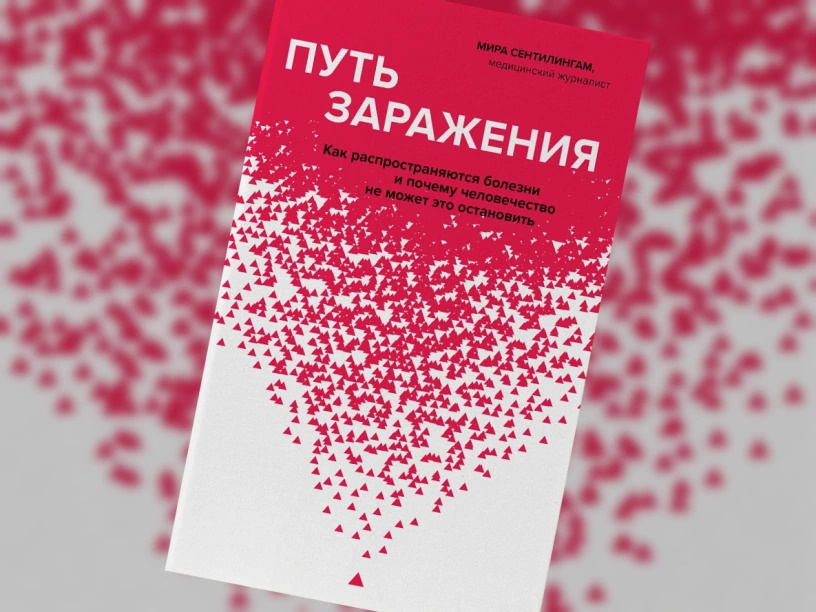
The Bombbor Publishing House represents the book of a medical journalist Mirny to the sandylings “The Way of Infection. How diseases spread and why humanity cannot stop it ”(translation by N. V. Suvorkova).
The last pandemic suddenly hit the world due to coronavirus infection, of course, overshadowed all the previous ones. However, there were many of them, and they all prepared the world for the fact that something completely new, powerful and exceptional would appear. This book is the almanac of the struggle of mankind with various diseases in all corners of the globe. She talks about the war that scientists are conducting right now, against Dracuncture, smallpox, polio and many other diseases.
We offer to read a fragment of the book.
In the face of the unknown
To date, it should already be clear that outbreaks of diseases are not such a rare phenomenon. In any particular month, WHO reports 2–12 outbreaks occurring in different regions of the world. For example, in May 2019, the news reported 15 outbreaks around the world, starting from polio in Iran and fever of the Rift Valley [1] in France and ending with measles in several areas and monkey Ospois in Singapore. One day, May 9, three different outbreaks took place: Ebola in the Democratic Republic of Congo (an ongoing flash that causes international concern), measles in Tunisia and Mers-COV in Saudi Arabia.
In some situations, cases of the disease are easily determined: for example, during an ongoing outbreak, such as Ebola, or when it is a well-known infection in the region-Mers-COV. Current data constantly growing around the world also force many doctors to be in a state of increased readiness. A completely different matter is when such a disease as the monkey of the smallpox, which was born in Africa and is usually transferred through contact with an infected animal, appears in Singapore; Or when Chicunga, a rather exhausting joint infection, characteristic of Asia and North and South America, is suddenly diagnosed in Italy. In such cases, healthcare representatives should react very quickly in order to identify the disease as soon as possible and take control of it. Even if the disease has long been known in the country, it can cause chaos, having reached a new location for itself, for example, the capital.
Next, I will list several recent examples of diseases established in one region, which were taken by surprise health care workers in other places.
May 2019: The first case of a monkey smallpox imported into Singapore
At the end of April, a 38-year-old man from Nigeria arrived in Singapore to take part in the seminar held over the past two days of the month. On the second day, April 30, his temperature rose, chills and a rash on his skin appeared, because of which he remained in his room in the hotel for the next week. However, his condition worsened, and on May 7 he was taken to the hospital by an ambulance and was placed in the insulator of the National Center for Infectious Diseases. Medical workers who treated this man were forced to wear personal protective equipment.
To determine the cause of the disease, laboratory studies of samples taken from the affected areas of the patient’s skin, which showed that he had a smallpox monkey - a rare viral infection, an easier version of ordinary smallpox. The disease is familiar to central and West Africa and usually occurs in contact with the blood and biological fluids of infected animals.
According to the Minister of Health of Singapore, before the trip this person was present at the wedding in the southern part of Nigeria, where, perhaps, he ate the meat of wild animals infected with the virus. Fortunately, the risk of the transmission of smallpox from person to person is very small, so it is unlikely that the infection can spread so as to cause a flash. But it is still present - it means that everyone who contacted this man needs to be tracked, and in the case of close contact, vaccinated and put in quarantine for 21 days. Osopi does not exist vaccines against monkey, but a vaccine against ordinary smallpox is considered enough to either prevent the disease or reduce the manifestation of symptoms to a minimum.
Investigations of the Ministry of Health were identified by 23 people who could be classified as close contacts: 18 people who were either present at the seminar or conducted it, one worked at the seminar, and four more were hotel staff. One participant in the seminar had already left the country, leaving back to Nigeria before the investigation began. As a result, I had to look for his tracks in his homeland. During the outbreak, standard procedures also include observation and public relations measures. Given the fact that all these measures were taken in Singapore immediately together with the quarantine of the sick man and the people who contacted him, the risk of an outbreak of monkey smallpox was recognized as low as the Ministry of Health and the World Health Organization. The spread of the virus was stopped.
May 2017: A number of inexplicable deaths are fear of Ebola
On April 25, 2017, WHO reported a number of deaths in Sino, Liberia. Their reason remained a mystery. On April 23, with vomiting, diarrhea and mental disorder, an 11-year-old boy who participated in the funeral was taken to the hospital on the eve. He died within one hour after arrival.
By May 7, there were already 31 people with similar symptoms, 13 of which died. All the victims knew each other in one way or another, were friends or relatives, as well as almost all (with the exception of two) took part in the same funerals as the child.
The situation that was not surprising caused fear in the community, since the country was still recovering from the large -scale outbreak of Ebola, which struck Western Africa in 2014, while Liberia suffered the most, numbering more than 4,000 deaths and 10,000 cases of the disease. The funeral turned out to be a common cause of infection during the outbreak of Ebola, because the bodies continued to be contagious even after death. There was also a group of people with symptoms similar to Ebola’s fever, and they were all attended by local funerals.
As a result of the epidemic of Ebola’s fever in Liberia, local authorities have developed the experience of responding to flashes of infectious diseases, and emergency care services and laboratory infrastructure are currently created. This allowed officials to exclude Ebola as a cause within 24 hours after the first alarm and send samples of blood, urine and plasma to the US centers to control and prevent diseases for testing. Studies have revealed that the infectious pathogen is Neisseria Meningitidis C, a bacterium causing meningitis, as well as other forms of meningococcal disease, the general symptoms of which are stiffness of the neck, high temperature, sensitivity to light, confusion, headaches and vomiting. The transmission of the disease occurs by airborne droplets, this explains the speed of the spread of the virus. However, the identification of meningitis was a surprise for many experts. Since 2010, the Menafrivac vaccine has been used in all territories of the Meningitis belts in Africa, including liberia, and since then the number of cases of the disease has quickly decreased.
But such a vaccine protects only from type A bacteria, which were the most common form observed until 2010, giving a type with the opportunity to appear in such communities as the Sinoe District, which, in turn, found everyone by surprise.
Summer 2007: Chikungunya is justified in Europe
Chikungunya is not a very well -known disease or, at least, was such before it stepped into Europe in 2007. The word chikungunya means “becoming distorted” in the language of Kimaconda, which speaks groups in southeastern Tanzania and Northern Mozambique. The name of this disease is associated with a stooped appearance that can occur in people from joint pain caused by an infection. Other symptoms include nausea, fatigue, muscle pain and rash. This is a viral disease that is most often found in Africa, North and South America and Asia and spreads through the bites of the mosquitoes of Aedes Albopictus and Aedes Aegypti , and the former began to meet in the southern parts of Europe since the beginning of this century. The absence of a vaccine and effective treatment makes prevention to the main strategy for control of the disease.
For some time in Europe, cases of Chicungunie brought by travelers from the regions endemic for this disease have been recorded. However, mosquitoes in Europe picked up the virus, and this laid the foundation for its independent distribution within the North Italian region Emilia Romania in the summer of 2007. “The man who returned from India bit the local mosquito, then the same local mosquito bit someone else, and now we already started a large outbreak,” says Dr. Jan Semenza. In the period from July to September of that year, more than 200 cases of Chikunguny were registered. Since then, outbreaks of local infection, also called autochthonous infections, took place in France in 2010 and 2014, as well as in France and Italy in 2017. In Italy, this was the second large -scale outbreak of the disease, in which more than 300 infected in three areas were registered: in Rome and in Anzio in the center of the country and in Gaardwall in the south. “The passenger flow is to blame for everything, which increases the risk of importing from endemic regions to Europe,” says Semenza. “And then people travel and move around Europe, and the disease is spread at the local level.”
Although public health experts have long been afraid that the spread of diseases transmitted by mosquitoes would become more frequent when this happened in 2007 - for the first time for Italy and for Europe as a whole - they had to act quickly, since the consequences of too late reaction are huge. The virus circulating in the blood of society “can threaten the total blood reserves, penetrating them if no one pays attention to it,” says Semenza. The authorities quickly took control of the population of mosquitoes, blocking places of reproduction by using insecticides. They also told the public about the prevention of bites and stopped blood donation - since the virus could spread during blood transfusion - although this measure itself has dangerous consequences for life.
In the future, constant observation will also be required, especially at the level of communities, since people who affected the disease react faster to changes than third -party observers. During the outbreak in 2017, someone from the local population identified the symptoms because he came across them earlier during the visit of Asia, and brought the information to the attention of health workers, the Sementsz explains.
At the moment, climatic conditions in Europe help to control diseases transmitted by mosquitoes, including chikungun, since mosquitoes are dying out with the onset of winter colds, which violates the transfer of the virus between people and prevents the transformation of the disease into endemic. However, global warming helps to extend the summer season, and the chances of the worldwide distribution of Chicungun, imported by vacationers, only increase. Mosquitoes straighten their wings, and each of us should be ready to notice and stop them.
[1] Acute transmissive zone arbovirus disease, which has currently been in the group of diseases regulated by the international medical and sanitary rules of 2005 at the national or regional level.