
Translated material
The lost war and the Kremlin’s pressure. Dangerous elections in Armenia
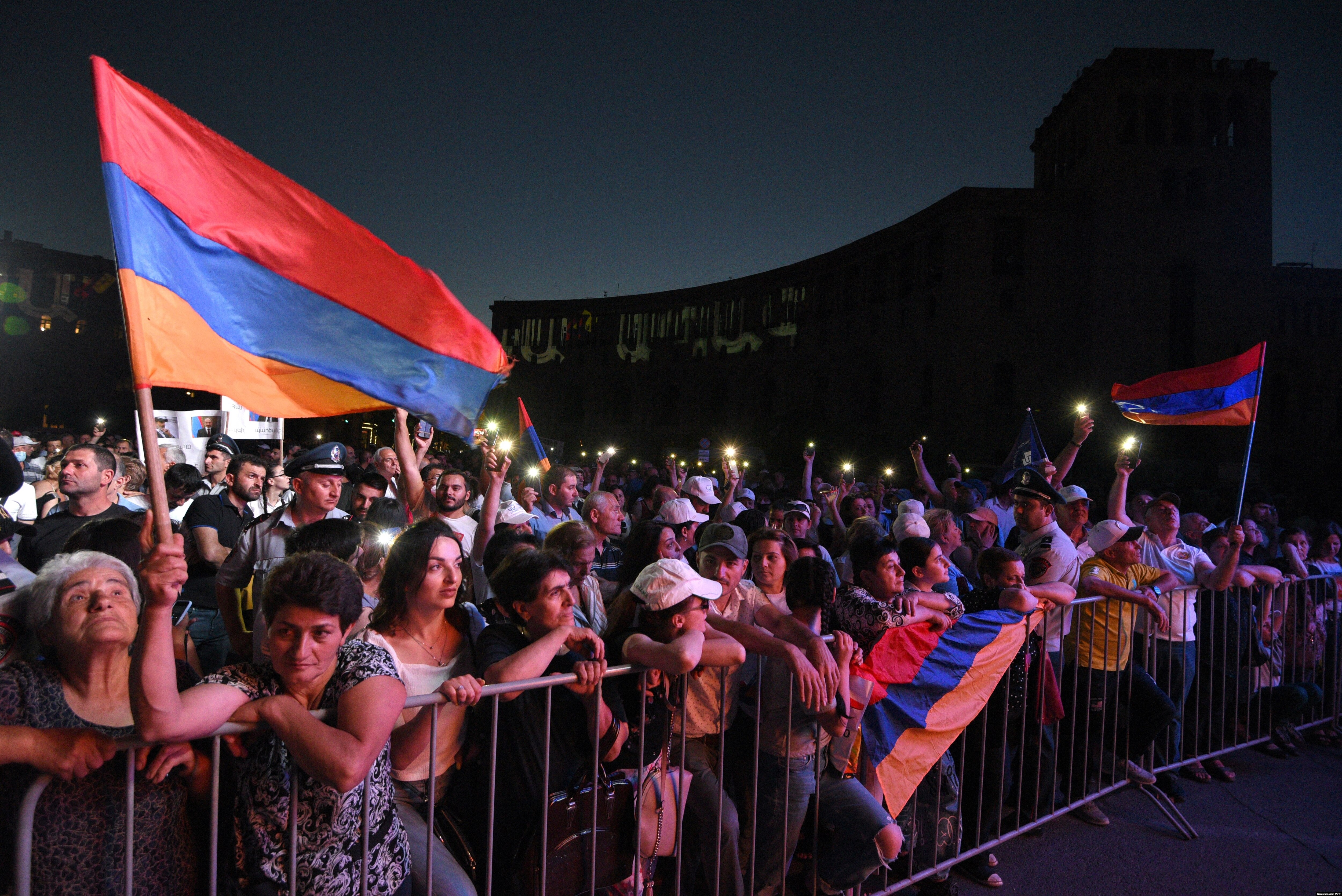
In Armenia on June 20, extraordinary parliamentary elections will be held, the outcome of which can determine the fate of the country for years to come. These are the first elections since the end of the next Armenian-Azerbaijani war, which Yerevan lost and which has been more even more split by the Armenian society. All participants in the elected race are constantly poured with threats and heavy accusations against each other, promise to all the internal and especially external enemies of the Wendett and are not ready for any compromises.
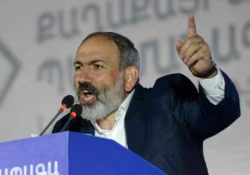
On Sunday, June 20, in Armenia for chairs in parliament and the right to form a new government will fight as many as 26 parties and blocks , this is a record number. On Saturday, the country has been declared "Day of Silence." Of course, among all the participants in the elections there are two main favorites-these are the acting Prime Minister Nikol Pashinyan and his party “Civil Treaty”, which is part of the ruling liberal political alliance “Elk” (“Exodus”), and headed by the Armenia block, former president Robert Kocharyan (from 1998 to 2008), which was also once the first president of unrecognized unrecognized Nagorno -Karabakh.
Freedom Podcast StudioSince the completion of military operations in the Nagorno-Karabakh and on other sections of the Armenian-Azerbaijani border last fall, the whole diverse Armenian opposition (nevertheless, nevertheless, is capable of forming any powerful single block due to numerous disagreements) requires the speedy resignation of Nikol Pashinyan, whom many call the traitor.
It is Pashinyan that his rivals and ill -wishers blame the defeat of the Armenian troops in 2020 . According to the peace treaty of last fall, Baku regained a significant part of the territories occupied by the Yerevan and the army of the Nagorno-Karabakh in the early 90s.
Photo from Twitter - Armenian settlers in Nagorno -Karabakh, who suffered from shelling. September 2020
Several Casualties Caused 2 #nagorno -karabakh ( #Artsakh ) Peaceful Population by Large -Scale AggGress BY Azerbaijan SINECE MORNING. Women, Children; Schools, Other Civilian Objects-Under Indiscriminate Targeted Attacks. @Ombudsarmenia - #humanrights in conflict situations! pic.twitter.com/pwschhvgtb
- Arman Tatoyan (@atoyan) September 27, 2020
Supporters of the Prime Minister, on the contrary, argue that the responsibility for military defeat, together with the prime minister, must be shared by all the military and former leaders of the state who did not prepare Armenia for war.
On November 10, 2020, after the announcement of the signing of the agreement between Yerevan and Baku on the termination of the armed conflict, the protesters in the capital of Armenia captured the buildings of parliament and government. After that, protests against the Prime Minister regularly took place in Armenia ( in April, he, by law, resigned and is now, "about." ), Despite the fact that martial law continued to operate in the country until recently, and with it-a ban on mass shares. Pashinyan's resignation is required by all former presidents of the country. After the General Staff of the Armed Forces of Armenia opposed the prime minister in February 2021, Pashinyan declared an attempt to a military coup.
Nikol Pashinyan himself at one of the last pre -election rallies called such figures of Armenia losses in the last conflict: 3705 killed, 268 missing, 60 prisoners ( in fact, more prisoners can be more noticeable, the fate of even more than 100 Armenian fighters has not been clarified ). On June 12, the Azerbaijani authorities announced the transfer of Armenia 15 prisoners of war in exchange for maps of minefields in the controversial territory of the Nagorno -Karabakh. At the same time, in March, the European Court of Human Rights, where parents of captured military personnel appealed, said that, according to his information, 249 citizens of Armenia remained in Azerbaijani captivity.
It is important to note that a couple of months ago, Nikol Pashinyan stated that he initiates the holding in October this year, if he remains the head of government, a referendum on the adoption of a new constitution ( or amendments to the current basic law ) in order to move from a parliamentary form of government to a semi -presidential one. At the same time, recently, in 2018, Armenia from the semi -presidential, on the contrary, moved to the parliamentary republic. Supporters of this change expected that former President Serge Sargsyan would retain power by becoming the Prime Minister. This plan, however, was disrupted by the mass street performances of Pashinyan's supporters, who ultimately managed to achieve the prime minister of his leader.
Robert Kocharyan, the chief rival of Nikola Pashinyan, the leader of the Armenia Bloc, formed by him, together with the nationalist parties, "Renating Armenia" and "Dashnaktsutyun", who would recently be in prison for very serious accusations of seizing power and corruption. In particular, the former President Kocharian is charged with involvement in events in March 2008 in Yerevan. Then, in the city, as a result of dispersing the opposition, ten people died. The protests began after the announcement of the results of the presidential election, which the opposition considered falsified. At the 2008 demonstrations, the current Prime Minister Nikol Pashinyan was arrested. He then received seven years in prison for organizing riots and left the colony on an amnesty in 2011.
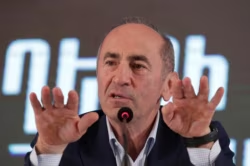
Robert Kocharyan was arrested in July 2018, after which he was released twice and was again taken into custody. In one of the comments, Kocharyan called himself a victim of new authorities, to whom the system of justice "serves." As a result, at the end of March of this year, the Constitutional Court of Armenia issued a decision to terminate the criminal prosecution of former Armenian President Robert Kocharian in the case of suppressing protests in 2008. The court recognized the “invalid” article of the Criminal Code, which investigated his case.
Candidate of political sciences, international observer Ivan Preobrazhensky in an interview with Radio Liberty emphasizes that the current early elections in Armenia are a direct result of defeat in the Second Karabakh war, pressure from the opposition and the Kremlin:

"The current Prime Minister Nikol Pashinyan has every chance of losing power. His main rival, ex-president Robert Kocharyan is a representative of the so-called" Karabakh clan. "For many years, from the moment of the execution of the Armenian parliament to the coming to power of Nikol Pashinyan, this clan held power in the country and, unlike the current Armenian government, enjoyed solid support. Kremlin.
Until the recent war, Moscow did not hide between Armenia and Azerbaijan that Kocharian defended the interests of Kocharyan, and opposed his arrest and trial of him on charges of corruption. However, it must be remembered that Armenia is now a parliamentary republic. And if two large blocks receive, which is very possible, approximately equal to the support of voters, then the Golden Promotion will be in the hands of small parties: the “prosperous Armenia” of the millionaire Gagik Tsarukayan, another “Karabakhts”, ex-president Serzh Sargsyan, or the other former head of state Levon Ter-Petrosyan. The first two may well join the Alliance with Kocharian, which will support the Kremlin. And Ter-Petrosyan has long quarreled with Pashinyan, so there is nowhere to wait for the current prime minister of support, in fact.
Moscow did not hide Moscow before the recent war between Armenia and Azerbaijan, which protects Kocharian's interests
So the most probable result of these elections: temporary confusion and, possibly, attempts to seize power with different sides illegal ways, followed by the loss of the post by the current Prime Minister. Which, in turn, will question all the agreements reached now with Azerbaijan, Turkey and Russia, which means that the region will put the region before the threat of a new war. ”
As noted by the Air Force , among Kocharian supporters, his friendly relations with Russian President Vladimir Putin are emphasized: “After the war ended, the Air Force interlocutor in the Armenian authorities noticed that only two could deprive Pashinyan - Pashinyan himself or Vladimir Putin, referring to the unbalanced behavior of the current Armenian prime minister, waving a hammer at rallies and promises all over the rallies and promises to all promises and promises all “Vendetta”, or direct Russian intervention.

Early parliamentary elections are crucial for Armenia, the recently said President of the Republic Armen Sargsyan. He noted that in the pre -election period there were constant manifestations of intolerance, insults, threats, also inappropriately striving for democracy or the incidents or figures talking about democracy: “Unacceptable, worthy of strict condemnation of any attempt to cross the situation, much more incurring hate and enmity,” emphasized. Sargsyan.
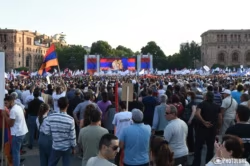
In addition to the blocs of Nikola Pashinyan and Robert Kocharian, for example, the “Honor Honor” block, formed by the parties of the ex-president of Armenia Serzh Sargsyan and the ex-director of the National Security Service, Arthur Vyanetan “Republican” and “Fatherland”, formed by political scientist Levon Shirinyan and parliament with Arman, participate in the current elections. Babajanyan "Bloc of the Democrats" Shirinyan-Babajanyan ", formed by political scientist Andrias Gukasyan and the head of the party" National Democratic Union "Arshak Sadoyan Blok" Free Homeland "(candidate for the post of Premiere-Gukasyan). The last two blocs advocate the external policy course of Armenia towards the West. They also go to the elections. The Armenian National Congress party, headed by the first president of Armenia, Levon Ter-Petrosyan, Party of the Svetly Armenia Party Parliament Edmon Marukayan and the Party of Prospering Armenia, led by one of the largest Armenian businessmen, Gagik Tsarukayan.
The latest Gallup International Association survey, conducted on Friday, June 18, showed that 28.7 percent of the voters were ready to vote for the Armenia Bloc, 25.2 percent of Pashinyan Pashinyan. The remaining political forces, according to these data, do not gain more than 5-10 percent of the vote.

How to get around the lock?
Read>-

Alexander GOSTEV
The editor of the RS information service, international observer, author and editor of the heading and podcast "Atlas of the World"
Gosteva@rferl.org