
Translated material
"Boy with deer horns" on Netflix is the most delicate series about the end of the world
Perhaps this is the best show of the first half of 2021
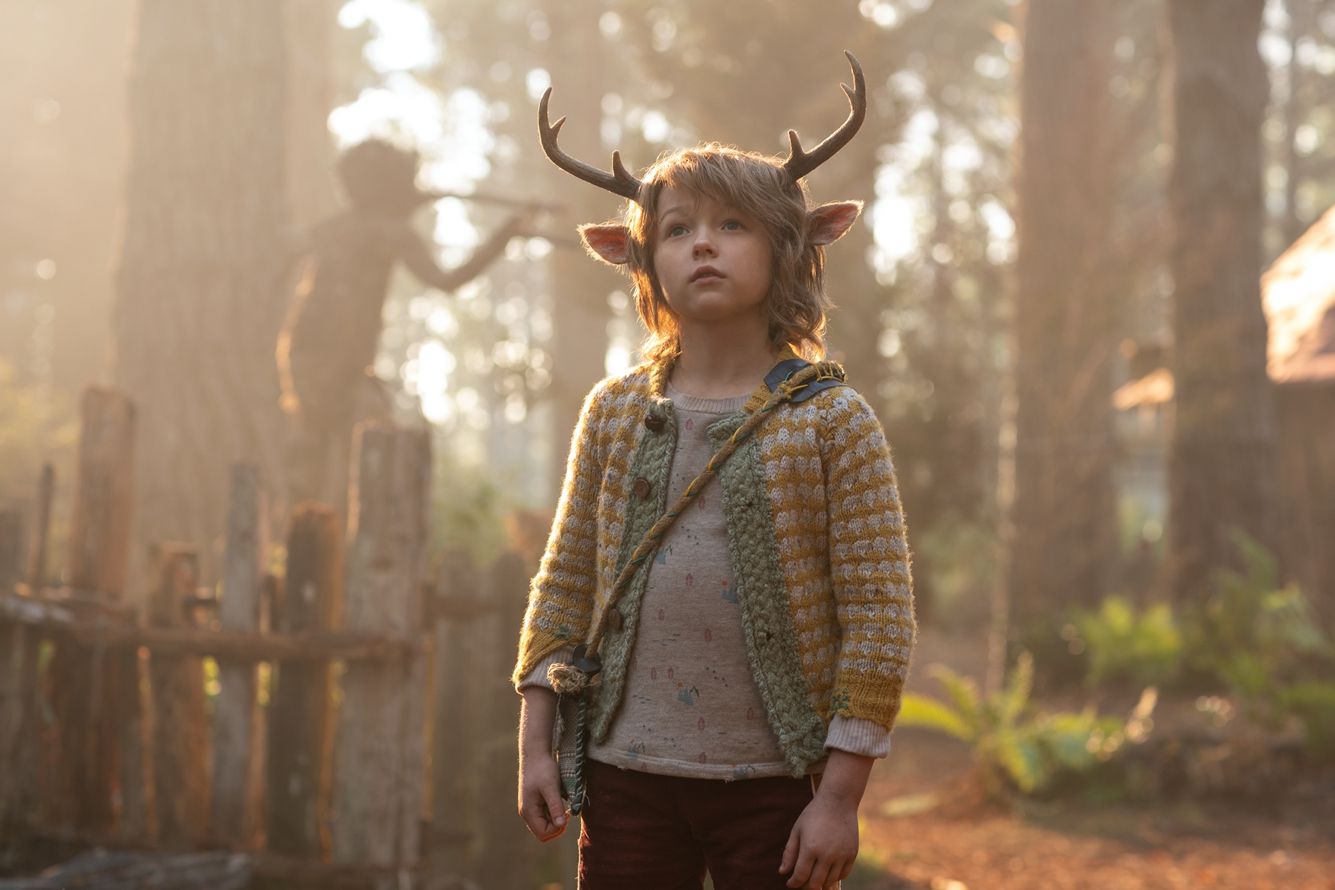
The first season of the “boy with deer horns” was published on Netflix - the adaptation of the comic book about a world where adults almost dragged a pandemic (Covid has nothing to do with it, although therapeutic jokes about masks and Lockdown are present), and children are born half of people, half beasts. As it is easy to guess, the main character of the series is a boy with horns, and we have not seen such touching characters since the hobbits. According to the film critic, Yegor Moskvitin, perhaps this is the best series of the first half of 2021.
Why Warner Bros. goes to Netflix?
The first thing that can surprise the experts of the cinema and TV shows in the “Boy with deer horns” (in the original - Sweet Tooth, the comic book in Russia is also known as “Sweet Coast”) is the Warner Bros. Television in the Netflix show. After all, it seems that the projects of the Warner Media internal studios should be released only on the HBO channel and the HBO Max Streaming belonging to this corporation.
But competition on modern television is more complicated. Having removed the “Guardians” and “Lovecraft Country” for the native HBO, Warner Bros. Television calmly makes TV shows for Appletv+ (for example, “Lizi History”), Disney+ (“Guys What I need” according to Tom Wolf’s novel) and even Netflix. For the industry, this is a common thing. And yet, in the case of a “boy with deer horns”, you can’t do without a genealogical reference: this project is connected with Warner Media much stronger than it seems.
The Warner media imperial includes DC comics, and they have a Vertigo unit - a publishing house that specializes in graphic novels for adults. These complex, ambiguous and sometimes provocative stories are now willingly turn into series. Following the “preacher” and “Konstantin”, “Sandman” along Nil Gaiman and “Y. The last man. " The rights to the graphic novel “Tales”, in which the characters of folklore live among people as migrants, the television channels were bought twice - but in the end, instead of a regular series, an interactive called Wolf Among US came out.
However, since June 2021, the main contribution of Vertigo to the television industry should be considered “a boy with deer horns” - the most beautiful, touching and delicate series about the end of the world in the world.
How is the Universe of a “boy with deer horns” arranged?
According to the comic and the series, in the near future the world is waiting for two tests at once. The first is the H5G9 viral disease, which begins with a slight tremor and ends with a painful death. By the beginning of the events of the series, humanity is almost completely pumped out by this plague. The second signal by nature that it is time for us to change is the appearance of hybrid children. They are both people and animals at the same time. And humanity to these hybrids, of course, is not happy: they hunt and put experiments on them.
The main character of the series is a boy named GAS (actor-tier Christian Kovius), born with deer ears, horns, night vision and sharp nuhuh. Dad (Gus calls his “Pabba”) managed to hide the child in the forest, but at the eleventh year of life the hero will have to leave the green shelter. His companions will be a toy dog and a former Tommy football player (Nonso Anozi from the Game of Thrones) - a black healthyard, thanks to which the adventures of strange friends will remind the story of Geklberry Finn and a fugitive slave Jim.
In parallel, two more plot lines will unfold - less successful in terms of dramaturgy and acting, but important for the development of Hus history. In one Dr. Singh (he is played by Adil Akhtar-a British actor with Pakistani and Kenyan roots) will save his wife from that very illness-and at some point will forget about the oath of Hippocrates for the sake of a loved one.
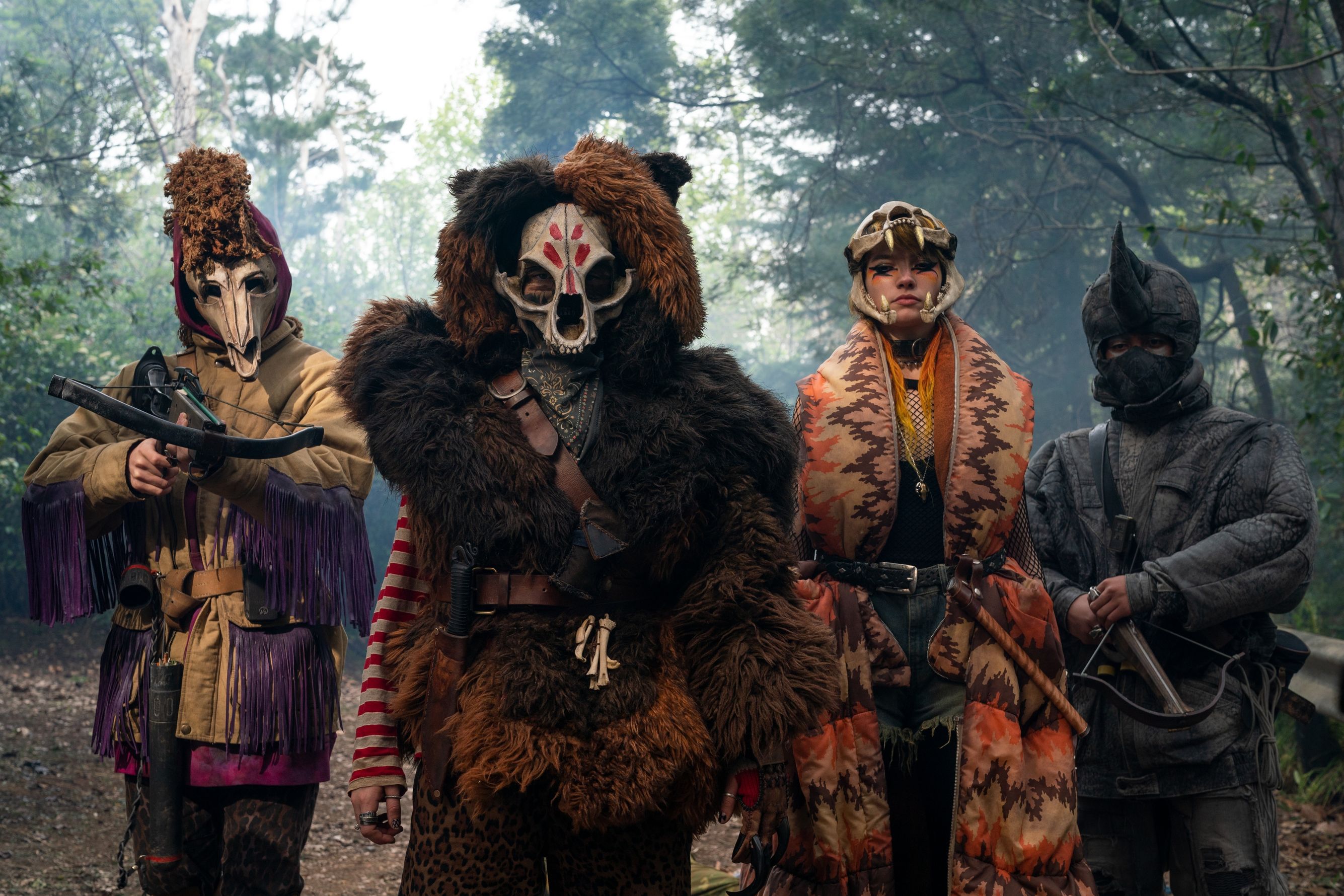
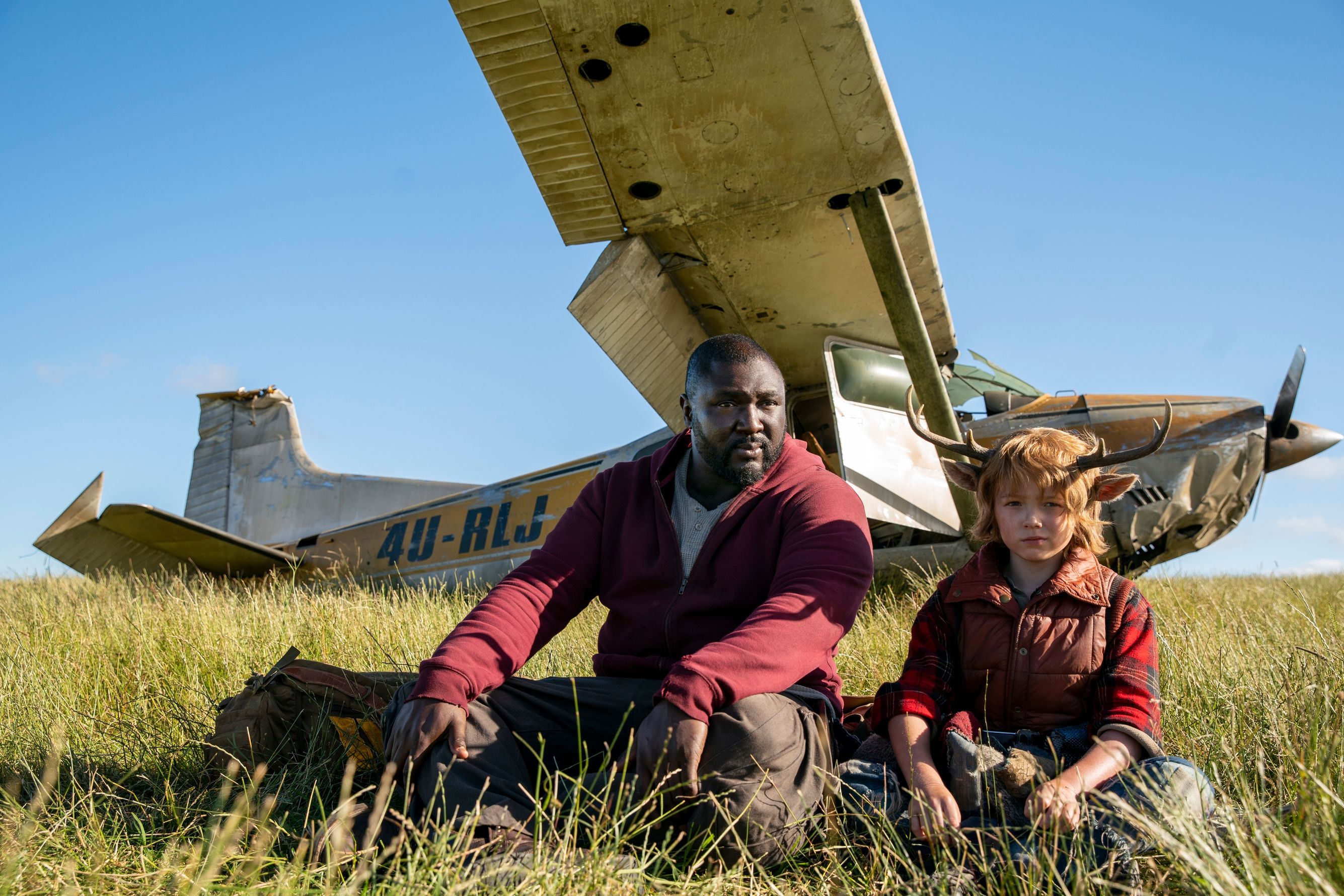
In another psychotherapist Aimi (Dominican actress Denmark Ramirez), having spent a couple of weeks in quarantine in her own office, he will go to the empty city - and suddenly decides to settle in an abandoned zoo. Subsequently, it will become a shelter for hybrid children. On which, as we recall, there is a hunt. And the hunters are the army of General Ebbot (South African actor Neil Sandilands), a little caricature leader from the past, who desperately wants to stop the future where he has no place.
And why don't you come off this series?
In the film adaptation there are a number of serious differences from the comic book that make it much more comfortable for young spectators - and allow you to plunge into the infantile naive of older audience.
Hus's father ceased to be religious and became simply perfect - so that series in which he brings up his son will have to watch with wet eyes. A sunbathing voice connecting different plots (belonging to 80-year-old James Brillin, father of Josh Bronin, who played Tanos, then Bush) turns a post-apocalyptic thriller into a kind of fairy tale. Terrible things like murders are still taking place in the frame, but graphic violence has become less, and humor helps to discharge the situation. “Sorry to call you strange,” one child says to another. “And you forgive a mountain of corpses,” he answers.
Dr. Singh has a background, thanks to which his appearance in life, Hus does not look so ominous. The black football player Tommy in the novel was a white hockey player: the author of the comic book, writer Jeff Lemir dreamed that Liam Nisson would play him. But it turned out differently, and now in the story of the child and his bodyguard (resembling both the Logan, the Mandalor, and the Arya and the PSA line from the Game of Thrones) there was also a racial connotation.
The story of growing alone now resembles a family melodrama also because the producers from Team Download, who participated in the production of the show, insisted on this. She is guided by Robert Dauni Jr. and his wife Susan. Their previous project - “The amazing journey of Dr. Dutylitetla” - is largely similar to “a boy with deer horns”.
So the series turned a complex drama into an understandable and easy parable about good and evil. But, it seems, this is exactly what we are so missing today. If a graphic novel was described as a mixture of Bambi with a “crazy max”, then the adaptation is more like a Disney fairy tale “Pete and its Dragon” - and only then to “Walking Dead”.
The eared and horned GAS is the most touching humanoid in pop culture since the time of the hobbits. This sensitive and courageous child is a head above the baby from the “mandalor” - and much more interesting and independent than the characters of endless teenage anti -utopias. His stubborn search for his mother is a heartbreaking story reminiscent of the Soviet cartoon "Mom for the Mammoth."
And in order to illustrate the simple thought that nature is wiser than people, “a boy with deer horns” draws pastoral landscapes of unthinkable beauty. Each frame is a kind of art therapy.
Finally, this is the next comforting prize of Netflix for everyone who hopes for a more fair and humane future. In the “boy with deer horns” to replace the world of tough hierarchies, violent simplifications and primitive fears slowly, but inevitably comes the world of complex, but full of love. In life, it seems, it doesn’t happen - but it seemed to be clear what Netflix was selling to us.
Egor Moskvitin