
Translated material
The return of the leader
If United Russia was able to put Stalin at the head of her list, then school teachers would not have to falsify the elections to the Duma
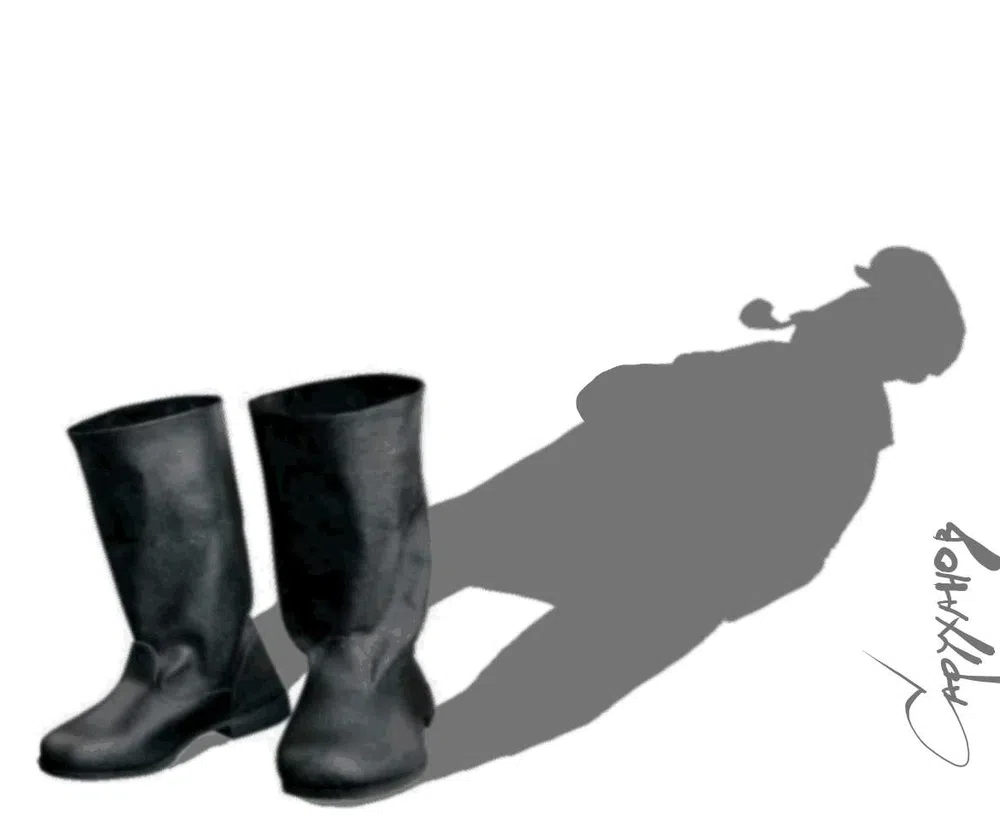
For several years in a row, Russians have called Stalin the most outstanding figure in Russian history. The number of those who recalls the “father of peoples” in this context reached 39%in 2021, as evidenced by the data of the Levada Center survey, which the Russian authorities consider the “foreigner”. There is an evil irony in the fact that the study of public opinion on the issue of “historical greatness” should be accompanied in modern Russia with this mandatory post.
The people and the state gathered for the new Stalinism: the question is who will be the first to proclaim the return of the leader.
Stalinism remained the ridge of the late Brezhnev USSR, according to which a noticeable part of our fellow citizens is nostalgic today. The feeling of the “great lost homeland” (construction teams, bam, vouchers to the south, “real seamy” - the necessary to emphasize) almost officially unites ministers and homeless people in 2021. It was not customary to talk about this directly, but Stalin remained the real author of Stagnation. The state apparatus, built on the interweaving of Soviet and party bodies, worked in Stalin. The key idea of the stagnation society was that the state makes all significant decisions - only it can be the subject of history and action in general. All present and important is connected with the nomenclature, the private initiative is suspicious and dangerous. The leader crowns the state, and, ultimately, only he can act - the rest should wait for further orders.
The non -restrained power of the state rested on fear. The mechanisms of the latter are well explained by the historian Yevgeny Dobrenko, the author of the work of Late Stalinism: after 1945, a large terror in the USSR was not repeated, but everyone understood that it was possible. Today, along with the massive experience of “historical greatness”, these fear and the statehood of reality have returned to society. Everything that does not come from officials is under suspicion and runs the risk of being declared by the machinations of “foreign agents”. In the inevitable way to adapt to such social reality was mass cynicism and apathy - and they also return today.
A society that instantly accepted the new rules of the game longs for a leader who would take responsibility for every breath carried out in our sovereign territory.
The state apparatus understands what is happening as a national sanction to create arbitrariness. In addition to dozens of repressive laws that have made the usual work of entrepreneurs, bloggers, teachers or volunteers, forgotten methods of “law enforcement” are returned. Torture is no longer considered prohibited in the inquiry. The estate of the sovereign people is no longer threatened by anti -corruption investigations - they are declared extremism.
Stalin returns to public consciousness simultaneously as a recognition of such a state of affairs normal and as a paradoxical personification of the “people's avenger”, who is dealing with officials for humiliation and lawlessness. The other side of the leader’s reincarnation is connected with the myth of Stalin-Asket, Stalin, who performs the harsh trial of corrupt officials. The powerless society, destroyed by the state, sighs: "Stalin is not on you."
The result of the thirty-year development of the Russian Federation was a military-historical reconstruction of a large style. And if United Russia was able to put Stalin at the head of her list, then school teachers would not have to falsify the elections to the Duma.