
Translated material
The price of distrust
How vaccination affects the restoration of the US and Russia economy
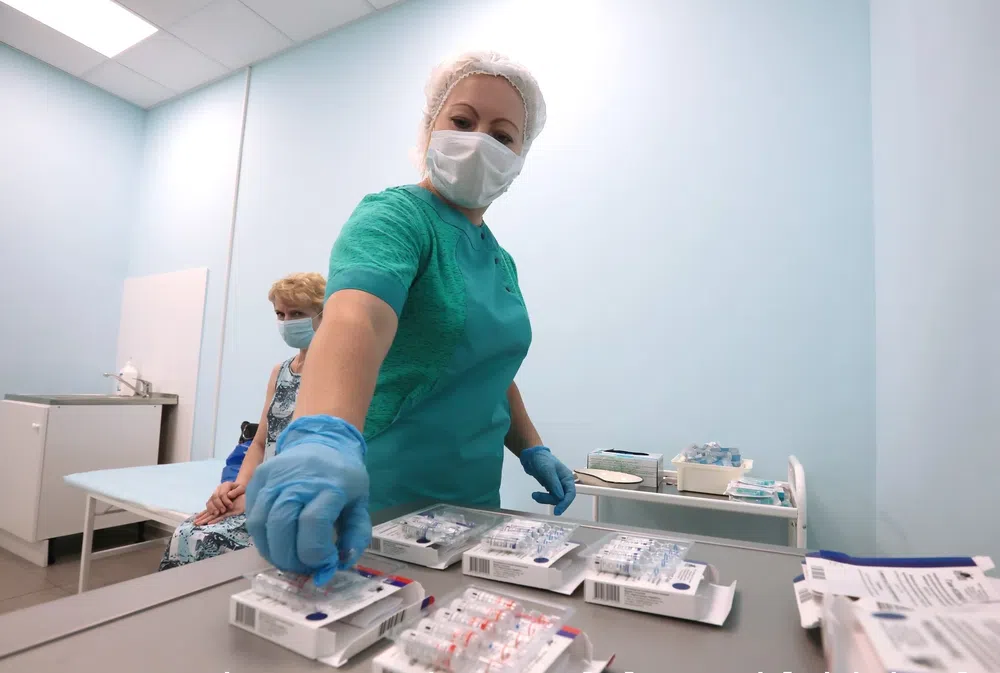
As of the end of June 2021, 46% of the US population received one dose of approved vaccines, 54% received both doses, in Russia 11% received one dose and two% received two. The results are obvious, this summer all states in the United States take restrictions aimed at combating a new coronavirus infection, while “non -working days” and other quarantine measures are introduced in Moscow. Large -scale vaccination in the United States made it possible to resume normal economic activity, while the low rates of vaccination in Russia are an obstacle to the restoration of the economy to prendemine indicators.
At the beginning of the pandemic, American economists considered three economic scenarios: rapid recovery (the presence of negative consequences in the first and second quarters of 2020), the main scenario (negative consequences in the first - third quarters of 2020, the abolition of air travel restrictions in the fourth quarter), pessimistic (negative consequences throughout 2020). As life showed, a negative scenario was implemented, since active vaccination in the United States began only in 2021.
Analysis of the Data Data 500 of the largest companies (S&P 500 index) for June 2019 - March 2020 showed that
The pandemic had a significant negative, but at the same time a short -term impact on stock markets in the United States, as well as on markets of other developed countries.
In particular, in the period of January 30, 2020 - March 10, 2020, quotes fell by 2.65%, and in the period on March 11–22, 2020 - by 7.32%. After the adoption on March 27, 2020, the “Law on Economic Security and Assistance to the Pandemia of Coronavirus” (The Coronavirus Aid, Relief, and Economic Security Act) worth 2.2 trillion dollars the above index grew by 7.3%. In the first months of the pandemic, the yield of 10-year treasury obligations of the United States, which are considered one of the important indicators of the stability of the financial market, fell to 0.67%. However, as of May 2021, their profitability increased to 1.56%, which indicates the restoration of markets. A statistical analysis of American economists showed that there is a significant dependence between the number of daily new cases of infection, the mortality rate on the new coronavirus infection and the fall of stock markets, and this dependence is more noticeable when analyzing data around the world than exclusively in the United States. In other words, the more new infections, the greater the volatility in the financial markets. The greater mortality from the new coronavirus infection, the greater the volatility.
In the first months of the pandemic in 2020, the world food prices decreased by 20% due to a fall in demand from restaurants and hotels, which were forced to close by decision of the authorities. The pandemic had a serious impact on the sphere of research and higher education. Playing an important role in conducting and financing medical research, national health institutions suspended projects not related to a new coronavirus infection. Many universities, including Harvard, did the same to focus financial and human resources on overcoming the spread of the virus.
The pandemic also had an influence on the pharmaceutical industry of the United States. 26% of components for American pharmaceutical manufacturers are imported from the EU, 18% from India, 13% from China. The latter is also the largest supplier of components for the industry of medical devices (39.3%). По данным Администрации по лекарствам и продуктам питания (Food and Drug Administration), в мае 2021 года имелась нехватка 162 лекарств, таких как атропин, кортизон, дексаметазон, допамин, эпинефрин, гепарин, кетамин, метадон, морфин, преднизолон, пропофол, сульфасалазин, цинк и DR.
In 45 states in the United States, which allowed businesses to resume the functioning at the end of April 2020, the mobility of the population and the number of Working Hours showed a tendency to restore two weeks before the states began to gradually remove restrictive measures. The gradual increase in the mobility of the population before the removal of restrictive measures could be caused by several circumstances: firstly, fatigue from quarantine, and secondly, a decrease in the sensation of the danger of the disease, which could be a result of a decrease in the number of daily new cases of infection at that time, a decrease in the number of news stories about pandemia, etc. An increase in the number of hours worked could also be caused by the fact that such Services, like food delivery, began to actively develop during quarantine measures.
To mitigate the economic consequences of the US, the US authorities took a variety of support measures. In March 2020, the Federal Reserve System (Fed) reduced the key rate by 0.5%. She also bought bonds in the market for $ 125 billion, and finally, the enterprises of the key sectors of the economy were able to get $ 300 billion in the form of Fed loans. As for the US Congress, the “2020 Law on Economic Security and Assistance in connection with the Pandemia of Coronavirus” was adopted. He covered the following measures. Firstly, the issuance of $ 1,200 to all adult Americans with an income of up to 75 thousand dollars per year (or family couples with an income of up to 150 thousand dollars). Secondly, the issuance of $ 500 per child under 17 years old. Thirdly, an increase in unemployment benefits to $ 600 per week and an increase in the period during which you can receive this allowance up to 13 months. Fourth, the issuance of $ 500 billion to enterprises in the form of loans, provided that they retain 90% of their employees until September 30, 2020, pay these loans for five years, can pay dividends to shareholders only after loan payment. Fifth, the allocation of $ 377 billion enterprises of small businesses. Sixth, postponing payments on student loans until September 30, 2020. The sequences, a ban on the eviction of people with mortgage loans guaranteed by the federal government until May 15, 2020. Epinode, the allocation of $ 25 billion per programs for the release of food to the poor. V-nine, the allocation of $ 100 billion to hospitals that suffered financial losses due to the abolition of elective procedures. In-tennies, the direction of $ 45 billion for the purchase of protective costumes for medical personnel.
On March 11, 2021, Joe Biden signed a law allocating $ 1.9 trillion to support the economy and combat the consequences of the pandemic. About trillion went to social programs, $ 400 billion directly to fight the virus, the rest to support the economy. In particular, the Americans received $ 1400 at a time. Important expenses from the point of view of medicine: $ 34 billion for subsidizing the purchase of medical insurance in the framework of the 2010 Law “On Protection of Patients and Available Health Care” in 2021–2022, this will allow us to insure 1.3 million people who had not previously had a policy. People without medical insurance to the last postpone a doctor’s contact, which entails serious consequences . In addition, such Americans do not undergo regular testing, since payment without insurance from a pocket can reach $ 850. About $ 20 billion will be spent on the development of vaccination practice. The Biden administration through the Federal Emergency Agency created vaccination centers, where thousands of people every day receive their dose of vaccines. The Trump administration believed that the states should independently organize vaccination. $ 8.5 billion is sent to rural hospitals, which are at risk of closing.
The quarterly indicators of US GDP survived serious fluctuations due to pandemia. In the second quarter of 2020, the GDP fell by a third, in the third quarter of the same year it grew by a third, then in the fourth quarter of 2020 the GDP grew by 4.3%, in the first quarter of 2021 it increased by 6.4%. According to Rosstat, the dynamics of the quarterly GDP of the Russian Federation in the prices of 2016 looked as follows: in the first quarter of 2020, it amounted to 20.6 trillion rubles, in the second quarter - 20.1 trillion rubles, in the third - 22.9 trillion rubles, in the fourth - 24.9 trillion rubles, in the first quarter of this year - 20.5 trillion rubles. Obviously, the Russian economy has suffered less from pandemia, this is primarily due to the fact that the share of services in Russia is lower than in the United States. In addition, the American authorities to combat pandemia introduced restrictive measures for longer terms than Russian. In particular, the Moscow authorities introduced serious restrictive measures only last spring, while the authorities comparable in the population of New York introduced measures to combat pandemia in the spring of 2020 and canceled them only this summer.