
Translated material
After school - to parliament
Sweden political parties involve tens of thousands of teenagers in politics
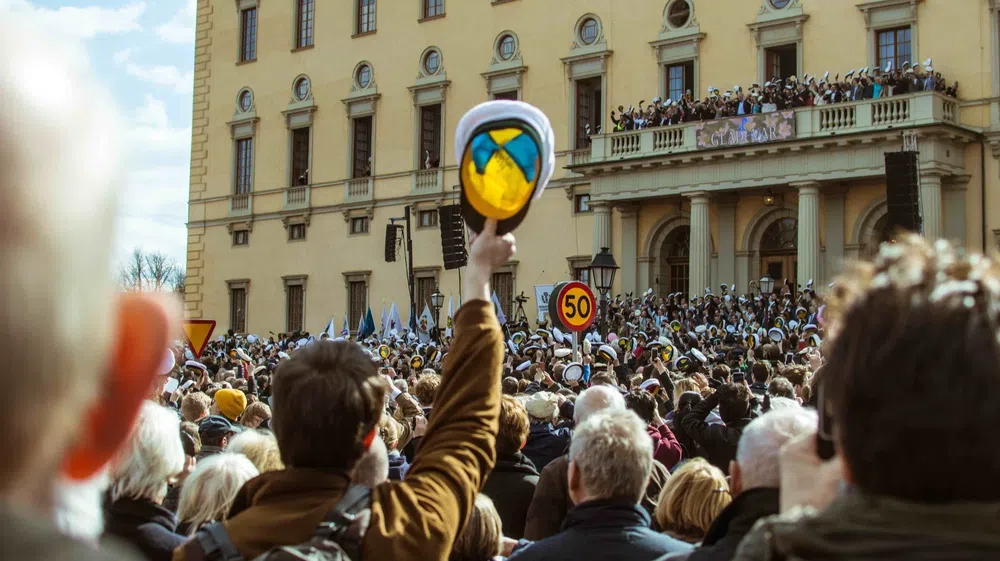
According to the Swedish Agency for Youth and Civil Society (MUCF), Swedish youth is seriously involved in the country's political life: about 60% of adolescents aged 16 to 25 years say that they are interested in social problems, and 44% say that they are interested in politics. In the 2018 Swedish Parliament, the appearance of voters among young people aged 18 to 24 was 84.9%. The fame of Sweden from the point of view of the political involvement of youth in 2019 was brought by eco -activist Greta Tunberg, who at the 16th conference of the UN to change the climate and a few months later was recognized as the Time by the man of the year. However, the case Greta is just one of the usual examples for Sweden: the participation of adolescents in youth political organizations is encouraged by the state, and you can often become a member of the youth wing of the party at the age of 12.
“New” figured out how the future leaders of the country are preparing in Sweden and what role immersion in political life from adolescence plays in the support of democracy in the country.
Affiliate material. Prepared in cooperation with ru.sweden.se
Democracy lessons
As the Novaya Gazeta explains to the Swedish Agency for Youth and Civil Society (MUCF), the youth policy in Sweden involves the inclusion of young people in the life of society, including it provides them with the opportunity to influence it. In practice, this means that adolescents should participate in political decisions and have the right to vote not only in matters that directly concern them. Since young people also include minors, the degree of influence of adolescents is changing over time (the Swedish youth policy is consistent with the Convention on the Rights of the Child). This approach is most noticeable in the elections where even seven -graders can vote.
Despite the fact that in Sweden you can vote only from the age of 18, the Skolval experiment (“School elections”) is underway for schoolchildren. It consists in the fact that the school may submit a notification of intention to participate in the elections, and then students, starting from the seventh grade, can vote using the same ballots as adults. The results of these elections are not counted, but are not much different from the real elections. In 2018, 1528 schools took part in the experiment, in which almost 391 thousand students voted. Similarly, elections are held in the European Parliament, however, they participate in an order of magnitude less than schools. According to MUCF, such school elections were held in Sweden in Sweden in schools since 1960, but were first compiled at the national level in 1998. Their appearance is due to several reasons.
-Firstly, they stimulate students' interest in politics and prepare them for future voting, providing them with genuine experience of the procedure in polling stations. Secondly, they provide teachers with good opportunities for discussions in a class, where students can analyze the differences between the policy of political parties. Thirdly, there is also a human rights prospect. Since the age for participation in national elections is set at the level of 18 years, “training elections” in schools for students from 13 years and older give them the opportunity to express their opinion, the agency noted.
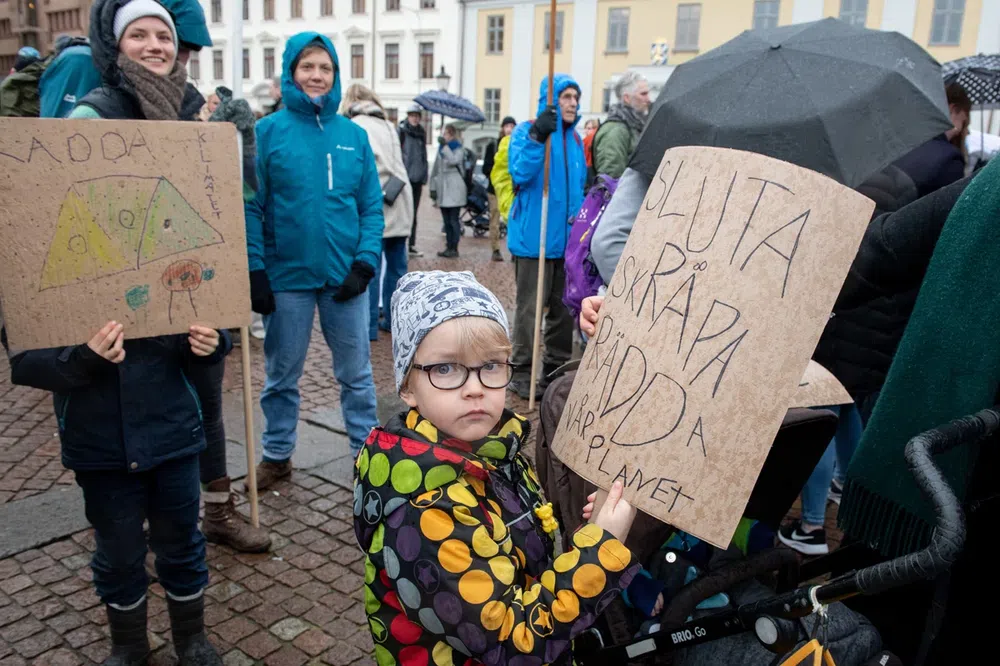
According to the sociologist in the field of education of Yulva Bergstrom from the University of Upsalus, despite the fact that the election results are not counted, for schoolchildren this is the usual part of the political climate. In addition, their results show mood among Swedish youth and give opinion about those politicians who came to them within a year (school principals have the right to invite representatives of various political parties, on their own initiative, campaigning in schools is prohibited). So, according to Bergstroy, most young people vote for left -wing parties, and also worry about environmental issues. “There is a discussion in society, and they are part of it,” notes Bergstrem. The researcher of the political parties Ann-Katrin Jungar from the University of Suderman also agrees with her.
- The state is interested in involving young people in activities in real life. This is part of our democratic culture in Scandinavia - to be involved and have a strong civil society, which is necessary to maintain democracy. Civil society, which is not controlled by the state, but, on the contrary, controls the state. It should have a place for a variety of organizations that can attract people of different views, ”says Junggar.
And play in the PlayStation, and go to the demonstration
According to Ann-Katrin Yungar, at the moment eight parliamentary parties are operating in Sweden, and each of them has its own independent youth alliance. About twenty -five thousand young people under 30 years of age are in total (it is worth noting that active parties to parties are many times less). In the youth unions of the largest political parties-Social Democrats (the youth wing of the party, they are reduced to the SSU) of the legalist moderate coalition party (Moderaterna, the youth wing-MUF)-consisting of ten thousand people (most of them, however, have only membership and does not take an active part in the activities of unions). In addition to political unions, adolescents in Sweden have other democratic institutions that allow them to defend their rights or teach democracy. According to the sociologist, Yulva Bergstroy from the University of Upsal, traditionally in Sweden, unions of universities and schools are strong, for example, the United Union of Students of Sweden and the Union of Students) and the Sveriges Elevrå In addition, in Sweden, other youth organizations also operate, which can also be regarded as political: their activities are aimed at combating civil rights or discussing environmental issues (for example, Amnesty International or Nature and Youth Sweden). It is almost impossible to assess the number of their participants.
Typically, an interest in politics is born in adolescents at school. According to Nick Erbrink, the president of the Swedish young Christian democrats (KDU), before the start of the pandemic of the school in Sweden, traditionally gave different batches the opportunity to attend an educational institution to conduct campaigning among high school students: to put stands with their materials, give lectures, as well as arrange a clock presentation of their movement. And if in schools this event could be something special, the same young Christian democrats spent hundreds of similar events throughout the country in a year. In addition, earlier in schools they often held debate on economic and political topics, where representatives of different parties were invited.
-Now, during the pandemic, we are trying to focus on campaigns on social networks ( representatives of other parties note that because of this it is much more difficult to recruit new members. - Ed. ). However, our organization is open to everyone, you can easily get membership through the site. For example, before the entry I did not contact any of KDU, and when I wanted to enter, I did it online, ”says Erbrink.
Membership in the Youth Union is often free or is purely symbolic. For example, in MUF a participant needs to make 40 kroons, that is, about 350 rubles per year.
You can usually join the Youth Union from 12-13 years old, but adolescents usually come to this a little later, sixteen years old.
Among the parties surveyed by the "new", the most adult participants are among young Christian democrats: the average age of participants in the Youth Union is 22 years.
The science specialist in digital communications of the moderate coalition party Yusefin Wiklind joined the Youth Union seven years ago, when she was fourteen. According to her, one of the reasons for this decision was the Swedish taxes: it seemed to the girl that they were too tall because the state was issuing too large benefits for the unemployed. In turn, the party just advocated reducing taxation. In addition, she wanted to change the Swedish society and find like -minded people. A similar story at the 20-year-old Elvira Levenadler, who also joined the Moderaterna youth wing in 2016 after her best friend. The girl was always interested in politics and society, and the party shared her views on LGBTK+, as well as the environment and taxes.
- Every year we conduct polls to find out why adolescents join political organizations. There are several reasons for this. To begin with, they want to influence politics and get the opportunity to change anything in Swedish society. In addition, many see this more educational meaning: the organization gives them the opportunity to gain knowledge about the structure of society and politics. For others, membership is a way to make friends with similar values, ”explains Andrea Ternes, General Secretary of the Youth Social Democratic Union (SSU).
According to Ann-Katrin Yunggar, parents and friends who are already in the party can be attributed to other important motivators. In addition, now social networks and the media play a significant role in involving adolescents in political life. From there, they will learn about parties and relevant political topics, such as ecology, social justice or issues of immigration. In youth political unions, adolescents can articulate these problems on the debate or even take part in the development of bills for “maternal” parties, which will then be discussed in parliament. At the same time, most teenagers receive membership rather as a sign of solidarity. In the youth unions of the Social Democratic Party and the moderate coalition party, a pair of thousands of ten people are active. In the liberal youth union - only a few hundred people. However, the size of the youth political union slightly affects the quality of experience that adolescents and their pastime can get in them.
According to Ternets, SSUs for adolescents are trying to hold weekly meetings and events at which members of the youth party can discuss various political issues, as well as take part in seminars and workshops. Young social democrats also spend an educational weekend or even organize educational camps. In addition, SSU can conduct demonstrations, as well as participate in municipal or federal electoral campaigns.
At the same time, part of the activities in which young party members participate are not political at all - these are meetings for playing football or PlayStation.
Other youth political unions act in a similar way. According to the president of the Union of Liberal Youth (LUF), Romina Purmochtari, in Sweden of members of its party is called "political botanists." Since the Liberal Party in the Swedish parliament is the smallest, teenagers who think about a political career (as Romina notes, their participants are more likely to become lawyers or civil activists). Therefore, most of all in LUF care about enlightenment. For example, in this youth union there are book clubs where teenagers together read the works of philosophers.
- Luf really gave me a lot of knowledge. I learned to speak in public, speak and argue, in addition, I acquired a lot of political knowledge. For example, I am 25, but I have been behind me eight years of political experience. So, usually our active participants find a good job, because the youth department gives them a lot of experience, ”says Romina.
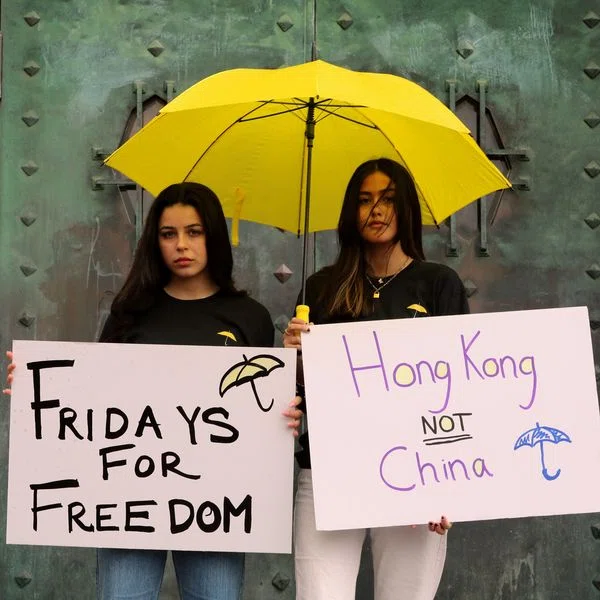
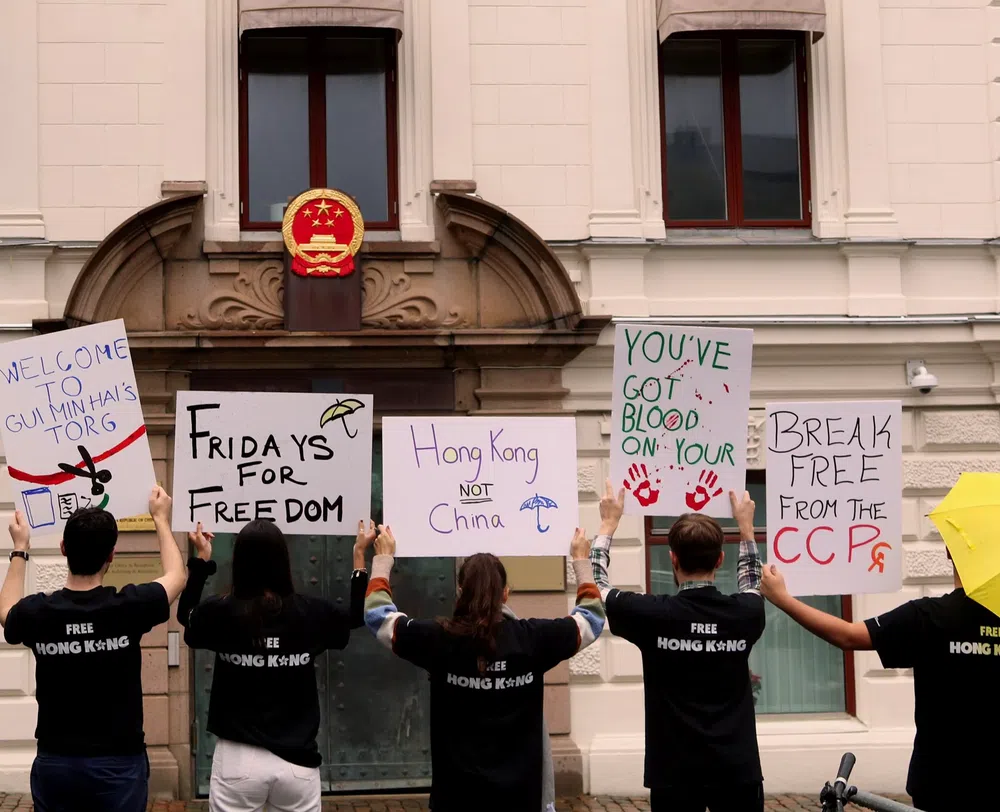
In addition, the party also combines issues of international solidarity (the Union of Liberal Youth is also part of the International Liberal Youth Federation and European liberal youth (Lymec)). LUF supported the liberation movement in Belarus, in addition, the organization arranged shares in support of the "Revolution of Umbrellas" in Hong Kong. No less interesting is leisure time in the Youth Union of the moderate coalition party, says Elvira Lovenadler.
- I am the president of MUF in my region, so I arrange weekly events and help my local members in various political issues, and also participate in federal events. In addition, I took part in political campaigns several times. The political climate in Sweden is quite good, nothing threatens us, and we can easily disseminate information about our politics and opinions, says Elvira.
Party cultures
According to the Ministry of Culture of Sweden, the 1950s can be considered the starting point to start the formation of the Swedish youth policy. At that time, the government mainly paid attention to the informal formation of adolescents in the context of organized leisure. As explained in the ministry, this was supposed to reduce the risk of social and economic isolation of youth. In the legal sphere, this activity, however, began to be enshrined only in 1994, when the Swedish parliament was proposed by the corresponding bill. Since then, the Swedish youth policy has been interdisciplinary in nature and affects not only education and leisure, but also healthcare, culture, as well as economic issues. The principles of modern formation of youth policy are based on universal approaches to human rights, well -being and democracy and can be expressed in the phrase: "All young people should have access to good living conditions, the ability to form their own lives and influence the development of society." The political life of adolescents is also supported by the state.
According to a sociologist in the field of education of Yulva Bergstrom from the University of Uppsal, youth organizations play an important role in the political structure of the state, and their debate is discussed in the means of mass information at the national level. They have the same right of voting as their “maternal parties”. It was in them that a significant part of today's leading politicians in Sweden began.
- There were no specific studies on this issue, but I can say that most of the Swedish politicians began in youth organizations. At the moment, the leaders of the two largest political parties-the heads of the Social Democrats Stefan Levven and the moderate coalition party Ulf Kristersson-left the youth unions. It is generally accepted that before going into a “big” policy, a person must go through a youthful organization and learn there the “foundations” of political life. Despite the fact that now the parties are trying to attract people from the outside, youth alliances are still a significant tool for recruiting and training for leaders and active representatives, ”explains Ann-Catherine Yunggar.
According to the International Secretary of MUF Pasi Wikuri, the majority of legal entertained politicians holding high positions at the local, regional and national levels from moderate ones had experience in the youth wing of the party. The former Prime Minister of Sweden Fredrick Reinfeldt, who led the moderate coalition party, also headed MUF in the 1990s.
In addition, the same members of the Youth Union of “moderate” in fact are a quarter of the participants in the “maternal” party.
- This is natural. You learn politics, you learn to formulate it and defend your positions until you become one of the best politicians. From an early age you study culture, and after that you represent the party in parliament, ”says Wikuri.
Despite the fact that you can be elected in Sweden from eighteen, to influence politics, according to Wikuri, from a very early age. For example, already at twelve, a participant can write an offer for the party congress. If it is well written and members of the party vote for it, in theory it can affect both the policy of the “maternal party” and the Swedish policy. Despite the fact that this rarely happens, this is possible in theory. Similar actions can be carried out at the local level.
The real political career in the country usually begins at eighteen, says to Ternets from SSU. Since the country has been holding elections every four years (recall, Sweden is a parliamentary democracy, there are no presidential elections, there are only parliamentary ones. At the same time, local and regional authorities choose the parliament), some young people can be elected to a political position even before they are twenty -five. Ternestam herself took her first political post at nineteen. Complicates competition for elected places usually good preparation of candidates, Yunggar notes. Therefore, despite the opportunity to run at eighteen, adolescents in Sweden come to more significant posts where at a more mature age, and to take a place in the parliament at twenty “manages only the most gifted”.
Бюджет юношеских ассоциаций в Швеции на 90% формирует государство, продолжает обществовед из университета Сёдертёрн Юнгар. Помимо этого, организации могут получать финансирование от фондов или членских взносов, однако это куда меньшие суммы.
По словам представителей партий, получить финансирование от государства несложно, его размер зависит от количества членов организации. Членство надо ежегодно продлевать, потому что во время проверки чиновники могут обзванивать участников списков партий, чтобы подтвердить реальность их членства. Кроме того, для государства важно, чтобы партии сохраняли в себе демократические институты.
— Преимущественно мы должны показать, сколько у нас членов. Кроме того, мы должны представить документы наших встреч, в которых отражена демократичность нашей организации. К примеру, я как президент могу проголосовать, чтобы решить, сколько денег мы потратим на агитационные материалы, на мерч или на мероприятия. Однако мы должны подтвердить, что решение было подтверждено большинством наших членов. Аналогичная ситуация происходит по всем нашим регионам. Это самое сложное: показать, как работает наша демократическая структура, чтобы объяснить, почему мы нуждаемся в финансировании, — объясняет президент KDU Нике Эрбринк.
Стоит отметить, что государство обеспечивает поддержку организациям, независимо от того, взглядов какого политического спектра придерживаются. Действующая власть (какая она ни была бы, левая или правая) также не мешает финансированию молодежных союзов оппозиционных партий.
— Власти видят, что деятельность юношеских организаций важна для поддержки хорошо функционирующей демократии. Кроме того, финансирование со стороны государства отгораживает их от взяток и коррупции. Таким образом, их финансирование становится прозрачным, а расход средств контролируется, — резюмирует Анн-Катрин Юнгар.