
Translated material
Belarusians were banned by Goethe
The authorities closed the International German Institute and leave Eastern Partnership
It is very easy to respond to sanctions. Brain assaults, night alarming meetings, calculated from calculating calculators in sweating hands are not needed. You need to do something completely different - just start to shmat randomly in all directions, maybe you’ll hurt the right one.
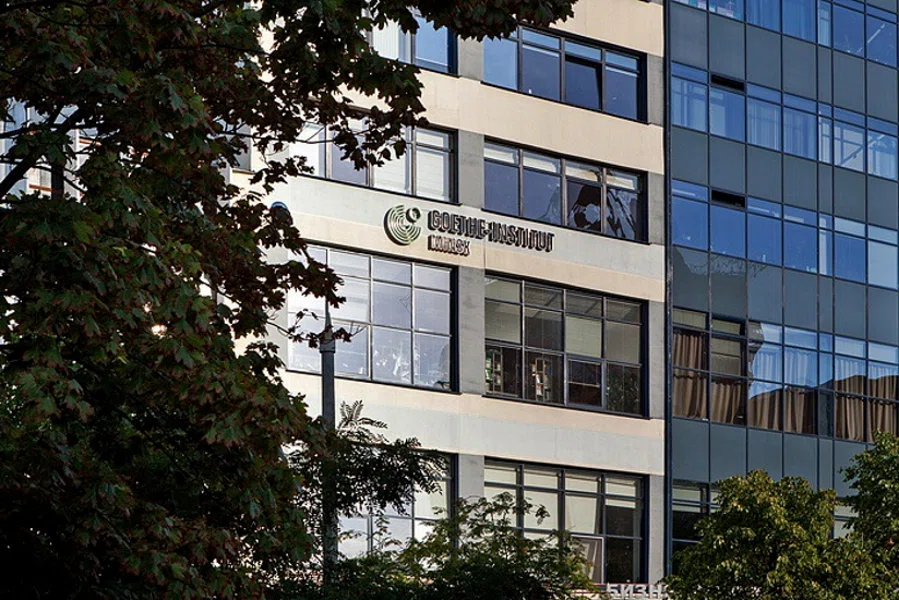
Lukashenko is still in culture and education. In response to sectoral sanctions imposed by the European Union on June 24, Belarus prohibited the activities of the Goethe Institute and the German Academic Exchange Service. And Belarus also comes out of the "Eastern Partnership" and the renewal agreement. In general, everything we can.
Goethe Institute has been working in Belarus since 1993. German courses, seminars for German teachers, exhibitions, film screenings, concerts - this is what the institute in Minsk was doing. And at the Goethe Institute, a great library of German literature and periodicals works. Plus, the reading room in Vitebsk and the Deutschexpress media daytobus for those who are not in Minsk. However, it is hardly necessary to explain what Goethe's Institute is doing - he works in 98 countries of the world. He will no longer be in Belarus. So, already in 97.
The information center of the German Academic Exchange Service (DAAD) opened in Minsk in 2003. He helped Belarusian students find scholarships for training in Germany, scientists - grants for research. Many Belarusian cultural and science figures thanks to Daad made lectures at German universities. Including - Nobel laureate Svetlana Aleksievich. In general, this service helps 100 thousand applicants around the world - from applicants to professors. Now her activities in Belarus have been discontinued.
Even before the librarians in the Goethe-Institute began to put books in boxes, Belarus was left by the head of the representative office of the European Union Dirk Shubel. On June 28, he was called to the Belarus Foreign Ministry in connection with the introduction of sanctions and was strongly recommended to leave the country. On June 30, Shubel left Minsk. July 1, he wrote on his Facebook page:
QUOTE. The head of the EU representative office in Belarus
“Today's Belarus is not quite the country that I arrived 22 months ago, but I am firmly sure that the Belarusians will be persistent and will get out of this crisis more powerful and ready to build a free, prosperous, hospitable and safe society. I look forward to the opportunity to return to Belarus in order to meet more of her persistent and open people, see more of her historical and natural attractions and help strengthen the close ties between the EU and Belarus in all key areas. At the same time, my thoughts remain with every political prisoner, with every person who faced an unjust detention or appeal, with their relatives, with those who lost loved ones in the turbulent 2020. Take care of yourself while I will do my work from Brussels in the near future. ”
By the way, Brussels said that, despite the exit of Belarus from the Eastern Partnership and the renewal agreement, the cost of Schengen visas for Belarusians would not increase. Until July 1 of last year, Belarusians paid 60 euros for visas, and only from July 1, after signing from the EU agreements on the reactsia and on simplifying the visa regime, Schengen visas became cheaper - 35 euros. True, Belarusians have not yet managed to enjoy cheaper visas because of the pandemic. Nevertheless, in the future, Belarusians will be able to pay the same 35 euros. Unless, of course, they will be released from the country: since December last year, traveling across ground boundaries is prohibited, and now the aircraft in the western direction do not fly.
The German Foreign Ministry, after the requirement of the Belarusian authorities to close the representative offices of the Goethe and Daad institute in his press release:
QUOTE. Admitting the Goethe Institute
“We regret the decision of the Belarusian side, which requires the cessation of Goethe-Institute and the German Academic Exchange Service in Belarus. This step will lead to further international isolation of Belarus. Belarusian citizens who will be deprived of the possibilities of public and cultural activities will be injured from this decision. ”
"International isolation"-it is said clearly, in German. And if in Russian, then you can remember the iron curtain. Modern Belarus builds it from the inside, so that no one even a book, even a lecture disturb the fragile balance, which can be considered only in an optical sight.