
Translated material
The output of the sislib
Yaroslav Kuzminov resigned. What will happen to the tower?
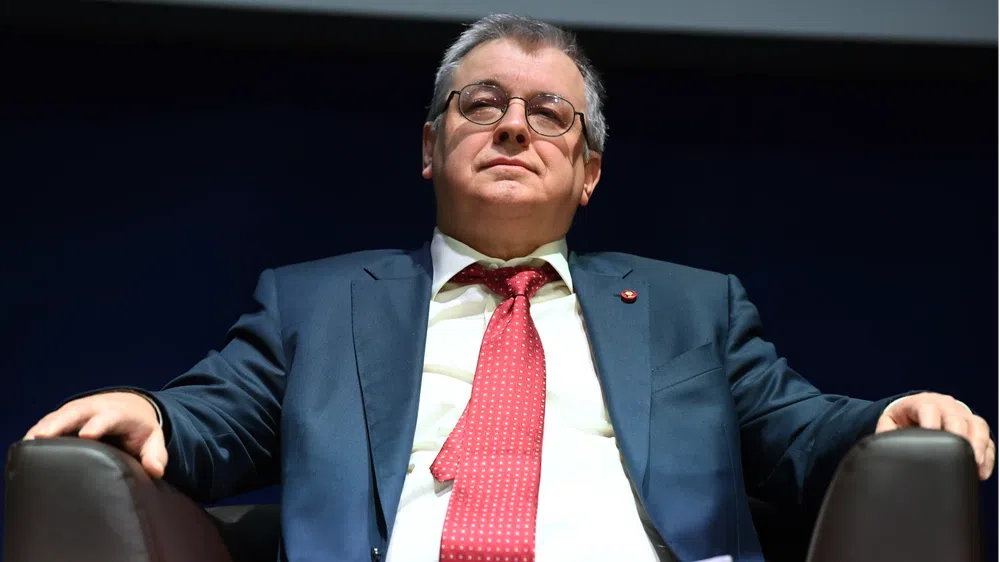
Yaroslav Kuzminov left the post of rector of the Higher School of Economics after 28 years of work. Other long-life rectors-Viktor Sadovnichy (Moscow State University) and Anatoly Torkunov (MGIMO) are sitting in their offices. But unlike them, Kuzminov did not inherit the Soviet or imperial educational project, but created a new university - perhaps the best in the country. The experience of creating the Higher School of Economics is unique for Russia and still needs their understanding: professors who do not want to work in a special Soviet Union have been striving for more than 20 years to the tower to make a large university of international level in Moscow. In recent years, HSE has been in an acute existential conflict with the “new Russian normality”, built on isolationism and revenge neoimpersian slogans. Together with Kuzminov’s departure, his legacy can be completely destroyed: in 2021, the country no longer needs good universities, since “Western ideas” are too clearly spread through them.
Kuzminov announced his departure from the post of rector at a meeting of the Academic Council, and then sent a farewell letter to teachers.
“I want to leave now, because there is still what I want to do in science, in project work, and I feel the strength for this. I can leave now, because I am convinced that a culture that has grown up at the university can now support, ”it says.
The resignation is fed as a balanced and well -calculated step that was prepared in advance, but the circumstances hint at some spontaneity and even the emergency of what is happening. Kuzminov’s statement was not planned in advance by the press service of the university, and at the time of the first information on the resignation of the Official channels of the Higher School did not comment on it. In addition, the rector’s transfer procedure in normal conditions is prepared in advance: the head announces the terms of his authority, after which it transfers them to his successor (in this case, this term does not have connotations related to Russian authoritarianism, so Biden is the successor of Trump as president of the United States). The resignation of Kuzminov opened a dramatic pause associated with someone who will be appointed new rector of the Higher School of Economics - in accordance with the charter of the university, the candidate for this post is approved by order of the government.
Kuzminov’s powers as the rector should have expired in 2024. He received his last five-year contract after an order signed by Prime Minister Dmitry Medvedev in May 2019.
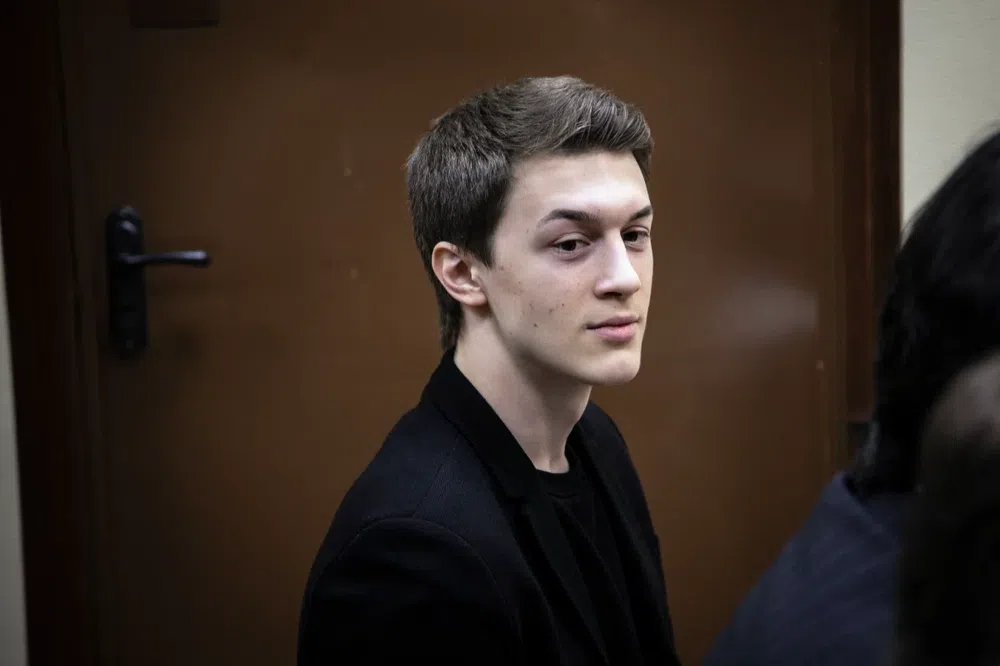
A few months later, a student of the Higher School of Economics, Yegor Zhukov, was in a pre -trial detention center on charges of “Massion Riots” during the “Moskovsky case”, Valery Kasamar, Valery Kasamar , failed the election campaign to Mosgordum , where Kuzminov was supposed to replace, the DOXA student project was deprived of his status, a man without a biography of Gleshamov, and a university appeared in the tower. He entered the protracted series of scandals associated with political pressure on teachers.
The time of system liberals was coming to an end, and Kuzminov’s position became increasingly vulnerable. Despite his “systematic”, it has always been a convenient object for attacks by ultra -conservatives who accuse the Higher School of Economics of all mortal sins - liberalism, sneaking, and also, of course, in the “collapse of the best Soviet education in the world” and in the “management of overseas puppeteers”.
Previously, such comments seemed unprofessional delirium, but by 2021 they became something like the basic principles of state policy.
In recent weeks alone, the American Bard College, which has existed since 1860, and the Russian Oxford Foundation, as the Ino-Agent, was defeated by the Social Science Lab has been recognized as an unwanted organization. For those who are professionally engaged in social knowledge in our country, the trend is extremely clear: any educational or research institutions can become “undesirable”, and in its former form there may not be a place in the new Russian conditions in its former form.
Employees of the Tsargrad television channel will now organize higher education in Russia - their most daring dreams come true.
The pace of these events will greatly depend on the one who will become the new rector of HSE. According to unconfirmed information, it will be a “young technocrat”, not related to the Kuzminov team. The appointment of an external person to a similar project in Russian conditions inevitably involves a change in “educational policy” and de facto recalls the raider seizure of the university than “progressive strategic development”. Among the "technocrats" can appear, for example,
President of the Skolkovo School of Management Andrei Sharonov,
Director of Asi Svetlana Chupsheva,
Former rector of the Sberbank Corporate University and the current dean of the Higher School of the Higher School of Business Valery Katkaalo
(I am grateful for this list Andrei Kolesnikov).
But “Technocrat” is so amorphous that anyone can actually fall under this definition - a technocrat can be in uniform. As it were,
Anyone who replaced Kuzminov in his post will have to accept the “new rules of the game”, within the framework of which HSE is unlikely to be able to claim the “oasis of liberalism” for the Russian education system.
Not only “politically disadvantageous teachers” will be at risk, as it was in the last two years, but also the managers of the old team, struggling to “maintain neutrality” and “stay outside the policy” with all their might.
After the events of 2019–2020, I wrote that the Higher School of Economics will not get out of the current crisis - not because dismissed teachers and expelled student projects are so valuable and indispensable, but because the tower will always be “too free university” for special services, at the same time, the constant attempts of a “compromise” from the rector of the economy of the Russian political regime will be picked up from the rector's economy. and the most progressive students. Now this trend in the impossibility of the “third path” for the university has been fully formed.
Probably, Kuzminov’s departure was the result of external pressure on his team and at the same time the consequence of the “systemic liberal” attempt to get out of the situation with the least losses, retaining his assets and reputation.
Yaroslav Ivanovich is clearly familiar with the book of economist Albert Hirschman “Exit, Voice and Fidelity”, dedicated to the choice that the consumer who faced a sharp deterioration in the quality of the work of a particular company. A special case of Hirschman's analysis is the situation of a citizen who is faced with the transformation of his state into a dictatorship. He, probably, can be applied to the rector, who was faced with the dictate of the special services and is not able to protect his employees and students.
One teacher told me some time ago that he does not understand why Kuzminov simply would not quit in order to no longer be responsible for everything that was happening with the university. And this happened - after the rearguard hardware battles of stretching for several years.
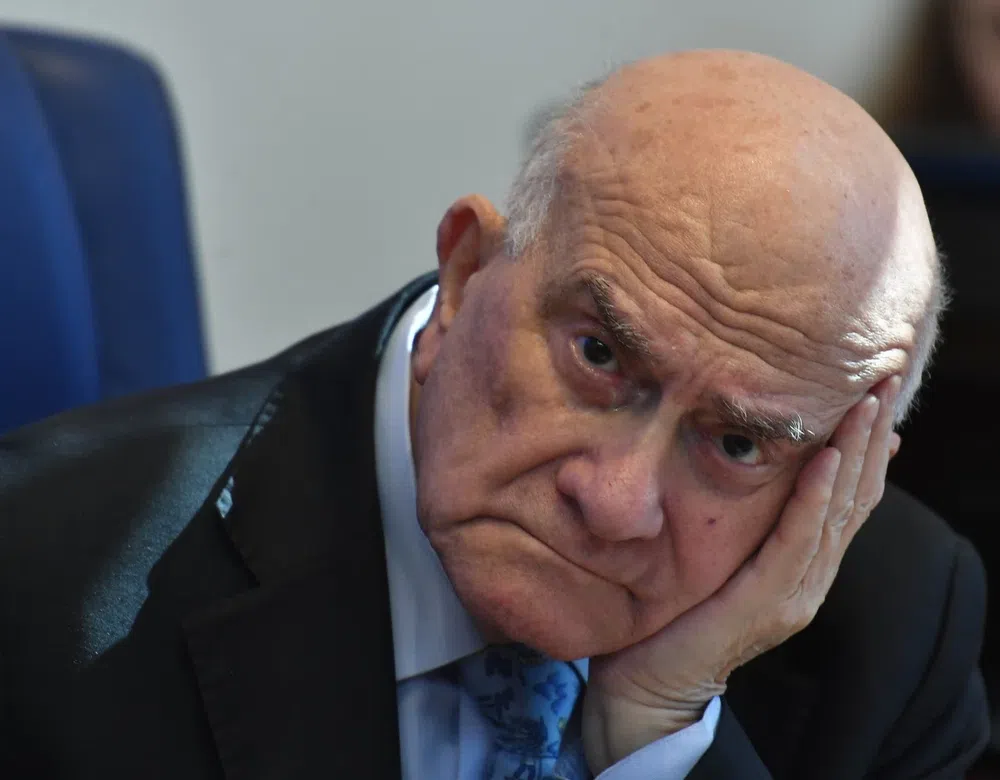
The fate of 87-year-old Yevgeny Yasin, a former Minister of Economy of Russia and the supervisor of the Higher School of Economics since 1998, remained in the shadow of Kuzminov’s resignation. Evgeny Grigoryevich, being in his honorable post, never tried to be a “compromise figure” and spoke about what was happening in the country what he thinks, creating many problems with more systemic liberals. Now the place of Yasin will take Kuzminov, Yevgeny Grigoryevich must be thanked for the courage, which did not leave him over all these years.
The author is grateful to the Higher School of Economics and personally to Yaroslav Ivanovich for 13 wonderful years of work in the walls of the university. In these years, every day I studied with colleagues and students of the tower, the result of these lessons was a literal reading of the university values: there is nothing more important than freedom of research and freedom of discussion. The experience of the Higher School of Economics, including historical events in 1992 for Russian education, now inspires many to create new educational projects.