
Translated material
"The police compiled lists." The defeat of independent media in Hong Kong
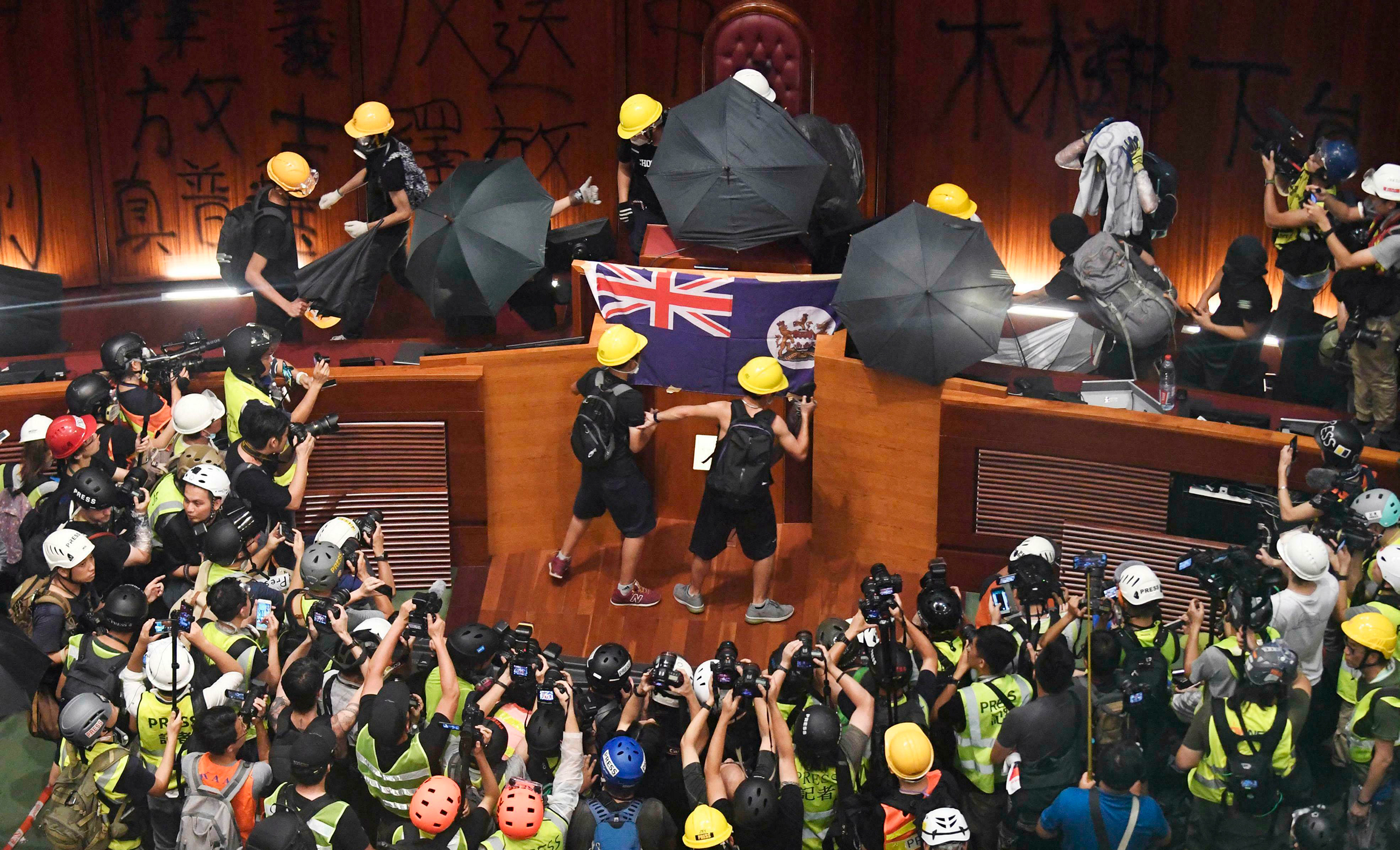
Protesters broke into the parliament building in 2019. Photo: Kyodo / AP
Tighten the legislation, persecution of connections with foreigners, searches for journalists, blocking sites, forced self -censorship and refusing to collect donations for considerations of safeness - you might think that we are talking about Russian media, but no: China’s actions on the power integration of Hong Kong into the political space of the country have recently been literally rhyming from the domestic - or Belarusian - agenda. Mediazona explains as briefly as possible how Hong Kong journalists were defenseless before the Chinese security forces.
Law
“In the first moments after midnight, during the ceremony with military music, China restored its sovereignty over Hong Kong, putting the end of the 156 years of British colonial rule,” wrote the New York Times on July 1, 1997. - This event was expected with trepidation and excitement since 1984, when the UK and China agreed on the conditions of the return of the territory taken from the XIX century “opium wars”. From this day, the period of uncertainty was counted: will China fulfill its promise to maintain life in Hong Kong almost unchanged over the next 50 years? ”
From the moment of publication of this text, half of the agreed deadline has passed - and now it is obvious that China has fulfilled its promise only formally. If at first in the issue of economic, cultural and political differences between the autonomous territory and the mainland, Beijing followed the formula of Dan Xiaopin “One Country, two Systems”, then in the 21st century attempts to compulsory integration became more active. For example, in the text of the Declaration on the transfer of Hong Kong it was guaranteed that rights and freedoms - including freedom of speech and freedom of the press - "will be protected by law." Now, in terms of freedom of speech in the ranking of “reporters without borders”, Hong Kong sank from 18th to 80th place .
The gradual folding of island liberties came across the predictable resistance of local residents. In 2019, the streets of Hong Kong became an arena of long -term fierce clashes with security forces; Protesters demanded that the bill on the extradition of suspects in mainland China; The initiative was eventually turned, but it turned out that it was a tactical concession - already in 2020, a powerful blow was struck in street protests in the form of a law on the protection of national security. Such a law was provided for by the basic law of the territory adopted in the transfer of Hong Kong to China; In 2003, they tried to accept it, but then mass protests overlapped a flash of atypical pneumonia (SARS-COV), and voting in the local parliament was postponed due to quarantine. The restrictions introduced due to the pandemic of the new coronavirus (SARS-COV-2) were no longer stopped: the Hong Kong law was adopted immediately in Beijing.
The document criminalized four categories of acts, the definitions of which are extremely widely formulated: separatism, undermining the state system, terrorism and “entering into a conspiracy with a foreign state or external elements in order to create a threat of national security” of Hong Kong as part of the PRC. The maximum punishment is life imprisonment, decisions on jurisdiction - for Beijing, the circle of potential violators - all the inhabitants of the planet Earth : the authors of the law applied the principle of extraterritoriality, that is, it acts, regardless of citizenship and location of the suspects.
Over the year, 117 people were detained on new accusations, ten - on the first day after the entry of the law on national security by force when the opposition of Hong Kong reached the protest. At the same time, the electoral legislation was changed : the “patriotism” was an obligatory criterion for registering in the Legco Legislative Council (Legco) - and the lack of suspicions of the threat of national security. Another consequence of the law was the sanctions, which President Donald Trump introduced, recognizing the new policy of Beijing in Hong Kong with an “extreme threat of national security, foreign policy and US economy” and depriving the autonomous territory of the “special trade status”.
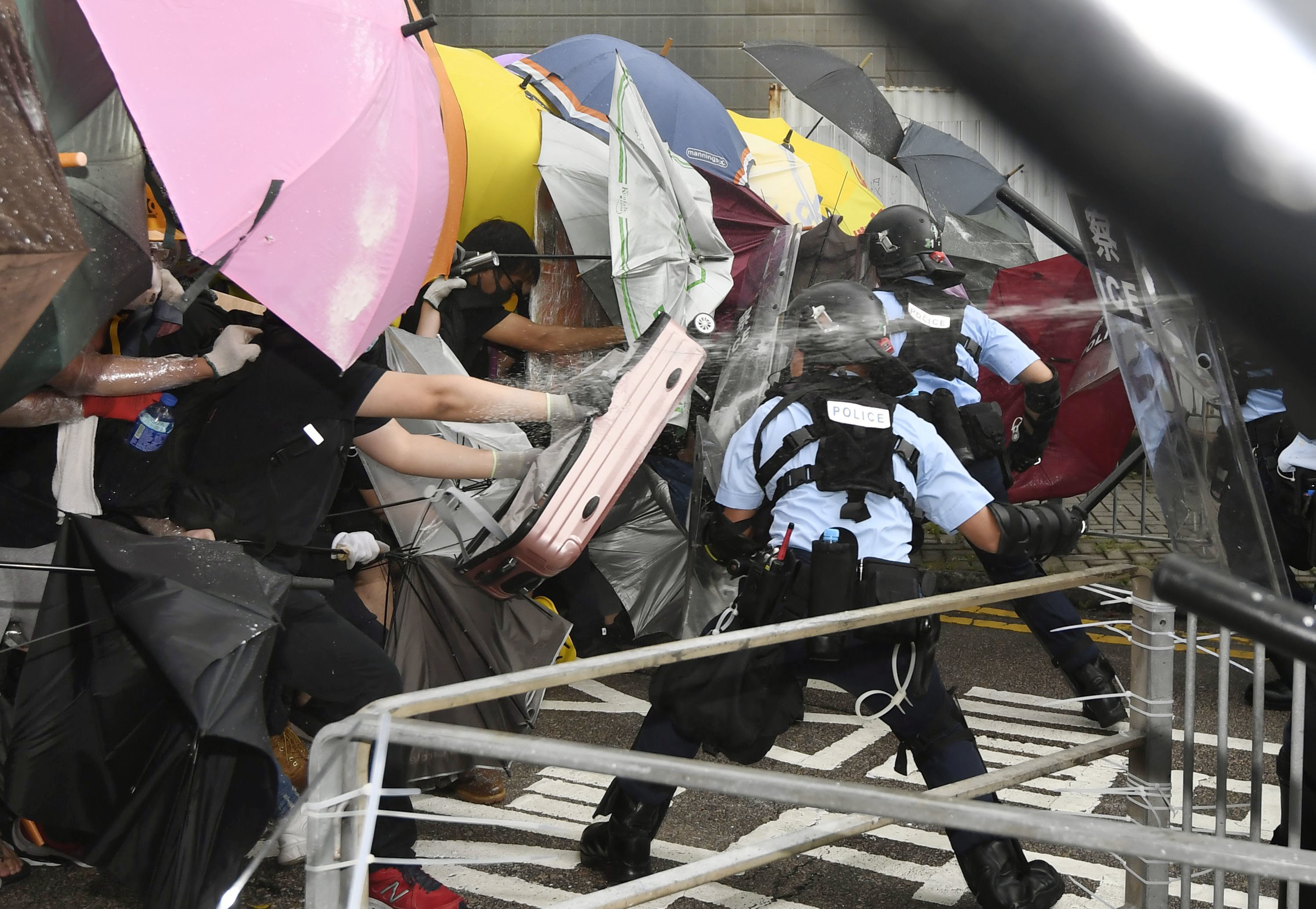
Protests in July 2019. Photo: Kyodo / AP
Press
The most famous defendant under the new law was the 73-year-old media Magnate, the founder of the popular newspaper and active critic Beijing Jimmy Lai. In August, barking was detained on suspicion of "conspiracy" with abroad; So far, the Apple Daily editors have been searched for two hundred security forces, democratic activists bought up the company's shares that have grown in price by 300%.
Since its foundation in 1995, Apple Daily has been subjected to various forms of pressure: advertising boycotts, attacks on the owner and correspondents, arson, damage to circulations and cyber attacks. The newspaper decided to close the newspaper in the year of the Century of the Communist Party of China: the security forces came to the editorial office on June 17, now there were about 500 of them. They detained the five heads of the publication, including the editor -in -chief of Ryan Law, on suspicion of calling for foreign sanctions against Hong Kina, and also froze the company's assets Next Magazine, which has done the work of the publication is virtually impossible. Back in May, Hong Kong Secretary John Lee sent letters to local units of HSBC and Citibank banks, threatening up to seven years for operations with barking accounts.
On June 23, the Apple Daily newspaper ceased to exist . On the same day, the Wen Wei Po Project newspaper came out with an editorial about barking, accusing him of “betrayal” and working in the United States. American President Joe Biden made a rebuke to China, calling Apple Daily “such a necessary bastion of independent journalism in Hong Kong” and emphasizing that Beijing “refuses the main freedoms and encourages Hong Kong autonomy and its democratic institutions and processes, which contradicts these international obligations.”
Lamo Chao. Against the backdrop of protests against laws on extradition and national security, a certain popularity in Hong Kong received the concept of Lam Cao, which can be conventionally translated as “burning”. Its essence lies in the readiness of democratic protesters - usually supporters of independent Hong Kong - to sacrifice the status, material position and successes of the local economy in order to strengthen international sanctions if they can cause sufficient harm to China: "If we are combined, you will burn with us." Both the authorities and the moderate critics of Beijing condemn the concept as dangerous and destructive.
The problems did not end there. A few days later, one of the Columnists of Apple Daily was detained at Hong Kong Airport, who was supposed to go to the UK. He is also suspected of "conspiracy" with abroad.
At the same time, the Stand News publication out of concern for security deleted comments and the blog-user-fractions on its website, and also turned off the collection of donations: there was enough money for the year of work, and it was decided to refuse additional risks. The site post852.com stopped working back in May, but continued to lead the YouTube channel-now the content was deleted from there, and the founder of the platform promised to record videos only on historical topics in the future. The technological publication of Winandmac , against the backdrop of these events, announced that it was canceled by registration in Hong Kong and transported the office abroad.
“We are afraid that the police compiled lists, and many journalists and Columnists are waiting for the persecution,” Ronson Chan commented sadly by the head of the journalistic association, adding that these events mean the end of the freedom of the press in Hong Kong.
Editor: Dmitry Tkachev