
Translated material
"No one was waiting for longer"
The pilot Wally Fank could go into space 60 years ago. Now she will fly there with billionaire Jeff Bezos. She is 82 years old 💪
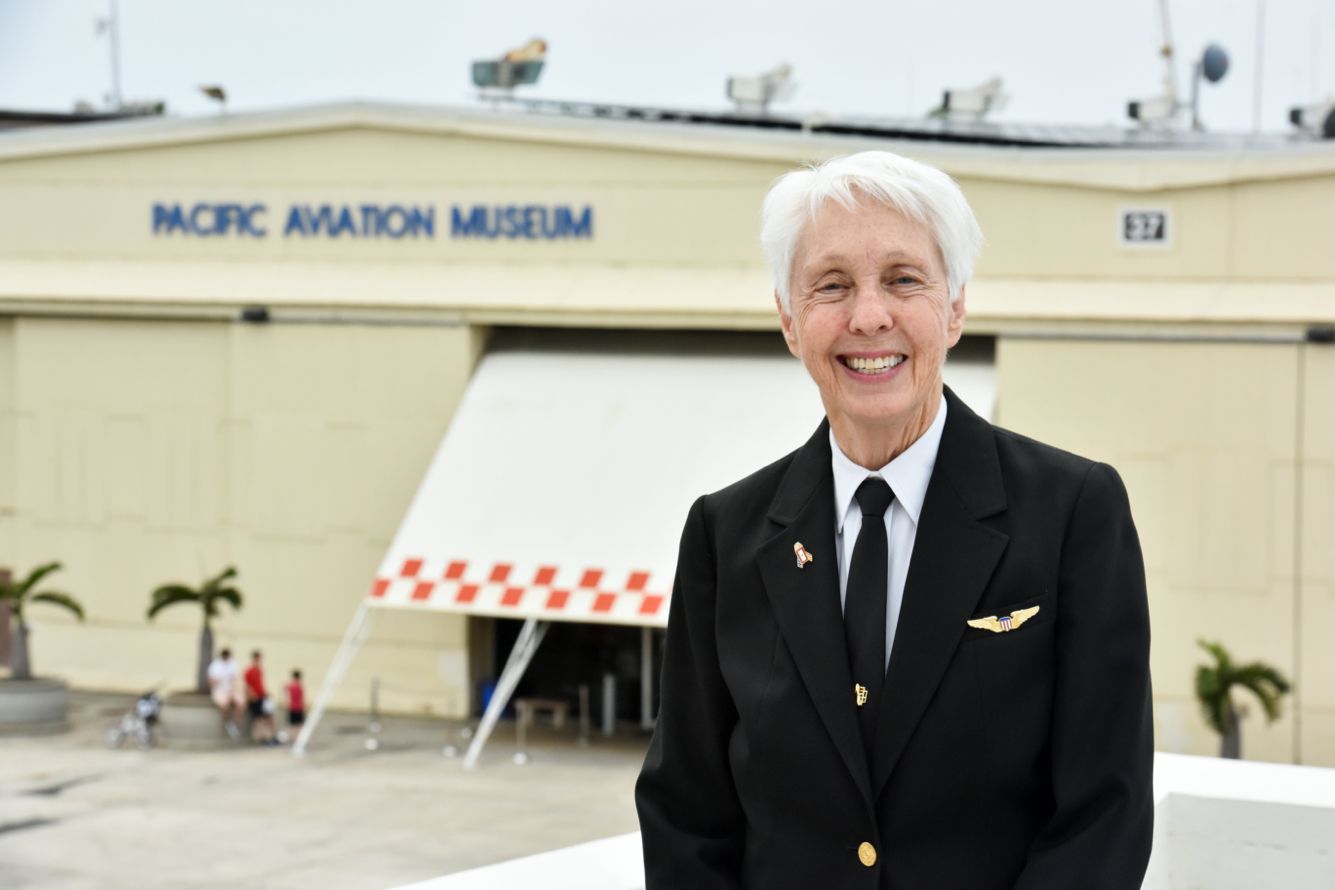
On July 1, the founder of the Internet retailer of Amazon and the space company Blue Origin, the richest man of the world Jeff Bezos named the name of one of the two unknown participants in the first suborbital flight of Blue Origin on July 20. This is an 82-year-old American pilot Wally Fank, who in the 1960s successfully passed tests for preparation for space flight, but still has not visited space. “No one was waiting for longer,” wrote Bezos on Instagram, referring to the years of waiting for Funk.
The businessman also posted a video in which he tells Funk how the participants in the Blue Origin suborbital flight will return to the ground. “The hatch opens and you go out. What will be your first words? " - asks Bezos. “I will say:“ Dear, this is the best that has ever happened to me, ”Funk replies and impulsively hugs Bezos. He laughs.
Funk dreamed of flights from childhood. At the age of five, she jumped from the roof of the barn in the "Superman cloak". The girl began to attend the flight school while studying at college, becoming the best in her class. Once, Funk saw the cover of Life magazine with a photograph of the pilot Jerry Cobb and found out that she is being tested as part of a program for testing women for space flight.
Funk contacted the initiator of this program Dr. William Lovelyis. He participated in the selection of candidates for the first detachment of NASA astronauts as part of the Mercury program and on his own initiative and at his own expense began to conduct similar tests with women. Lovelyis believed that in the future they, like men, would work at orbital stations.
In 1961, he selected 25 women to 35 years old, with good health, who studied in college and having flight training. 21-year-old Funk became the youngest of the group. As part of the tests, she spent a record for 10 hours 35 minutes in an isolated water tank (it was a sensory deprivation test). “I had not a shadow of doubt. I was their object. They could do everything they wanted with me, ”Funk recalled later. She was told that she passed the tests better than men.
Fink was among 13 out of 25 women who successfully passed tests (later their group will be called Mercury 13). Lovelis wanted to continue testing at the US Navy, but the military did not give permission. “There was no military or government program in which it was planned to use astronauts women, so they did not give the opportunity to use their objects,” the historian of the National Museum of Aviation and Cosmonautics in Washington Margaret Vaititkamp explained .
She believes that the door to the astronautics, which opened for women in 1961, quickly slammed mainly because of the ambitions of US President John Kennedy, who decided to send the Americans to the moon. In May 1961, he stated that the United States would organize a lunar mission for nine years, and in subsequent years all the efforts of NASA and Pentagon were aimed at solving this particular problem. “They had one goal, which did not provide for social experiments with a woman’s flight into space,” explained Waitimamp.
As a result, the first American in space was Sally Ryd, who went to orbit only in 1983-20 years after the world's first woman-cosmonaut Valentina Tereshkova.
Funk built a career in aviation. In 1971, she became the first female inspector of the US Federal Civil Aviation Administration and, in her own words , trained more than three thousand people to control aircraft. In 1974, Funk went to work in the National Council for Transport Security, where the first of women began to investigate aviation incidents.
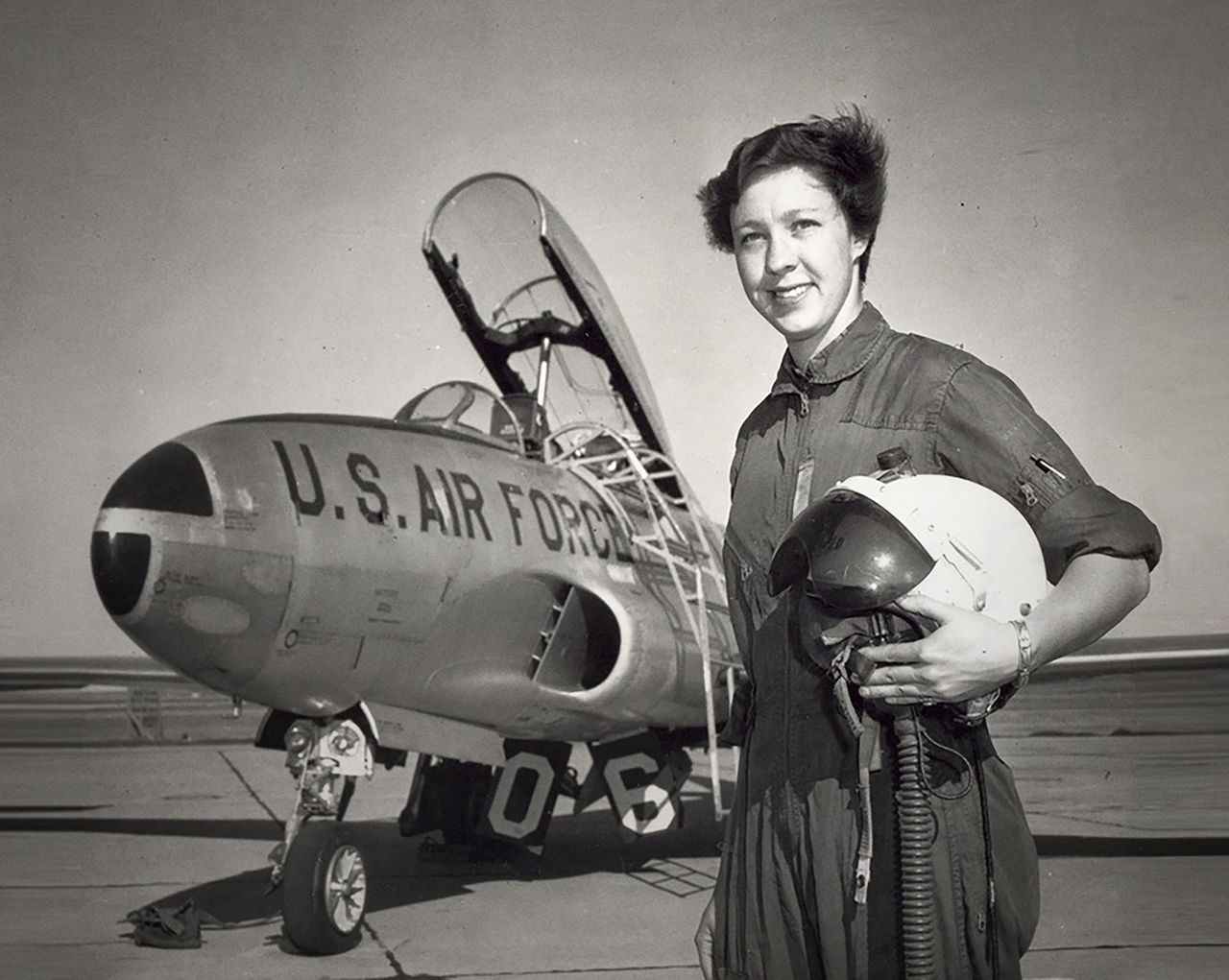
However, she never left the dream of space. Funk went to the USSR twice and met with Tereshkova. And four more times I applied to a detachment of NASA astronauts. Each time she was refused, because she did not have an engineering education that was mandatory for space flight, and the agency was ready to take only nine months to receive it.
Desperate to get into space as part of the NASA detachment, Funk decided to go there as a tourist. She book a place on several commercial flights of different companies, but not one of them has yet sent tourists into space - including the Virgin Galactic ship, billionaire Richard Branson, which Funk bought a ticket for 200 thousand dollars back in 2010. However, Branson himself plans to fly into space on the Virgin Galactic ship on July 11 - nine days earlier than Bezos and Funk.
The founder of Amazon invited the pilot to join the Blue Origin flight as an honorary guest. As notes The Atlantic, its participation in this project is not only an excellent PR ridge, but also a “real gift for a real person”. Wally Fank, who, from his youth, dreamed of space, can become the oldest person who went there. Now this record belongs to the American astronaut John Glenn, who in 1998 made his second and last cosmic flight at the age of 77.
Olga Korelina