
Translated material
Nine million "deprivation"
How will people lose the right to be elected?
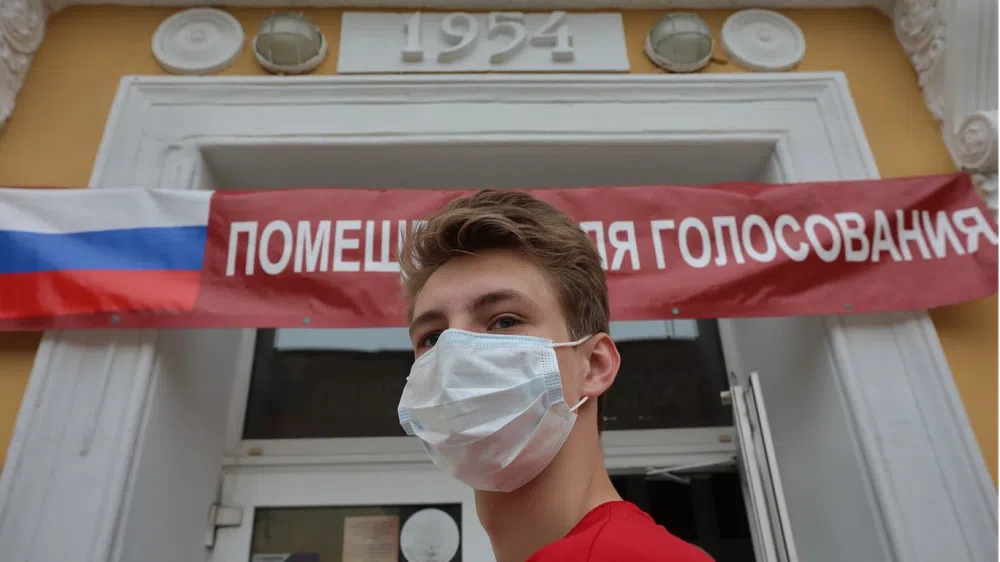
The Voice movement published a report on the new “deprived” in Russia. According to the “votes”, at least nine million people are deprived of passive suffrage, and after the adoption of the “law against the FBK*” (included in the list of extremist organizations), the number of such will grow many times.
Nine million are about 8% of all Russian voters. There are several grounds for depriving their passive suffrage:
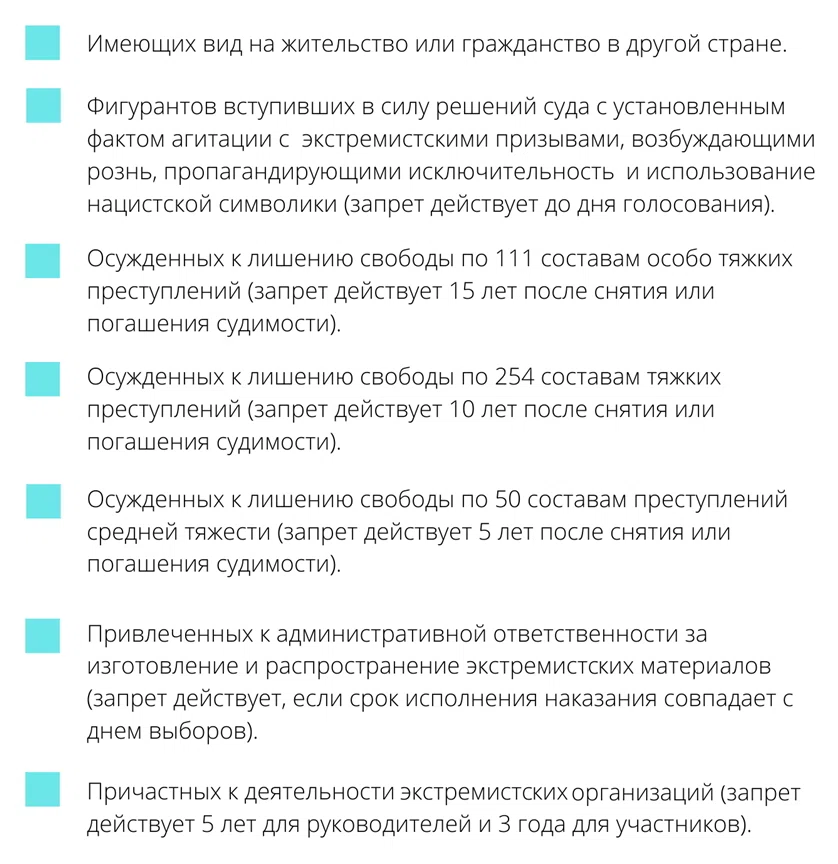
the presence of a residence permit or citizenship in another country,
communication with "extremist" organizations,
the presence of a criminal record in a number of criminal cases,
justification of Nazism.
Whom they can deprive the right to participate in elections to the authorities
Foreigners in their country
A large group of “deprivation” - holders of a residence permit or citizenship of other countries . Such Russians can only participate in the elections in the municipal authorities in the presence of an appropriate international treaty.
In 2007, in the refusal to determine the complaint of Vladimir Kara-Murza about the ban on participating in the elections to the Moscow Regional Duma due to the second citizenship of the Constitutional Court, he decided that this decision was constitutionally. According to judges, only Russian sovereignty retains the deprivation of suffrage with two passports.
The exact number of Russians with a residence permit or second citizenship is unknown. In 2015, the Federal Migration Service stated that, according to its estimates, six million Russians have two citizenships, of which five and a half million have passed the process of naturalization in Russia.
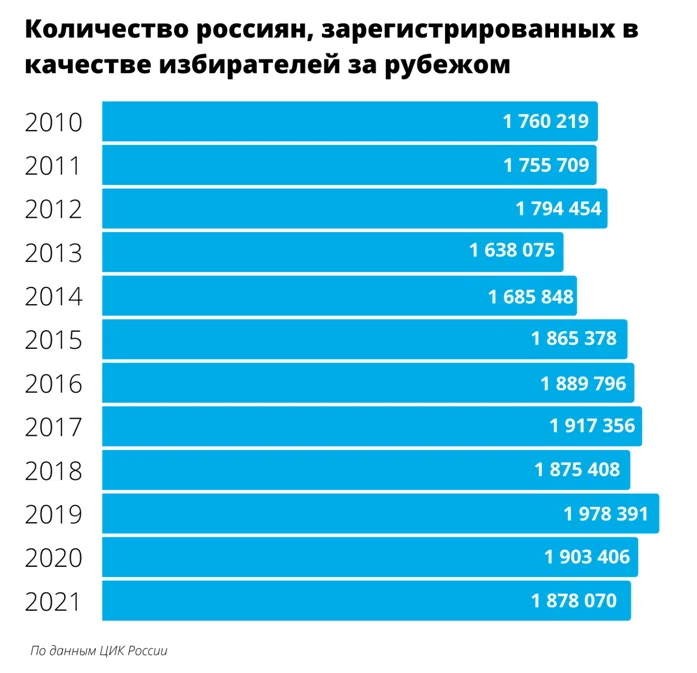
According to the CEC, at the beginning of 2021, more than 1.8 million voters were registered abroad.
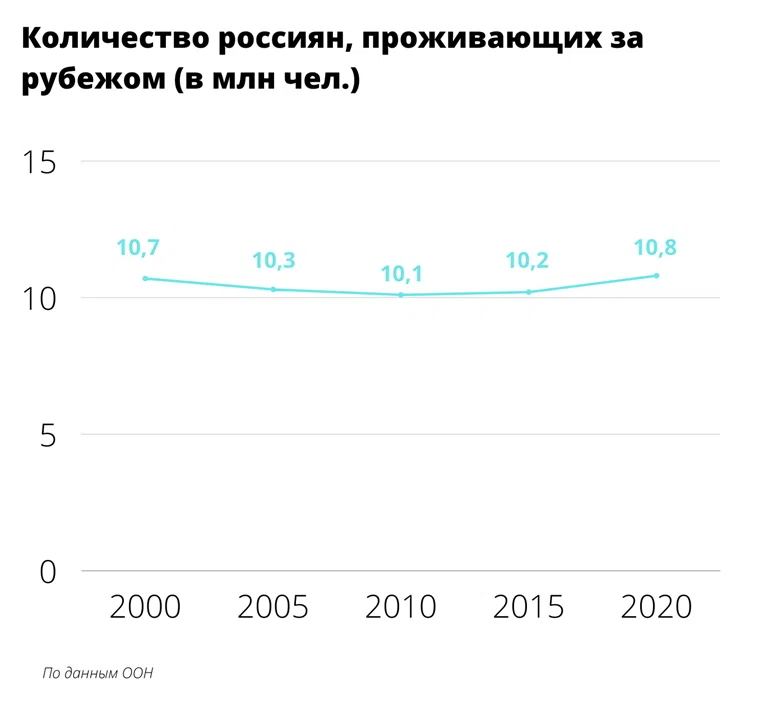
According to the UN estimates, about 10.8 million Russians lived outside Russia in 2020. Since 2015, after a decline in emigration, this figure has grown by 600 thousand people. A significant part has a residence permit or second citizenship.
Judicial "deprived"
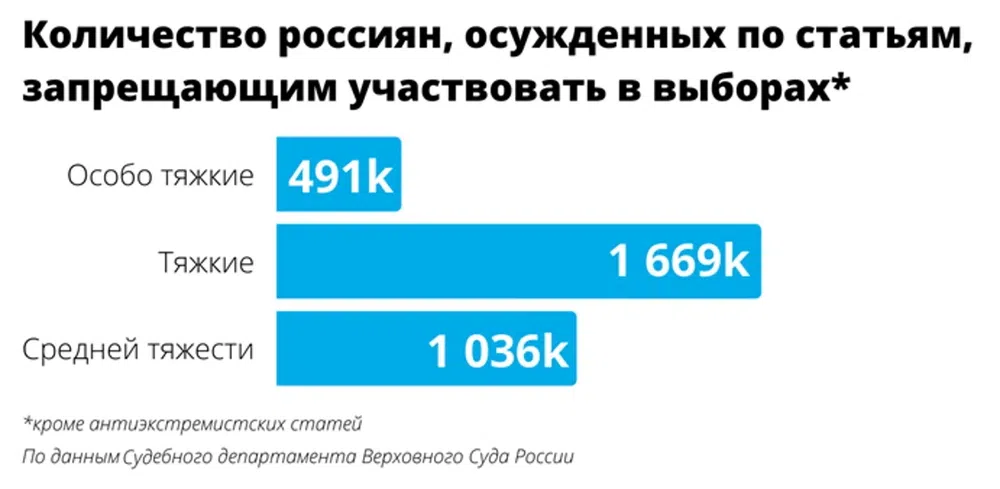
They are deprived of the right to be elected and convicted under 417 articles of the Criminal Code, the ban is also valid after the removal or repayment of a criminal record. Most of the convicts do not have political ambitions, however, both civil activists and opposition politicians receive punishments for these articles.
For especially serious crimes, the ban is valid for 10 years after serving the sentence. Thus, if you take into account the term of imprisonment, convicts cannot participate in the elections for at least twenty -five years.
Sergey Furgal, ex-governor of the Khabarovsk Territory, one of the political prisoners who faces a criminal punishment under an article for a particularly serious crime. Since July 2020, he has been in jail due to suspicion of involvement in the murders of Khabarovsk entrepreneurs in 2004-2005. If he is found guilty, he will lose the right to be elected until the end of his life.
Parts 1 and 2 of Article 212 on the organization and participation in the riots belong to the category of grave or especially grave acts. According to these articles, the punishment received part of the convicts in the “swamp case” . The sentences for these articles were also threatened by the defendants in the “Moscow case” , but in the end, cases were either terminated or re -qualified for a less difficult article 318 on the application of violence to a representative of the authorities.
Alexei Navalny lost the opportunity to be elected after the sentence under part 4 of Article 160 of the Criminal Code of the Russian Federation in the second case of Kirovles , this composition also refers to serious deeds. The outstanding criminal record became the official basis for the refusal of registration of Navalny in the presidential election in 2018.
Articles for political opponents
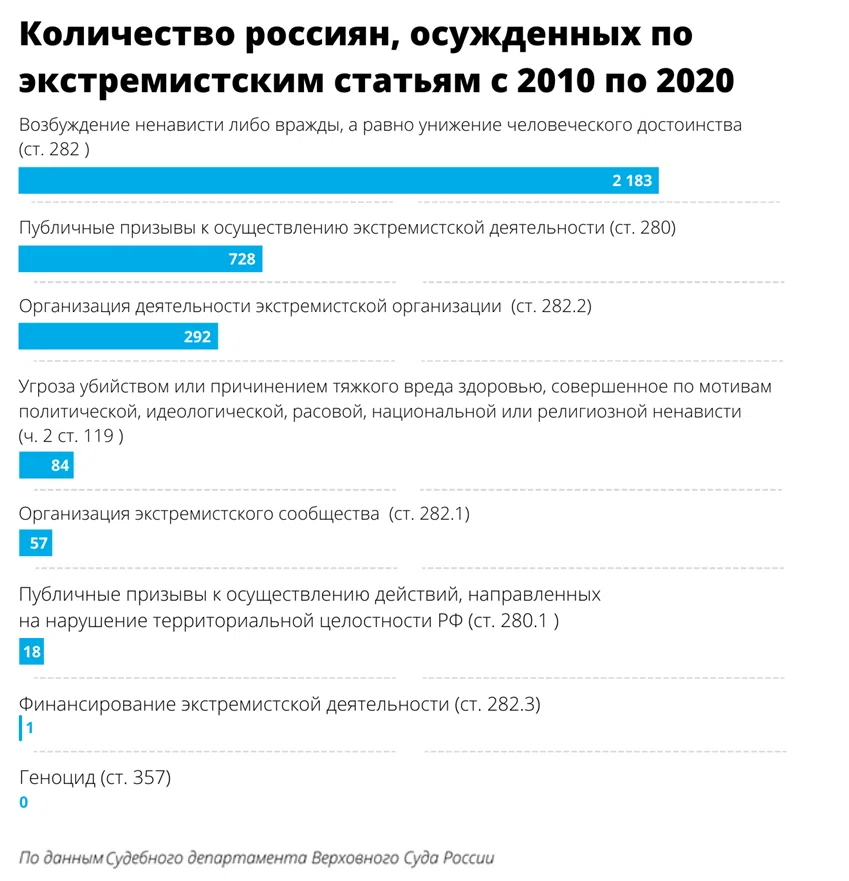
The prohibition on the nomination is also obtained by convicts under the "extremist" articles of the criminal and administrative codes. Activists and opposition politicians often take place on these compositions. For example, the former FBK operator Pavel Zelensky received 1 year and 11 months in prison for "calls for extremism."
Criminal punishment under the articles for extremism from 2010 to 2020 was received by 3,363 Russians.
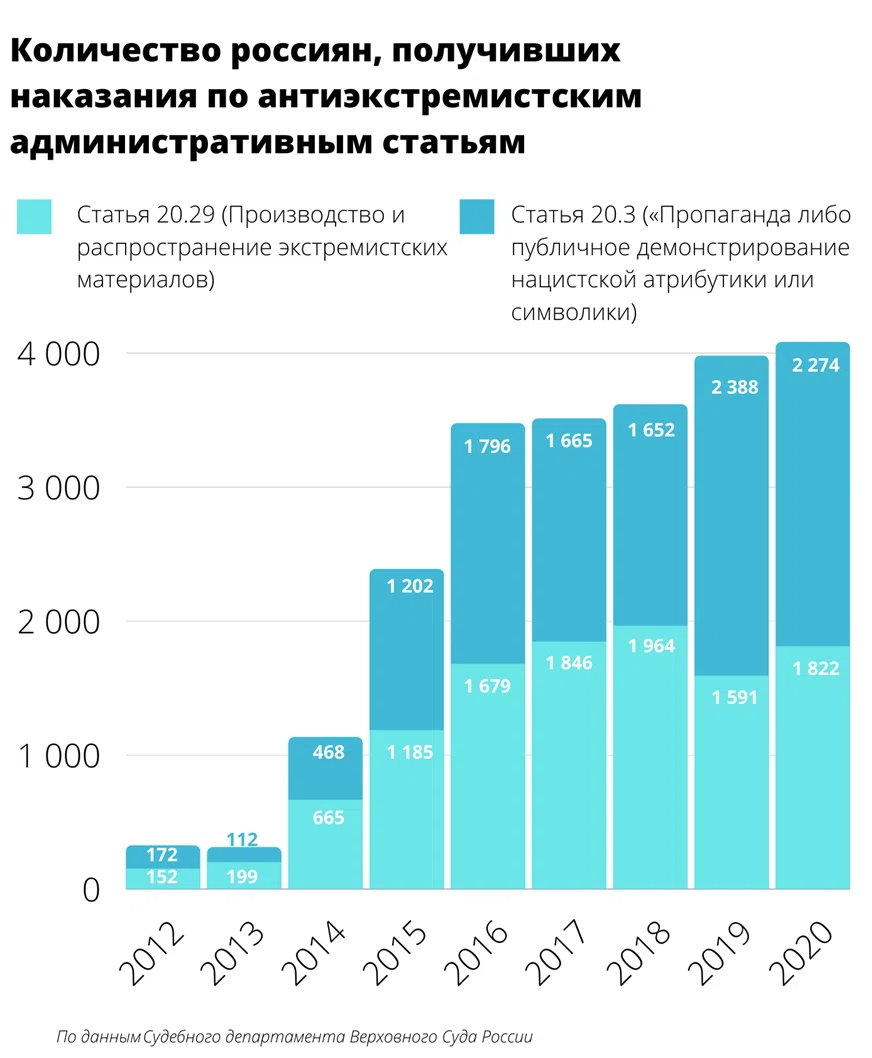
The Code of Administrative Offenses provides for two “extremist” articles: Article 20.3 On public demonstration of Nazi attributes or symbols and article 20.29 on the production and distribution of extremist materials. Administrative cases for extremism are used against activists, ordinary participants in opposition rallies, for example, in only 2020 only 34 people were involved in the repost of the video of Alexei Navalny “we will remember the crooks and thieves of their manifesto-2002” (recognized as extremist material).
Every year, 3-4 thousand people receive fines or arrests. After amending in 2021, Article 20.3 on the ban on demonstration of Nazi symbols without a negative assessment can receive administrative punishments can be even more citizens.
In the future, about 10 thousand people who have received administrative punishment under Article 20.2 (“Violation of the established procedure for organizing or holding a meeting, rally, demonstration, procession or picket”) after winter rallies in support of Alexei Navalny can lose. In case of three detentions on this composition for six months, the police have the right to initiate a criminal case under the "Dadin" article. The maximum punishment for it is imprisonment for five years.
The “Dadinskaya” article refers to medium -soup crimes, convicts on these compounds are deprived of the right to be elected five years after repaying or removing a criminal record. This category also includes the “folk” entrepreneurial article for fraud (Article 159) - over ten years about 51 thousand people were convicted of ten years.
The use of violence to the representative of the authorities (Article 318) is also qualified as a crime of moderate severity. This composition often becomes a tool for pressure on activists after protests. In 2021, after rallies in support of Alexei Navalny, 43 criminal cases were instituted under this article, 12 defendants already received real terms.
The Decree of the Constitutional Court of Russia dated 2013 states that the restrictions of suffrage should be “reasonable, proportionate and reasonable”, and it can be deprived of passive electoral law automatically guilty of grave and especially grave deeds. However, at that time, the ban on the right of nomination applied only to these categories of crimes and extremist compositions. After expanding the list of such articles, the ban on them spread automatically.
The European Court of Human Rights recognized the automatic deprivation of electoral rights without analysis - contradicting the fundamental rights and freedoms of man.
The ban on participation in the elections is also obtained by defendants in court decisions, in which campaigning with an appeal to extremism, justification of Nazism, inciting growth or propaganda exclusivity or superiority in a number of signs is established.
Electoral sanctions
The list of potential “deprivation”, which was “Voice”, is now 75 politicians and public figures. The criteria for inclusion in the list was the presence of administrative punishments on rally and “extremist” articles and open criminal cases against politicians. The list is based on open data and, according to the Voice, can be incomplete. The report also submitted a list of politicians already deprived of passive suffrage over the past year.
In the list of potential “deprived” - Sergey Furgal, Andrei Pivovarov and Ketevan Haraidze, who are now in the pre -trial detention center, Maxim Reznik, who was sitting under house arrest, Dmitry Gudkov, who left Russia under the threat of a criminal case.
Over the past year, six politicians have been deprived of the right to elect, due to the decisions of the court of law. Three-due to criminal prosecution. Andrei Borovikov was sentenced to two and a half years in prison, Julia Galyamin - to two years old according to the "Dadin" article, Nikolai Platoshkin - by five years conditionally . After serving or removing a criminal record, they cannot be elected for another five years.
Three more received administrative punishments under Articles 20.3 (“Public demonstration of Nazi symbols”) and 20.29 Code of Administrative Offenses (“Production and distribution of extremist materials”). Evgeny Domozhirov, ex-deputy of the City Council of Vologda and the chairman of the movement "Together", lost the right to nominate because he compared the current mayor of the city and governor of the Vologda region with the Nazis. Yuri Yukhnevich, a deputy of the Tyumen regional Duma from the Communist Party, became a “deprived” for the repost of the video of Alexei Navalny. Anton Mirbadalev was fined one thousand rubles under the same article for the repost of the video in 2010.
After the adoption of the “law against the FBK”, which forbidden to participate in the elections to people related to extremist organizations, the number of “deprived” people can significantly increase. Due to blurry formulations, hundreds of thousands of people supporting the FBK can fall under the law.
Oppositionists Ilya Yashin and Oleg Stepanov , the former coordinator of the Moscow headquarters of Navalny*, became the first people who were not allowed to the election, referring to the new law.
“The number of types of prohibitions for politicians in the right to be elected today is so large that not all of them still began to be used. Any active citizen can please the arranged traps, ”said Grigory Melkonian, co -chair of the Voice movement and one of the authors of the report on new“ deprived ”in Russia. - Many norms are clearly accepted for growth. It should be expected that the number of “deprivation” will grow if the political system in the country does not heal. It is difficult to predict how the growth will be violent, since it depends on many factors: whether the candidates will be able to challenge the restrictions in the constitutional court, how actively the authorities will use the criminal and administrative prosecution of opposition candidates in regional and local elections, whether the sign of involvement in “extremist” organizations will massively use ”.
List of potential deprived of "Voice"
Politic name - for which it/it can be deprived of the right to elect it
Ananin Vadim - shares, "Open Russia"
Baybulatov Ural - shares
Bespalov Sergey - headquarters of Navalny
Boyko Sergey - shares
Boyko Sergey Andreevich - shares
Bondarenko Nikolay - videos on YouTube, promotions
Bykovsky Nikolay - promotions
Bychkova Elizabeth - shares, headquarters of Navalny
Vorobyov Alexander - meeting with voters
Vorsin Alexey - Promotions
Vostrikov Ivan - shares, headquarters of Navalny
Gresko Alexey - shares, headquarters of Navalny
Gudkov Dmitry - Aunt did not pay for rent in 2015
Danilov Ilya - shares, headquarters of Navalny
Evdokimova Marina - shares, headquarters of Navalny
Emelyanov Oleg - shares, headquarters of Navalny
Ekaterina Engalycheva - shares
Zhukovsky Vladislav - shares
Zabelin Maxim - Promotions
Zinatullin Ruslan - Promotions
Zykov Alexander - promotions, headquarters of Navalny
IOLYEVICH Mikhail - provided a premises for the training of observers
Kazankov Ivan - led the collective farm
Kalinin Vladimir - took a loan on the bail of a truck, who later had an accident
Kalinichenko Stanislav - shares, headquarters of Navalny
Kanarev Artem - promotions
Kapinosova Sofia - shares, headquarters of Navalny
Kartavtseva Olga - shares, headquarters of Navalny
Kiselev Konstantin - shares
Klimov Maxim - promotions, headquarters of Navalny
Kozlov Dmitry - comrade -in -arms Sergey Furgal
Kochegin Evgeny - promotions, headquarters of Navalny
Kochkin Semyon - stocks, headquarters of Navalny
Kuznetsov Sergey - Companion Sergey Furgal
Lekiashvilly Elena - promotions, headquarters of Navalny
Lyaskin Nikolay - Public Support of Navalny
Mitrokhin Sergey - Public Support of Navalny
Mikhailov Oleg - Promotions
Norman Irina - shares, headquarters of Navalny
Nurtdinov Ruslan - Promotions
Ostanin Vadim - promotions, headquarters of Navalny*
Pivovarov Andrey - "Open Russia"
RAU Victor - shares
Reznik Maxim - a hemp found a relative
Rogozhkin Alexander - shares
Roizman Evgeny - Public Support of Navalny
Rudakova Diana - promotions, headquarters of Navalny
Ryzhkov Vladimir - repost
Ryabchuk Alexander - shares
Sarapulov Zakhar - shares, headquarters of Navalny
Svetov Mikhail - posts about rallies
Skultitsky Andrey - Promotions
Smirnov Alexander - meeting with voters
Sable Love - Work in FBK
Nightingale Valery - A meeting with residents
Stepanov Oleg - headquarters of Navalny
Strunin Anton - promotions, headquarters of Navalny
Stupin Evgeny - Promotions
Tregubov Roman - Navalny headquarters
Ukhov Sergey - shares, headquarters of Navalny
Fadeeva Ksenia - shares, headquarters of Navalny
Fateev Andrey - Promotions
Fatyanova Irina - shares, headquarters of Navalny
Filchenko Galina - Promotions
Furgal Sergey
Haraidze Ketevan - Fighted with illegal development
Tsibirev Dmitry - stocks, headquarters of Navalny
Tsukasov Sergey - shares
Chanysheva Lilia - promotions, headquarters of Navalny
Schwartz Alexey - Investigation of falsifications on the vote
Schlosberg Leo - Promotions
Yukhnevich Yuri - repost of the video
Yankauskas Konstantin - Public Support of Navalny
Yumbaev Artem - promotions, headquarters of Navalny
Yashin Ilya - publicly supported Navalny
FBK (the Fund for Combating Corruption and the headquarters of Alexei Navalny - are recognized as extremist organizations and are banned in Russia, and are also recognized as NGOs that perform the functions of the foreign agent.
“Open Russia” - recognized as undesirable and ceased to exist
Emigrated from the country