
Translated material
Fortress plan
How the modern class Russia works: Vladislav Inozemtsev explains in 10 theses
The term "New Middle Ages) has become quite common and is used to designate (mainly grotesque or more correctly, Alarmist) social or geopolitical trends of the late XX century. I will not touch on how reasonable the application of this concept is to Western societies, however, in my opinion, what is happening today in Russia is very reminiscent of a return to the past, and in many aspects.
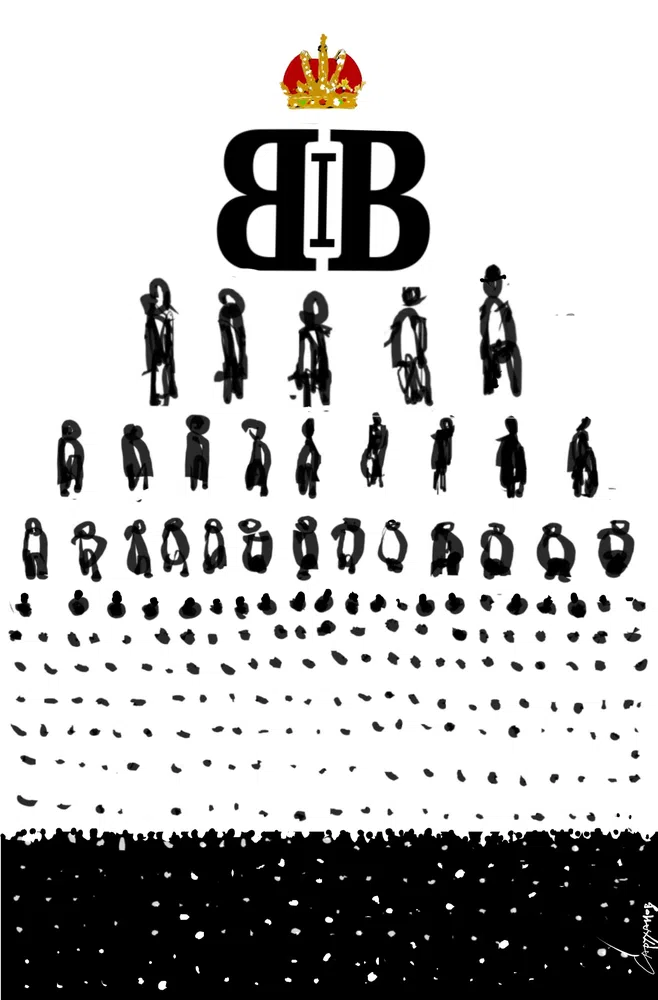
Usually, speaking of the “new feudalism” in Russia, political scientists pay attention to two circumstances: to the formation of a hereditary ruling elite (regardless of whether the elite’s children in the system of public administration or on -state commercial structures) and the emergence of a “new aristocracy” (or “new nobility”) in the person of the capacity of the security forces. In fact, what is happening in these areas can really be described as the formation of a new elite, the belonging to which is determined (or in the near future will become determined) by the origin of a person and his related connections - a kind of analogue of noblesse de Robe (mantle nobility) and noblesse d'Epeé (nobility of the sword) in the era of the French l'naen Régime. I would add here the analogue of the “second estate” - a community of clergy rapidly bred in recent years. Today, the number of ruling “nobility” and priests (about 200–250 thousand officials and security forces of medium and high ranks and about 120 thousand ministers of the cult) is practically identical to the number of nobility and clergy in France on the eve of the revolution of 1789).
The right to “new nobility” to rule the country is justified by the interests of the state, the need to protect society from an external threat and the traditional structure of society,
Allegedly too much to accept any other orders. All these arguments are strikingly coincide with the fundamental logic of feudalism described by Mark Blok˟˟˟. The difference between the new Russian elite and the Soviet nomenclature, documented by Mikhail Zelensky˟˟˟˟, consists, in my opinion, in the medieval interdependence of power and wealth: in the USSR, the first was not converted into the second as natural as in Russia of the XXI or in Europe of the XIV century, and human competencies were not so few compared to his formal position. Therefore, the designation of Russia as a society successfully building “new feudalism”, in principle, is fair (I myself wrote about this ten years ago, criticizing the opinion of many Western authors, who believed that our country will change as the generation of Soviet special services will be replaced by those who received their MBA in Western universities and are very familiar with modern civilization˟˟˟˟˟, but it seems to me that for a more voluminous picture is worth it for a more voluminous picture. Pay attention to a number of very important details.
1.
The “new Russian Middle Ages” is based on the rental type economy, without which the current system would be impossible. During the first two terms of Putin and Medvedev’s presidency, additional (compared to 1999) revenues secured by an increase in oil cost increased on average from $ 33.5 billion a year in 2001-2004. Up to $ 394 billion a year in 2011-2013, and this fixed the foundations of the new regime. Feudalism always arose where the monarch (and the irremovability of the head of the country is no longer doubtful) had the opportunity to complain to the servants with money, property and monopolies, which today is provided precisely by the rental character of the economy, even if the main value of the land suitable for agriculture was replaced by the deposits of minerals, gas pipelines and plots for urban development. In Putin’s Russia, we see the restoration of medieval economic practices in many forms, up to the taxes system almost unknown to the new time of the new time (which, for example, is the Plato system, “unsubscribed” by the Kremlin to the next dignitarous son, as well as many certification programs).
2.
The quite medieval approach of the Russian government to wealth is emphasized by its fixation on three factors: raw materials (more than 80% of all negotiations that V. Putin led with foreign partners in 2000-2012, concerned gas and oil); The population (starting in 2006. The demography has become one of the main “skates” of the regime - and the emphasis is on multiplying the number of subjects through increasing the birth rate or stimulating immigration, and not on their human potential and creative capabilities [the outflow of the most qualified personnel does not cause visible anxiety among the authorities]) and the size of the territory (the annexation of the Crimea showed that the desire to freeze in The problem areas of the post -Soviet states was a systemic factor, and no accident). All these points indicate that
The wealth and power of the country are perceived by the inhabitants of the Kremlin as if they were completely unfamiliar economic work of even the last third of the 18th century.
3.
An important element of medieval consciousness is the restoration of the paramount significance of the concept of “state”, and not in the meaning of Stato or L'état - as a certain order, namely, as the structure of absolute dominance (many researchers are no coincidence that the etymology of the Russian word “state” from the word “Lord” ˟˟˟˟˟˟. This moment seems extremely important to me, since the concept of a nation has become more common in Europe as a more common concept of the nation as Civil or historical community, to which politicians have since appealed for several centuries, but in Russia the Putin’s “state” reflects precisely the inability and unwillingness to build a civilian (and any other structured) society, pointing out the desire to preserve (if not even restoration) of imperial traditions and practices (as can be seen, for example, to the consistent destruction of Russian federalism, in whose course, whose course, whose Speaking without abysses, the current regime and gained its current appearance˟˟˟˟˟˟˟).
4.
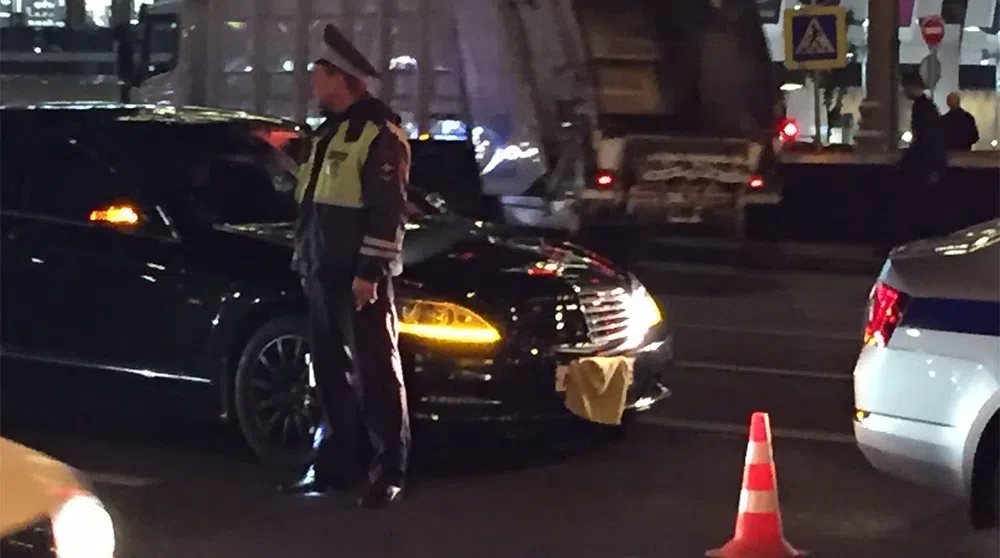
I want to pay special attention to the fact that we are talking about postulating obviously different values of human life. If you turn to the practice of modern countries, it turns out, for example, that society generously rewards those who risk life for its life, but at the same time evaluate this life very moderately. The salary of a junior officer in the US Army is $ 50–62 thousand per year, or a third of the salary of a member of the House of Congress, however, in the event of his death, the family receives compensation of $ 300-350 thousand, while in the event of a civilian due to an accident, a terrorist act, the unauthorized actions of the authorities or even the medical error of compensation exceed the indicated. the amounts of tens and even hundreds of times (average payments to relatives of the victims of the attack on September 11, 2001 amounted to $ 2.1 million, parents of students who were killed by a collapse at Florida University - $ 15 million, compensation for the unconditional killing of J. Floyd reached $ 27 million, and the maximum payment for a medical error that entailed the death of the patient, It is $ 74.5 million in the USA). In Russia, the situation looks opposite: the victims of accidents receive funny amounts in the form of compensation - from 100 thousand rubles per one who died when flooding the walking boat on Lake Maksimka in the Chelyabinsk region up to 1-2 million in most other cases; At the same time, in the event of the death of the "new nobles," the situation is changing. Even in an orderly case, when the FESESBASHIC shot down the traffic police inspector on New Arbat, the latter received 2 million rubles from the Ministry of Internal Affairs, 4 million from the FSB and a new apartment in Moscow worth at least 10 million rubles. This reminds me of the requirements of medieval laws of the type of “Russian Pravda”, which established the gradations of compensation for injuries and the death of people in clear dependence on their position in the social hierarchy (the gap has reached 16 times, not considering the famous provision that “there are no turns in the slave”, that is, nothing was paid for the life of representatives of the lowest castes). The return to the caste system, confirmed even at such a level, is the most obvious sign of the Middle Ages in Russia.
5.
It is impossible not to see that the modern legal environment in Russia is actively destroyed through the formation of numerous groups of persons outside its direct reach. Formally, this can be seen on the example of Art. 447 of the Code of Criminal Procedure of the Russian Federation relative to the so -called. “Special subjects”, that is, persons to whom a special procedure for initiating criminal cases is applied. What is characteristic, among them there are much more officials than (which could be at least relatively acceptable) people's deputies. However, this is only the visible part of the iceberg, since hundreds of thousands of people have other privileges (special traffic to violate the rules of the road; protection against searches and inspections or the opportunity to avoid criminal punishment). Officials today are much more likely to be prescribed conditional terms in connection with large theft or corruption than ordinary citizens - and at the same time among the officials themselves, the FSB employees are distinguished: according to the statistics of the Supreme Court, criminal cases against them are initiated six times less often than in relation to other security forces, and 30 times less than in relation to the “special integrations” as a whole. We can also recall that almost all senior officials, priests or their children, guilty of traffic accidents, moved away from responsibility, while ordinary citizens received real terms.
In fact, the legal system, which in Russia has long no longer meets the main requirements of law - universality and non -metropolitanism (in the first case, we see the laws obviously accepted in the interests of one or more persons, for example, “Timchenko Law”; in the second - the retribution of amendments to Article 4 of the Federal Law “On Basic Guarantees of Electoral Rights and the Rights to Participation of Citizens of the Russian Federation” and Article 4 Deputies of the State Duma of the Federal Assembly of the Russian Federation ”), is also destroyed by the unequal application to various groups of citizens, which is better than many other facts indicates a return to the classes characteristic of the Middle Ages, in which people had different rights and freedoms.
6.
The continuation of the same approach is the division of society into strata, depending on the anachronous ideas about the “norm”, which is becoming more and more in our country. First of all, in this context, one can recall the formal decriminalization of domestic violence, whose victims are 85% of women, which de facto means recognizing the men of special dominant status in society, which is incompatible with the basic postulates of the human rights doctrine and the main values of modern society. It is impossible not to notice that the Russian authorities are also suspicious of all deviations (and homosexual relations, for example, even in the relevant laws are called “non -traditional” - which emphasizes the meaning that is attached to the country to traditional canons, which is also characteristic of those prone to changes to medieval societies) and do not consider diversity the key to success and modern society.
The fact that
The state begins to act - in the image and likeness of the feudal authorities - on behalf of not society, but religious groups
(in particular, Sergei Lavrov openly accuses the government of other countries of “arbitrary interpretation” of Jesus behavior), stopping not illegal acts, but manifestations of “heresies” (this is the only way I can interpret the criminal persecution of Jehovah's witnesses, which should not have a place in the secular state). Extremist materials catalogs also resemble the “index of prohibited books”, the publication of which the Vatican ceased back in 1948
7.
Concluding this section, it is worth mentioning the principle that has begun relatively recently the process of the principle of universal suffrage, which has brought the number of Russians who cannot be elected to the representatives of the representative power, to at least 9 million people, or 8% of adult residents of the country (in this case, it is early to talk about the return in the Middle Ages, but the revival of the price system in Russia takes a very specific form). In contrast to the company of early New Age, we are limited not by the principle of belonging to a certain social strategic strategic strategic, not by ownership or property status, but on the basis of an assessment of the “reliability” of an individual who should not be seen in participation in protest or “assistance” to extremist organizations. The restriction of rights on the basis of attitude to power clearly leads us away from the basic principles of the democracy that was established in the West since the 17th - XVIII centuries and returns to the time of the “wires” - a system in which the power is assigned or controlled by its pre -selected persons.
However, a completely special (probably most important) element of the new system is the revival of purely feudal features in the organization of society in the territorial and managerial aspects.
8.
This is the general principle of the construction of the territory. We are not talking about the similarity of Russia with the gradually forming feudal state, where sovereign columns and barons have inherited territories - we are more likely to be about a lane system in which power is delegated in exchange for an oath of fidelity and the provision of certain services. If in previous times they were collecting taxes and ensuring a certain number of armed knights, then in our case we are more about the proper level of legitimization of the central government (the main task of the governors is to ensure spectacular voting results in the federal elections) and ensuring the order in the territory through the balance of interests of the central and local "elites", the authorities and influential business structures. At the same time, regional leaders do not have their own legitimacy and can be removed from the authorities by decision of the Kremlin (formally, this alone excludes the opportunity to call Russia a federation, since there is no right to dismiss the leaders of the constituent entities of the federation and appoint governors, as Moscow does today, in no federal state). I will add that the central authority is not interfering with the relationship of the heads of regions with their subordinates, acting according to the classical rule “The vassal of my vassal is not my vassal”; Municipal authorities interact almost exclusively with regional ones.
9.
The control system is largely repeated by the old Russian principle of “feeding”, although it has become more complex. The official goes to the region to manage him and the “amendments” of his own state (in most subjects of the federation a significant part of local businesses - agriculture, office complexes, logistics, retail trade, local sales and electricity sales and electricity are controlled by governors and their “close people”). The property is accumulated more or less openly - the most famous case, probably, is 650 thousand hectares of agricultural land belonging to his former governor Tkachev in the Krasnodar Territory by a total value of about $ 1 billion; However, feudal ties are not exhausted only by “feeding”. The Kremlin’s governors in the form of various kinds of envoy and leaders of power structures in the regions also carry out an informal collection of tribute, sending it to the center regularly and in significant volumes. In other words, the conversion of favoritism into power, and they themselves, in money and property, occurs in Russia constantly, and there is no need to talk about any increase in the effectiveness of management. The recent “direct line” of the president once again pointed out this: several phrases mentioned threats to their address from local authorities, and one exceptionist-activist subjected the next day the attack and was hospitalized in Tambov with serious stab wounds. Russia is unlikely to have a chance to disintegrate into individual principalities, but life in each of them is becoming less and less managed according to general rules and laws and, more and more obvious to the interests of regional feudal lords.
10.
This looks like a special case of the above: more and more regions appear where the will of these feudal lords is much significant than Russian laws. First of all, Chechnya comes to mind, the “national economy” of which almost every year shows a total loss in all basic industries and whose budget is 89% of federal subsidies. Russian laws practically do not apply in the republic, and Chechen law enforcement agencies make sorties to different regions of Russia, hunting for objectionable ones. However, it is not worth considering that things are better in Dagestan (where the arrests of mayors of cities turned into military special operations), Ingushetia or Tyu (where clan society was built, more and more immersed in archaic and, accordingly, poverty). В данном случае мы возвращаемся к уже отмечавшемуся обстоятельству:
роль и степень свободы регионов определяется не их экономическим благосостоянием, а тем, как их вожди позиционируют себя по отношению к сюзерену,
насколько серьезными силовыми возможностями они располагают и в какой мере важны для решения идеологических задач, ставящихся Кремлем. Все это вполне соответствует не современной логике развития, а чисто средневековым реалиям, активно воспроизводящимся в стране сегодня.
Подводя итоги, я обратил бы внимание на два масштабных тренда, которые легко могут быть прослежены в развитии нынешней России и которые явно указывают на возвращение во времена, предшествующие модернити.
С одной стороны, в то время как многие социологи говорят о нарастающем имущественном неравенстве (которое, разумеется, заслуживает должного внимания), куда более важным — но менее исследуемым — является формирование деления всего российского общества на «государевых людей» и «холопов». Сама такая стратификация имеет глубокие исторические корни: даже высокопоставленные люди на Руси привычно именовали себя данным образом перед лицом царя˟˟˟˟˟˟˟˟˟, а формально холопство было упразднено через несколько лет после преобразования России в империю, в 1723 г. У меня практически нет сомнений в том, что именно этот тренд станет ведущим в ближайшие десятилетия — и разделение общества по возможности апеллировать к своим правам и свободам станет намного более значимым, чем любые его градации, основанные на степени материального благосостояния.
С другой стороны, я бы хотел обратить внимание на то, что «государевы люди» будут все более произвольно относиться к собственности и имуществу представителей низших классов. Это можно видеть уже сейчас — например, в попытках «государева человека» Андрея Белоусова забрать у «торговцев-металлургов» то, что, по его личному мнению, должно принадлежать казне. Такое отношение будет становиться все более распространенным, что может вызвать дополнительную напряженность в обществе, которая будет попросту подавляться. Здесь же следует отметить, что по мере возвращения России в «новое Средневековье» границы будут становиться все менее проницаемыми, а «государевы люди» займутся более безопасным накоплением капиталов и имущества дома, отказываясь от вывода их за рубеж. Итогом станет постепенная экспроприация олигархических состояний и выдавливание их нынешних обладателей из страны.
Создание устойчивого тренда на архаизацию российского общества — несомненный успех Кремля и его основное достижение. Российские власти совершили нечто практически невозможное: остановили и повернули вспять социальное развитие крупной европейской страны, открытой миру и обладающей полной информацией о происходящих в ней событиях. Он создал совершенное «коммерческое государство», где власть и деньги свободно конвертируются друг в друга, вернул общество в состояние анабиоза, а свободных людей — в зависимых от хозяев жизни субъектов. «Новое Средневековье» стало естественным результатом того бегства от современности, которое Кремль преподал российскому населению в качестве единственного способа ухода от проблем, которые следовало бы решать, а не отмахиваться он них. Это будет дорого стоить России, но подводить баланс придется, видимо, уже следующим поколениям.
Footnotes
˟ см.: Soldatov, Andrei and Borogan, Irina. The New Nobility: The Restoration of Russia's Security State and the Enduring Legacy of the KGB, New York: Public Affairs, 2011
˟˟ подробнее см.: Inozemtsev, Vladislav. «The Zombie Nation Returns» in: The American Interest, 2019, January-February, Vol. XIV, No. 3, pp. 25–28
˟˟˟ см.: Bloch, Marc. The Feudal Society, vol. 1: The Growth of Ties of Dependence, London and New York: Routledge & Kegan Paul, 1962, pp. 256–266
˟˟˟˟ см.: Voslensky, Michael. Nomenklatura: The Soviet Ruling Class, New York: Doubleday, 1984
˟˟˟˟˟ подробнее см.: Inozemtsev, Vladislav. «Neo-Feudalism Explained» in: The American Interest, 2011, Spring (March–April), Vol. VI, No. 4, pp. 73–80
˟˟˟˟˟˟ подробнее см.: Иноземцев, Владислав. Несовременная страна: Россия в мире XXI века. Москва: «Альпина Паблишерс», 2018, cc. 54–56
˟˟˟˟˟˟˟ подробнее см.: Абалов, Александр и Иноземцев, Владислав. Бесконечная империя: Россия в поисках себя, Москва: «Альпина Паблишерс», 2021, сс. 277–284
˟˟˟˟˟˟˟˟ cм.: Пространная Русская Правда: Троицкий список, ст. 84
˟˟˟˟˟˟˟˟˟ см.: Юрганов, Андрей. Категории русской средневековой культуры, Moсква: «Мирос», 1998, с. 218