
Translated material
Fragments of Kolomna
What forced Denis Lebedev, the mayor of the small city near Moscow, to commit suicide? Reporting "New"
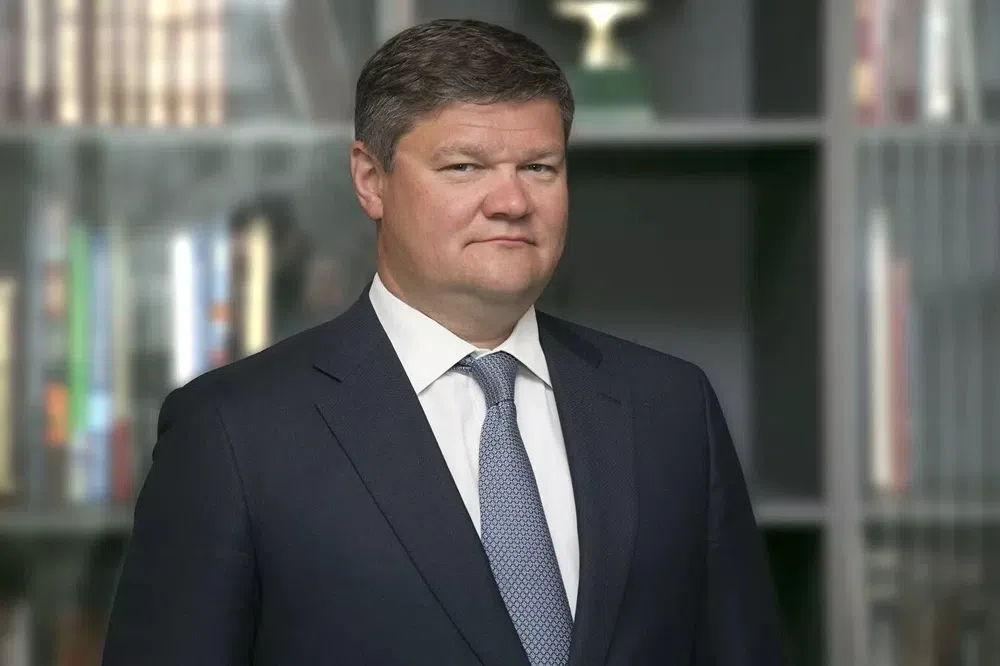
In Kolomna, they said goodbye to the head of the city district Denis Lebedev, who committed suicide on July 2. The policy was 46 years old. He was found in his own apartment with a gunshot wound. According to the Investigative Committee, Lebedev brought to suicide.
The New Gazeta went to Kolomna to find out the reasons why the official could commit suicide, find out how the townspeople treated him, and in what state he left the city.
Why?
Around 7.30 a.m. on July 2, the head of the Transport Service Service of the City Hall of Kolomna Vitaly Krylov, the head of the transport service of the Kolomna City Hall, rose to the apartment. He waited for his boss for two and a half hours to take him to work. At exactly 10 in the morning there was a shot in the bedroom. Krylov, opening the door, saw Lebedev’s bloodied body on the bed, and next to him on the floor - a double -barreled hunting rifle. He immediately called an ambulance and contacted the police. According to Kommersant, Denis Lebedev did not leave the suicide note.
A variety of versions began to appear in the media, why the head of Kolomna decided to shoot himself.
The Ridovka website suggested that the reason could be a waste of 71 million rubles in the construction of schools: two schools and several extensions to the existing buildings of educational institutions began to be built in the federal target program in 2019, but over time, all these construction sites stopped.
The fifth channel announced the other version: they stated that Lebedev left a suicide note in which he explained the reason for the suicide - supposedly, he did not see another way out of his personal conflict with the deputy chairman of the Moscow Region Maria Nagornaya, which constantly criticized him publicly.
Suicide was associated with the critical financial condition of the administration of the Kolomensky district, which is now the defendant for a number of claims worth more than 100 million rubles.
"The city is only losses"
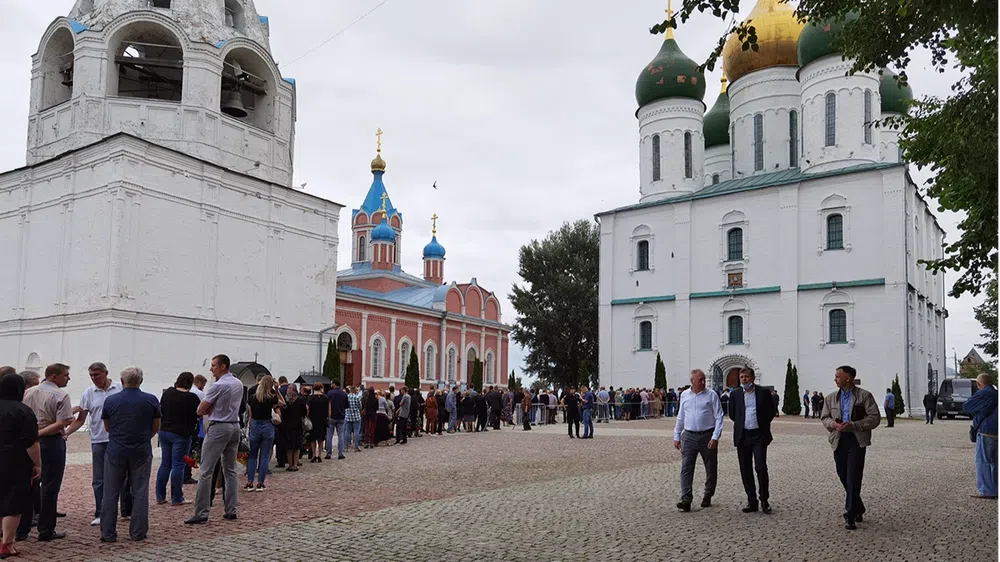
On Sunday morning in the square in front of the Assumption Cathedral, near the Kolomensky Kremlin, local officials, municipal employees, state employees and few residents of Kolomna gather. The governor of the Moscow Region Andrei Vorobyov arrives in a helicopter.
The funeral service is scheduled at 9 in the morning, but already 15 minutes before the official beginning of the ceremony, the church is filled with people. The cathedral is cordoned off by the police. And you can go to it only through the scope of the metal detector. "Volunteers of the Moscow Region" carry chairs and give out masks.
Officials approach the next meeting, albeit for a joyless occasion, in a businesslike way. Solve issues.
- So what about the power station? Will we pull to the factory?
- No, why? How then to justify?
The audience whisper: “I don’t understand why ...”, “Young still, everything was ...”, “How is his suicide in a church are buried” ...
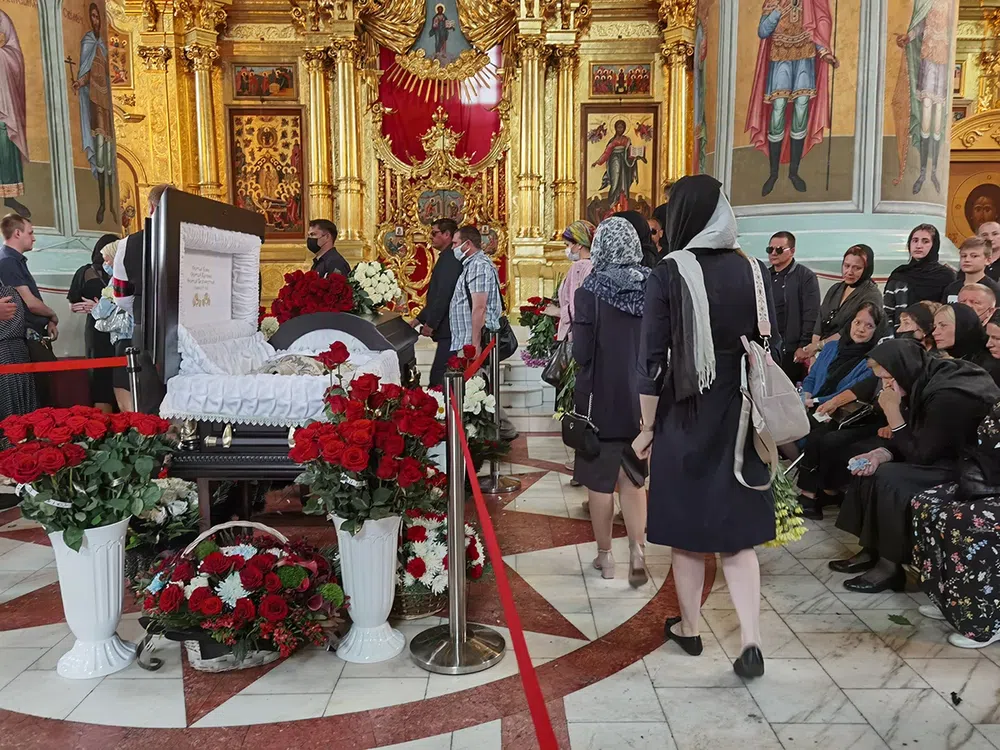
By the time of the beginning of the mourning ceremony, a long line is built near the entrance - at least three hundred people. And people continue to approach. Inside, everything is forced by wreaths with traditional inscriptions: "Remember, mourn." The crowd goes in a dense stream: someone touches the coffin with a completely closed veil in the body, someone simply gives a bouquet of a young man standing nearby. About forty minutes later, the stream began to thin. Almost up to 12 hours, either belated officials or sympathetic and curious residents come.
“I can’t understand why they are a suicide?” - asks me an elderly woman, who introduced himself to Irina. “Or really killed him?” The versions are different.
In recent years, the Orthodox Church has become softer for suicides, it has been funeral, if there are any special circumstances: for example, if a person has killed himself in a state of affect.
Farewell is over. Through the pedestrian zone, past museums, shops with pastille and carved houses rushed a long motorcade of elite cars.
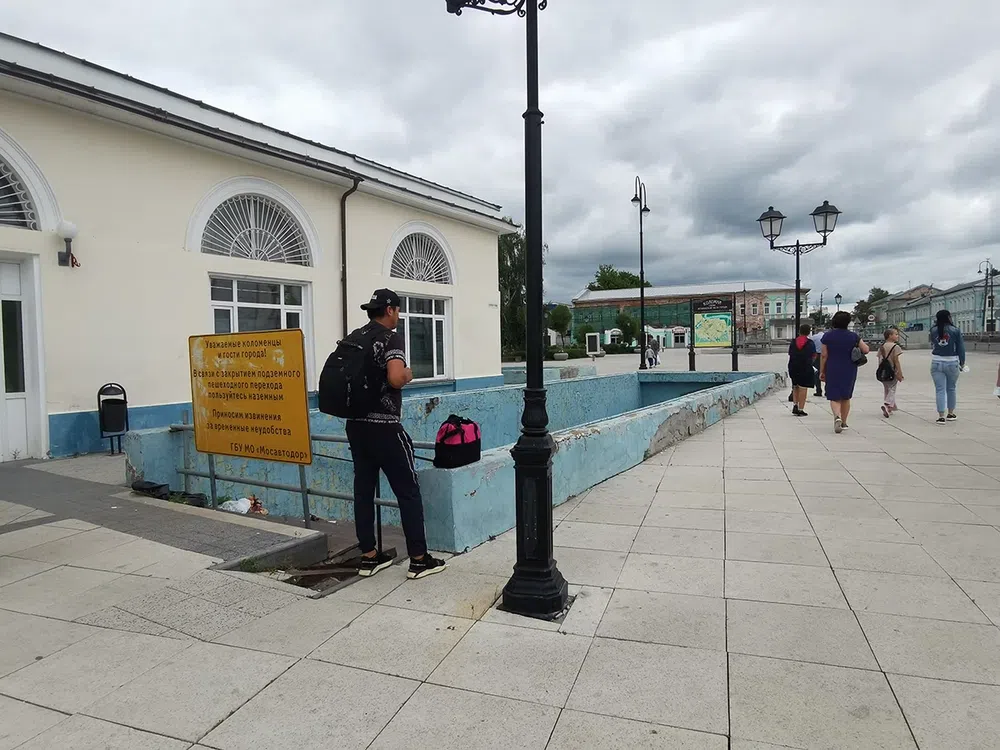
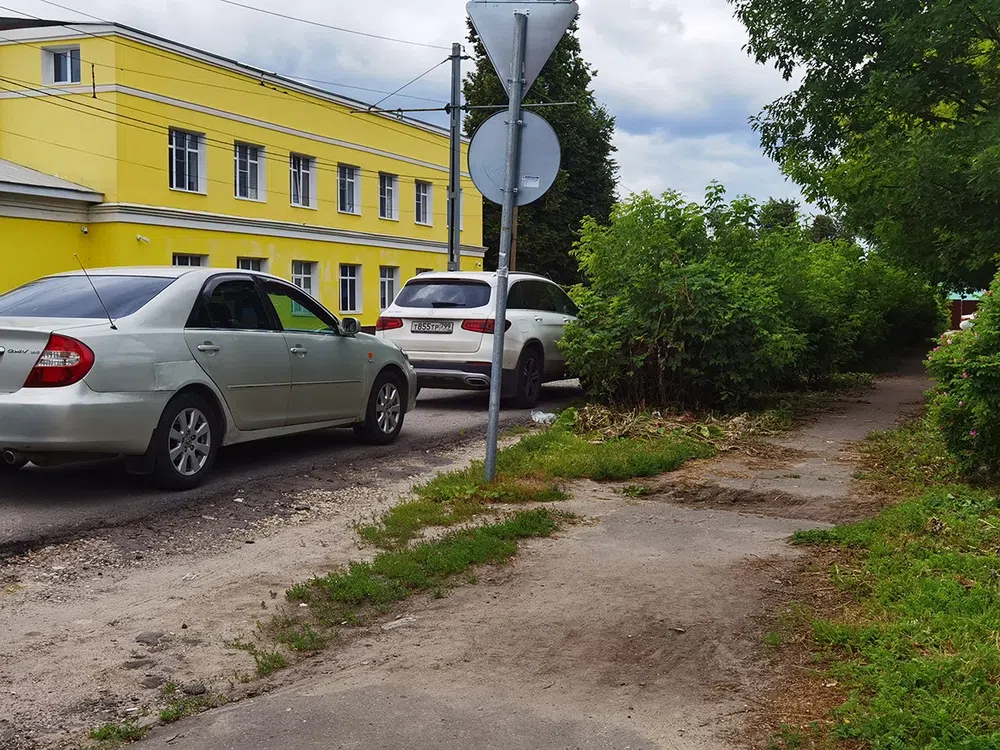
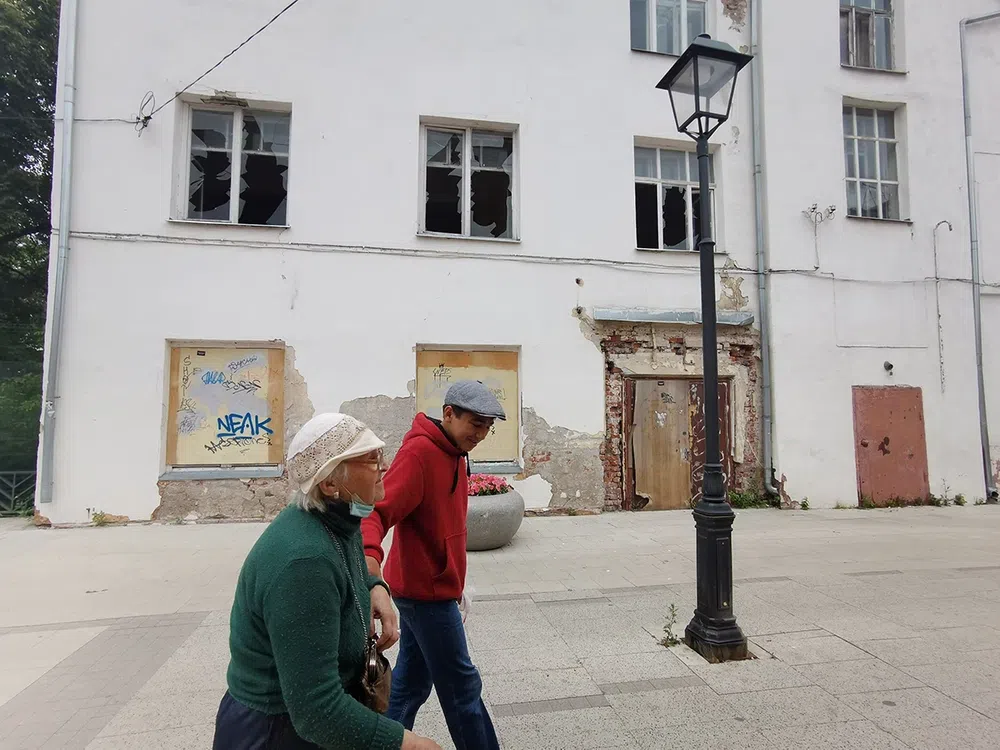
The center of Kolomna looks very neglected. Draining carved houses, holey asphalt, crooked granite tiles. And, I must say, the inhabitants of the authorities are not very satisfied. One of the state employees, Igor (the name changed) shares impressions of life in Kolomna.
- If you have a salary of 20–25 thousand - consider you lucky. Above - only by relations. In Lebedev, two state -owned enterprises were closed: road repair management and car. They opened a private company that puts asphalt in the city. Under the former chapter Shuvalov, the city had something to fill the budget, and then all major organizations were taken by Moscow, and there was no budget. In road enterprises, they immediately put their leaders. We made a trash here, a garbage plant, the city of lakes was attached to Kolomna. Why do we need lakes? It is incomprehensible. And so - everything is fine. This is all about him [Lebedev] we can say. We had a normal chapter before him, Shuvalov. Under him, the old houses in the central part of the city were painted and repaired. He was removed, because he did not allow to open the trash here. And under Lebedev, they made a landfill with a 9-story house high, drove garbage from all over the region. It stink even here if the wind was blowing in our sides. Well, then they closed it. And the sense? They still carry garbage there, from the side of the Kashira, the waste flows into the OKU.
Not everything is fine in Kolomna and with tourism.
- Here they built a huge ice palace, and the sense of it? Under the former chapter, at least tourists were taken there by buses, and then on museums, people earned, souvenirs, grazed ... And now from it the city is only losses. It is empty. Sometimes they will give out tickets to schools, catch up with a thousand people in one section and removed on the camera to create mass.
- Lebedev called on top, the instructions were given, he does. The tile was said to be put. They shifted several times. At first she swam, because in the fall they put in the mud. In the spring - anew. Then it turned out that she was slippery, again shifted. They put benches, only there, except for homeless people and tourists, no one is resting, because it is hot in the summer - what is there to sit in the sun? And even this tile was laid only in the center, near the Staraya Kolomna bus station, and then there is no Soviet power.
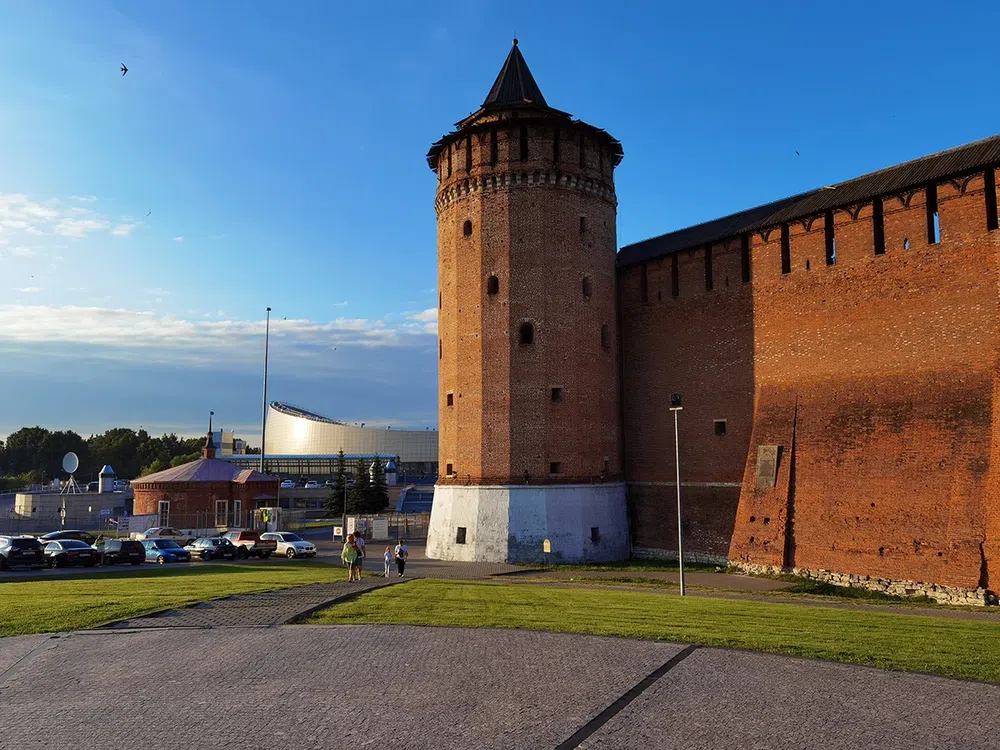
Under the Soviet Union, there were many enterprises: a sewing factory, cable, pasta, heavy machine tool building plants. Only the locomotive -building plant remained. At the former cable factory, the head of the city wanted to organize the production of car carpers, but did not have time.
Garbage reform spoiled them
One of the most painful problems of Kolomna is garbage. Garbage reform caused protests of the population in the city, and then searches, seizure of equipment, arrests and criminal cases against activists.
In 2017, the authorities repeatedly increased the load on the municipal landfill of the Holm Waste Waste, recalls the community activist “No Landming. Kolomna »Dmitry Solomevich. Under the mayor of Lebedev, to him, as well as to other activists who protested against increasing the power of the landfill, security forces came with searches.
If earlier the landfill was used exclusively for the needs of the district, then since 2017, a string of trucks that carry waste from Moscow and other areas of the Moscow Region have been added to the usual stream.
- The garbage was dilute without sending, in the amount of many times exceeded the project provided by the project (up to 10 times), and as a result the landfill sturred terribly - it was felt for 10 kilometers. Before that, he did not cause special complaints even among people who lived nearby.
In order to stop the excessive garbage stream, residents overlapped roads, and arranged protests. As a result, a crowded landfill was closed in 2019. According to official figures, now more than 2.3 million tons of garbage are stored on it. But so far there is no talk of any reclamation - there is no budget, explains Solomevich.
Simultaneously with the closure of the Volovichi training ground in 2019, a new, much more extensive landfill near the village of Myachkovo was opened. The final beneficiary of the enterprise is the daughter of the Rostec State Corporation RT-Invest. This is one of the largest training grounds in Russia. The cost of the KPO was estimated at 3.5 billion rubles. Dmitry Solomevich says that the old landfill was designed for 100 thousand tons of garbage per year, and the new complex was 1 million tons. Naturally, few residents support the emergence of a new, larger “landfill”, albeit “ultra -modern”.
Landfills gradually surround Kolomna. Within the city, right on the subcountered shore of the Oka, an unauthorized landfill arose containing class “B” medical waste, judging by the label found in waste. They still can’t remove this landfill, despite the fact that the waste is washing off into the river, but in the budget they still cannot find money, although about 50 million rubles are allocated annually for the environment, including the elimination of unauthorized landfills.
“And all this is in the neighborhood with the Lafarzh-Holtsim cement enterprise, where they plan to burn 250 thousand tons of waste a year, as fuel,” Dmitry explains.
The activist remembers ambiguously about the former head of Kolomna: on the one hand, he says that the official completely controlled by the governor of the Moscow Region, on the other, sometimes made contact.
-From some side, even sorry for him, somehow he could not believe that he could like this himself.
Kolomenskoye Politburo
As in many small cities, in Kolomna there were their own "owners". And this is not only the head of the city, but also the heads of the local police and the FSB. Over the past year, all the chapters of the power structures have changed in Kolomna. The former police head Vadim Zverev died, the prosecutor was replaced, and the former head of the 4th district department of the FSB Alexander Filatov was sent to raise to Moscow.
Lebedev in his work always relied on security forces.
“Zverev did everything that he [mayor] said,” says local activist Ivan Zhuravlev. - Together they participated in the collapse of the landfill movement: Lebedev from the political side, Zverev with Power. The protests began in March 2018, and the first month they did not know what to do. Then it became clear that “walking at a pedestrian crossing” is a long time. Measures were followed, protests were identified, if they were state employees, I know several cases, they were fired.
One of the leaders of garbage protest in Kolomna Vyacheslav Egorov told Novaya Gazeta that the former mayor Shuvalov was allegedly removed precisely for not allowing the garbage from all over Moscow Region, and Lebedev seemed to be raised here to resolve this issue. “As a city manager, he was not bad,” says Egorov, “he knew how to maneuver between structures, agree, knock out money, but from the moment of appointment he became more mercantile.”
To the question of the correspondent of “New”, whether he believes that Lebedev could shoot himself, Egorov suddenly responds negatively.
- I leave this version as a combination of circumstances. The fact that he drank a lot - everyone knows here. But the last two weeks he has been on sick leave. Perhaps someone told him something in such a state that he had encouraged him ... Denis clearly had plans to live on and further earn.
I know him, as a person with a purposeful, non -stupid, very loving life, entertainment.
The unification disconnected
Denis Lebedev began his career as a personal bodyguard Gennady Gudkov, but then decided to go into politics.
In 2011, he elected just Russia to the Moscow Region. During his deputy, he moved to the team of the Governor of the Moscow Region Andrei Vorobyov. In 2014, he was appointed acting head of the small (35,000 inhabitants) of the Ozersky municipal district, which is 40 kilometers from Kolomna. Then the elections passed. Alternative candidates were not allowed, United Russia pensioners distributed grocery sets, and he became the mayor. After that, direct elections in the lakes, and indeed in the suburbs, were canceled.
Lebedev had a peculiar manner of working with officials, which fully manifested itself in the lakes, and then, probably in Kolomna:
- The security forces showed a dad for a person, and after a conversation with the official, Denis Yuryevich himself already led. However, I do not know about any case of conducting inspections, and even more so initiating cases, ”says Ivan Zhuravlev.
Following the election went serious changes in the Office of Lakes. First, the city was combined with the nearest settlements, village councils were liquidated. The number of deputies decreased. Since 2018, lakes began to try to unite with Kolomna. This caused protests of the local population, including state employees. But the state employees were threatened with dismissal, and with the rest the police held explanatory conversations - many were frightened by fines. The unification plan was implemented in 2020. Public hearings on Zoom were held. As a result, local deputies took the region’s desire under the visor, and voted “for” with the whole composition.
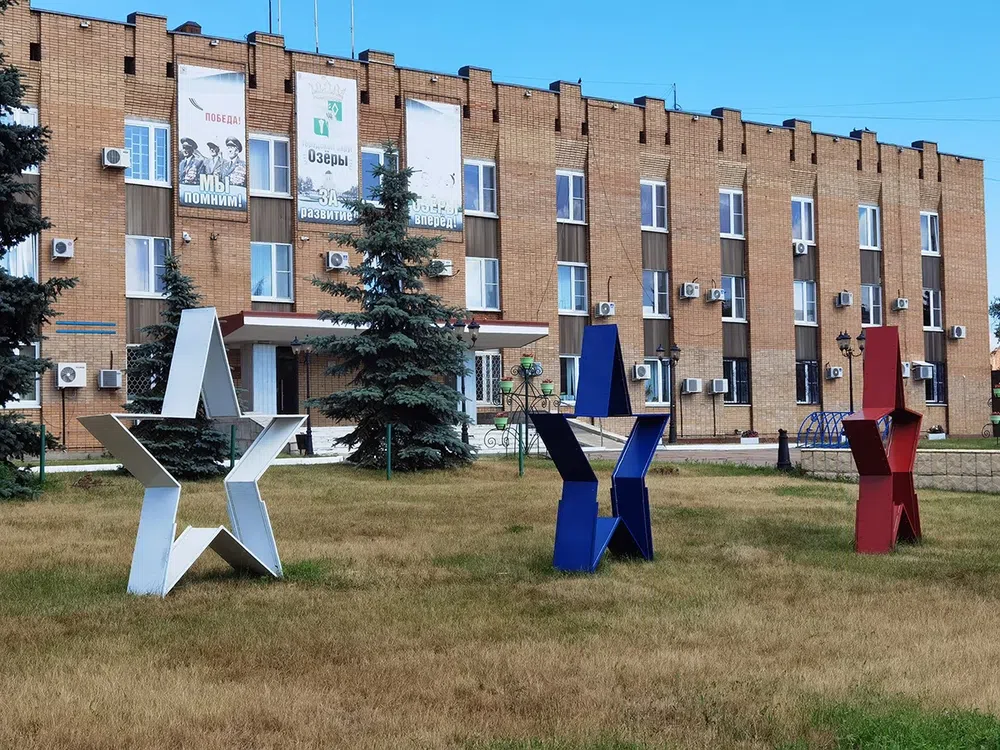
During the union, the reduction of state employees began: about 400 people lost their work - police officers, pension fund employees, MFCs, administration clerks, social protection. After joining in January 2021, elections were held to the Council of Deputies of the Kolomensky District. 10 people from the “Growth Party” wanted to take part in them, who protested against the expansion of training grounds and garbage reform, but they simply did not allow them to elections. As a result, lakes represent only four deputies.
“These elections were absolutely falsified,” says Zhuravlev. - If the Kolomensky authorities themselves say that two thousand people usually come to the elections of deputies, and here are 3.5–4 thousand, where did they get these numbers from? I was an observer, the vote went for three days. Of course, everyone was caught up in the first two days, and on the third - they simply took and adjusted the results.
The elections did not bring any changes to the life of the townspeople.
- They promised that they would begin to repair networks, which have 98%wear, but passed almost a year, and no repairs, we can say, can be seen. They also promised to reduce the fare in public transport to Kolomna from 98 rubles to 37 - at the price of the intracity route. But this remained promises. One of the deputies promised to build a furniture factory for 400 jobs. But she is also not.
After the death of Denis Lebedev, the acting head of Kolomna became his deputy Lyudmila Mordovskaya. Its residents with its arrival are not expected with its arrival in the life of the city.