
Translated material
Nature recommends
Could World Science be able to make sure the effectiveness of the Sputnik V vaccine? Alexander Panchin explains
As we all know, there are many problems in Russia, including science. And all the more important when some achievement of Russian scientists receive international recognition.
One of the manifestations of this was the recent publication in Nature magazine under the heading: “Certificates accumulate in favor of the fact that the vaccine from the Covid-19“ satellite ”is effective and safe.” In this article, which, in fact, is a journalistic review of other studies, it is mentioned that the satellite vaccine is used not only in Russia, but also in almost 70 countries. And that the studies of the vaccine were carried out not only in Russia.
We remember the two articles in the international journal The Lancet, after the I and II phases of clinical research of the "satellite", and then - the intermediate results of the III phase in the sample of 20 thousand people. Since then, independent studies have appeared in Argentina, San Marino (where, by the way, more than 80% of the population have been vaccinated with a “satellite”) and in the United Arab Emirates, which confirm: the satellite vaccine is safe, contributes to the production of antibodies and reduces the likelihood of infection with the SARS-COV-2 coronavirus, the probability of symptomatic flow of Covid-19, the probability of symptomatic flow hospitalization and death.
I must say that the satellite vaccine did not have the easiest way of recognition. The same Lancet magazine also published the criticism of the studies conducted in Russia, which the authors had to answer. In particular, there were questions to the transparency and availability of data. A separate problem was that the satellite vaccine was registered before data on its effectiveness appeared. But if there are still questions to open data, then there is little doubt that this is a good vaccine. Antibodies are produced, vaccinated is less common and easier.
The distrust of the vaccine in Russia can be partially understood. Alas, in our country, many drugs with an unproven (or even obviously non -existent!) Efficiency are registered and approved.
In Russia, there are a lot of pseudo -nouses. But in this, as well as in the flaws of the advertising campaign of the vaccine, there are no guilt of researchers and developers of the same “satellite”.
And although the thesis is “once registered, it means it works” - hardly correct, the studies themselves look very convincing.
The article in the journal Nature also discusses the fact that the “satellite” is one of the many vector vaccines. Therefore, side effects (temperature, fatigue, muscle pain) should be similar (and they are really similar) to the side effects of other similar vaccines that are used in the world. And yet there is one exception. For the "satellite" - unlike the Astrazeneca vaccine - no evidence of an increase in the risk of one of the rare forms of venous thrombosis was found. The journal Nature is discussed, however, which, perhaps in Russia, is difficult to search for extremely rare side effects.
What is not said in this article is that for Astrazeneca the question of whether the vaccine is really associated with the mentioned side effect, extremely controversial. This connection was built on preliminary data: 7 cases of a rare disease for 281,264 vaccinated. Now more than 5 million people are vaccinated by the vaccine, and a comparison with an age -similar -way and floor sampling of unvaccinated people does not reveal a significantly increased risk of such a side effect, although it is not yet possible to exclude such a connection. Maybe the "satellite" will be discovered by such a feature, but I would be very surprised at this.
Regardless of this, vaccination remains the safest solution in a pandemic that has claimed more lives than HIV and tuberculosis taken together, taken, for a similar period of time. Although no one argues that in parallel it is necessary to track every undesirable, including a very rare, side effect and learn to prevent them.
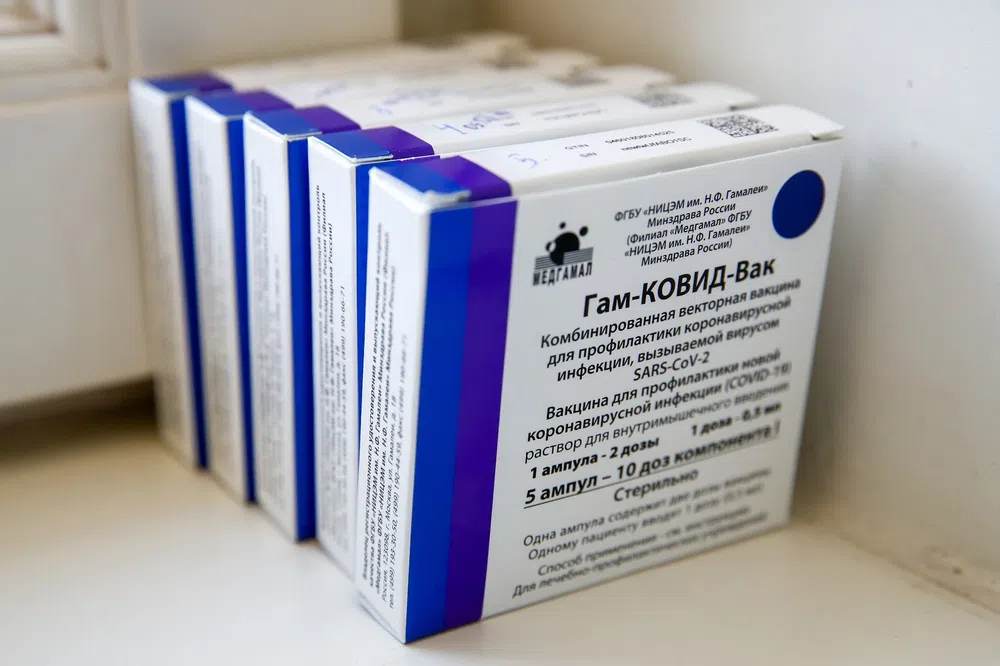
Nature magazine notes that the satellite vaccine has yet to be approved in WHO and the European Medical Agency.
Whether this approval will be obtained is an open question, because in addition to the scientific side, there is also a political issue.
In particular, Nature provides opinions that in the European Union, perhaps there is no need for a “satellite”, because there are vaccines that they themselves created and checked.
But this is a policy, but there is a science where there are much fewer disagreements regarding the effectiveness of a wide range of vaccines. These are the “satellite”, and the vaccines of the companies “Pfizer”, “Modern”, “Johnson and Johnson”, “Astrazenka”, Cansino and some others. Let's hope that politics will not prevent people from choosing good vaccines among a wide assortment of both in Russia and in the rest of the world.
What is still useful to know about the satellite vaccine. It uses two adenovirus vectors (carriers) - this is its difference from other vector vaccines. The first injection uses the AD26 vector, and in the second dose - AD5. This is done in order to increase the efficiency of vaccination, because, presumably, people who have been redeemed by real adenoviruses may have immunity to the vector itself, and then it may not be so effective in delivering the genuine s-protein of the coronavirus, to which we want to form adaptive immunity. Perhaps this fear was exaggerated: the production of antibodies to the S-Belka of the Coronavirus is observed today and after revaccination by the “satellite” or its simultaneous version of the “satellite of Light”.
The Vectors of the AD26 and AD5 themselves are slightly different in where they are localized in the body. Both are predominantly found in muscle tissue at the injection site, but the trace amount of AD26 is found in the spleen, and AD5 in the liver. In any case, we see this in animal research.
A good feature of vector vaccines is that they deliver the necessary genes quite pointwise: to cells of a certain type.
Humanity has already used vaccines to defeat the diseases of the past: smallpox, whooping cough, measles, polio. Is there any hope that the Covid-19 will be defeated? The future is not determined, but everyone can make their own contribution to bring us closer to its safe option.
There is such a value indicated by the letter R - the average number of people that one infected person infect. If this value is larger than one, then we have an increase in the number of infected, exponential growth in cases of disease. If R becomes less than one, we have a decline in the number of new cases. In some countries, including due to vaccination, it was possible to achieve the value of R significantly less than one. This is San Marino, and Great Britain, and Israel, and some other countries.
The value of R depends on very many factors - on the density of the population, on the share of the excreted in the population, on the share of vaccinated, on the biological features of the circulating variants of the virus, from whether the masks are worn, whether the self -isolation is observed, how often mass accumulations of people and so on. Each of our steps to minimize the risks of infection of others strikes the spread of the virus. Vaccination today is the most important step in this war, which depends on us and which is easy to undertake.
If we are not conscious, we will not be able to control the pandemic. The virus will continue to spread, the risk of dangerous options will increase, which can have a variety of unpredictable consequences. The safety of not only ourselves, but also the next generations depends on our actions today.