
Translated material
History of the QR code
This technology was invented by a Japanese engineer while playing in GO at work. Now it is used everywhere - but its creator does not make anything on this
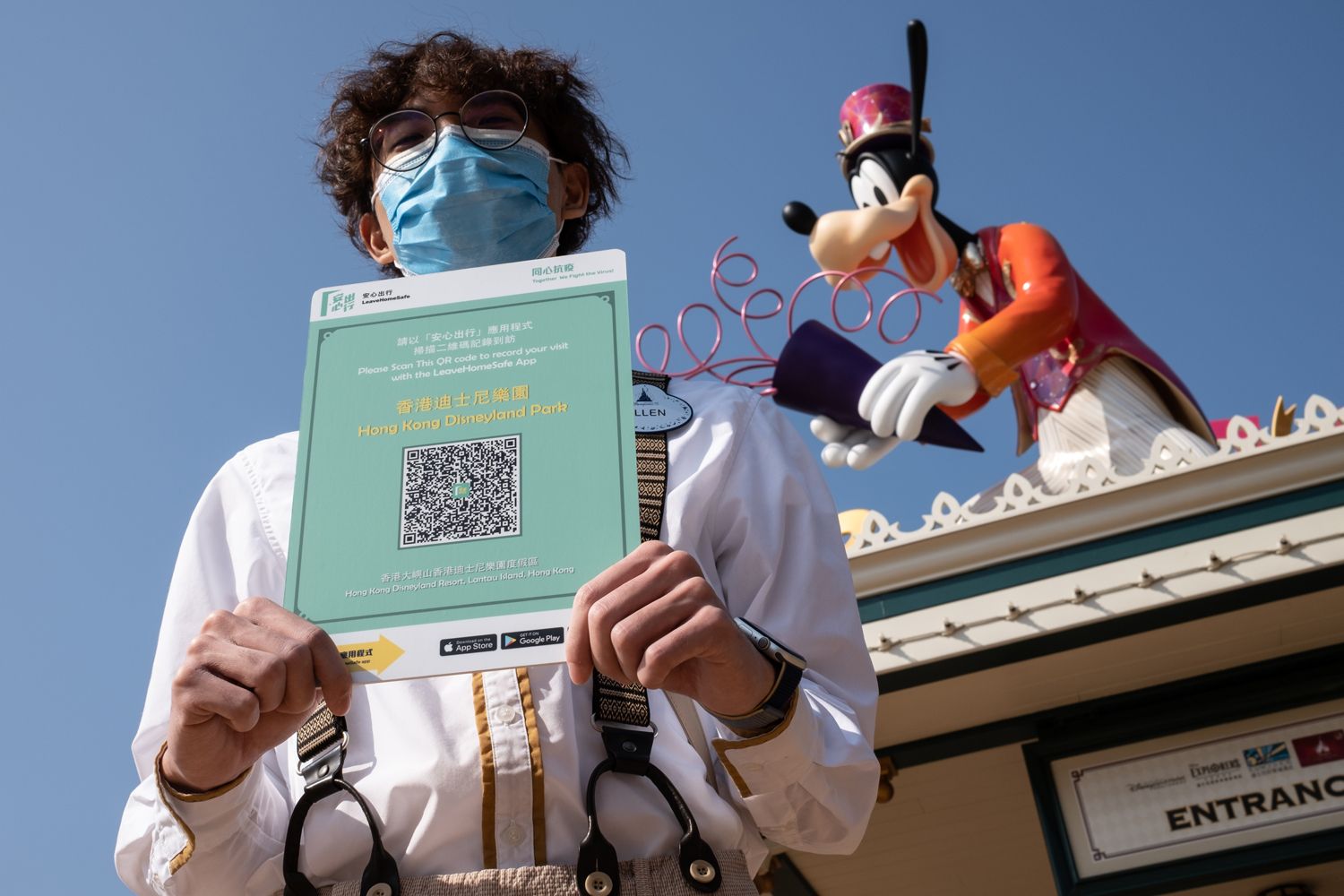
In 1995, the Japanese company Denso Wave introduced the first QR code-37-year-old Masakhiro Hara worked on its technology for a year and a half. He came up with the design of the new information reading system, playing in the th during the lunch break at work. Since then, millions of people around the world have been using QR codes , due to the pandemic of coronavirus, their number continues to grow . You can now travel by QR codes, go to cafes and restaurants , choose and order food, and also pay for purchases.
Why did you need a QR code?
Since the mid-1950s, Japan has experienced an unprecedented growth of the economy -and supermarkets with a large number of goods began to open in the country: products, clothing, household appliances. On the cash register of that time, the price of the goods was required manually. Due to the consumer boards, the cashiers complained about numbness of the wrist by the end of the working day.
The invention of linear barcode and its distribution on an industrial scale in the 1970s facilitated their work. But over time, the shortcomings of this technology became obvious. An ordinary barcode may contain about 20 alphanumeric symbols of information. Auto parts manufacturers began to complain that their workers in some cases have to scan 10 barcodes on one box.
Then the plants turned to Denso Wave with a request to think of a new technology for memorizing information. They wanted the code to contain alphanumeric symbols, as well as Kanji and Kan . The DENSO WAVE developers team, which had experience in encoding information, began to develop a new technology. Among the developers was a native of Tokyo , Hosai Masahiro Hara.
How did the QR code appear?
Masakhiro Hara, now the chief engineer Denso Wave, recalls that he and his partner Takayuki Nagai sought to invest as much information as possible in the code. Using barcodes, it is encoded only in one direction - horizontally. And with 2D codes-in two at once: horizontally and vertical. Now 2D scricks (these include the QR code) allows you to encode thousands of characters.
The largest challenge for the development team was the speed of code reading. They have been looking for a format for a long time that could be scanned at any angle - so the code is easier to notice and do not need to waste time to choose the correct position of the scanner. Once playing in th, Kara realized : the way the stones are built on the cells of the board may be a good way to transmit a large amount of information at the same time.
How do QR codes work?
The QR code is a scanned barcode with data, transformed into a certain form. In QR codes, numerical and alphanumeric symbols, bytes and hieroglyphs are converted into a unique two-dimensional location of the squares.
When scanning, the scanner passes over these squares and transfers their location back into the original data form. The location of the squares-or data modules-is actually a URL address of the page on which the code leads.
So there was a template consisting of square marks, which devices can read quickly-a QR code. It is able to encode up to 7087 digits and kanji characters, and is read 10 times faster than other codes. Hara says that the QR code is more reliable: the code will be able to read, even if 30% of its region is contaminated or damaged.
When Denso Wave introduced a QR code, Hara was not completely sure whether the new technology of the usual barcodes would replace. However, he believed in the effectiveness of his decision and hoped that he would use as many people as possible for different purposes.
How did the QR code capture the world?
The QR code immediately began to be used in the automotive industry . This has largely reduced the time to perform various tasks: from production to delivery and issuance of payment receipts. And when people have a request for transparency of production and tracking of goods, QR codes began to be used by companies producing products, pharmaceuticals and contact lenses.
In 2000, the technology began to be used in other areas-in the same year the QR code received ISO certification . For example, in Japan, codes appeared on horseback racing cards - with their help, to find out about the winners of the race, it was possible faster. Although Khara does not make a bet, he recalls that he was proud when he saw his invention on the cards, in the hearts of thrown out by disappointed players.
But it was the appearance of smartphones and a quick mobile Internet that led to the widespread use of QR codes-they allow you to instantly go to sites, download applications, etc. 63-year-old Hara admits that it is most surprised by the possibility of non-cash payments on a QR code in China. As notes The Guardian, on the day the number of such payments reaches 1.8 billion. “At that time, I felt that I had developed something great, and predicted that it would be widely used in the industry in the future. But I did not expect the fact that [the technology will] actively use ordinary users. Now the QR code is used as a payment method. This is completely unexpected, ” says Hara.
About the popularity of the QR code in the PRC
Most people in China pay for goods and services through a QR code. Last year, their share reached 85%, which is 6 percentage points more than in 2019, according to China Unionpay.
For this, the two most popular mobile payment platforms are used: WeChat Pay from Tencent and Alipay - Alibaba payment division. Applications generate QR codes through their digital wallets. It is convenient for everyone. Users can connect their wallet with a bank account and immediately start spending money. And sellers can cheaply and easily create QR codes, instead of buying terminals for reading bank cards.
By 2025, the total amount of transactions in the PRC through QR codes can reach 2.4 trillion dollars.
How did coronavirus affect the spread of QR codes?
Back in 2018-2019, the total number of scans of QR codes increased by 26%, and the number of scanning by one object was 35%. In 2020, coronavirus pandemia led to an increase in the use of QR codes by 35%, according to Modern Retail.
The QR code began to be used in a cafe as a menu for ordering food and drinks-this allows visitors to avoid contact with the menu to which hundreds of people touched. During Lockdown, in the spring of 2020, in Russia, a QR code could leave the house , for example, for a trip around the city. From mid-June, according to the QR code about vaccination or an illness (or with a negative PCR test), they began to be allowed into Moscow restaurants. In other countries, QR codes are used to visit clubs or supermarkets, now you can also travel from one country to another (though only if you are a resident of the EU ).
Masakhiro Hara was touched by learning that his technology is now used to prevent the spread of the virus. “I am very pleased that it is used to increase the safety of people,” he says . The engineer admits: in 1994, he did not think that the QR code would come in handy in the field of healthcare. Now he is thinking about how to contain even more information in the QR code so that he can process images-such as, for example, X-ray pictures and cardiograms.
Patent rights to the QR code are still retaining DENSO WAVE. But back in the 90s, she said that she did not plan to use them to receive deductions for the use of technology. Thus, turning the QR code into "public code". Its developer, Masakhiro Hara only jokes about this: “We do not get a commission every time the technology is used. If only it were like that! "
Natasha Kondrashova