
Translated material
Two countries, one pre -trial detention center
How Russians are sitting in the insulators of Belarus: an interview with Anton Gashinsky, lawyer Yegor Dudnikov and family Sofia Sapieha
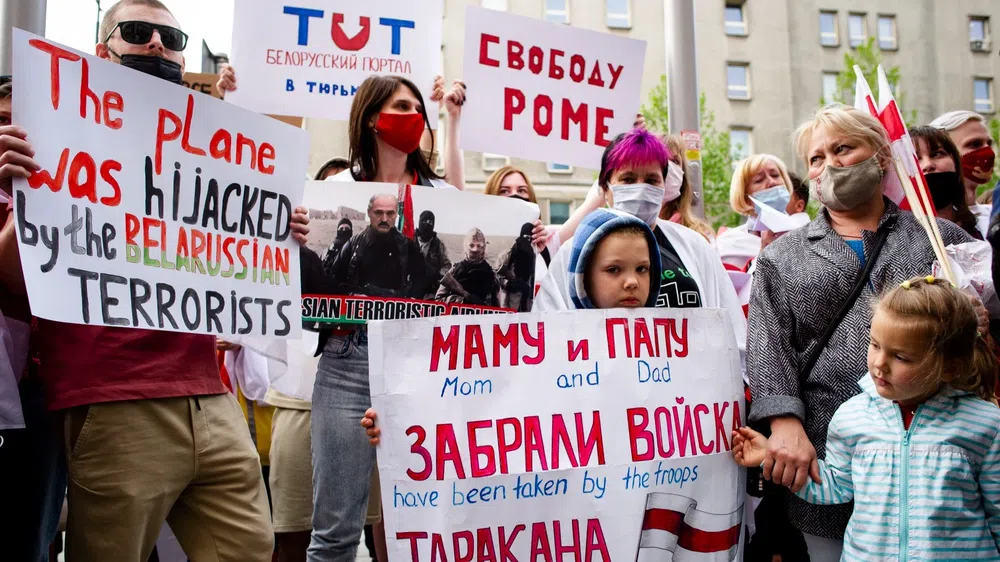
Loud criminal cases in Belarus with the participation of Russian citizens continue to develop. However, if in the case of Sofia Sapga, the friend of the creator of the NEXTA channel Roman Protasevich (at the end of June, both of the preventive measure were changed to house arrest), the investigation works for the speedy completion of the case and his transfer to court, then the fate of another Russian - Yegor Dudnikov - may be more difficult. After the recent publication of Alexander Lukashenko, with the accusation of several people of serious crimes, including the attempt on one of the most odious propagandists of the country Grigory Azaren, the prospect of Dudnikov to be in the Belarusian prison for many years became much more real.
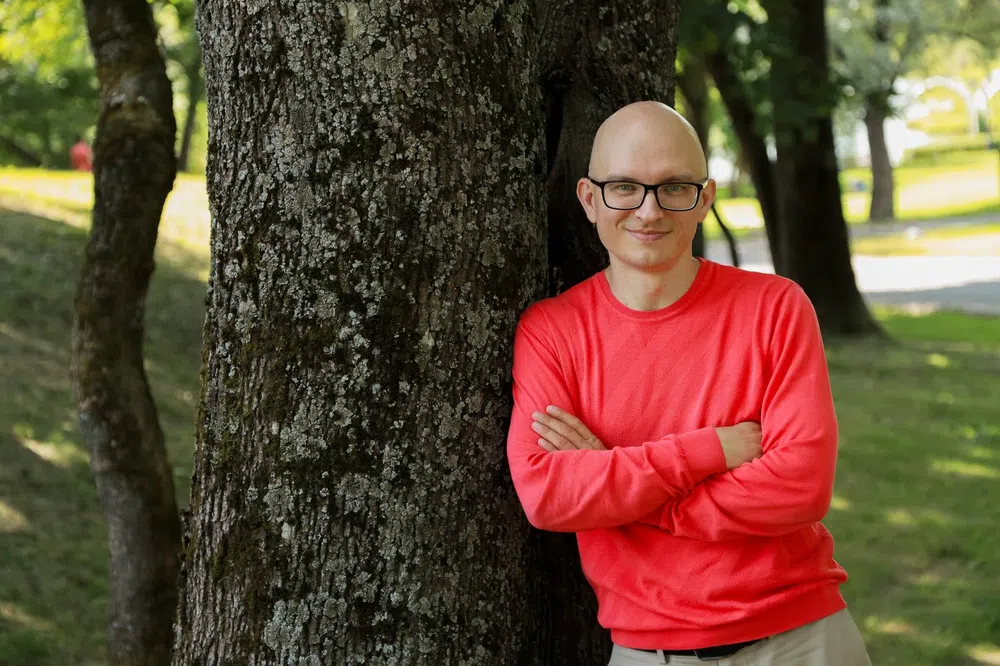
Unless, of course, the fate of Dudnikov is not interested in Russia. The fact that Dudnikov and Sapga are Russians makes its own adjustments to the actions of the Belarusian regime, but can we say that they began to treat them more humane? The correspondent of Novaya spoke about this with Anton Gashinsky, a Belarusian lawyer who represents the interests of Dudnikov and the family of Sofia Sapega.
“The condition is that you do not need to beat. Here is a leaflet, pen - write "
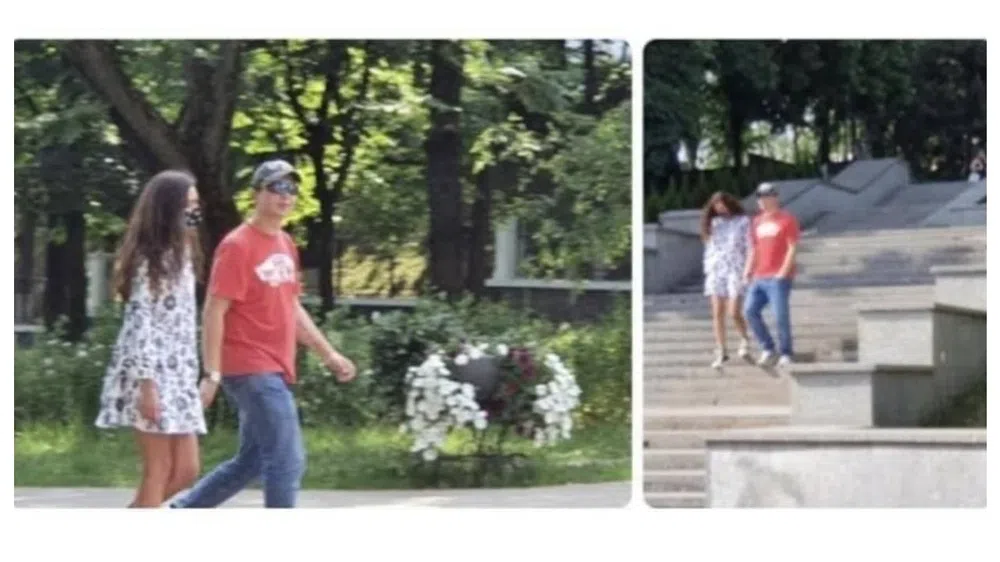
- What is now the attitude of the investigation to Sofia Sapege? Everyone was very surprised by the shots, which were captured how she, along with Roman Protasevich, seemed to give an interview to a certain television channel - on the street, as a completely free person.
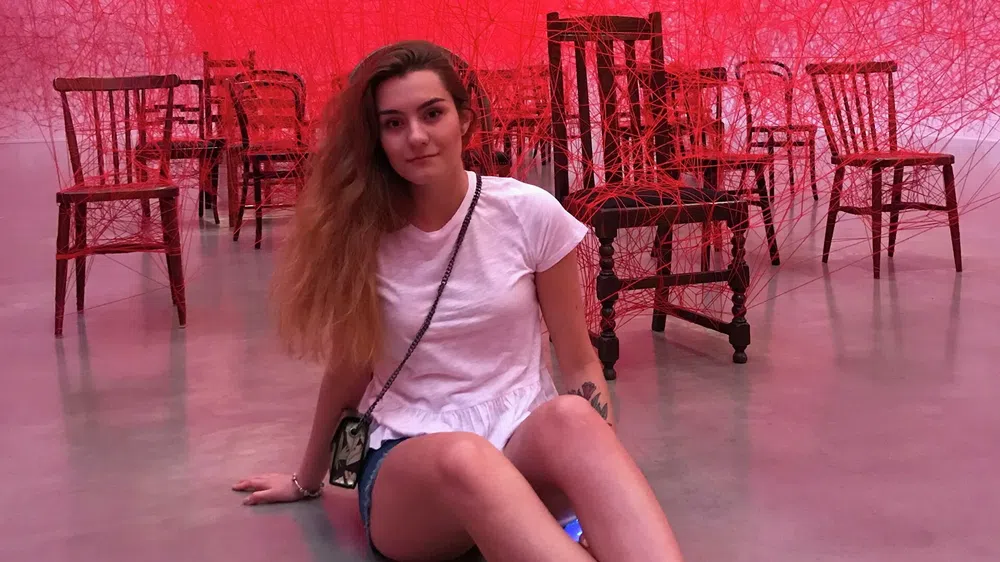
- There was information about the interview, but no one, by the way, had seen him. I can’t confirm or refute the fact of an interview, but I can definitely say that the attitude towards Sapega has changed - now dust is literally blowing off her. Everything is very respectful, and Sofia allows many things - for example, she is allowed to communicate on the phone with parents every day. They have not yet been given permission to a personal meeting with mom and dad - they met once, but until their arrival was allowed to her daughter.
- What is the merit of Sapieha herself? With Protasevich, the situation is more or less understandable-it is public. Sofia also made a deal with the investigation?
- I have no unequivocal confirmation that she concluded a pre -trial agreement with the investigation. The fact that now many investigative actions are being carried out with her, and they are carried out quite actively is true. Their intensity is such that in the next month or two or three, the denouement of this story is possible.
- How much did the Russian authorities now join the Sapieha?
- Very actively, and this is evident from the fact that even at the meeting of the two presidents in Sochi Putin and Lukashenko discussed this story. I believe that Sofia’s parents are in solidarity with me that the general decision on the fate of Sapieha has been made and all current actions are a sequence of steps towards its release. Now Sofia has been transferred under house arrest - this is a very positive signal in itself, and the investigation speed says that the case is actively preparing for the next step - for transferring to court, or for the president for pardon, or to send the case to Russia.
- And what, Lukashenko can have pardoned the sappe without trial?
- In this situation, the president has very broad powers, and he can make any decision. In accordance with the Regulation on the pardon and exemption of criminal liability, persons who contribute to the disclosure of the crime and eliminate the consequences of their commission, the president can free the person from criminal liability. That is, if the preliminary investigation authority establishes that the damage was caused by the actions of Sapieha, then upon compensation and also when paying criminal law compensation, the president may decide on its release. This is if she is charged with a grave or particularly serious crime.
If the prosecution is charged with a less serious crime, then the criminal prosecution authority with the consent of the prosecutor will be able to terminate the case. First, the court should take place, after which the convict may apply for pardon to the president, provided that he was guilty and complete compensation for damage, if his kind of damage was caused by his actions. But there is also a procedure for the release of a person from criminal liability, if he actively repented, compensated for the damage caused and so on.
In general, decide to the president, but now I see four options for the development of events:
investigation, court and extradition to Russia for further serving of punishment or pardon Putin;
the decision to terminate criminal prosecution with exemption from criminal liability;
investigation and transfer of the case for further actions and the court already in the Russian Federation;
The investigation, the court, universal repentance and pardon on the part of Lukashenko.
- What does Sofia tell parents when they call up? Not in terms of criminal case and investigation, but in general.
- Basically, all conversations are devoted to household issues. For example, Sofia has no replaceable clothing, her entire wardrobe is in Vilnius, and it was discussed that the parents would either bring new clothes, or they would give it to someone. The issue of receiving a diploma was also discussed, and now Sofia managed to get a master's degree in online mode.
- Is there a consolidated tactic of the side of protection of Sofia and its parents? Is she a victim of circumstances or is the defense intended to agree with some arguments of the investigation?
- The position of the parents is simple: Sofia was not at that time in the wrong place. In this sense, she is a victim of circumstances, yes. They expect that the Belarusian law enforcement system will figure it out, and the Belarusian president will make some decision that will be for the good of good-neighborly relations between the two countries. As for the position of Sofia itself, now she is in a slight confusion, because she understands that at the moment her fate is somehow solved in addition to her will.
- What are the parents of Sofia about Protasevich? How much does his behavior seem justified in these circumstances?
- They do not publicly discuss this, this topic is quite closed. Now the situation for parents is extremely focused on another: there is their child who, under investigation and who threatens up to 12 years in prison. This issue must be resolved.
- You said that the dust was blown away from the sapegi. And at the very beginning, after all, how was it?
- It's hard to say. We have no reliable information about this. Everyone saw a video with her performance, everyone noted her psycho -emotional state, and even the defenders of Sapieha said that the girl had panic attacks. It is very difficult to psychologically be in a pre -trial detention center, but here you still need to take into account the circumstances of the hit: you are flying by plane in Vilnius, and here - wow! - The plane turns around and sits in Minsk, and next to you sits a guy who is on the wanted list there. The situation is so difficult, but for now the plane lands, while all people get out of it, a person wraps himself additionally. Anyone will wind up to such an extent that, by and large, nothing will need to be done there. No need to beat, no need to use psychological violence. It's just that here you have a leaf and a pen - write. Although we do not exclude any other triggers in this situation.
- Considering that Sapega was sitting in the Belarusian pre -trial detention center, it is difficult to imagine that from the very beginning she was treated with Petit.
-I can only say that while Sofia was in the KGB pre-trial detention center, she was sitting in the cell alone and there was no special attitude towards her. In general, in any case, it is difficult for a person to be alone in isolation conditions.
- How much diplomatic employees from the Russian Federation are included in this matter? In the early days, the Russian side, as we recall, did not differ a great desire to fit into history.
-The work of the Foreign Ministry and the embassy is still not public, it passes through separate unspoken channels. I know that it is actively conducted, and the information in the case is regularly collected, accumulated and reported ... ( shows with the index finger up ). I can also say that the Consul of the Russian Federation visits Sapega weekly, even when she is under house arrest, she is constantly interested in her fate. And largely thanks to this story, close attention is now paid to all Russians who are in the Belarusian pre -trial detention center.
"Dudnikov was transferred to the basement, now dampness was added to the stuffiness"
- The investigation now additionally reports the fact that they are a Russian, and not a Belarusian?
- In Belarus, as in Russia, investigators do not depend on anything and are guided only by law ...
- A very ironic phrase.
- ... But it is clear that the very fact of public history and the fact that the investigator’s work is studied almost under a microscope, forces law enforcement officials to try not to make mistakes. It can still be reached, but it still should not interfere, especially if we are talking about the main investigative administration of the Investigative Committee of Belarus - they know exactly how to work professionally.
- In addition to Sapieha and, for example, Yegor Dudnikov, there are many Russians in the Belarusian pre -trial detention center, whose stories are not published.
- Yes, and there are a lot of them. About 800 Russians are now in the Belarusian pre -trial detention center or in places of isolation from society. But those who are related to the events of 2020, among them, are a few - I think, 50 or even less.
- Direct question: they are being beaten now?
- It is unlikely. In Belarus, the use of physical violence is not practiced. Another thing is that violence is possible and often used as a tool at the very beginning, when the person is detained. It is important that all confession is also obtained at the very beginning - it is when you apply physical or psychological pressure during the detention. This is not necessarily blows, by the way: you can be faced with mud or overcrow your face so that the hands are swollen and numb.
Unfortunately, our courts do not assess the validity of the use of this violence, they look only at the basis of detention, but formally there are always those.
- That is, the scheme is this: at first, the operatives put you with the face on the floor, beat your kidneys, you sign everything, and then a good investigator comes, who simply does not need to raise your hand on you?
- It’s easier for the investigator to work: when he comes, he already has all the confession. This is later, when a lawyer appears, a detainee or arrested can say that violence was applied to them. The investigator will fix everything, he will not convince you. Another question is that only the court evaluates all words, and he often acts according to logic: here, at the beginning, you testified yourself - it means that this is true, but here you already had a lawyer - it means that you are like. In any case, the judges must proceed from the totality of all the evidence collected, but the trouble of the law enforcement system in Belarus, and, I think, in Russia is that the operatives initially choose some version and simply collect evidence for it. It turns out a gorgeous and folding picture, and other versions - and even more so the versions put forward by the accused - are not considered at all, because they are refuted by the evidence collected.
- In this way I brought the question to Yegor Dudnikov. He was definitely beaten.
- Yes, he openly declared violence during the detention and he told a lot more - in particular, his travels around the apartments. But these facts are subject to comprehensive verification by the relevant authorities. On these facts, complaints were prepared in the name of the chairman of the KGB and the Minister of the Interior. The audit is also carried out by the Investigative Committee. There are no results yet, we are waiting.
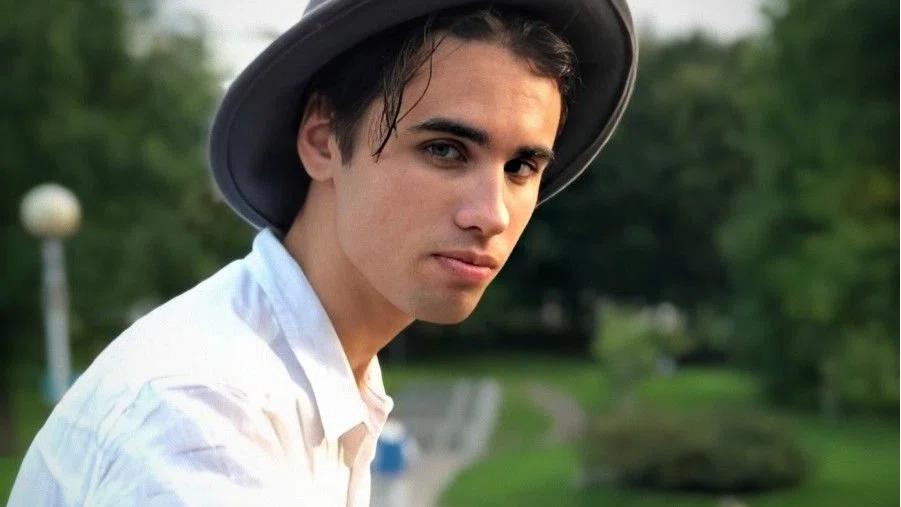
- In what condition is Dudnikov now?
- You must consider that Yegor is a young guy and at the same time a rather romantic, or something, man. The whole situation with detention and being in a pre -trial detention center affects it extremely bad. In Minsk, as in Moscow, the weather is very hot, the temperature sometimes rises to 35 degrees of heat.
Previously, Dudnikov was sitting in the cell on the top floor with a flat roof, which heats up very much. The camera was very small, the temperature inside sometimes reached 50 degrees.
At the same time, very high humidity, and even in a pre -trial detention center, all the windows were removed for the summer, they left only bars, so now any rain can become a problem. It was so hot in the cell that Dudnikov and his neighbors walked exclusively in their underpants and still constantly doused later. Add to this the lack of hot water, so that it is simply impossible to observe personal hygiene. And also prison food: not only is it impossible to eat, so it, according to Yegor, instantly deteriorated. There was a moment when he just drove into the camera and, unknowingly, tried this food, after which he quickly earned poisoning. Plus, one of his neighbors lay in the cell with suspicion of Covid, and Yegor himself complained about well-being: he had a cough and a runny nose, but no one does PCR tests in a pre-trial detention center.
The other day, Dudnikov refused to change the preventive measure for house arrest and, in addition to everything, was transferred to the basement. Now, besides stuffiness, dampness also overcome him. Scarecrow with a croak.
- From what you said, I conclude that the Belarusian jailers do not care what the state of the prisoners is.
- This is not entirely true. They don't care, many sympathetic and empathizers. But they are hostages of the system of criminal-executive legislation and cannot do anything. The only thing - when there was an abnormal heat, the head of the pre -trial detention center allowed the fans to put in the cameras.
- What are the prospects for the criminal case of Dudnikov? Here, from the Russian authorities, there is clearly less attention than in the case of a sapega.
“I think this is true.” On the other hand, the circumstances are different here. After the last speech of the president, in which he spoke about the “citizen of Dudnikov” ...
- Who is this person Yegor?
- We do not know about any “Dudnikov citizens” in this case, the speakers may have mistaken, or there is information in a case that we do not know about. It is possible that it was precisely about Yegor Dudnikov. Given the context in which Yegor was mentioned in Lukashenko’s speech, there are certain fears for his fate.
- That is, the judicial perspective has deteriorated?
- It is obvious that excessive attention to the criminal case may affect its outcome. There it was about the connection of Dudnikov with the telegram channel “OGSB”, where he, according to Lukashenko, either the administrator, or the moderator who was engaged in “subversive activities”. It was also a question of assassination on the gambling. Whether Yegor has the relationship, we do not know. But at the time when these events took place, he was already in a pre -trial detention center for a couple of months. The qualifications of the criminal case can now be turned so that the criminal punishment will eventually draw up a term of up to 15 years in prison.
- How regular your connection with the client is?
- I try to visit Yegor once a week, sometimes it turns out more often. There is access, but here is the same problem: the cabinets for communication are very small and stuffy, they are divided by a glass partition into two parts. In addition to the fact that it is very hot, in such conditions it is practically inaudible, which says the client, you have to listen or put your ear to small holes in the partition. In fact, this deprives lawyers of the opportunity to provide legal assistance effectively. But even in these conditions we try to cope.
- The story of Dudnikov is the story of a person who is considered as an object for bargaining, or just everyone waved his hand - how will it be, it will be?
- It seems to me that this is a story in which everyone is watching how it will develop further. On Sapega, I think, everything has been identified for a long time, but nothing is not clear according to Dudnikov, the parties are now watching where the matter will come in as a result. Russia looks at what Belarus will do, and Belarus - what Russia will do. But I may be wrong.
"There are no lawyers as lawyers as a social group of repressions"
- How much has the attitude towards the advocacy in Belarus has changed from the authorities?
- There were very important changes in the history of the Belarusian advocacy, very fundamental amendments to the laws were adopted. Now in Belarus, lawyer bureaus or lawyers who carry out their activities individually are prohibited. Only legal consultations remained. About a fifth of the country's lawyers was in a situation where they need to be liquidated, and to continue their activities, it will be necessary to go into legal advice.
- At the legislative level, changes are understandable. I say rather about the human attitude of the authorities towards lawyers. Last year, which went out into the street, now, in fact, defeated, and lawyers who supported him or at least defended him, are probably not perceived by the Belarusian regime as friends of the state.
- The question is controversial. Адвокаты как осуществляли свои прямые функции защиты клиентов, так и осуществляют их — в том числе по делам, связанным с событиями 2020 года. Понятно, что участие адвокатов в таких делах находится под пристальным вниманием и правоохранительных органов, и прессы. Понятно, что есть такие темы и дела, опубличивание которых приводит к тому, что работа адвокатов подпадает под пристальное внимание, и в случаях выявления нарушений виновных начинают привлекать к дисциплинарной ответственности и лишать лицензии. Таких случаев тоже много, это печально. Однако адвокаты делают свою работу.
— Журналисты тоже делали свою работу, однако силовики громят одно издание за другим. Получается, репрессии в отношении адвокатов — меньших масштабов, чем в отношении журналистов? Или мы чего-то не видим?
— Опять провокационный вопрос, он содержит в себе утверждение. Я бы не говорил, что есть какие-то репрессии в отношении адвокатов как в отношении социальной группы. Таких репрессий нет. То, что сейчас происходит с адвокатурой, очевидно, является попыткой государства перестроить систему.
— Сделать ее более управляемой?
— Возможно, но это надо было делать по-другому. Вот в России, например, существует Федеральная палата адвокатов, которая фактически является самоуправляемой и регулирует сама себя, вне Минюста, функция которого — ведение реестра адвокатов. В Беларуси государство решило взять все в свои руки. Не исключено, что в дальнейшем, когда произойдет перенастройка системы, власть примет другие решения по распределению полномочий в управлении адвокатурой. Цель благая, но способы достаточно… разные.
— Возвращаясь к российским заключенным в Беларуси. Есть ли у вас ощущение, что в ближайшей перспективе из-за резонанса в делах, связанных с россиянами, следствие в Беларуси в отношении граждан соседней страны будет вестись максимально аккуратно и законно? Или истории с Сапегой и, может быть, Дудниковым вынесут за скобки, а все вернется на круги своя?
— Закон един для всех. Неважно, какую страну ты представляешь. Иностранцы в Беларуси точно так же обязаны соблюдать законы этой страны. Преимущества перед другими тут нет и быть не может. Просто российским гражданам чуть больше повезло: в их делах очень активную позицию часто занимает посольство. В отличие от остальных дипломатических представительств других стран, российское посольство очень рьяно пытается защитить своих граждан любыми законными способами и добиться их освобождения и выдворения в Российскую Федерацию. Это посольские работники всегда делают очень четко и профессионально, особенно начиная с 2020 года, когда посольство приняло активное участие в освобождении практически всех задержанных в тот момент российских граждан. Сотрудники лично вывозили людей в своих машинах на территорию России — сами и за свой счет.
Чувство солидарности у российских посольских работников в Беларуси — на уровне. Это надо ценить.
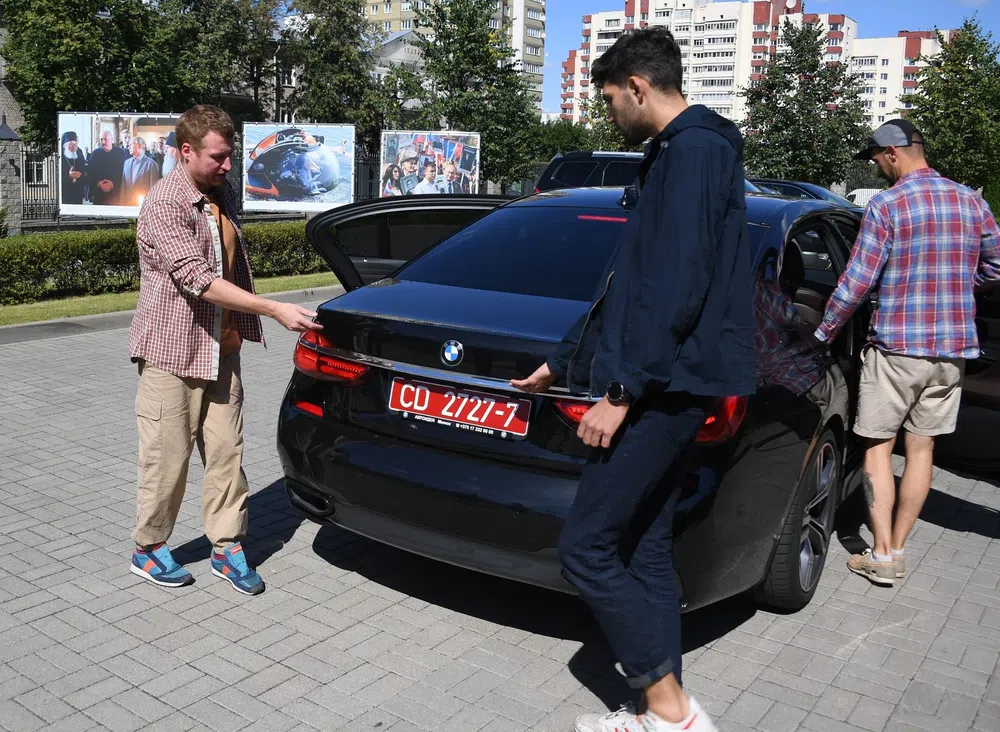
Как правило, работа российского посольства не видна, она закулисна, но то, что они делают, — это большое благо. Я очень часто защищаю российских граждан и могу вам сказать, что к российскому посольству часто прислушиваются и белорусские правоохранительные органы, и суды, пусть общение и идет только через ноты.
— Может, следственные органы и суд в представителях российского посольства видят не столько обычных работников, сколько именно посланников российского режима?
— Не буду отвечать на этот вопрос ( улыбается ).