
Translated material
Russians against food
Citizens are not so happy about grocery counter -sanctions, but still support them
The VTsIOM in his report “Specifications by residents of Russia by domestic and imported foods against the backdrop of economic sanctions” said that citizens are no longer so enthusiastic about the ban on importing imported products, as seven years ago.
If in 2014 84%of the respondents were for the embargo for the import of imported products, and against 9%, then in 2021 only 57%acts for “grocery counter -sanctions”, and against 36%. Most dissatisfied with trade wars among residents of Moscow and St. Petersburg: there 50% of respondents do not approve of Russian counter -sanctions (among the youth of such dissatisfied - 45%). But more than 50% - all the same for the ban on grocery imports.
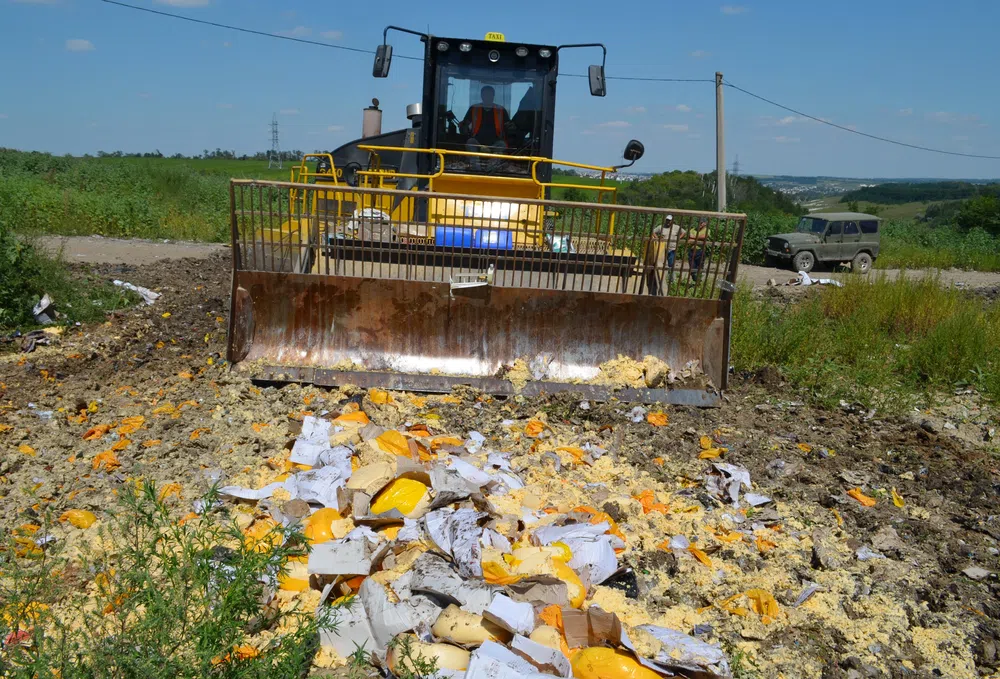
Products
You can, of course, say that the share of dissatisfied with the external food policy of the Russian Federation has increased four times, especially among young people and residents of large cities.
But, on the other hand, more than half of the Russians approve of this policy, which means that they approve of the increase in products for products, and the reduction of the assortment in stores and (indirectly) approve of super -accommodation of agricultural -groups. Agree, there is something touching in this.
Therefore, it is interesting to recall once again what people thought about the “antisancies” over the past seven years - thanks to the insanity and its archive.
I must say that, according to the VTsIOM, and in 2014, Muscovites and Petersburgers, as well as young people, doubted the wisdom of such a state step. But then they were in an unconditional minority. In the age category “from 18 to 24 years”, 12% of citizens believed that this ban on import of food would bring Russia more harm than benefits. 15% were difficult to formulate their position on this issue.
But the older generation was completely delighted, believing that the ban on imported food "would benefit Russia." This position was held by 85% of respondents over 60 years old and 81% of respondents aged 35 and 59 years.
Over 60 years old, this means those who were born before 1954. That is, these people should remember the stories of parents about how the situation was with food in the Stalin USSR. They themselves stood in queues in the 1970s, also saw empty shelves in the late 1980s, and how these shelves were quickly filled with goods in the 1990s. But, go, you are “prohibit import”! And those who were born between 1955 and 1979 also liked the idea of rejection of foreign food. However, in any of the age categories, this indicator did not drop below 73%.
By the way, citizens did not seduct regard to the possible costs of importing imports. 63% expected prices for prices, 46% predicted that the products would take smuggling. 63% showed awareness in world trade practices, predicting an increase in the share of imported products from countries that did not fall under response.
Rights with overpayment
I must say that people in their expectations were right: both in fact concerned the growth of prices, and in that it concerned the reformatting of imports.
As calculated at the Center for Economic and Financial Research and Development of RASH and at the Institute of Social Analysis and Prediction of the RANEPA, “the total negative result of counter -sanctions for the consumer amounted to 445 billion rubles. per year, or approximately 3,000 rubles. for 1 person per year. Losses of consumers were largely redistributed in favor of Russian manufacturers - 374 billion, or 2500 rubles. per year for 1 person. Another 56 billion rubles. per year (or 390 rubles per 1 person) compensate for the growth of the inefficiency of the Russian economy, and 16 billion rubles. (110 rubles per 1 person) - the equivalent of redistribution in favor of foreign manufacturers, whose goods are now sold on the Russian market at a higher price than to counter -sanctions. ”
But the share of imported products from countries that did not fall under the “response sanctions” really grew! True, now they were more expensive - to the great pleasure of importers.
A good illustration here may be a situation with cheese.
As experts of RASH and the RANEPA found out, the general winning of cheese importers “due to the growth of domestic prices in 2013-2018. amounted to 17.3 billion rubles. And was distributed to the importing countries as follows: Belarus (78%), Argentina (6%), Switzerland (4%), Uruguay (3%), Chile (3%), other countries (6%). ” This is despite the fact that the import of cheese in dollar equivalent in the postsanition period decreased significantly, amounting to 42% of the value of 2013 in 2018.
In 2014, citizens considered the “positive consequences” of the grocery embargo in 2014 the share of domestic products in stores (86%) and the development of domestic agriculture (85%).
It is amazing how people nevertheless imagined this-how tenacious the myth of some “Russian farmers” who, give them the will, will now fill up all the shelves almost free and high-quality products.
In 2006 (during the “House of Import”) in Russia there were 2.3 million workers employed in agricultural production in large and medium -sized agricultural organizations. And in 2015, there were already only 1 million such workers (of which 800 thousand permanent). That is, the volume of production of agricultural products increased, this is undoubtedly, but the number of employees of agricultural enterprises was reduced, and at times.
And to increase the share of domestic products in stores, sanctions were not at all as noticeable as citizens expected. The import of food in retail, according to Rosstat, decreased from 34% in 2014 to 24% in 2018. But since 2016, the drop in import has ceased.
As stated in the report “Import substitution or movement” prepared by NRA in 2020, “The volume of import of sanctions products for the period 2013-2019. It decreased by a quarter in real and by 40% in value terms. At the same time, the volume of Russian production of these categories of products increased by 12.3%. ”
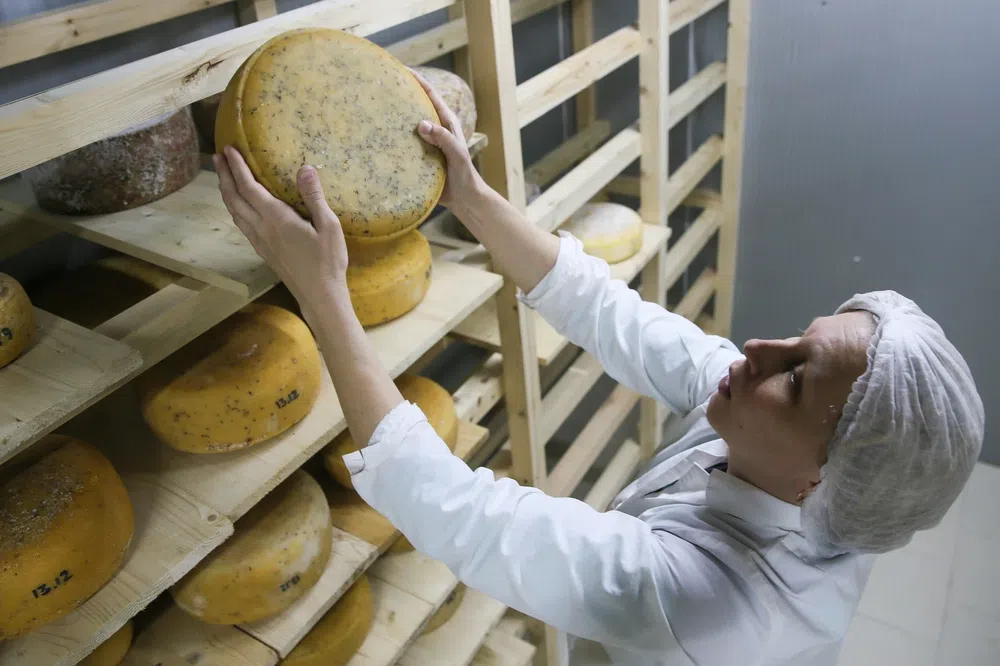
With the "growth of production" of domestic products it turned out ambiguously. Russian manufacturers as a whole managed to replace imported pork, poultry meat and to a lesser extent - beef.
But with some products, nothing happened. As noted by experts of RASH and RANEPS, “the consumption of apples in 2013-2018. It decreased by more than a quarter, and prices increased markedly. Internal production, despite the noticeable initial growth in 2013-2016, later began to drop sharply. It has not yet been possible to restore the initial level of consumption due to domestic production. ”
The same story occurred with cheese: prices were stable at a level that significantly exceeding pre -sanctuary, domestic production after rapid initial growth was reduced almost to the initial level, and consumption in 2017-2018. It turned out 15–20% lower than in 2013
It turned out to be like this with dairy products: in general, the “import substitution” took place, but everything became much more expensive - “the loss of cottage cheese consumers in 2018 compared to 2013 amounted to 33 billion rubles, and dairy products - 41 billion rubles, milk - 62 billion rubles. and butter - 60 billion rubles. "
With popular approval of workers
By 2017, 26% of VTsIOM respondents said that the counter -sanctions did more harm than benefits, but a significant share continued to argue that the Russian food embargo only plus.
And the most remarkable thing is that the ban on imported food was no longer approved by pensioners, commented on VTsIOM: “As the VTsIOM-satellite poll show, most Russians (67%) believe that Russian counter-sanctions were more likely to benefit our country (80%in 2014). Positive moments are more often noted by respondents aged 35–44 years (79%) and studied at universities (75%). ”
Well, you know the results of the last survey.
It turns out that people are really ready to enrich domestic agricultural producers.