
Translated material
Taliban*, ...!
Why will the Minister Lavrov have to negotiate with the organization banned in Russia
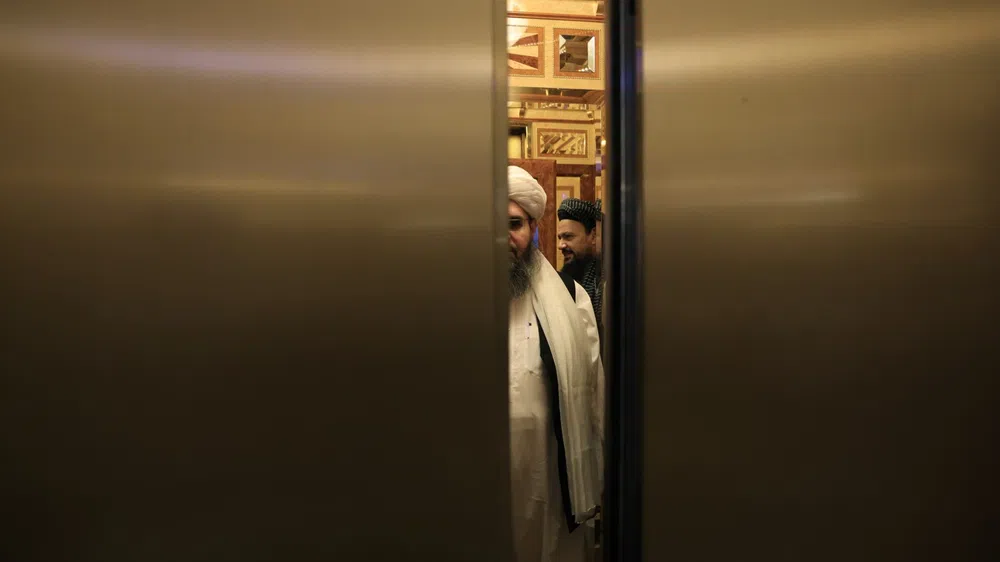
It seems that yesterday Russian Foreign Minister Sergei Lavrov called for the withdrawal of American troops from Afghanistan. But when this call was finally heard in Washington, he called the decision to withdraw American troops premature and not leaving "even a small chance of normalizing the situation."
However, it is still not worth blaming the main Russian diplomat of inconsistency. The demand for the withdrawal of American troops from everywhere where they are located is a duty reception of Russian propaganda, while a public regret on their departure from a particular country, in this case from Afghanistan, is a political statement indicating the real concern of Russia with this step of its sworn main “partner”.
Propaganda and foreign policy are close concepts, but far from always compatible. You can say anything, but in fact, the US military presence in Afghanistan has been ensuring the security of the post -Soviet countries of Central Asia for many years, which Russia, out of habit, attributes to its sphere of influence.
Given this circumstance, the “treacherous” decision of the United States to withdraw its troops from Afghanistan clearly became a considerable blow for Russia.
From which her “flexible” propaganda recovered quite quickly, taking into service the thesis that hasty departure from Afghanistan would be a recognition of their defeat for the United States. Having behind the same hasty departure from the same Afghanistan more than thirty years ago, Russia undoubtedly knows what he is talking about.
Unlike Russian propaganda, Russian foreign policy will recover from the departure of the United States from Afghanistan soon, if it recovered at all. There are many reasons.
The Taliban Fundamentalist Islamic Movement is a fanatical and irrationally cruel organization, widely known for the planting of the wildest gender discrimination, the barbaric destruction of monuments of culture of the pre -Islamic period, the executions of the “infidels” and not noticed in general good. In terms of negative characteristics, the Taliban movement is probably a little better than al-Qaeda or some ISIS, but a little worse than, say, Hizb Ut-Tahrir, also prohibited in Russia.
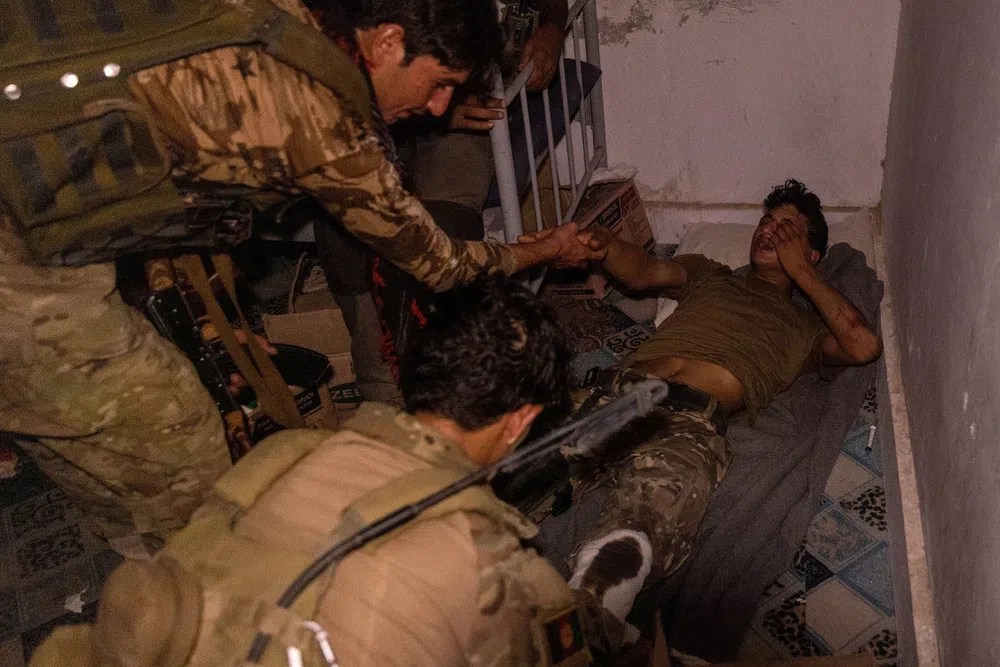
Until now, the presence of the US troops and its allies, as well as the financial assistance of the West, allowed the government of Afghanistan to somehow exist and even restrain the pressure of the Taliban, which turned out to be very tenacious. The history of Afghanistan, as well as other Islamic countries, teaches the fact that a fragile balance between the converted secular authorities and Islamists does not tolerate the departure of the troops of foreign “progressors”, at least western, even anti -wested ones. Of course, I would like to hope for the best, but, objectively speaking, to expect that the current Afghan government of Ashraf Gani will be able to avoid the fate of another Afghan government - Mohammad Najibullah - so far a few. The Americans will probably have time to evacuate President Gani himself, but nothing more.
The Taliban fundamentalist regime replaced his government is unlikely to be able to count on Western assistance to the country, which in the period from 2002 to 2019 exceeded $ 100 billion. He will have to survive on his own, which will need money. Where to get them in a monstrously backward and poor country, which today survives the cultivation of opium poppy (87% of its world production) and not quite legal export of products of its processing?
Afghan drugs are being taken to Europe along the ancient Pamir tract, a strategic road going through Mountain Badakhshan. This sparsely populated autonomous region of Tajikistan, bordering the Afghan province of Badakhshan, is known for close ties with tribe Afghan Tajiks. Which in Afghanistan is about the same as in Tajikistan itself. Until 2005, Russian border guards guarded the Tajikistan border with Afghanistan, and now Tajik. This affected the quality of border protection: due to a number of objective reasons, it was always not very high. And in the mountain Badamshan is simply low. A long time ago, the brave Danish general, the main military observer of the UN in Tajikistan, answering my question about how many fighters he would undertake to secretly transfer across the border in Gorny Badakhshan, said: "Before the division." I joked, probably.
Generally speaking, “happily” avoiding the delimitation and demarcation of the border in the post -Soviet Central Asia is an unpredictable thing: they can, suddenly, become a source of acute conflict, but the rest of the time, indeed, is quite permeable. I once had to look for border guards for a long time in order to legally cross the border of Kyrgyzstan through a border crossing in the desert forgotten by God.
The possible exit of the Taliban to the boundaries of Central Asia will probably become a fact in close term.
How this will affect the interests of Russia is not very clear. She has no integral policy in Central Asia for a long time. As not, in my opinion, and a clear idea of what you can expect from other countries of the subregion in connection with the impending changes in Afghanistan. (Fight with Ukraine and dog about this with the West, a clear thing, much more important.)
Although, for example, an anecdotal sultanate in Turkmenistan, as it seems, is always ready to negotiate with the Taliban, including on the basis of not quite acceptable for Russia. And, in fact, the anti -clerric regime in Uzbekistan can, on the contrary, quarrel with the Taliban without coordinating their actions with Russia. Whether Russia will be able to agree with Turkmenistan and Uzbekistan at least some kind of coordination of approaches to the problems of Afghanistan is a question. I would like to be able to.
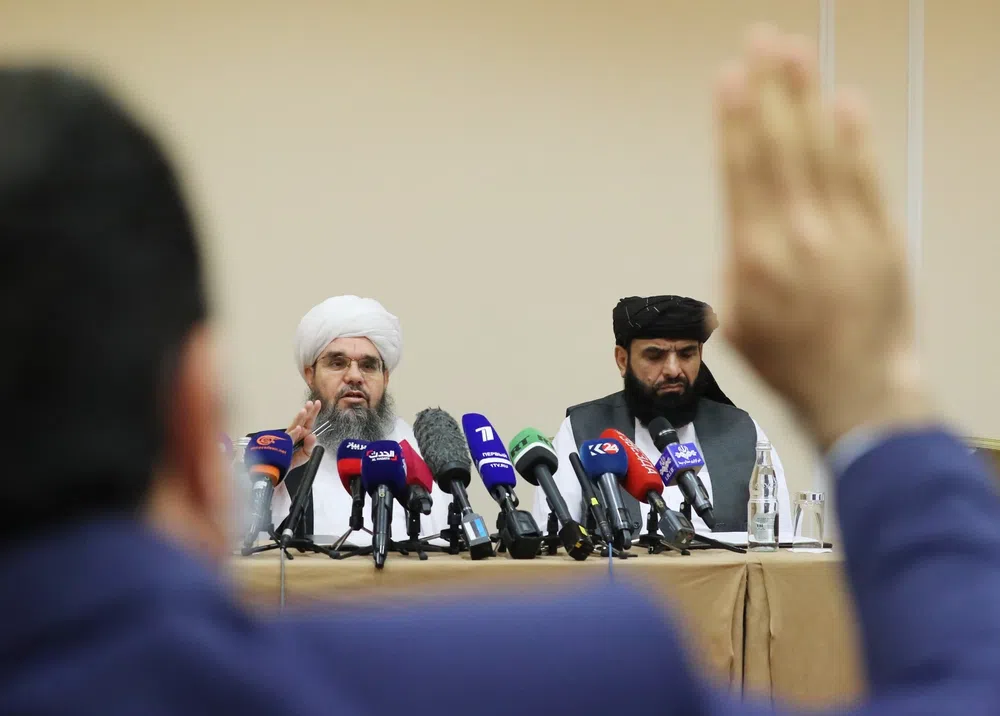
Particular anxiety in Russia cannot but cause a situation in Tajikistan, for well -understandable reasons, which is under its protection not only in words, but also in practice. And here Russia itself will have to negotiate with the Taliban. No one really knows how to do this.
For example, it will be necessary to maintain the legal status and the role that the 201th base of the Russian Armed Forces plays in Tajikistan (the former 201th motorized rifle division with the air group attached to it), as well as ensure the safety of the Cosmic Forces of Russia, which exercises space space, which was located in the mountains near the Nurek near the Nurek.
The main question for Russia is how the Taliban will behave in case of mass performances against the regime of the life ruler of Tajikistan Emomali Rahmon. The latter has long lost the shores, which is unlikely to like his people. Russia, of course, will always be on the side of Rahmon as a “legitimate” ruler, but on whose side the Taliban will be, is unknown.
The situation is very confusing: in the current confrontation paradigm of its foreign policy, Russia does not have obvious large moves. There remains the tactics of small steps that would save the communication channels with both sides of the Afghan conflict. Russia has already taken the first such step by resuming a dialogue with the Taliban, even if too defiantly. Although the East, as you know, is a subtle business that does not tolerate fuss and publicity.
What and how Lavrov says at consultations with the Taliban, we do not have to know. I only want to hope that he will provide them with proper respect. And at least it will not call morons. But to rush to agree, probably, is not worth it.
It is easy to assume that the Taliban will seek from Russia to remove the offensive label from them to the “prohibited organization”. Sooner or later, this, of course, will have to be done, but better later than before. The honorary title of “permitted organization” will have to be earned by learning to listen to the wishes of Russia. The list of wishes, I hope, is ready for a long time.
By the will of circumstances, Russia and Taliban have something in common-here and now they are outcasts of world politics. Why not beat the theme of the community of destinies?
In April 1941, immediately after the signing of the Soviet-Japanese pact about neutrality in Moscow, Stalin considered it appropriate to tell the Minister of Foreign Affairs of Japan Matsuoka: "We are Asians, and the Asians should hold together." Why not say something similar to Lavrov’s head of the Taliban delegation, perhaps even an advance?
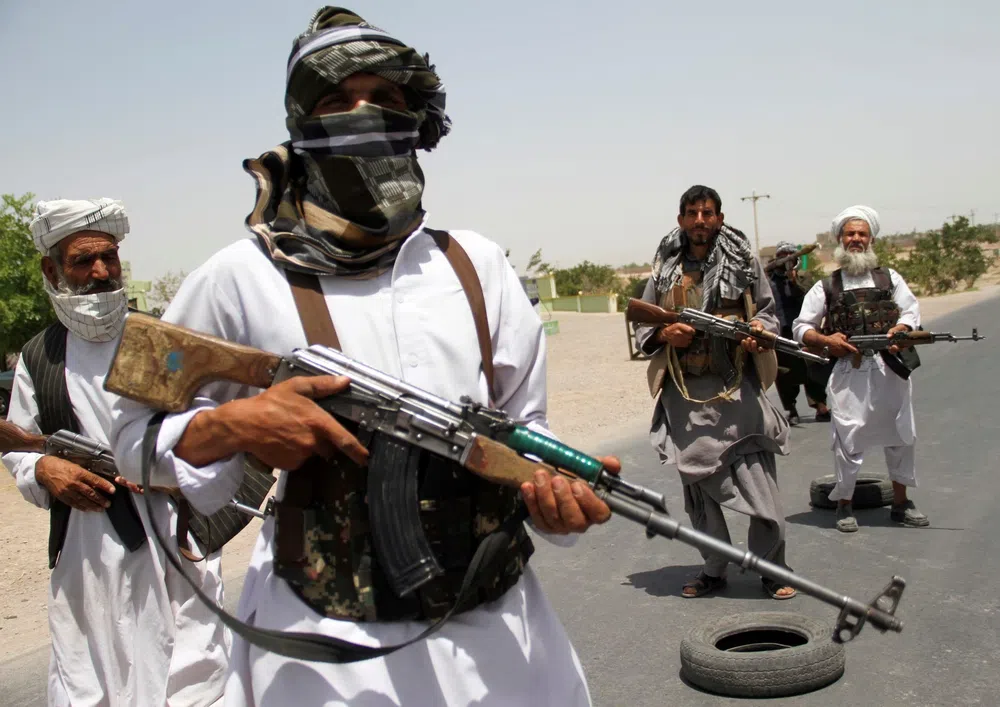
Sooner or later, but completely inevitable issues of peaceful settlement will stand in any negotiations with both sides of the Afghan conflict. Until the Taliban did not defeat, and the current Afghan government did not quite lose, the chances of such settlement remain. Although the time is catastrophic.
Is the experience of peaceful settlement in Tajikistan, which ended on June 27, 1997, the conclusion of a general agreement on the establishment of peace and national consent will come in handy here? The document was then signed by the President of Tajikistan Emomali Rakhmonov (now Rahmon) and the head of the united Tajik opposition, the leader of the Islamic Renaissance of Tajikistan Said Abdullo Nuri.
Perhaps the Russian Foreign Ministry could organize for high representatives of the current Afghan government and the Taliban the study of the experience of this unprecedented peaceful settlement, as a result of which the wolves remained full, and the sheep were not injured.
And, finally, the most unpleasant: on the continuing “export” of Afghan drugs to Europe, you will have to close your eyes at least until wealthy sponsors are found in the world who want to help the Afghan people not die of hunger. Or, for a variety, to create at least some semblance of modern industry and agriculture.
In a word, Inlala.