
Translated material
The main militant of the 90s and the best sequel of all times: the history of the creation and success of "Terminator 2: Day of Judgment"
In honor of the thirty -year anniversary, we recall the story of the triumphal blockbuster James Cameron - a film that still has no equal.
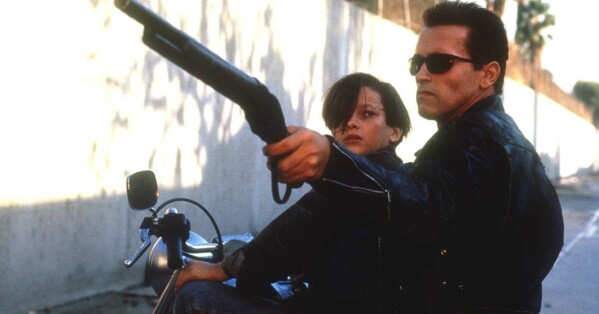
July 1991 became a memorable milestone - it was then that the sequel of the Terminator was released, which changed the landscape of the entire film industry. The continuation of the fantastic action movie James Cameron - a gloomy story about the confrontation of people with cars, is undoubtedly recognized by the best action movie of all times.
In a large -scale and most expensive spectacle at that time, innovative computer effects and directing Cameron were united - he showed an apocalyptic picture of the world, where technological progress promises humanity of war and catastrophes.
In the sequel, the heroine of the first part - Sarah Connor - fights simultaneously with the new high -tech cyborg, who arrived from the future, and with his contemporaries, who consider her crazy criminal. She is helped by a teenage son and antihero of the first part, the T-800 robot is a soulless machine that gradually learns to feel and empathize.
"Day of Judgment" is the most unsurpassed of all six parts of the "Terminator". He was famous for a dramatic intensity, a grand scale and a powerful acting.
Whatever Arnold Schwarzenegger is doing in his life, who had already managed to visit the Governor of California and ran for the post of US president - in mass culture he will forever remain a terminator from the second film. Robert Patrick, who embodied the most terrible robot from the T. series, made him worthy of competition.
And the visualization of the T-1000-the work of the ILM studio-also revolutionized in the field of visual effects.
How steel returned
The first “Terminator” is a gloomy action movie with a killer-killer whose chrome torso, according to legend , dreamed of James Cameron in delirium, enjoyed great success among the audience. Under the 6 millionth budget, the film collected 78 million at the box office-it was an unexpected triumph for the picture, which was positioned as a tape of category B.
The 1984 Terminator seemed to critics inventive and tense thriller, and directing Cameron - filigree skill, in which the author achieved results with limited funds and without the support of large studios.
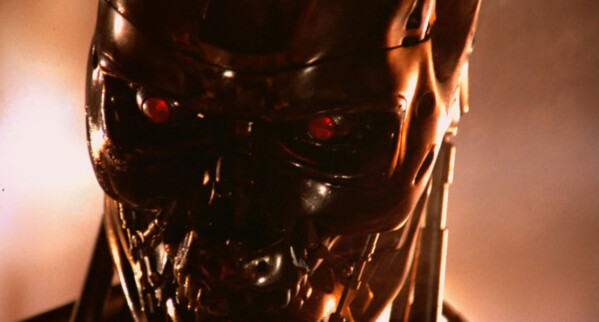
The idea of the sequel was born immediately after rolling success - even then Cameron threw a new story on paper, where the Terminator is reprogrammed to protect young John Connor. If in the first part the director was more like a slasher-with a trifle killer and a victim girl, then the Terminator 2 turned into a large-scale blockbuster.
Together with William Wisher Cameron, he coped with the script in six weeks. The director admitted that he was considering the following idea: two cyborg-shvartzenegger should come from the future-one is motivated to kill John Connor, and the other to protect the boy, since in the future John will become the leader of the surviving humanity.
Whisher seemed boring to Wisher. Later, Cameron wanted a villain who could contrast with Schwartz. The director also thought that Michael Bin from the first part would be the new T-1000, but such permutations could only disorient the audience. As a result, the T-1000 liquid-metal terminator appeared, whose streamlined forms opposed the pood fists of the old model.
I was big, and he was thin. I was strong, he was quick. I have basic technologies that were in the first film, and this guy has sophisticated abilities.
Arnold Schwarzenneger
It was not immediately possible to realize ideas. First, legal obstacles arose with the rights to the picture. The Terminator was divided between Carolco Pictures and Hemdale Film Corporation, which owned 50% of franchise rights. Arnold Schwarzenegger suggested that producer Mario Cassarus are profitable to invest: to redeem the rights from Hemdale and put an end to legal litigation, which staged production for as many as five years.
The development of the film also inhibited the level of special effects, possible in the mid-80s. And Cameron himself set such a bar that experts considered the project an unrealized project for a long time. It took six years that technological progress unleashed his hands.
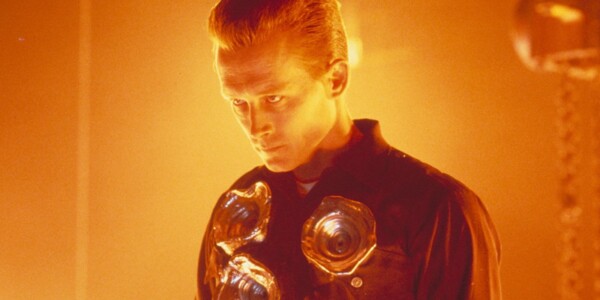
In the break between the “Terminators”, Cameron released the “Abyss” - not the most successful point in filmography, which, however, gave the director the necessary experience in the use of visual effects.
The technical level of “abyss” confirmed Cameron’s intentions - the image of a liquid metal robot for the second “Terminator”, which he dreamed about back in 1984, was now able to handle the masters from the ILM studio. It was they who created a water tentacle for a 70 millionth thriller about the ocean depths.
In parallel with this, the glory of the world superstar fell on Schwarzenegger. The Austrian bodybuilder in 1990 starred in “Remember everything” Verkhoven, who was also released by the Producer company Carolco.
For Schwartz, Cameron came up with a touching and dramatic turn-he turned a bad cyborg-killer from the first “Terminator” into a positive hero.
This transformation, according to Cameron, was somewhat confused by Schwarzenegger's script. But the sudden transformation from the killer into the Savior gave the film sharpness, and the very idea had to be kept secret. The T-800 secrets worked at the stage of the marketing campaign, silent that he is a positive hero.
The 13-year-old Edward Ferlong, who at that time escaping from the house, and the fighting Linda Hamilton, without which, according to Cameron, the continuation would not take place-this is how the acting ensemble of the best sequel of all times was formed. Robert Patrick also entered there in an unforgettable image of a liquid -metal robot, which was first planned to make singer Billy Idol.
Previously, they hired Billy Idol, but he was injured. They were interested in how I looked. I was a stuntman and starred in a heap of films for Roger Korman, where I made my tricks, so I really knew how to move. I had a certain athleticism that was suitable for this role.
Robert Patrick
Guests from the future: visual effects "T2"
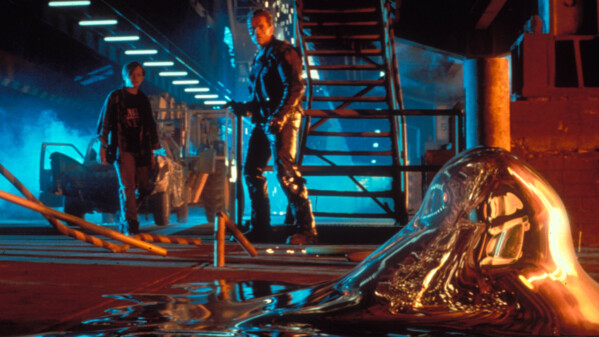
First of all, Cameron saw a chameleon in T-1000, capable of constantly changing-ILM and Stan Winston Studios, who have acquired the most advanced software at that time, set to work.
Special effects studios that worked on the film used all the available capabilities: from mechanical effects with animatron figures to work on modern Apple Macintosh computers.
The second “Terminator” performed the revolution in visual effects-the old-school militant created the image of the villain thanks to CGI technologies, laid the foundation for the digitalization of cinema.
The realistic T-1000 was created long before the Motion Capture technology has gained popularity in big cinema. Three -dimensional editors, as well as Photoshop, was used - it was used to mask and correct errors.
The famous “morphing” effect with smooth transformations of the body of the T-1000 was created under the strict guidance of Dennis Muren. They applied control points on the body of Robert Patrick on a special grid to fix the movement, and then digitized. The actor ran naked at the film studio, and experts imposed a metal texture on the virtual model.
Impressive scenes where the liquid robot passes through the metal lattice and takes the forms of everything that touches is the result of painstaking work, which cost 5.5 million dollars and ten months of labor.
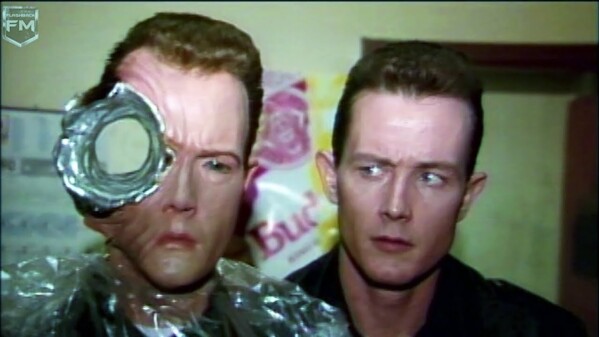
All this - for the sake of three and a half minutes of computer graphics that hit the imagination of the audience in 1991. The rest of the work was to use combined filming: Robert and Dennis Bloval created terrifying shots with a nuclear explosion that destroyed Los Angeles. The brothers built dozens of miniature buildings and blew them up using air mortars. According to William Wisher, only the entry of “T2” cost about the same as the entire first “terminator”.
The ingenuity of the "Day of Judgment" in how the film used all the creative and technical departments, connecting the old and new, animatronics Stan Winston, miniatures and computer images. It is not surprising that the budget of such a large-scale spectacle cost 102 million dollars-the most expensive indicator at the time of 1991.
Brad Fidel, the author of the immortal soundtrack for the Terminator, said in an interview with The Ringer that Cameron came to his studio and said: “I just want you to know that you are writing the most expensive film ever made in your garage.”
Fidel himself subsequently created a tense electronic score, which holds the pace of the entire “T2”. Instead of frightening synthesizers from the first film, Fidel emphasized in the sequel on a more dramatic audio row. There were no inventive solutions in the style of DIY - if in 1984 the composer knocked a cast -iron pan directly on the microphone, creating the main musical theme, then for “T2” Gary Ridstrom - a master of sound effects, attracted ... dog food. The sound of the resulting contents from a tin can has become an effect that accompanies the T-1000 in episodes of transformations.
The film was created at an incredible pace and hurry. The path from the draft to the finished product “T2” overcame in just a year-it was forbidden to hesitate, as the producer Cassar prepared the film for the weekend on July 4, 1991. Cameron practically coped with the task, setting an exemplary blockbuster - a magnificent epic about the choice and fate of mankind.
High art of Hollywood
The marketing campaign made an incredible splash-they started talking about the sequel before the exit, and the GUNS 'N' ROSES clip to the You COLD BE Mine track containing the T2 frames at the top of the hit parades. The "shipyard" managed to pay off even to the release due to the sale of rights to video and television. Only for the first weekend, the tape was able to beat the cash register records of the first “Terminator”.
When the film was released, he was met under deafening enthusiasm. Critics called him the best continuation in the history of the cinema, comparing, unless, with the second “godfather”.
“Terminator 2: Judgment Day” is a brilliant machine, all of brilliant steel and polished bronze, with the latest nuts and bolts. You treat him in the same way as any powerful machine, a little impassive, but with respect, bordering on trepidation.
Hal Hinson
The cash fees in the world amounted to more than $ 520 million - Judgment Day turned out to be not only the most profitable film of 1991, but also became the most successful project in Schwarzenegger's career. The triumph finally convinced Cameron that working on blockbusters with huge budgets was his horse. The director was called the Wagner of the movie workers, and the “terminators” were considered a grand opera, where clashes of cyborgs resemble the battles of the titans.
He, as critics noted , created the high art of Hollywood, concentrating around him creative talents, fantastic scenarios and big money. Cameron's films are the interaction of form and content, where pursuit on motorcycles through the channels and explosions of laboratories determine the grammar of the plot in a frantic stream of images.

But the "Day of Judgment" was loved not only for the extravaganza of action scenes and stunt tricks. “T2” is a philosophical reflection on determinism and freedom of choice, where, against the backdrop of the gloomy Los Angeles of the 90s, the possible future of civilization is investigated. Cameron continued the Technophobic line, showing how people and scientific and technological progress are subordinate to military goals.
Miles Dyson, an engineer of Cyberdine Systems, behind which Sarah Connor comes to kill him and “rewrite” the future, creates a microprocessor - the basis for artificial intelligence Skynet, which will subsequently destroy billions of residents. Guided by good intentions, scientists from generation to generation create technologies and devices that are great for murders and mass genocide.
The very dramatic, but at the same time complete humor, the line in “T2” is a relationship between a 12-year-old connor and T-800: the boy raises a metal cyborg and explains to him basic human feelings.
So “T2” becomes a fabulous history, using earlier literary samples. Like the “wizard of the country of Oz,” Cameron’s sequel tells about the “iron lumberjack”, which “acquires a heart”.
The genius of Schwarzenneger’s acting is in cold detachment, in which the robot performing the tasks is like a sculpture - but gradually it turns into a person from an “empty” machine. The cult image of the T-800 is rightly considered Frankenstein of the twentieth century, and the transformation of the Schwartz with a performance comparable to the works of Boris Carloff in the image of the monster.
To show fantastic things that we will not see anywhere, but with their help about eternal universal values - this is the unconditional skill of Cameron as a humanist. He leaves the audience with optimistic hope - people can change the future and improve, learning from their own mistakes. But as a warning, it fills the film with an alarming nihilistic atmosphere.
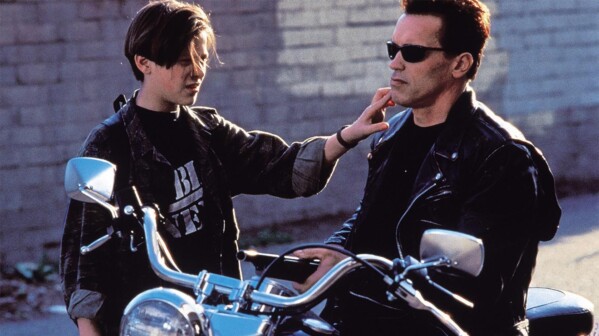
From the film he still trembles-in his elusive mode, non-stop, gloomy episodes from a psychiatric hospital and the chilling gaze of Robert Patrick-the most terrible policeman in the history of the movie. This tension is amazingly transmitted by Linda Hamilton in the image of a paranoid mother - the actress herself insisted that Cameron put her heroine in a psychiatric hospital in the sequel.
"T2" set trends and responded to requests at the same time. Here is the fashion for feminism, which Cameron flashed five years earlier in “strangers”, and in the continuation of the “Terminator” turned Sarah Connor into a muscular soldier. And the passion for brutal militants, full of violence and drive-the main genre of American cinema at the turn of the 80-90s.
Cameron-the director of the first “Terminator”, “Alien” and the underestimated deep-water epic “Abyss”, became the chief master of Havi-Meetal.
Owen Glaberman
“Judgment Day” set an incredible bar - not one of the followers managed to keep up with the glory and level of the sequel. This was understood by Cameron himself, having gone in 2016 for the restoration and re -release of his legendary film in 3D format.
The 35-mm negative “T2” was scanning and a long processing process has passed: color correction improved, scratches and film defects disappeared. The film was restored in 4K and released in world rental in 2017.
Cameron, who has mastered the CGI technology in Avatar, and decades later continued to admire the technical level of T2. According to the director, from the very beginning he felt that his team was doing something special-an action movie who, like the heroes of the franchise, would also affect the course of the future.
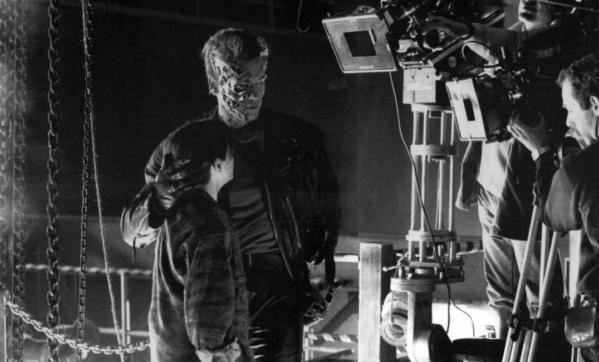
The Terminator 2 turned out to be a grandiose alloy of technology and creativity, where Cameron demonstrated - how to use the capabilities of technological progress and turn the movie into an eternal engine.
Expanding the space of the first film and without parasitic on it, “T2” combined new moves and techniques, turning into a large -scale two -hour pursuit. According to the Templar and stress, the “vessel of the vessel” is still there equal - from modern blockbusters, it was possible to approach it, except that the latter “crazy Max”.
The Star Wars were magnificent, but what Cameron did was something quite amazing-because of his vision and evolution of the high technology that he began.
Mario Kassar
The article was created by a participant in the authors league. About how she works and how to join there is described in this material .