
Translated material
What did the USSR really produce?
I very often hear from the older generation-such a country was produced. All factories went bankrupt, before we had everything we had, but now imported, Chinese. And I wanted to figure out what we lost.
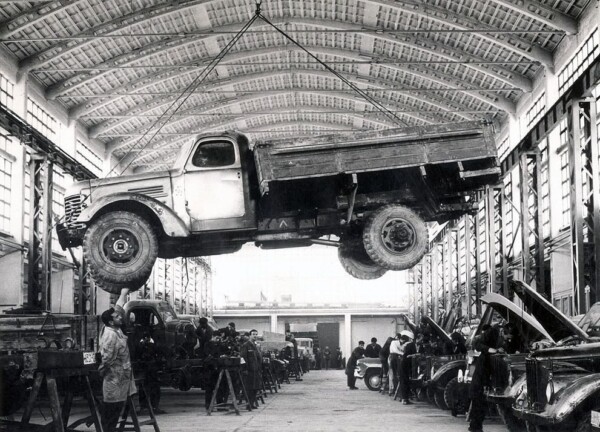
Here and there, facts arise, that the Soviet Union was extremely insolvent in terms of industry, and of course we had something to argue, to argue stupidly, but all the rest were lame, and two legs.
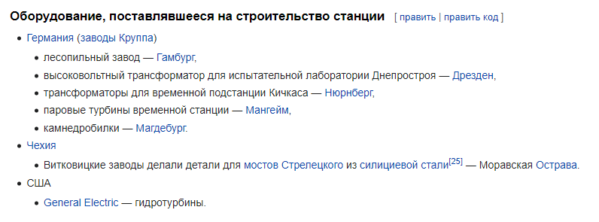
To begin with, a short excursion into history, but where did it all come from initially? I hope now it’s not for anyone that the good half of the industrialization is provided from abroad, I will only give several examples. Here is a list of contractors in the construction of Dneproges:
Another example: the Stalingrad Tractor Plant , built on the KAKh project in 1930, was originally built in the United States, and then was won, transported to the USSR and assembled under the supervision of American engineers. It was equipped with equipment of more than 80 American machine -building companies and several German firms.
Moreover, assistance was provided not only during the period of industrialization, but also after the war:
The American company General Electric delivered new generators for Dneproges in 1946 instead of destroyed during the war. The weight of the generator was about 1020 tons; diameter - over 12 m; The power of the generator is 90 MW, against a power of 77 MW of old generators.
You can find other examples as much as you like. Now we are not making this topic. Moreover, there is nothing shameful in using help at the initial stage. But the situation has not changed much in the future, we proceed to the essence of the issue. I will not paint each individual case for a long time, I want to give the most many examples from different areas as possible, and everyone will draw conclusions himself.
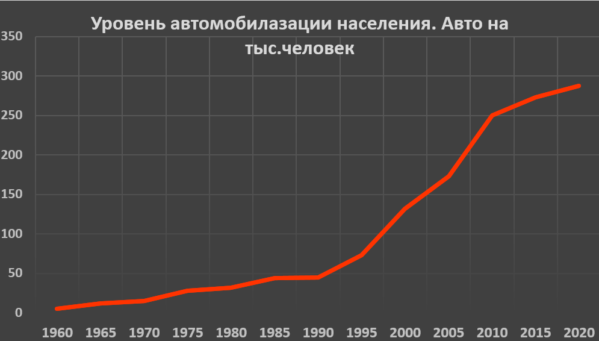
Of course, the automotive industry is the most striking example. In 1980, motorization reached the USSR 45 cars/per 1000 people. At the same time, in European countries this indicator was already more than 300 cars/ per 100 people. In the second half of the 1960s, the production of Moskvich cars barely reached 100 thousand a year. But this is one of the largest brands of that time, 100 thousand a year, with a population of 200 million. And this is not to mention the insane cost of the car, in the amount of 50-80 monthly salaries. Do not forget that most of the models of the Soviet automobile industry were copies of Western, well-known examples: Fiat 124-Zhiguli, Simca-Chrysler 1307-Muscovite.
A similar picture was in all household appliances. An amazing thing, in the Soviet Union, according to nostalgiars, there were dozens or hundreds of giant factories, the best education, medicine, industry and in general we were the first in everything, but in fact, most Soviet citizens constantly collided with commodity deficit. For example, one of the first Soviet video recorders of the VM-12 electronics cost about 1200 rubles, it was about 10 monthly salaries of that time.
You can say that at that time it was a peak of technological progress, and therefore such a high price was justified. Firstly, the video recorders have been known since the beginning of the 70s, so that Haitek of that time cannot be called. Secondly, we compare the prices of electronics of the same time in the USA:
The three most popular models of home computers are the beginning of the 80s:
IBM PC - $ 1500
Apple II - 2000 $
Commodore Vic-20 (without monitor)- $ 500
The average salary in the United States was then about a thousand dollars. It turns out that in order to buy a computer, it took 2-3 months of salary, how many salaries of the working USSR needed to buy a personal computer? And not at all, the union has not mastered the mass production of home computers. We are going on.
In 1980, 60% of families had a television, a little more than half, and, of course, most of them accounted for the urban population. But is it a lot or a little? Compare with other countries.
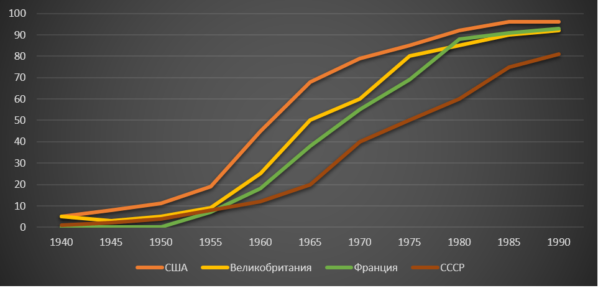
As you can see, everything is not as bad here as with an automotive industry, but it is still a noticeable lag, not even from the very advanced France. Such types of household appliances as washing machines, refrigerators and vacuum cleaners were produced in a clearly insufficient amount, sometimes causing exciting demand. By 1980, 78%of families had a refrigerator, vacuum cleaners - 55%, washing machines - 30%.
For most of the 20th century, the life of Soviet man was harsh and scanty. Men shaved with dangerous razors and brass razor machines with Voskhod blades. Women used gauze or torn old sheets for shreds. There were no beautiful, erotic, lace underwear, tights were often in short supply, perfumes and means of caring for themselves too.
Children played on wastelands and garbage dumps, or with the simplest wooden toys at home. Hygienic gaskets, sports simulators and razor machines, along with imported toys came to us only in the 90s-along with perestroika. Meanwhile, in the West, people for almost a century have used the benefits of civilization invented even after the First World War.
Due to the underdevelopment of the paper industry in the “most reading” country of the world, there was a shortage of books. The possession of good books in beautiful covers in a shortage has also become a measure of prestige and well -being. Just like in the Middle Ages, when the cignant of the printing machine was not invented, only we are in the middle of the 20th century. Here's another interesting sketch:
Since 1974, to suppress the shortage of books, a special “waste paper” series of books of classics of fiction that were sold “for coupons” received for the surveyed waste paper (usually 20 kilograms per book) began to be produced. But they were also not enough for everyone who fulfilled the condition, so a deficit was immediately formed on books from this series, and when books appeared on sale, there were queues from those who wanted to hand the waste paper for books.
Of course, all scarce books with a lot of overpayment could be obtained from the resellers. In addition, there were luxury clubs of book lovers, whose members had the opportunity to receive coupons for scarce books and buy books, usually with “load” from unclaimed books, in special kiosks.
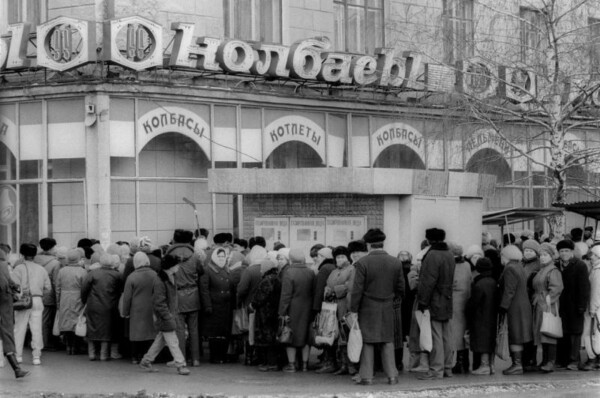
If you are far from literature, then we will talk about more urgent - about food. There is a very common myth, supposedly in the USSR, food was incredibly high -quality and natural, without all these additives, thickeners and stupid views. And all this was achieved thanks to the miraculous GOST. That's just all this is exactly what a myth.
In fact, GOSTs had nothing to do with the quality - this is just a description of various components and their percentage ratios that can be used in the product. I emphasize - they can. In addition to the first lines of the text, which indicated, for example, that sausage should contain 75% of meat, there were still very extensive notes, which indicated what the meat can be replaced with. According to GOST, such a meat substitute could be a mixture of bones, starch and food plasma, which the manufacturers used successfully. For example, the famous GOST 23670-79 dated 1979 in the editorial office of the year 1980:
It is allowed in return to beefs, pork, lamb joint use of protein stabilizer, mass beef or pork, or lamb, food plasma (serum) of blood, starch or wheat flour
Quite officially, according to GOST, there could be practically not meat in sausage. And this is only according to official standards, not counting theft in the field and all sorts of “production schemes”. In the sausages according to GOST, 10%of the meat content was allowed; What was there in reality - it remains only to guess. And for sausage is simpler - the varieties of “for breakfast” - GOST allowed the manufacture of czainate sodium, wheat flour, and potato starch.
There was a period when it was possible to use both animal bones, and tendons, and other unattractive parts of the animals. The list of "improvers" and substitutes in sausages alone was huge. GOSTs officially allowed the use of jokovin in sausages instead of vested meat, loud lumps, blades, cowns. The Soviet GOST 240-85 on margarine, culinary and combined fats, which allowed to produce fats from the same palm oil, palm stear, cotton palmitine, will be told about the quality of confectionery products.

Why was this in principle possible? But very simple, the fact is that these same “state standards” were corresponded almost annually. What is the point in any standard, if it, if desired, can be changed at any time? By the way, in addition to the GOSTs, there were the one so hated for nostalgiars.
Moreover, in many republics there were its own ones that differed depending on the situation with the crop, meat and dairy industry in the region. According to the same, all the beloved Soviet ice cream, which was made of vegetable fats, combi-combin, instead of agar-agar, was added starch and flour, and in the early 1980s, creamy cream varieties were replaced with milk: the creamy seal remained in Moscow and Leningrad, but no one was going to feed the province.
Outside of the regional centers, since the 1970s, no ice cream was sold except tomato, because all dairy products from agricultural registers were removed to Moscow. In Tyumen, the third ice cream variety appeared only in the late 1980s, and before that there were only milk in a glass and milk on a stick.
* * *Okay, maybe everything was bad in light industry in the USSR, but maybe in other areas the picture will change for the better?
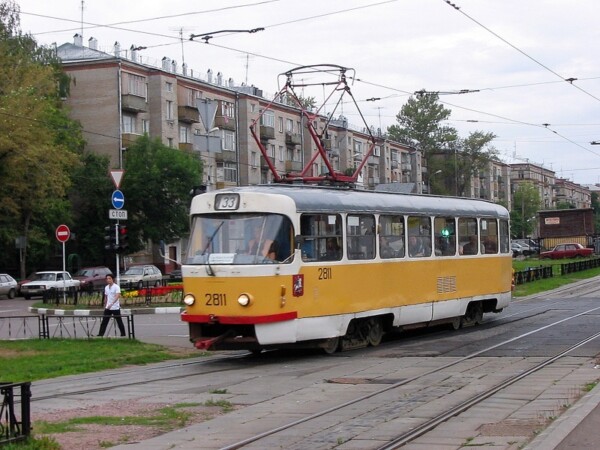
I think everyone is familiar with this tram-the name is Tatra-3 to him. T3 - tram wagons manufactured by the Prague ChKD enterprise from 1960 to 1999. In total, 14,113 wagons were produced, including trailed non -motornote. More than 1000 such trams were placed in Prague, Moscow and Kyiv. T3 T3 (taking into account modernized wagons) is still the main type of rolling stock in many Czech, Russian and Ukrainian cities.
It turns out that even such a simple thing in production as a tram, in the Soviet Union they purchased in friendly countries. Little Czechoslovakia provided the entire huge union.
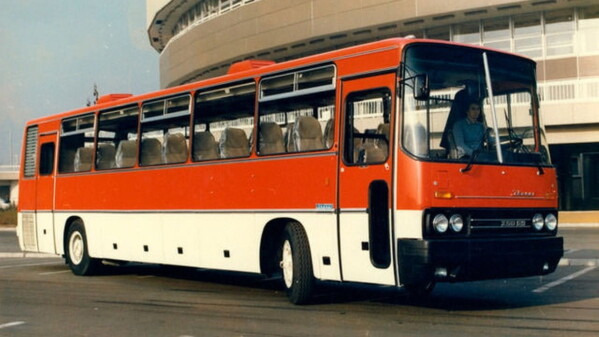
Do you know what it is? Of course you know! Ikarus-250 was one of the most common by the bus in the USSR and Russia, in 1970-1995. These buses were produced by the Hungarian company of the same name.
The most popular train throughout the post -Soviet space is ER2 and its various modifications.
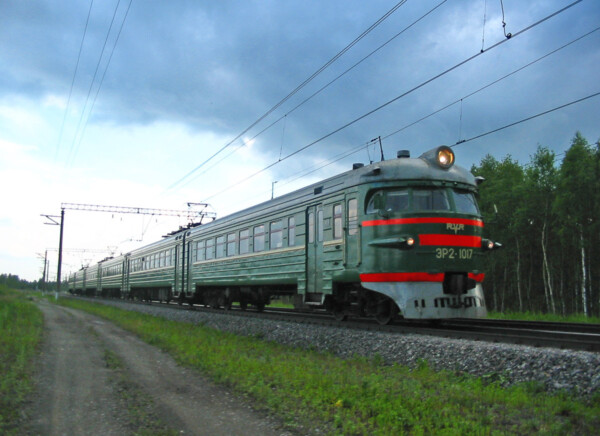
It was produced by the Riga Nagonal Building Plant in the period from 1962 to 1984. And all would be nothing, only Riga and Latvia are not that “very USSR”. On paper, of course, yes, the Soviet republics were part of, but all the Baltic republics were very separate, “the most affordable abroad” for Soviet citizens. Yes, and the plant itself was built in 1895 by the German-Baltic entrepreneur Oscar Freivirt as a Joint-Stock Company Fenikss. It does not smell any Soviet Union.
So what did the Soviet Union itself even produced? What was not bought/copied from the west, maybe what the country's economy should directly depend on? The deal of the GAZ -Pipes A century, - a long -term agreement concluded on February 1, 1970 between the Soviet Union and the Federal Republic of Germany on the supply of large -diameter pipes and other equipment for the construction of a gas pipeline to Western Europe with a fee for the staged pipes and equipment from the deposits of Western Siberia.
It received such a name due to the fact that it was the largest in the history of the Soviet-German/Russian-German and Soviet-European/Russian-European agreements, involving cooperation for many decades. Largely thanks to this deal, Germany immediately received a huge bonus in economic development. Here you have a long -term loading of your metallurgical enterprises, and a very cheap gas in huge quantities. But why did it take such a seemingly unprofitable for the USSR, and an extremely profitable contract for Germany?
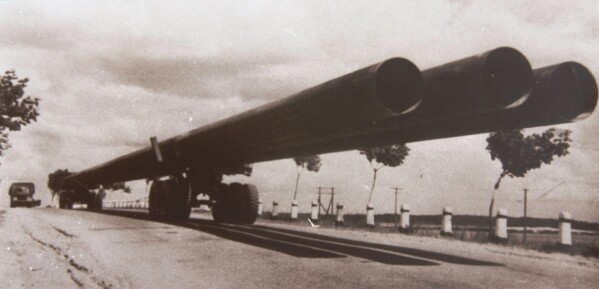
The fact is that, until its collapse, the USSR did not learn how to make high pressure pipes of high diameter. This is quite complex and high -tech products. The simplest technologically technologically spiral-lodge-one-lodge and direct-haired-two were able to make, helped specialists from Czechoslovakia. Single-sewing-straight pipes of small diameter and low pressure-knew how to do.
But so that all at once - the single -haired direct -haired high pressure of large diameter (which are just needed for large pipelines) in the USSR did not know how to produce at all. The USSR was forced to import these strategically important products from abroad, in colossal quantities. And not from the socialist GDR, since there, too, they did not know how to make such pipes, but from the more developed in technical terms of West Germany.
It turns out that the union could not even master the strategically important technology, but most of the country's GDP had the import of raw materials. By the way, the cursed capitalists that ruined the country were still able to master this technology and since 2005 in Russia several new workshops for the production of this complex high-tech products-the direct-haired single-sewing pipes of high pressure of large diameter have opened at once.
Now Russia is fully self -expression of its large diameter pipes and even supplies them for export. The power of Siberia, the Turkish Stream, Northern Stream-2 and many other gas pipelines are built precisely from Russian pipes.
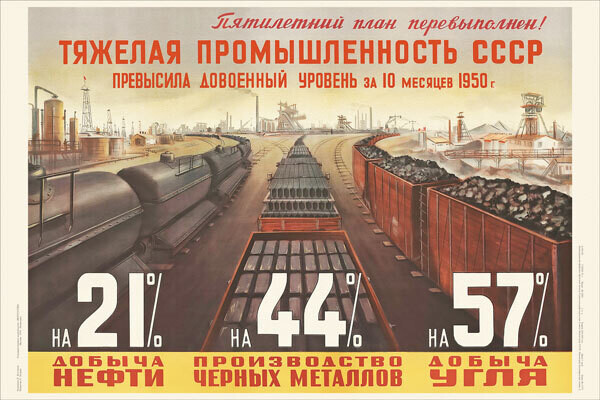
* * *Let us summarize: CCCR could not provide his citizens with cars, simple household appliances, books, public transport, high -quality food, electronics. Even strategically important industries - railway transport, gas pipelines, hydroelectric power stations, etc. were partially or completely acquired by abroad.
What did all these mega-wagons do who like to remember nostalgic? What did the country produce, which occupied 1/5 of all sushi on the planet? Where are the very economic indicators by which we should not only catch up, but also overtake the rotting West? What exactly was plundered, ruined, sold out damaged capitalists in the 90s? Maybe they finished off what was already slowly dying for thirty years?
#Longrids #USSR #parsing