Translated material
Foreign agents, undesirable, prohibited
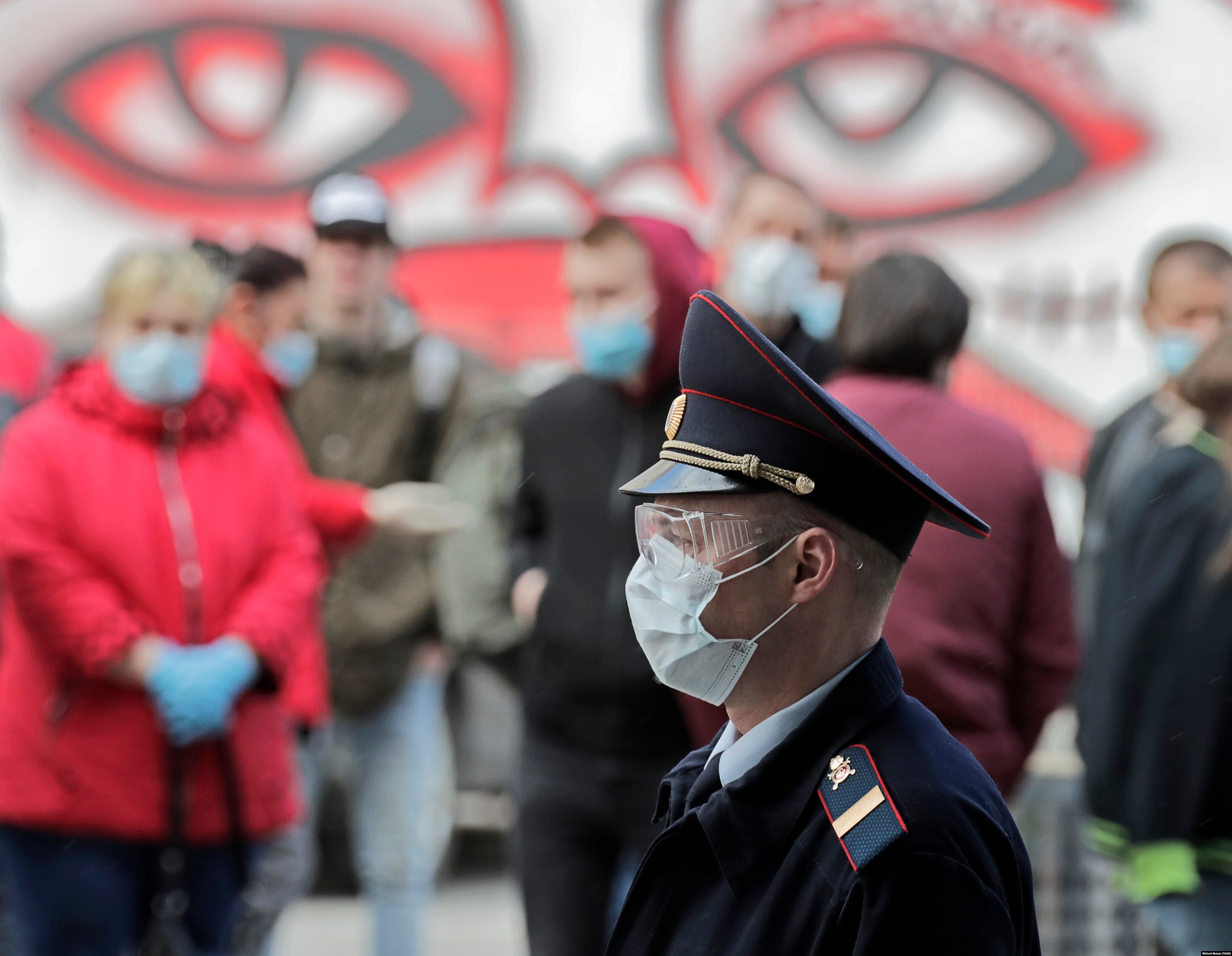
- Whom the Russian authorities declare objectionable and why the population is not interested in either repression or election campaign 2021.
- Why does the mincifers believe that users themselves are to blame for the loss of control of their accounts.
The number of objectionable multiplies
More and more people and organizations in Russia become objectionable to the authorities. Some, as the Internet publication "Project", which was recognized as "undesirable" last week, is forced to announce the closure. Others, tired of ongoing arrests, like members of the Pussy Riot group, are leaving the country .


Width PX Height PX
The url has been copied to your clipboard
No Media Source Currently Available
0:00 0:04:17 Download the media fileMore and more people and organizations in Russia become objectionable to the authorities
In the video, Galina Arapova and the sociologist of the Levada Center, Alexei Levinson (both organizations, call the Russian authorities, call "foreign agents", but their employees do not agree with this).
Video version of the program
Just the other day, the FSB of Russia tried to bring some clarity to the question of what private individuals can recognize as “foreign agents”, and a certain list appeared on the portal of draft normative acts, which must be focused on, collecting this or that information. Galina, is it now more understandable who and for what would be declared by foreign agents? Or the wording of this order, as well as the text of the law on individuals - "foreign agents", are so vague that everyone can become objectionable?
Galina Arapova: Indeed, the draft order does not make clarity much, unless it becomes clear that practically nothing can be written on topics related to weapons, military events, armed forces, luxury. This applies to that part of the legislation that establishes that “foreign agents” may be recognized as persons who carry out a targeted collection of information in the military, military-technical and military-industrial regions. At the same time, they have some foreign money or receive methodological and organizational assistance from foreign sources (say, a person has been provided to a person, he uses services, for example, foreign search engines, “google” information). That is, "organizational and methodological assistance" is not necessarily money. And if this information falls under the list of the 61st paragraph, then this person must immediately go and declare to the Ministry of Justice and join the list of “foreign agents”, and if he does not, it will immediately apply to Article 330.1 of the Criminal Code, and this is up to six years in prison.
Maryana Torocheshnikova: A conscript who will complain in his social networks that it was somehow wrong, from his point of view, they reacted to the military enlistment office, can fall under this legislation?
This puts on the line of the impossible work of the committees of soldiers' mothers
Galina Arapova: Yes, if he has foreign money or organizational and methodological assistance, as well as his parents and journalists who will write about it because there is an “information about the moral climate in the Armed Forces”, or “On Violation of the Law”, or “Information about the problems in the luxury”, which leads to the fact that something does not work out. In fact, this puts on the face of the impossible work of the committees of soldiers' mothers, organizations that help the parents of the dead troops.
One point aroused special interest among journalists, since it refers to information that it can cause damage to the security of the Russian Federation, analytics about the achievements of foreign companies in the space sector. It turns out that the comparison and analytics about the successes of others put our own state security in the risk situation. This is very strange! This draft order raises a lot of questions. It can be used in relation to a lawyer of a human rights organization that protects the rights of military personnel or a military journalist or analyst, and a specialist in the field of the military-industrial complex.
Maryana Torocheshnikova: This is actually a ban on the profession: you either give up and just in case write that you are a "foreign agent", or you just do not do it.
Galina Arapova: And at least you use Google, but Yandex to search for this information. And military journalism in such a situation will simply be forced to curtail all activity, well, the maximum of illuminating military parades, since the risk is very high.

It is impossible to report on the results of consideration of applications about crimes and criminal cases that military investigative authorities investigate. Say, the SLI dies, and its parents apply with a statement on the initiation of a criminal case. They are refused, and they will not be able to say about it. It can be about any financial crimes, corruption in this area, the death of a soldier.
Maryana Torocheshnikova: And then it will only be worse? Will new orders and lists appear?
I would not expect new lists, but replenishment of the register of "foreign agents"
Galina Arapova: If you are engaged in political activities and get foreign money, there is at least a backlash for maneuver: before you will be brought to criminal liability, there will be a “administrative”, a fine. And in the case of collecting information in the military-industrial sphere and in the field of work of Roscosmos this buffer as an administrative fine, there will be no criminal liability. Therefore, I would now expect not new lists, but replenishment of the register of "foreign agents" on this basis.
Maryana Torocheshnikova: Alexey, how do ordinary residents of Russia relate to this whole story with "foreign agents" and "undesirable organizations"?
Alexei Levinson: These events will have a significant impact on life in the country, but public thought has not yet been ripened: there is neither public protest against these measures, nor wide public support. In the mass folk consciousness, the "foreign" has positive connotations, if we are talking about consumer goods or comfort, and negative, if we are talking about political or moral matters. This idea is carefully exploited by all structures related to state security: there is almost automatically, by default, the "foreign" is "who wants to harm us." And if there is some kind of attempt to give this a nationwide sound, it will turn out as it happened more than once: "I have not read and do not know, but I’m ready to brand it."
Maryana Torocheshnikova: What is now the attitude to the phrase "foreign agent" among ordinary people?
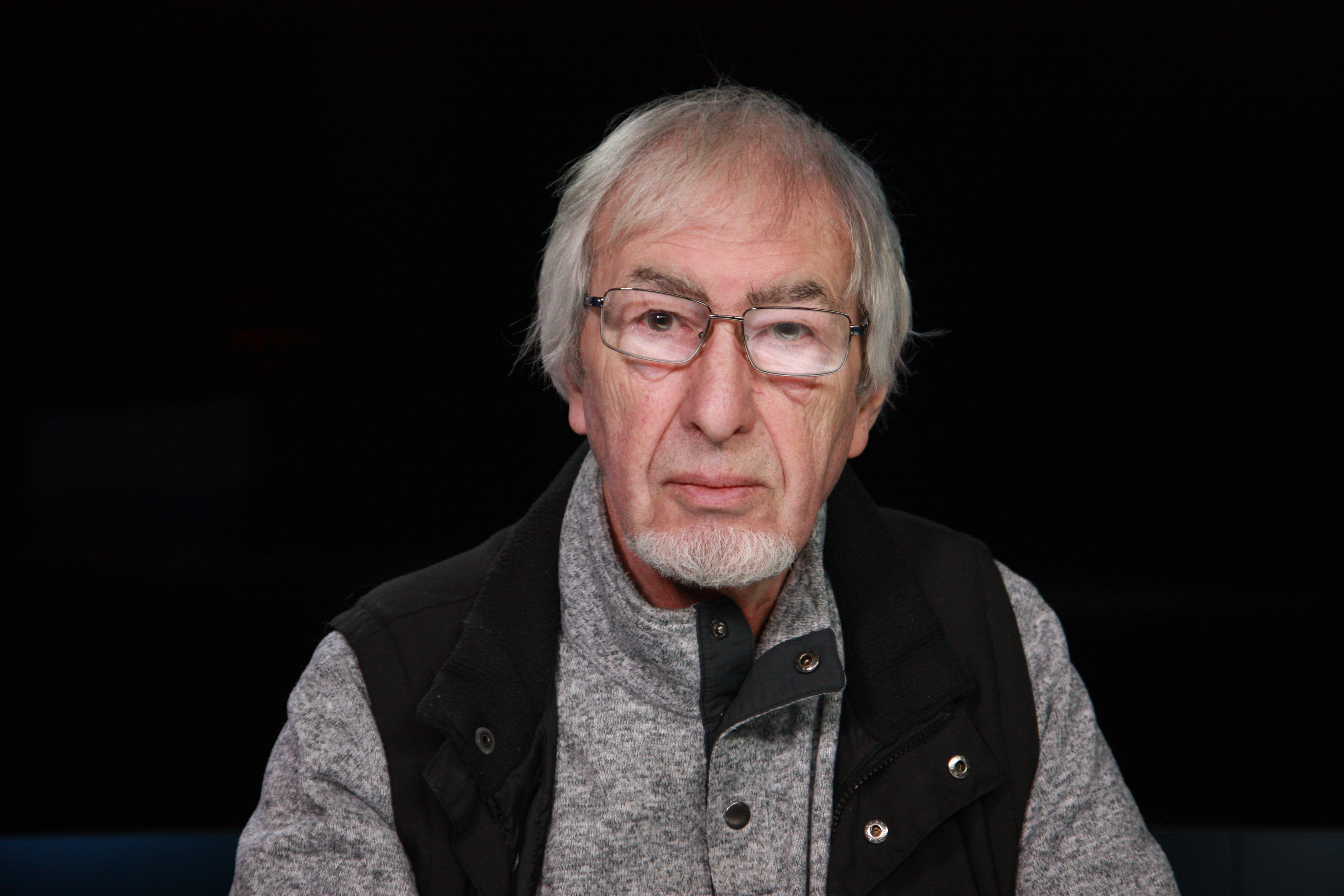
Lexy Levinson: A very small number of people encounter this phrase. The Levada Center was recognized as a “foreign agent”: we specially asked about the attitude to this and received meager numbers. About one tenth of our respondents spoke on this topic, and most of them said: people understand that this is a negative characteristic. But for the wide masses, among which our agency works, this is simply an insignificant circumstance, not at all what is important for their life.
Political scientists binds increased pressure on independent journalists and activists with elections to the State Duma
Maryana Torocheshnikova: Today in Russia, things are like this: if one organization is recognized as “undesirable”, then this does not mean that only its employees will suffer. The other day, the Community of the Lawyers "Team 29" , mainly engaged in cases in which citizens are accused of espionage and Stateismmen, announced the termination of the work. And all because of the letter of the Prosecutor General’s Office to Roskomnadzor, where it is said that the prosecutors identify “team 29” with a non-profit organization registered in the Czech Republic included in Russia in the list of “undesirable”.
There are other methods of pressure. This week, for example, an opposition deputy of the Moscow City Duma Yevgeny Stupin spoke about the threat of loss of lawying status.
We were joined by the municipal deputy of the Moscow district Kuntsevo Denis Shenderovich .
Denis, a number of political scientists connects increased pressure on journalists and activists independent of the Russian authorities with the election campaign to the State Duma, with the intention of clearing the clearing. Do you share this opinion?
Denis Shenderovich: The main repressions regarding possible opposition candidates have already been completed. For those who were allowed for a look, there is a danger of their further withdrawal from the elections for various occasions.
Maryana Torocheshnikova: According to your observations, how much is the Russians involved in this entire election campaign?
The main repressions regarding possible opposition candidates have already been completed
Denis Shenderovich: voters around me are quite active, they are aware of events and have a more or less true cut of information about what is happening. Now, nothing is particularly told about the elections. Those measures that are taken, the CEC, are also aimed at using the administrative resource as much as possible. They do not need a protest vote, no protest people need to come. The main task is to instill in people that everything is useless, that "we have already decided everything here, do not come to the polls, we ourselves will draw these voices."
Maryana Torocheshnikova: Alexey, according to the observations of the Levada Center, how much are the Russians involved in domestic politics, are interested in the election campaign?
Alexei Levinson: Except for a small layer of activists, then the audience is very little interested in the audience. Most of these people do not think at all exactly who to vote for. They will vote in order to demonstrate that they are true to this power, that the existing state of things suits them, they are afraid that it can change for the worst, and do not believe that it may change for the better. This is an overwhelming motivation to participate in the elections, no matter which ones.
There are very few people who would be vitally interested in holding their party to the parliament. Maybe in the electorate of the Communist Party or LDPR there are people who understand that you need to come and vote. There is no more to talk about who, because the electorate of the rest of the parties, including the "apple", is negligible.
Maryana Torocheshnikova: As far as I understand, people have already ceased to believe that something depends on their voice?
Except for a small layer of activists, then the audience is very interested in elections
Alexei Levinson: We had to talk with the participants in certain protests. The possibilities to express their opinion on these protests are also reduced each time. And those people who believe that it is no longer possible to go out for protests, it’s dangerous, to the question "what to do now?" They answer: "So, we must participate in the elections." That is, they went to protests because they understood: the elections are not an instrument, - n, realizing that the protest does not work, they return to the idea of elections. In general, there is a feeling that with ways of influence of society on power, it is very bad.
Denis Shenderovich: Unfortunately, Russian society has the opportunity to express their opinion and make their will they narrow every year, and now they have not actually left. I can hardly call democratic elections that will be held in September, taking into account a three -day vote and the fact that the CEC canceled video broadcasts and greatly limited access to them. These are three completely uncontrolled nights. These are practically cleared commissions. This is an electronic vote that no one can check in any way. I do not know how it can be called transparent elections.

But you still need to go vote. And I think people will go. Although the mood is such that, unfortunately, there are no options. The number of candidates was not allowed when the people can say: “Yes, these are our possible representatives in the State Duma,” and of those who are admitted, most likely units will pass, that is, they will not have any political force in the part of the five-year laws in this Duma, will not be able to represent the interests of civil society there.
You still need to go vote
Of course, there is an option to sit on the couch and wait until all this is somehow resolved until they come to your home. And there were such cases: the Russian Guard came home, and shot people from behind the roll of wallpaper. Of the two evils, you need to choose the lesser. And if there is at least one chance out of a hundred to compete for your future, for your civil and human rights, then it is necessary to do this.
Is it easy to hack "public services"?
There was Moscow, and became Chelyabinsk. Some users of the Public Service portal have discovered incredible metamorphoses with their own addresses shortly after the online primaries of United Russia at the end of May. Then the hacks of accounts were confirmed to the mincifers, writing off this on the frivolity of users who set simple passwords. But even a reliable password does not guarantee protection against outsiders to your account on "public services". So, for example, it happened with a resident of St. Petersburg, who is now trying to fight off a million duty.
In our video communication - an information security specialist, the head of the T.Hunter company's penetration department , Sergei Bureev .
Sergey, how is it possible - to hack "public services"? The data of millions of Russians are also stored there! They were promised that everything would be reliable. Is it possible to trust this portal now?
Sergey Bureev: I think yes. Still, the "public services" are made quite efficiently and safely. And the problem here is probably not in the weak portal protection system, but in the fact that the phone was lost and the user did not fully take care of the security of his data. There, perhaps, there was a very easy password, a light PIN code for entering the Public Service portal, or the user did not have time to change the password or exit the application. Yes, perhaps there are certain shortcomings in the "public services", but individuals are engaged in individuals who test the portal for safety, immediately associate with the developers, report and together they close all this.
Maryana Torocheshnikova: What is this story with the so-called "eternal token", some kind of set of symbols, which almost forever remains in the memory of the phone? And if you once went from him to the “State Services” application, then then anyone can go in. Is it possible to protect yourself from this?
Still, "public services" are made quite high quality and safe
Sergey Bureev: Token is stored on the phone, but in an encrypted form. This is a certain drawback, and the developers most likely know why this is done - to simplify the work or entry of the user. But along with this token, also in an encrypted form, a four-digit PIN code is preserved, which you introduce to get to the “State Services” portal. I think that in this case, the attackers understood the algorithm of work, perhaps they looked at the source code of the “State Services” application. It is enough to decipher this four -digit code, and then no token will not need that the attacker can enter the account.
Maryana Torocheshnikova: What should be done in this case to a person who decided to change the smartphone, and sell the old one to someone?
Sergey Bureev: First of all, you need to remove everything from the old phone as much as possible so that there are no traces of use, no tokens are preserved so that it is like new, with factory settings.
In information security, it cannot be safely argued that any system is 100% protected. Vulnerabilities have always been, is and will be. Special people who are looking for new vulnerabilities open something new every day: if it is now protected, then tomorrow there may already be a vulnerability that will steal data.
Maryana Torocheshnikova: What applications (sites) should I pay special attention to?
Sergey Bureev: These are all applications and sites that contain personal information, passport data, bank card numbers, everything that is personally connected with you. It is advisable to put a complex password there, if it is possible to install two -factor authentication, it is imperative to use it. At least once every couple of months it is worth changing a password, use different passwords on different services.
Maryana Torocheshnikova: In the 21st century, a person risks anyway if he uses some portals like “public services” or hubs, where in large numbers they collect his personal data, including banking services?
In information security, it cannot be argued that any system is 100% secure
Sergey Bureev: Yes. I can’t say that everyone is 100%protected. There is both an external and an internal attacker-some kind of unscrupulous employee of a company who, for his selfish purposes, can transfer your personal data to third parties.
Maryana Torocheshnikova: And the law enforcement system should already protect from this.