
Translated material
The main problem of Lithuania right now is illegal migrants from Belarus. There are more than 39 times more!
What kind of people are these, who helps them and why is all this Bulk Lukashenko? We retell the investigation of the migration crisis
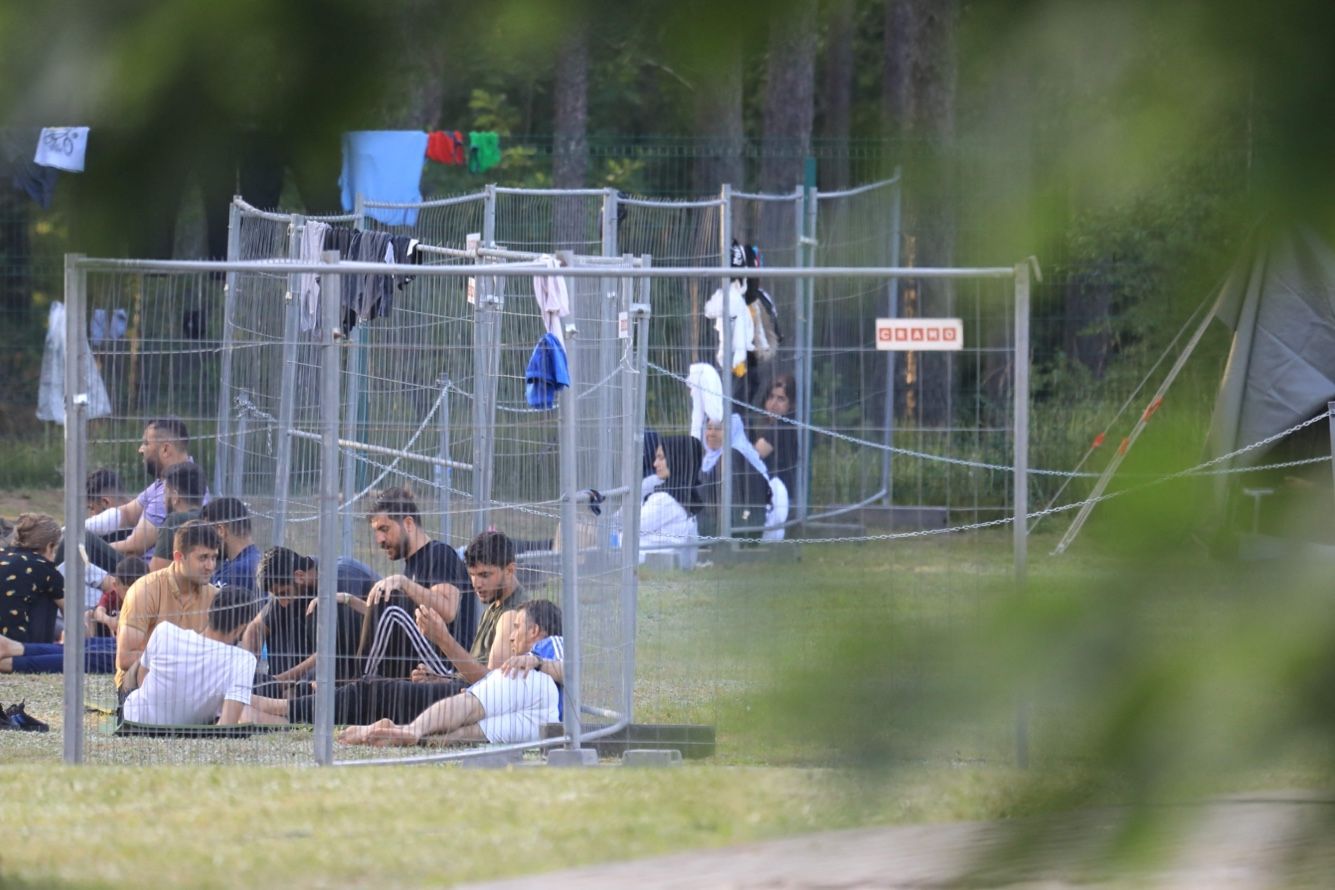
In the spring, a migration crisis began in Lithuania. Residents of the Middle East and Africa come to the country hundreds, and all through Belarus. Compared to last year, the flow of illegal migrants across the Belarusian-Lithuanian border grew 39 times. Lithuania has already accused Belarus of complicity with illegal immigrants, tightened the rules of stay for them and began to erect a barbed wire fence on the border. Several media - 15min and LRT , as well as the Belarusian Reform.by and the Mediazona Belarus - told how migrants get to Lithuania, how much they pay for this and from whom they receive help. Medusa retells these investigations.
For starters - about the situation with migration in Lithuania in general
In the summer of 2020, Lithuania, along with other countries of the European Union, did not recognize the results of the elections of the President of Belarus, whose winner Alexander Lukashenko was declared. Vilnius imposed sanctions against Lukashenko and gave refuge to his rival in the elections, the leader of the Belarusian opposition Svetlana Tikhanovskaya. Many Belarusians who left the country for political reasons after the election also moved to Lithuania.
In the spring of 2021, against the backdrop of a deterioration in relations with Belarus, Lithuania announced the growing stream of illegal migrants penetrating the country across the Belarusian-Lithuanian border. For the whole of 2020, 81 such a migrant was detained in Lithuania. By the beginning of April 2021 there were already 90 of them, and by the beginning of July- 800 . On July 28, 3145 people were detained who tried to illegally get to Lithuania through Belarus. How many migrants managed to cross the border is unknown.
Due to the migration crisis, Lithuania announced an extreme situation, requested the assistance of the European Agency for the Protection of External Borders Frontex and decided to build an additional barrier on the border with Belarus (the length of this border is 679 kilometers). The Lithuanians have already begun to build a fence with barbed wire, but the wire was not enough . Estonia and Ukraine volunteered to help her.
This is what Lithuania and Belarus say about this
Vilnius accuses Minsk of organizing the flow of illegal migrants. The authorities of Belarus specifically send foreigners to the Lithuanian border across one of the state tourist agencies, said Lithuanian Foreign Minister Gabrielus Landsbergis. And the Minister of the Interior Agnes Bilotaite called the growth of illegal migration "an element of the hybrid war."
Minsk rejects accusations of complicity with illegal migrants and assures that - as before - does everything to detain them. And the growth of migration is associated with pandemia and exacerbation of economic problems in the countries of the Middle East and Africa, said Sergey Rachkov, head of the permanent commission on international affairs and national security of the Republic of the Republic .
But the rhetoric Lukashenko is different from the rhetoric of officials. He openly says that the Belarusian authorities do not interfere with the illegal crossing of the Lithuanian border - and also explains this with a hybrid war. “We stopped drugs and migrants - now you yourself will eat and catch them,” he said in May, after an emergency landing of the Ryanair aircraft in Minsk .
“Today they [Western countries] howled. Ah, Belarusians do not protect them. Thousands and thousands of illegal migrants rushed to Lithuania, Latvia and Poland. <...> I want to ask, what are you there, crawled at all? You unleashed a hybrid war against us and demand that we defend you, as before? ”, Lukashenko added in June, shortly before the EU sectoral sanctions against Belarus.
In response to the sanctions, Belarus announced the suspension of an agreement on the reanimation with the EU. Now migrants from third countries who arrived in Lithuania through Belarus cannot be sent to Belarusian territory. They can only be deported to the country of their citizenship. In the case of migrants, which are now massively delayed in Lithuania, this is most often Iraq, Türkiye, Syria and Africa countries.
How migrants get to Belarus and how much it costs
Most of the migrants who are detained on the Belarusian-Lithuanian border are citizens of Iraq of the Kurdish nationality. From Iraq to Belarus, they most often fall into airplanes, like tourists. Direct flights between Baghdad and Minsk opened in 2017. And in May 2021, their number increased from two to four per week: to fly to Belarus not only Iraqi Airways, but also Fly Baghdad (each of them can transport from 200 to 300 people).
A resident of Iraq Amin (the name changed) told Reform.by that Lukashenko’s words that Belarus would cease to interfere with refugees seeking the EU for several days in a row on Iraqi television. Other Iraqi media, which follow the topic of migration, more often began to tell about Belarus. In addition, posts about the opportunity to move from Belarus to Lithuania began to appear in closed groups dedicated to migration.
Many Iraqis dream of leaving the country, so they hastened to take the opportunity and bought tours to Belarus, Amin said, explaining how the inhabitants of Iraq managed to find out so quickly about a change in Minsk’s policy.
According to 15min, now the path to the EU through Belarus in Iraq is considered the fastest and safe. The smugglers for the transfer across the Belarusian-Lithuanian border require, according to various sources, from five to 15 thousand dollars (however, there are also offers for 85 thousand dollars). For comparison: illegal entry into Europe with the intersection of the Aegean Sea should be eight to nine of the euro, with crossing the border in the Balkans-eight thousand euros, with the intersection of the Mediterranean Sea-three to five thousand euros.
According to smugglers, such “package tours” include the design of a Belarusian tourist visa, a flight from Iraq to Belarus, several days of living in a Minsk hotel and even excursions. As well as travel to the Belarusian-Lithuanian border and subsequent transportation from Lithuania to Germany-most migrants seek to get there. As journalists found out, local residents usually carry illegal residents in Belarus, Lithuanians, as well as immigrants from Ukraine, Georgia, Tajikistan and other countries living in the EU in Lithuania and other European countries.
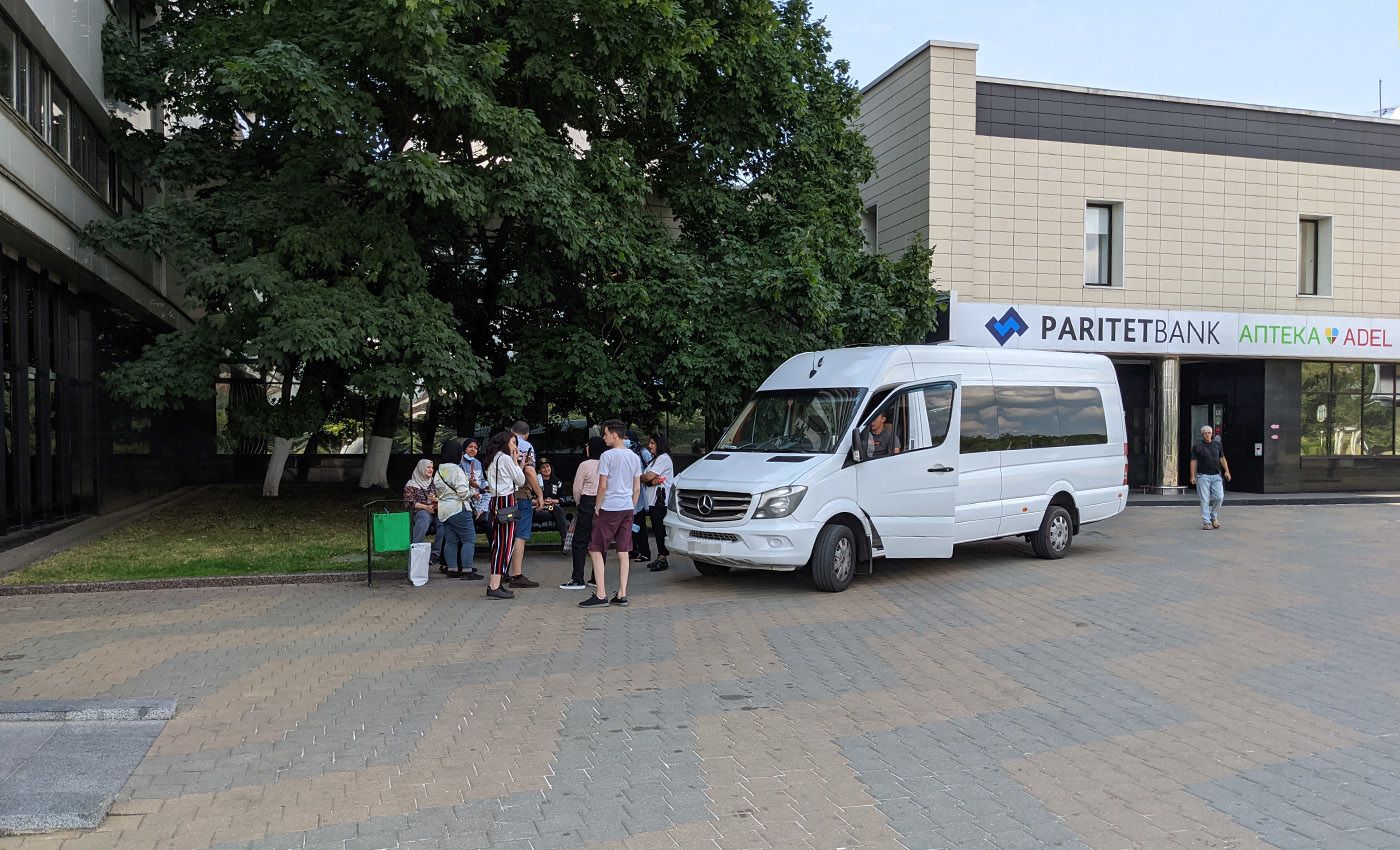
Some decide to come to Europe and cross the Belarusian-Lithuanian border on their own. It is harder and more dangerous, but cheaper.
The usual tour of Iraq to Belarus, according to Reform.by, costs $ 500-1500 (the publication notes that in recent months such tours have noticeably lost it, and demand for them has grown).
“It is interesting that the facilitation of the visa regime of Belarus with Iraq, thanks to which the visas for up to 15 days is issued almost automatically, occurred only three to four months ago,” said Makaraitite, head of the LRT Indrey, head of the Radio Liberty Bureau.
The tour includes flights, visa, insurance and hotel accommodation. Arriving in Minsk, foreigners spend some time in a hotel and are looking for a way to get to the Lithuanian border.
Some reach a taxi ($ 100-300), others choose a bus ($ 10-25). Then they - usually in small groups - cross the border, climbing over the wire fence. Places for the transition are either looking for themselves, or they are suggested by the conductor ($ 200-2,000).
Once in Lithuania, migrants are looking for a transfer to Germany. Carriers can take them from the border itself, but this rarely happens - usually migrants leave border cities or Vilnius, where they come on foot. It is worth transporting $ 500-1500 per person. But some are trying to get from Vilnius to Berlin and an ordinary regular bus, a ticket for which costs 60-70 dollars.
There are telegram and yutyub channels, where they give advice on how to get from Belarus to Lithuania (some videos collect 10 thousand views). They publish, for example, the contacts of the conductors and suitable places for crossing the border, advise how to dress (neatly and cleanly) and what to take with you (at least things). Some groups offer the manufacture of fake documents, including Lithuanian passports. It costs $ 2400.
This is what the instructions look like
Reform.by translated instructions into Russian on how to get to Europe. This instruction, as noted by the publication, was published in one of the Facebook groups. Here is its approximate content:
- You fly to Belarus from Baghdad.
- In Minsk, you rest for the first day, on the second - you go to the nearest point next to the border of Lithuania.
- After crossing the border in the forest to pay to get to Vilnius. You can rest there, but stay away from the police.
- You are going on a special car to Poland. Pay only after you are transported across the border.
- Choose a country in which you want to get a residence permit. Enter the local Arab groups in social networks. Find the truckers who will throw it to the right place.
- Do not chat in which country you want to stay to live, try not to catch the eye of the police, get dressed simply and neatly, behave modestly.
- When you get to the right country, come to state bodies. Say that you are a refugee. You will be made. Start preparing the necessary documents to stay there.
Belarus receives money from the inhabitants of Iraq who did not return to their homeland
The Belarusian version of the Mediazones and LRT in a joint investigation wrote that Iraqi travel agencies take from customers a security deposit of three thousand dollars as a guarantee of returning back. If a person does not return, the travel agency pays this key to Belarus in the form of a “fine”.
Reform.by partially confirmed this information. A resident of Iraq Zamir, an administrator of one of the groups for migrants in social networks, said that in some (but not all) Iraq travel agencies they really ask for a bail, but its size may be different - and three thousand dollars and $ 1400. According to Zamir, sometimes the bail is paid by the tourist himself when buying a tour, and sometimes this money is charged from his family if he did not return to his homeland.
The head of the LRT investigation bureau Indra Makaraitite told the Belarusian version of Radio Liberty that Belarus receives money for a non-driving tourist through the Belarusian consulate in Baghdad.
“We calculated that once in Lithuania there are already almost 900 illegal migrants from Iraq, the Belarusian regime received at least two million euros from this scheme,” she said.
And Belarusian border guards ignore illegal migrants
Reform.by anonymously talked with two Belarusian border guards. Both talked about unofficial instructions to turn a blind eye to illegal immigrants trying to get to Lithuania.
According to one of the sources of the publication, earlier for the detention of such people, employees of the border service were awarded, and now they stopped. In addition, with the illegal immigrants themselves, they used to be more strictly: they compiled an administrative protocol and placed in specialists before deportation. Now they are simply released. The interlocutor Reform.by claims that border guards do not like it.
Recently, the authorities are indicating that border guards plan outfits in a certain way. This means in such a way that there are peculiar windows through which illegal immigrants can pass. There are no direct instructions from the authorities, but when, for example, you say to the boss that the right flank is not covered in the border zone, he replies, they say, nothing terrible, and does not take any measures. <...> It is clear that smuggling and illegal migration are put on stream. <...> As a result of all this, a large outflow of personnel is underway, many people do not extend the contracts.
Another source Reform.by confirmed the words of a colleague.
From the authorities there was an order in orally - to turn a blind eye to illegal migrants, to detain only in cases where they are completely impudent and try to go almost through the checkpoint. For ordinary border guards, of course, this does not like this, and people still try to detain the violators. <...> By the way, now instead of border guards to protect and patrol the border, they put [the consumption of border troops], and it is quite possible that the special forces themselves show the migrants where to go.
15Min, citing the words of migrants, notes that on the border with Poland the situation is different - there Belarusian border guards, as before, detain illegal immigrants.
In addition, the publication notes, earlier the KGB controlled the stay of Iraqi tourists in Belarus. The special service received their lists and monitored movements. Now, according to the interlocutor of the publication, there is no such practice.
At the same time, some Belarusian travel agencies (in particular, the Centercuroral State Agency) collect passports of arriving Iraqis. However, this is hardly hindering this: some migrants specially tear their passports before crossing the border, believing that without documents they will have more chances to get asylum.
Despite the evidence that the Belarusian authorities at least do not interfere with illegal migrants to make their way to Lithuania, Reform.by said that he did not find "visible traces of the organization of illegal migration flows by someone from Belarus."
As one of the evidence of this version, the publication led a dialogue with the Iraqi migrant Amin, who came to Belarus with friends to get into Lithuania on his own. While in Minsk, Amin threw Reform.by journalist a photo of the schedule with the schedule of city buses and asked: “And which of them go to the border?”
Lithuania tightens the rules for migrants
At the end of July, the Lithuanian authorities adopted a law that limits the rights of illegal migrants. It reduces the term for consideration of petitions about the asylum and deprives the suppliers of the right to appeal to the decision of the court of first instance.
Human rights activists said that this law violates human rights. The President of Lithuania Gitanas Nauceda agreed, adding that, according to his assessment, the law is “holey”.
“However, now it would be more dangerous to have a holey policy regarding illegal migration. Now it is better to have such a law than not to have any regulation, which provides a means to curb the extreme situation on the border of Lithuania with Belarus, ”he said, asking the Lithuanian Sejm to correct the shortcomings of the law in the near future.
The fact is that Lithuania is obliged to place illegal migrants on its territory who got into the European Union through its territory and submitted petitions for asylum. The country's authorities should also provide migrants with housing and food.
In case of refusal to asylum, Lithuania is obliged to deport migrants to the countries from which they arrived. And the expulsion to the states of the Middle East and Africa is a long and difficult procedure, the head of the Bureau of Investigations of the LRT Indra MacAaraitite explained to Radio Liberty .
As a result, Lithuania is no longer enough places for migrants detained after the crossing of the Belarusian-Lithuanian border. They were settled in empty rest houses, in camp sites and in schools.
For them, tent towns began to be erected. The Lithuanian authorities say that migrants have already fled from a tent camp in the city of Pabrad. The conflicts between migrants and the administration began at the center of accommodation in Ignalin (according to the mayor of Ignalina, the migrants refused to eat and demanded to return mobile phones to them). And in Dinishkes, residents came to protests against the resettlement of migrants in one of the city buildings.
Migrants themselves complain of restriction of freedom, poor living conditions and a lack of medical care in the sites of resettlement. “All people detained in this building suffer psychologically,” Ryan from Iraq told Mediazone.
According to him, among migrants there were already attempts by suicide (Reform.by also writes about such attempts). Another Iraqi citizen Elias added: "I already fled so as not to be in Iraq, who is like a prison, but here - the same thing."
Olga Korelina