
Translated material
Operations instead of taxes
Why is it beneficial for participants in a market economy the desire of the head of the Stavropol traffic police to have a gold toilet
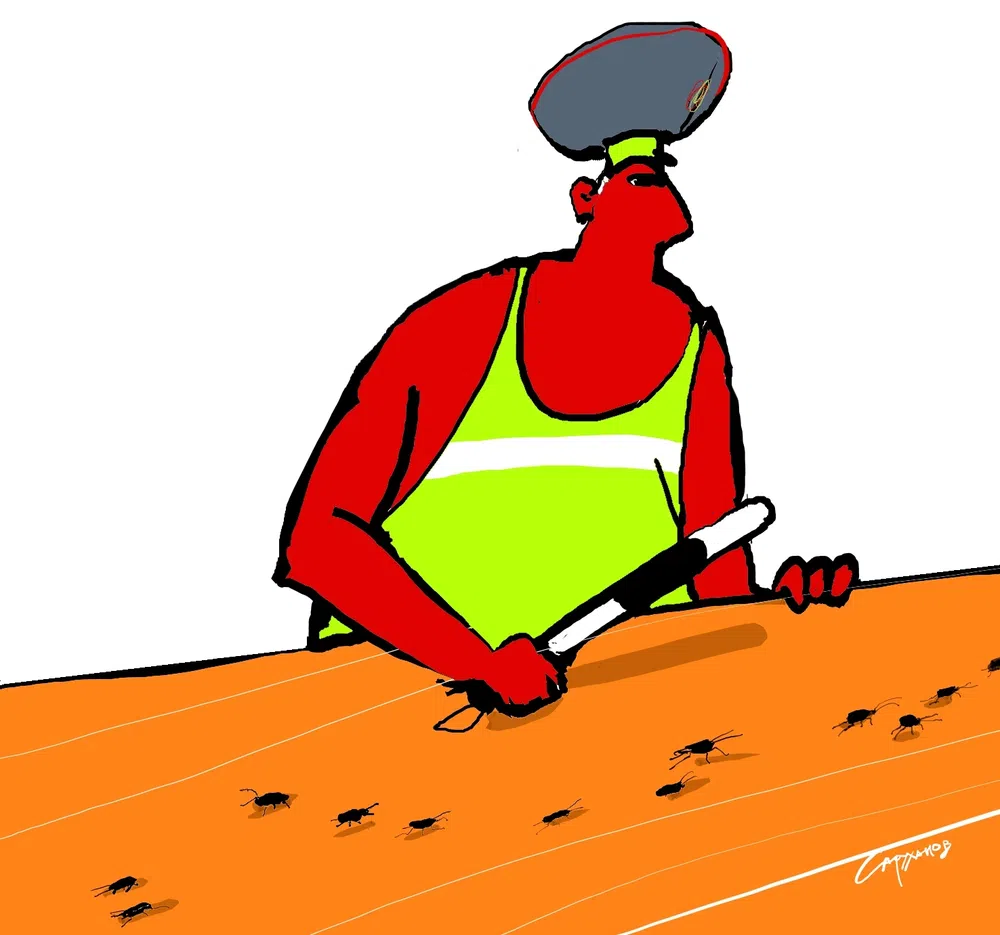
Do you know what first conclusion the economist draws by reading headlines such as “income of corrupt officials per year reaches 100 billion rubles”, or at least a sensational story about the estate of the head of the Stavropol traffic police? There is money.
A business that pays their corrupt officials has this money. And consumers who pay for products, transported, according to a number of media and speakers of law enforcement agencies, “with violations of legislation”, have money.
This is a necessary reservation - "according to the statement." An employee of the Stavropol traffic police was not convicted, and living in a house with a gilded toilet is not a crime yet. Yes, we understand that the “salaries of the colonel” could not be enough for such mansions, but the specifics of the remuneration of civil servants is a special story.
Often they say, they say, if not for bribes, prices would decrease. This seems obvious, because the entrepreneur lays the costs of bribes in the price of manufactured/sold products.
But who told you that an entrepreneur freed from bribes should reduce prices for this amount?
The seller wants to sell the goods at the most profitable price. What restrains his desire to increase the price? The degree of readiness of the client to pay for his product or look for an alternative. Plus, the degree of availability of this alternative, that is, the level of competition. But the lack of taxation is not an argument in favor of reducing prices.
Yes, both bribes and taxes are the costs of the entrepreneur. But the product in the market is really sold at the price that the buyer can pay, and not for the one that the seller wants to appoint. With a bribe or without a bribe, the amount on the price tag will be one that you are ready to give for the purchase. It may seem high, but the fact of acquiring something means that for a person this product is more important than money.
And if there are no bribes, this does not mean that the goods are cheaper. Sellers have no motivation to reduce the price in this situation.
Theoretically, winning the economy may be different here: the entrepreneur released from bribes will increase the profit that he will spend - for example, he invests in a business expanding or buying a gilded toilet. But it can also be said that the bribe received by the police will return to the economy: he will somehow spend this money, and someone will work on it.
And why, instead of paying taxes, instead of paying the state, paid (supposedly!) A bribe a bribe responsible for checking compliance with the rules?
Because, in this case, the costs of paying the bribe were lower than the costs of compliance with the rules. This is how the line is for some kind of product-a sign of its lack in the market, and a bribe for the possibility of violation of the rules-this is a sign of problems with these rules.
Not a bribe, but a patronage - as in the Middle Ages
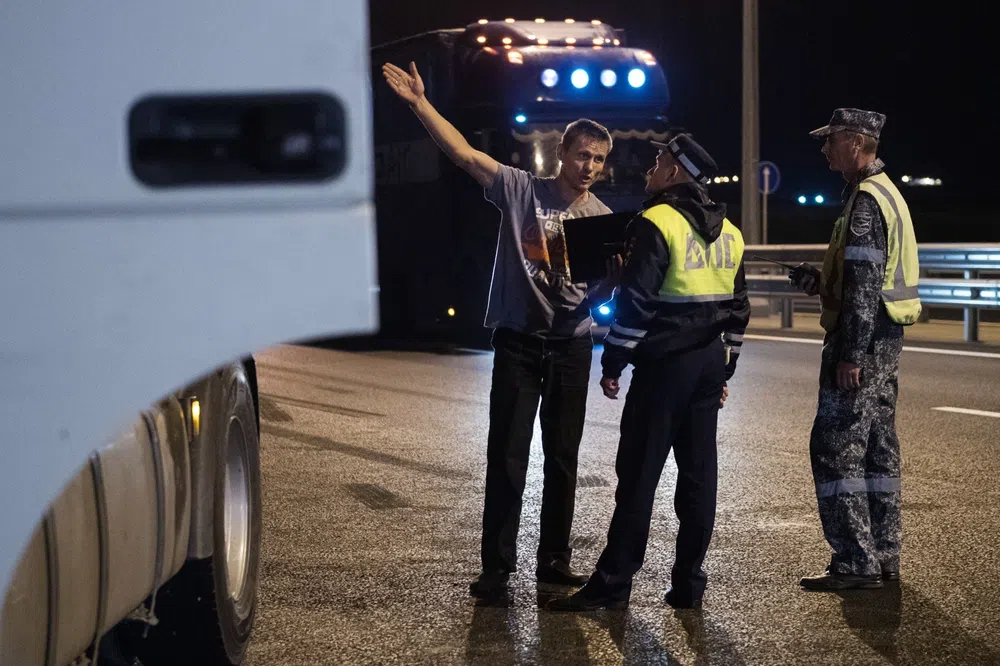
“ According to the current legislation, fines from 100 thousand to 500 thousand rubles are set for overload (total or axial). In such a situation, it is easier to give a bribe ten times less fines and calmly pass without checks of weight control and traffic police posts , ” writes Znak.com
Here is a description of the consequences of bribes for fares of trucks with violation of the weight regulations, which is given by the “new”: “ There is a batch of cars with license plates“ 818 ”, at the posts they know what kind of cars they are, and do not touch. Another distinguishing feature is the windshield signs: man, “reef” or “May”. This means that the car is “paid ”.
But this picture will cause the economist not indignation, but the question: how is such a system different from the purchase of travel licenses?
The fact that the fee for such “licensing” settles in the pockets of the traffic police, and does not go to the budget? But the economy, by and large, is indifferent: bribes or taxes (for business this is one and the same) - costs.
Moreover, as the study says “the influence of the administrative load and participation of business in corruption on the revenue” by M. Yu. Malkina (NSU named after Lobachevsky) and V.N. Ovchinnikova (NIFI of the Ministry of Finance of the Russian Federation), published in the journal of the New Economic Association (2020, No. 3 (47): “... and corruption, and prolonged interaction with regulatory authorities (including lobbying private interests) can be considered as monetized practices of commercial activity. In other words, each of them was the investment of companies in expanded proproduction their business processes, accompanied by certain costs in the form of financial costs ... ”
In this case, the “bribe”, from the point of view of the economy, is the so -called Protection is an instrument for regulating relations between economic entities, ordinary for the Middle Ages.
In the framework of medieval orders, a tablet behind the glass of heavy vehicles is a guarantee that the entrepreneur received from the defender (“tread”).
What did such a tread from? For example, from the actions of the central government, which established a tax or a fine that does not correspond to the level of solvency of the entrepreneur and his customers.
The glass in the glass received for a certain bribe is a certificate confirming the distribution of risks between the entrepreneur and his “defender”. The entrepreneur paid for guaranteed travel on the road, the “protector” (in the person of the alleged traffic police officer) assumed the risks of ensuring its transportation (a guarantee from a fine for non -compliance with weight load standards).
A bribe or "improving efficiency"?
No, you say, fines are installed to motivate the driver to comply with the rules: “A truck with five axes cannot transport a load more than 40 tons by highway”, and roads and bridges are “killed” due to overload.
Stop, it doesn't work like that. If trucks drive with a half -time overload, then their owners consider the risks of such a trip acceptable.
And people in the form who receive money for the travel of such trucks, from the point of view of the economy, help to distribute these risks in an optimal way. Yes, in this way. What would you like?
You want the “roads and bridges” not to be killed ” - then make travel on these roads paid for everyone: weigh the cars before entering the track, and let the one who weighs them receive half the amount from the fine for the overload.
Or even 90%. Will there be too much? What do you want - efficiency or equality of income?
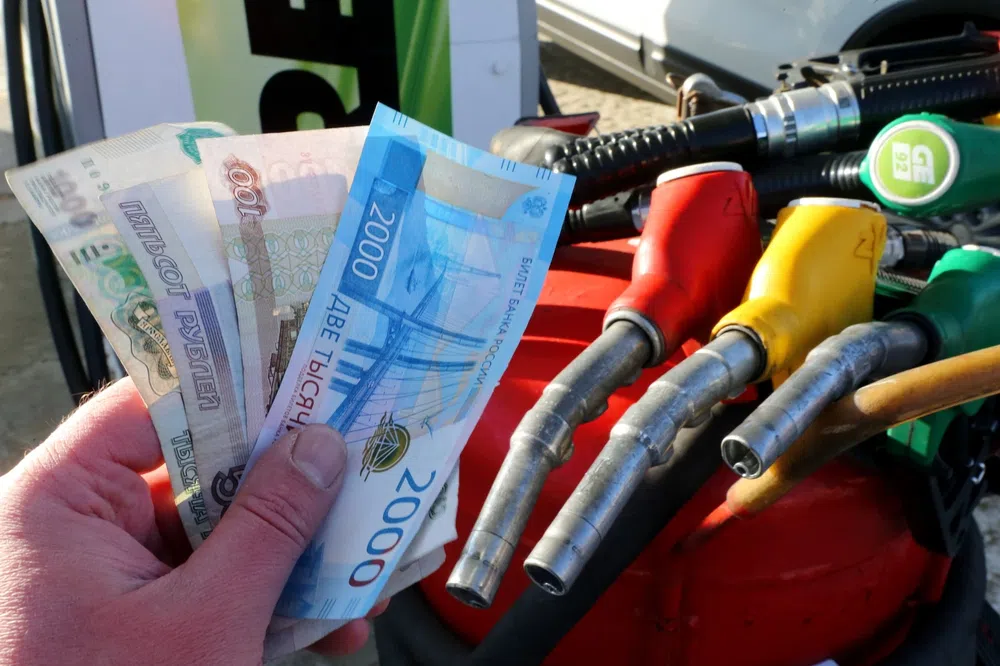
Talking about bribes, people often forget that the “corruption policy” (let's call it like that) is targeted. How does this work? With police officers checking the compliance with the weight regime for trucks, a small part of the total number of drivers is faced. An even smaller part of drivers overloading their car is faced with the proposal to “resolve the problem” for a bribe, but the situation when police officers apply any sanctions against the driver is even more rare. Do not drive a heavy truck - you will not face corruption. A bribe is, in essence, a targeted tax, you like it or not.
But the tax policy is another story. Imagine a situation in which all drivers will begin to observe the weight regime. No overload - no bribes. The first consequence will be a reduction in the volume of cargo transported at a particular moment in time, that is, a reduction in the supply of goods, which will immediately turn into the increase in prices for these goods. And everyone will have to pay.
So, people in the form on the road and requiring money from truck drivers, from the point of view of the economy, carry out the function of optimizing the tax burden, taking into account local market realities. If you do not like this - well, an alternative can be a flexible tax policy in the field and the actual powers of regional administrations and legal lobbying for private interests. You can’t deceive the economy.
But if you want an “non -corpsed police” - this is a more difficult topic. For another article.