
Translated material
Grow a cutlet in a test tube is not a problem
But is the world ready for the revolution, which is carried by the artificial meat industry
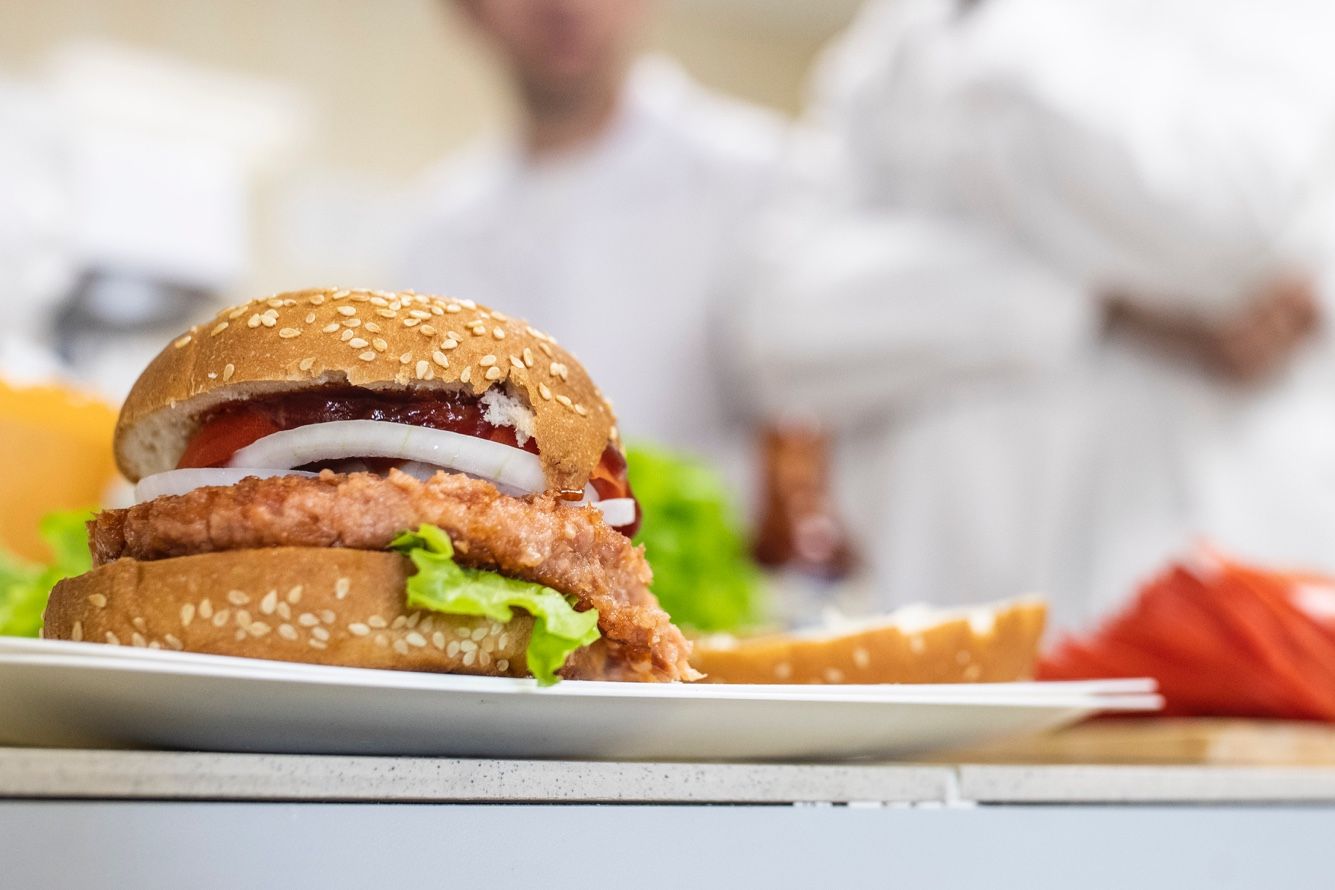
Can humanity completely abandon livestock and switch to meat "from a test tube"? Two scientists from the University of Duke in the USA, political scientist Yan Dutkevich and sociologist Gabrielle Rosenberg, published a large article in the post-livingitical world in The Guardian about what benefits and threats are carried by the developing artificial meat industry, which can completely change the world in which we live and used to. "Medusa" retells the content of this article.
“We will avoid the absurdity of growing a whole chicken only to eat her leg or wing - growing these parts separately in a suitable environment,” Winston Churchill wrote in the futurological article “Fifty Years later”, published in Strand Magazine in 1931.
His prediction began to come true even ahead of schedule: the first “synthetic” meat was created in 1971 - the American professor Russell Ross raised an in vitro smooth muscle of a guinea pig. But the heyday of various projects related to the cultivation of meat in laboratory conditions happened later.
The general public saw the first prototype of the product of artificial meat in 2013 - they became a buckthrough cutlet created by a research group from the University of Maastricht. His presentation was held in a private club in Singapore. And in December 2020, Eat Just from San Francisco introduced the world's first commercially affordable artificial meat-anyone could already buy it.
Most of the projects for growing artificial meat are grouped in world technological centers like Silicon Valley; They are supported by technodes and venture capitalists, who over the past ten years have invested more than $ 7 billion in alternative proteins, including about $ 900 million in artificial meat.
The Maastricht cutlet for Bourger was partially financed by the co -founder of Google Sergey Brin, Bill Gates, Richard Branson and other famous capitalists are engaged in the propaganda of artificial meat. At the same time, a traditional large business is already being pulled into the new industry: the pharmaceutical giant Merck is investing in the Mosa Meats project, and Tyson Foods meat giant buys a share in Upside Foods.
There are already quite a few companies producing artificial meat in the world: they grow layers of cow, pork, poultry, fish, crab, shrimp, bison muscle cells. The technology is already here, it works - but, Dutkevich and Rosenberg ask the question, what can it bring?
World without catch and slaughter
Artificial meat enthusiasts believe that the world without cattle and poultry farming will become much better: greenhouse gases will be reduced, the tangible fraction of livestock gives, pollution of water bodies and soils with antibiotics and other chemicals will stop.
Moreover: in their opinion, the main prerequisites for the appearance of new zoone infections - such as coronavirus will disappear. People will stop cutting down the forests and destroy ecosystems for the sake of fields for fodder crops; Refusing to catch fish and seafood, people will leave the world ocean alone. In the end, the abandonment of livestock will reduce the amount of suffering on the planet - and at the expense of animals that will cease to kill for the sake of meat, and at the expense of workers' farms and cattle, which now work in often terrible conditions.
Skeptics tend to believe that the new agricultural revolution will not cancel the main vices of the modern industrial system: its opacity and dependence on a handful of transnational corporations, on the protection of which are the army of lawyers - and which, in fact, dispose of the contents of our stomachs.
But the artificial meat is larger than the arguments, and ultimately, the main restraining factor on the path of the growing industry of artificial meat is the high cost of the final product.
Now traditional livestock breeding wins due to the gigantic scale of production and large monopolies that can afford both dumping and minimal expenses for the payment and labor protection of workers.
According to the calculations of the Open Philanthropy Foundation, for successful competition with livestock breeders, artificial meat manufacturers need to lower the price for a product that we could call “something like beef”, at least to $ 25 per kilogram. Now the cheapest of all existing options cost around $ 37 per kg.
The problem lies in this "something like." Modern technologies allow you to grow in bioreactors not juicy steaks or chicken legs, but a homogeneous mass of muscle cells - not particularly tasty and devoid of texture of real meat. It is similar to raw materials for chicken nuggets - a finely ground mixture of meat scraps, fat, skin, connective tissue and offal. Even with a minimum cost of $ 37, artificial nages are exorbitantly expensive - simply because the “natural” nages cost the manufacturers in real pennies.
Dutkevich and Rosenberg believe that it is possible to reduce the price of artificial meat only by investing significant funds in scientific research, and subject to mandatory state support of potential manufacturers.
They indicate historical experience: American agriculture in the 19th century helped to raise huge investments in research and the business itself. The modern “orange belt” of California, for example, appeared as a result of significant investments in R&D - breeders gave money, and they learned to grow Brazilian oranges on American land. Around the same years, investments in the selection of corn were made the United States as a world leader in the production of corn - which they still remain.
Dutkevich and Rosenberg also indicate more modern examples: in particular, the experience of Israel and Singapore, in which it is state support that allows you to release artificial meat, if not by competitive price with traditional livestock breeders, then at least much cheaper than in other countries. Singapore became the world's first country to allow the wide sale of chicken meat grown in a test tube.
The authors of the article in The Guardian believe that the future artificial protein industry will not do without state regulation: production standards must be developed and adopted that guarantee the quality of the product and exclude the possibility of using livestock products. Now many artificially grown cutlets are not fully artificial: as a nutrient medium for cell growth, they often use the blood serum of cow embryos.
This approach cancel the advantages of the created industry - ethical, environmental and economic, so scientists should look for other nutrients, and lawmakers should provide control of this, according to Dutkevich and Rosenberg.
In the future, it is also necessary to protect a huge number of livestock workers, which will be without work as a result of a mass transition to an artificial product. Butns, livestock specialists, veterinarians and other qualified workers will have to retrain to bioreactors operators, and the state should stimulate new companies to hire such people to work; Both lawmakers and trade unions should play an important role in this process, the authors of the article are sure.
In addition, it is important to think about food security issues in advance: technologies that literally will depend on the lives of billions of people in the literal secrets of the new (or old) food industry titans, Rosenberg and Dutkevich are sure - all information about artificial meat should be open and accessible.
This is one of the serious arguments of the critics of the advancing “meat revolution” who believe that it will lead us to a world in which irresponsible and poorly controlled corporations will feed the population of the land with a product of dubious quality, released using secret technologies.
The irony is that the world in which we have been living for a long time is suitable for this description, the authors of the article note. And at least the world in which the meat will be grown in the factory will become more favorable for animals and the environment.
Anastasia Cartogasheva