Date
Author
Светлана Прокопьева; Софья Рогачева
Source

Preserved copy
Translated material
"The need for freedom." Censorship was replaced by arrests
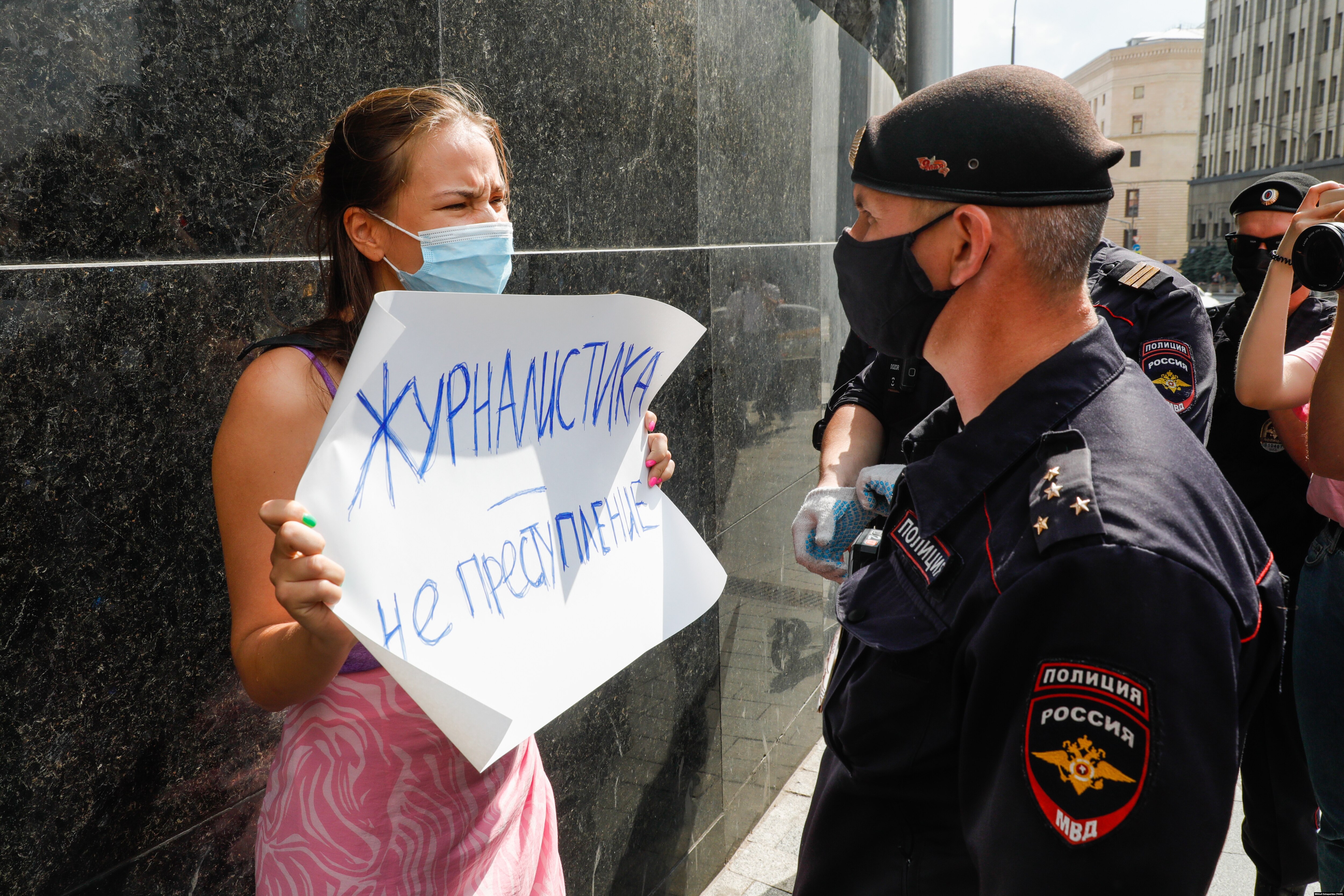
On this day, 31 years ago, the Law of the USSR "On Press and other media", which canceled censorship, entered into force. Over the years, the Russian media have grown up, multiplied and got stronger, mastered new formats and genres. Today, censorship is officially prohibited, but the state actually declared war on independent journalism. And today, 31 years after the abolition of censorship, Yasen Nikolayevich Zasursky died, without which it is impossible to imagine the Faculty of Journalism of Moscow State University, which raised more than one generation of independent journalists.
The history of Soviet censorship began on the third day of the October Revolution. On November 9, 1917, the Council of People's Commissars issued the decree "On the Seal", which gave the revolutionary government the right to eliminate the bourgeois press as "one of the most powerful weapons of the bourgeoisie." The maternity leave emphasized that not all publications, but only some of the three reasons would be closed. They were formulated, however, were not too clear, and in a matter of years hundreds of newspapers and magazines ceased their existence, "sowing the turmoil through a clearly slanderous perversion of facts."
The temporary nature of the decree was emphasized. It was promised that he would be canceled with "a special decree on the onset of normal conditions of public life."
“Normal conditions”, apparently, came only in 1990 - in the last year of the life of the Soviet Union. Before that, in the entire media sphere, and in culture as a whole, Glavlit reigned-censorship applied to periodicals and books, including those imported from abroad, and films, and scenarios of films. Glavlit ceased to exist after the entry into force on August 1, 1990 of the Law "On Press". “Print and other media are free,” the new law proclaimed.
His life was short -lived - the USSR soon collapsed. In the Russian Federation, in December 1991, the Law "On Media" was adopted. He also proclaimed the freedom of print and directly forbidden censorship - and for a long time helped the editorial offices and journalists to defend freedom of speech.
But the state went the other way. In 2008, after taking control of all federal television channels and largest newspapers, Roskomnadzor was created. Based on the laws "On the Protection of Children from Information ...", "On Combating Extremist Activities" and others, the quasi -Cascenery department blocks sites and fines the editors - usually critical to the authorities. On Monday, July 26, all media projects of Alexei Navalny were blocked, for example, including Roszhkh and Rosyama sites.
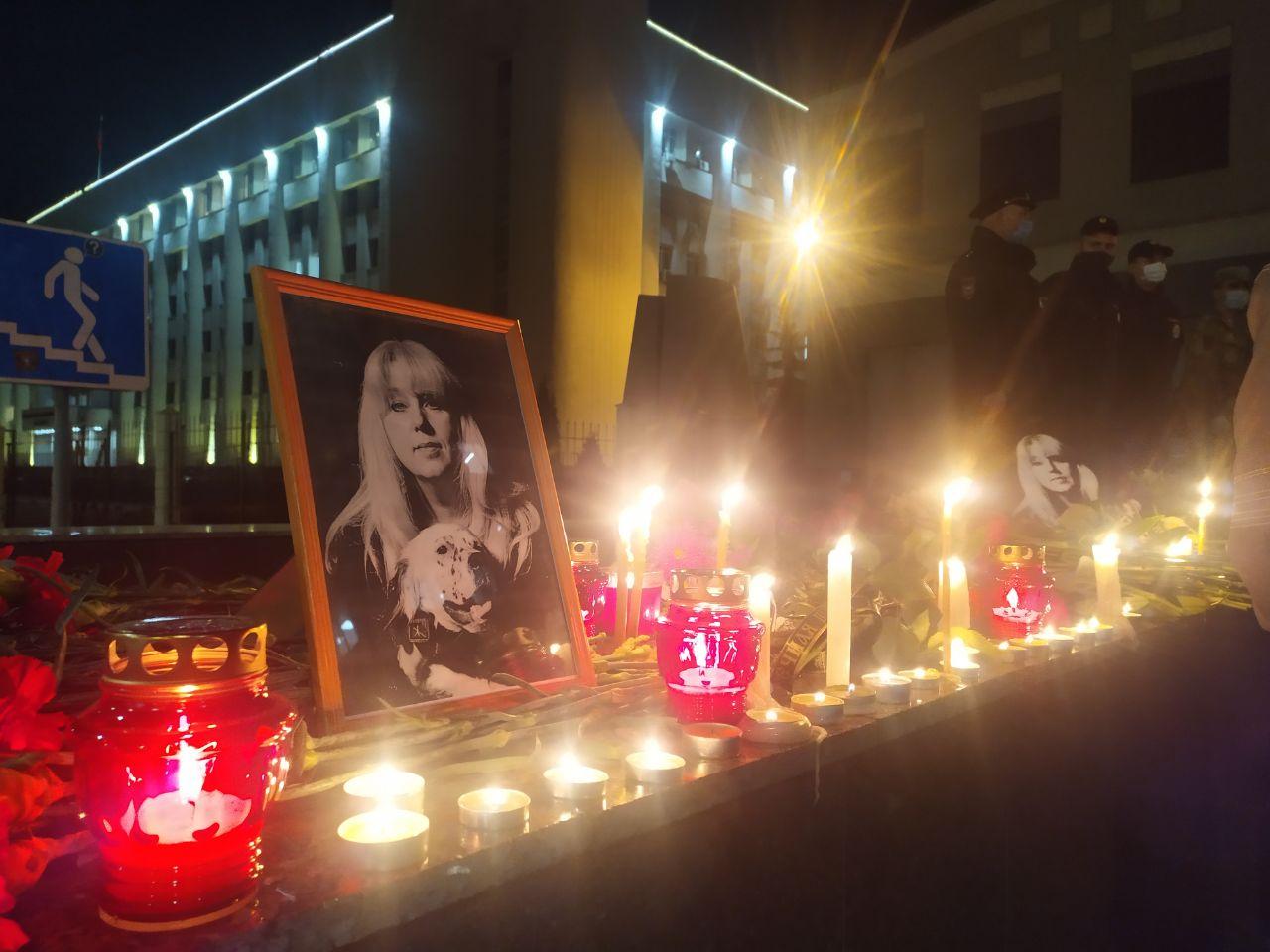
Nowadays, the Criminal Code has become the main tool for censorship. Medusa journalist Ivan Kolunov nearly went to prison on charges of selling drugs, which he simply threw him. The co -author of this article Svetlana Prokopyeva was convicted under the article “Justification of terrorism” for the author’s column with reflection on the reasons that prompted Mikhail Zhlobitsky to blow himself up in the reception of the Arkhangelsk FSB. The former correspondent of the Kommersant newspaper Ivan Safronov has been in a pre -trial detention center on charges of Gosizmen, although the essence of the crime is still not clear to his colleagues and lawyers. Just the other day, the police came to the house of the editor -in -chief of The Insider Roman Dobrokhotov in a criminal case of slander, then leaving Dobrokhotov in the status of a witness. A year ago, a search from another “witness” journalist ended with a terrible tragedy: the chief of the Nizhny Novgorod site “Goat Press” Irina Slavina burned herself in front of the building of the Ministry of Internal Affairs. “In my death, I ask you to blame the Russian Federation,” she wrote on Facebook.
The state announces those journalists who can not be attracted to criminal articles by “foreign agents”. Until December last year, in the status of "Media-Ino-Agent" were only the editors-"Voice of America" and all projects of Radio Liberty. This year, the list was replenished with Medusa, The Insider, Vtimes and others. But even earlier, the list of "individuals-in-foreign agents" began to be filled out. To date, it consists of 18 people. The grounds on which the journalists fall into this list are not clear, and the consequences discriminate: this is the need to create a legal entity, once a quarter to report to the Ministry of Justice about all his expenses and “political activity” and, under the threat of a fine, put a long and bulky attitude to literally every publication, even in the media, even in social networks: this message (material) was created and (or) widespread by foreign The media that performs the functions of a foreign agent, and (or) a Russian legal entity performing the functions of a foreign agent.
How do journalists be saved from this hybrid censorship? And is it possible to escape?
"He will ask the Ministry of Justice of explanations"
The Union of Russian Journalists - the heir to the Soviet Creative Union - is considered the loyal authorities and, accordingly, an authoritative organization. Its chairman Vladimir Soloviev is part of the Presidential Council for the Development of Civil Society and Human Rights. "The main task of the Union of Journalists, according to the Charter of our Union, is the struggle for freedom of printing and freedom of dissemination of information, no matter how pathos it sounds," he says.
According to him, the SJ several times a week reacts to signals from the regions about the facts of censorship.
“Almost every day I sign the papers to the investigating authorities, the General Prosecutor's Office, the Investigative Committee, the police, and the heads of the regions in which I indicate such facts,” says Solovyov. -And most often, nevertheless, the situation is fixed, as it was just recently, just a few days ago on Sakhalin. The regional leader decided to dismiss the newspaper editor. We also turned to the prosecutor's office. And after that, the governor came to the place, figured out and fired this official.
On July 25, two days later, as the Ministry of Justice supplemented the list with the latest portion of individuals-in-foreign agents, the Union of Journalists published a message on his website: "The Human Rights Commission in the Information Sphere of the Council of the Russian Federation on the development of civil society and human rights will ask the Ministry of Justice of explanations on recognizing a number of Russian journalists-foreign agents."
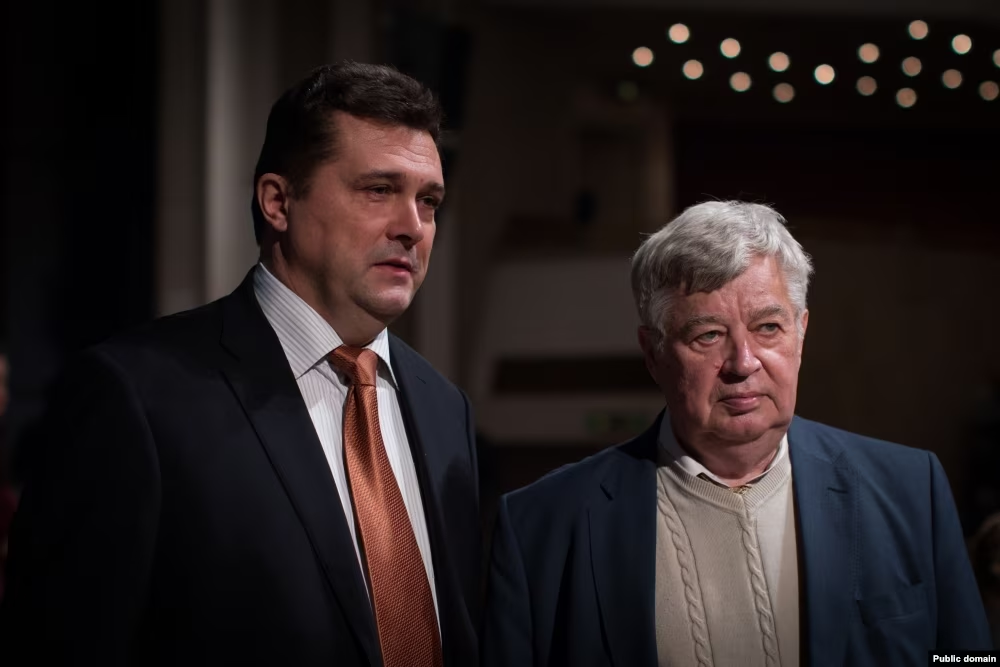
“We are against any restrictions that prevent journalists from working,” Soloviev comments, “both foreign and our Russian, working for foreign media domestic media and Russian journalists working abroad, against which various similar measures are also used. According to the study of our lawyers, every time an individual or the media enters the register of foreign agents, it does not explain why this is happening. There are no specific facts to become clear why the individual or the media falls on this category. This, of course, greatly worries the entire journalistic public, because each of us probably once had contacts with foreign colleagues, and some received, perhaps, fees from foreign media. I myself, for example, when I was a loser in Yugoslavia, there were direct inclusions on the Radio Freedom several times, I talked about the situation in Yugoslavia. And they even sent me a little fee. What, after that I had to declare a foreigner?!
Throughout the country, or in the situation with foreign agents-it is quite difficult to influence something here
- The Union of Journalists is an influential organization. Do you feel the opportunity to influence this situation?
-We are still a public organization. But the union has authority. And our statements, at least, work on the use of censorship at the regional level, and officials are punished or dismissed. But on the scale of the whole country, or in the situation with foreign agents-it is quite difficult to influence something. Nevertheless, I am joining the Council of Human Rights under the President of the Russian Federation. And each time when communicating with the president - this happens once a year, usually at the end of the year - this situation is once again informed by the president. His answers can be studied in the transcript of the conversation of the HRC and the President.
"Achovaya situation"
The independent trade union of journalists was registered by the Ministry of Justice in 2017. It was created by a group of colleagues, since "official structures do not want or do not dare to affect unpleasant topics and protect the injured journalists, especially in the North Caucasus and in Chechnya." The main tools of the trade union are open letters, petitions and pickets. The latter, because of the pandemic, are impossible today, says the chairman of the trade union Sofya Rusova:
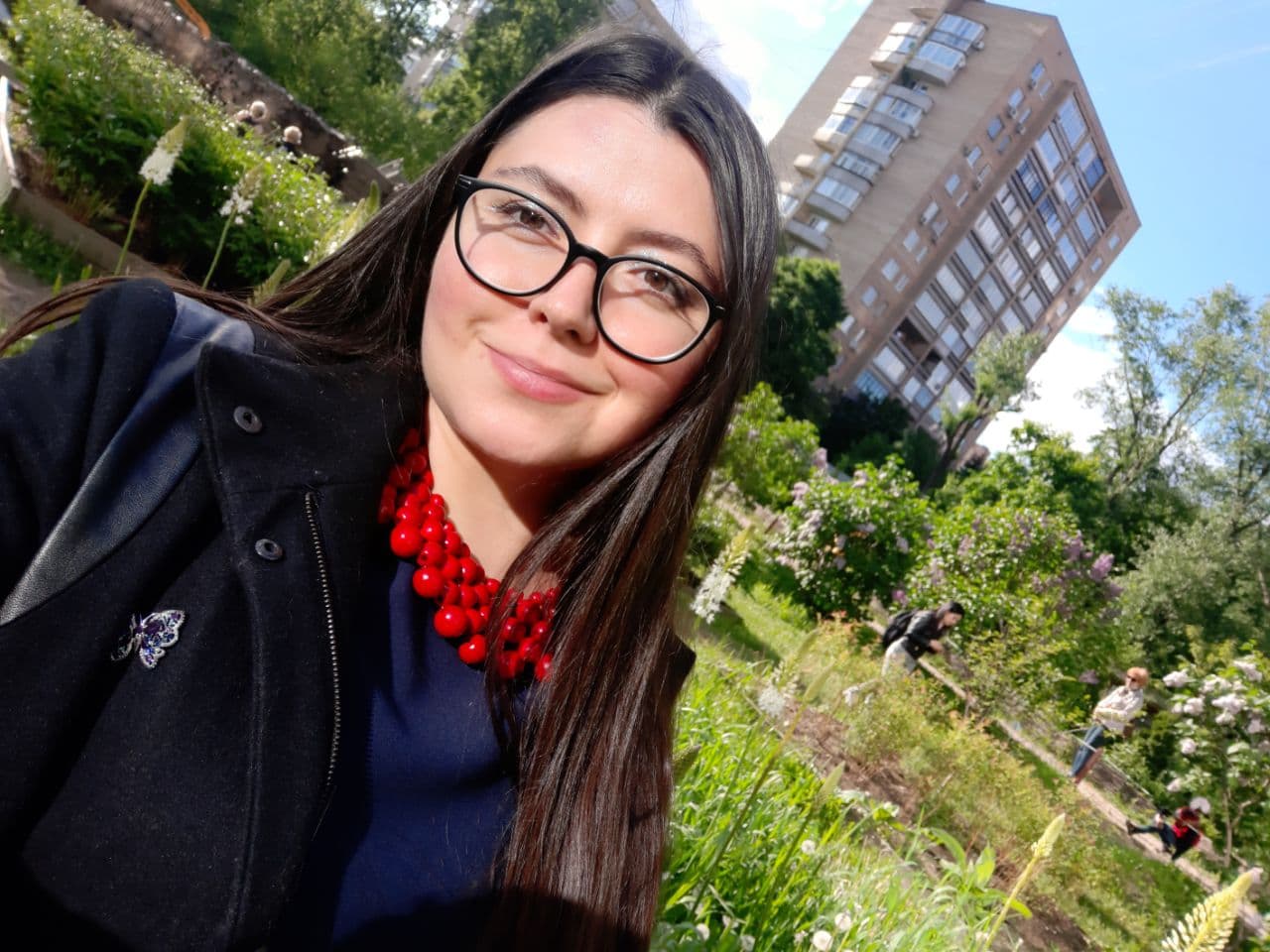
- Of course, shares of solidarity are important and necessary. Many times this year I wanted to go to some pickets, organize a rally. But now covid restrictions, I hope they will once end and public policy at least a little, including in support of the media will return.
- What can make a journalistic community to support those colleagues who are subject to pressure and discrimination?
I hope that we will survive until the time when the media will be free and independent again
- The trade union of journalists exists as an organization of independent people who understand the value of freedom of speech, freedom of expression and understand that censorship is unacceptable. We try to draw attention to stories related to regional journalists, because when something happens in Moscow with large publications, this gets into the information field more, officials immediately pay attention to. But Russia is a very large country. The trade union is needed, including that all stories related to pressure in the regions, in small cities become public, so that no one from the authorities could say that with freedom of speech and the rights of journalists, everything is fine with us. No, everything is very bad with us, the situation is asthaya. The number of media is reduced, I know a lot of stories when people cannot register a new media for a number of reasons. We must be careful about each other in the profession. I admit that we can have different political views. But the views on the fact that the institution of the media should be independent of the state and defend the interests of society - this is the main thing that should unite us. I hope that we will survive before the time when the media will be free and independent again, and journalism will be a prestigious profession in every sense, including from an economic point of view.
"Society fell into apathy"
Pen-club is an international non-governmental organization uniting professional writers, poets and journalists, which protects their rights. Members of the Pen-club undertake to oppose any suppression of freedom of speech in their country and wherever possible.
On July 17, Pen-Moscow and the Association "Free Word" made a joint statement against freedom of speech in Russia.
"Eight of our colleagues-journalists are included in the list of individuals-foreign agents. This is Roman Badanin, Julia Yarosh, Maxim Glikin, Julia Lukyanova, Maria Zheleznova, Peter Manyakhin, Olga Churakova, Elizabeth Maetnaya. In addition to endless and meaningless reports to the Ministry of Justice, this practically excludes the possibility of working in any officially recognized media, for them, He pushes the leaders of the profession to the side of the information field, ”the statement said. The recognition of the American organization Project Media, Inc., the publisher of the Russian investigative site "Project", the authors of the application regarding the destruction of the most important investigative resource. The document notes that the main losers are our fellow citizens, the same "ordinary readers and spectators", whose interests are referred by the authorities. It is their horizons that is artificially narrowing, it is precisely their constitutional right to know about what is happening in the country and the world from various sources.
A literary critic, a culturologist, a media expert, a member of the St. Petersburg Pen-Club Nikolai Podosokorsky emphasizes that the soil for today's persecution of the press was prepared for 20 years.
- These 20 years were not just gone - the first to hit the professional communities, of which they were squeezed out of the disloyal, assigned the right people in the leadership, and under control in different ways. Therefore, instead of surprising today, why different professional communities are silent, you just need to watch how they degraded or in which direction they developed all this time, ”says Podsokorsky. - Now there are many different organizations, associations and public movements nominally, but in fact those who are engaged in real human rights - we see how they get, how different shortcuts are glued to them, from foreign agents to unwanted organizations. This is, in fact, a general tragedy.
Cases about which one can be outraged-someone was arrested, someone was searched, someone was declared an ino-agent-so much that you do not even have time to react in personal quality
- Is it useless to fight?
- No, why - do what it should, and be what will happen, but the whole question is in effectiveness. You can count human rights structures on the fingers that do not have a label of a foreign agent are not under some criminal cases. This is a "mediazone", although it has already been submitted to it, the "OTD-info", which is also about to declare a foreign agent, the Moscow Helsinki group, our Pen clubs, St. Petersburg and Moscow, but we see, especially taking into account the experience of Belarus, that all these organizations are also under the blow. From the media remained "New Gazeta", "rain" and "Echo of Moscow" - one radio station, one newspaper and one television channel. The rest are either closed or are on the verge of closing. That is, almost no one is left. And the cases about which one can be outraged-someone was arrested, someone was searched, someone was declared a foreigner-so much that you do not even have time to react even in personal quality.
According to the director of Pen-Moscow Nadezhda Azhgikhina , she herself testified to the court about the announcement of the media protection center, which is headed by Galina Arapova.
- It was a couple of years ago, I testified twice for Galina Arapova, went to Voronezh, and I am glad that not only public organizations, but also representatives of law enforcement agencies, stood up with me. Because Galina as an expert helped everyone. I then said that it is not only not a foreign agent, but the largest patriot, because it performs the work that, in theory, some kind of state structure should perform. This is a work on informing journalists about modern legislation, on how to work with it. I consider the inclusion of the Center for the Protection of Media and other human rights organizations in the register of foreign agents a big mistake. As for the media-foreign agents and people, which are included in this register (there is even my former student) is just nonsense.
-Pen-Moscow made a statement-what else can be done?
When a society is indifferent, when it does not consider an attack on a journalist its problem, this is the biggest problem
- Well, we live in the society in which we live. It seems to me that the biggest problem in Russia is not that this list of foreign agents exists, which is expanding completely absurdly, but that our audience does not believe that this is their problem. It seems to me that the lack of an understanding of the problem of freedom of speech as its daily and necessary problem, the lack of understanding of the protection of human rights as its own need is the biggest misfortune of modern Russia. Yes, the legislation is changing - when society insists on this, but when society is indifferent, when it does not consider the attack on the journalist its problem, this is the biggest problem. I have been watching this for a long time, but it seems to me that it will change, that we will return to common sense, that people will understand that what is happening in the country concerns them. We have done a lot in order to marginalize journalists, human rights activists, civil society, to suggest that it is not important that these are people who decide something with each other, that this does not concern you-it was done quite technologically. But I hope that the unity of people will return. I like, as Dmitry Muratov says-that in the late 1980s, people and journalists looked in one direction, and then something went wrong, and people began to look the other way. That's when they look in one direction again, we will have another situation - it depends only on people. And I hope to survive before - maybe it will be much earlier than you and I think. And now, probably, experience is accumulating. In Russia, they never lived so full. This experience must be experienced, and after satiety there is something else, other needs arise-in dignity, in freedom, in free press, in discussion. Because the need for freedom and justice belongs to the basic needs of man.
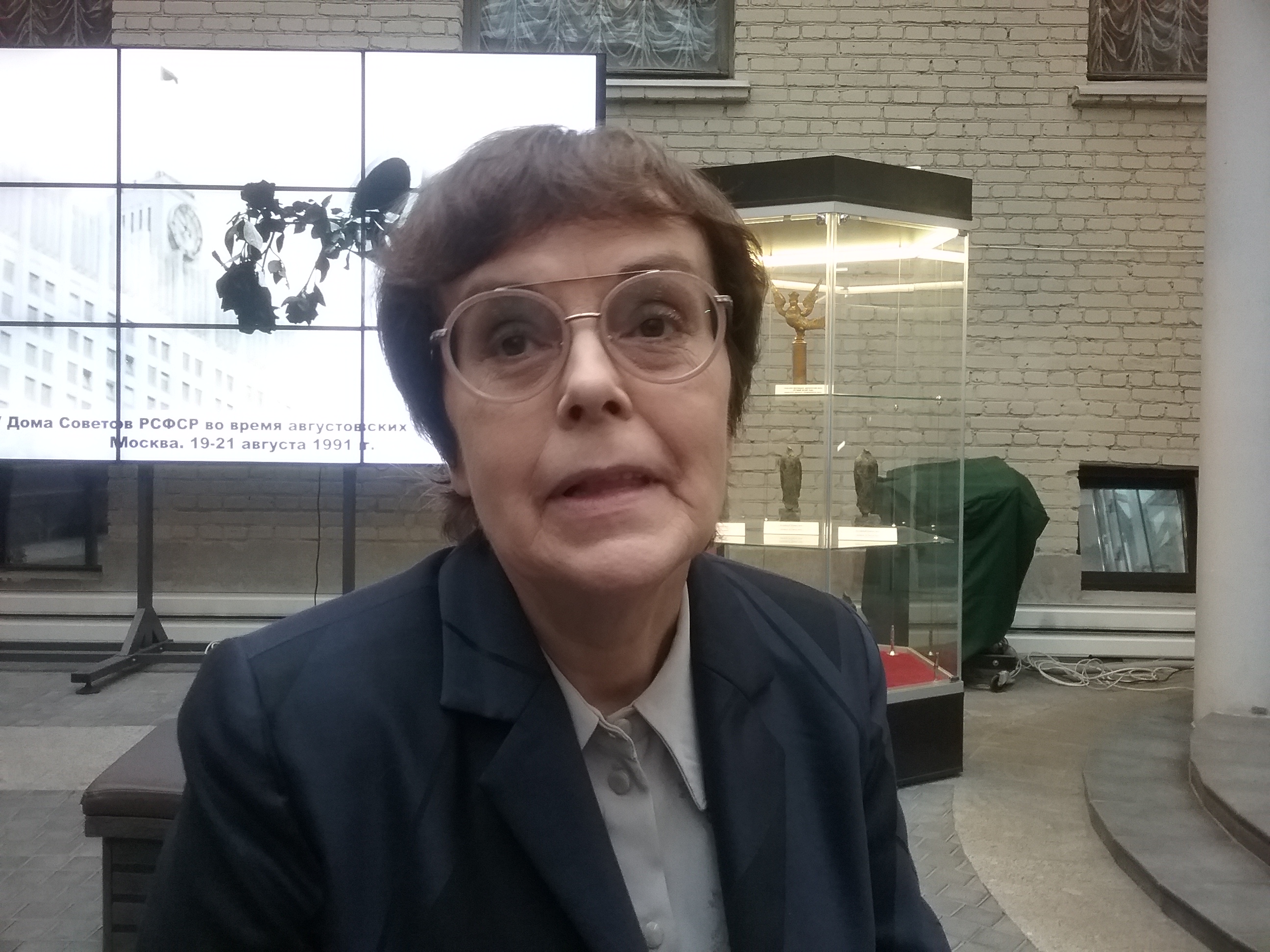
“Recently, our society has fallen into apathy,” says Elena Chizhova, director of the St. Petersburg Pen-Club. - On the one hand, this is our society, on the other hand, this is a reaction to the winter dispersal of demonstrations that have become the last surge of civic activity. Я не ожидаю больше ничего такого и думаю, что большинство людей, которые раньше интересовались этими проблемами, сейчас занимают такую позицию, что надо пересидеть. У многих мыслящих людей возникает ощущение, что власть закусила удила, плетью обуха не перешибешь, и люди погрузились в унылое застойное состояние. Втянули головы в плечи – мы же видим, каким репрессиям подвергаются все не втянутые головы. До сих пор идут эти "санитарные", "дворцовые" дела – все это привело к гражданскому унынию.
Что может сделать писательская организация против этого катка?
Петербургский ПЕН-Клуб – это все-таки не политическая организация, и на все события мы реагировать не можем, мы не средство массовой информации. Хотя свое отношение к этому мы давно высказали. Что может сделать писательская организация против этого катка? Это печально, но не хочется выглядеть необоснованным оптимистом. У меня у самой тоже очень пессимистические настроения, и в этом смысле я понимаю гражданское общество.
– Неужели Петербургский ПЕН-Клуб не собирается выступить в защиту только что объявленных иноагентами журналистов, в защиту The Insider и других СМИ?
– Я не вижу в этом необходимости. Логика развития нынешних событий была задана еще в 2014 году.
"Надежда только на ЕСПЧ"
Воронежский Центр защиты прав СМИ сам стал иноагентом еще в 2015 году. В отличие от многих других НКО, кого постигла та же участь, Центр не закрылся, а сумел продолжить работу с этим статусом. Сегодня юристы Центра консультируют и защищают в судах редакции и журналистов по всей стране – от Калининграда до Магадана.
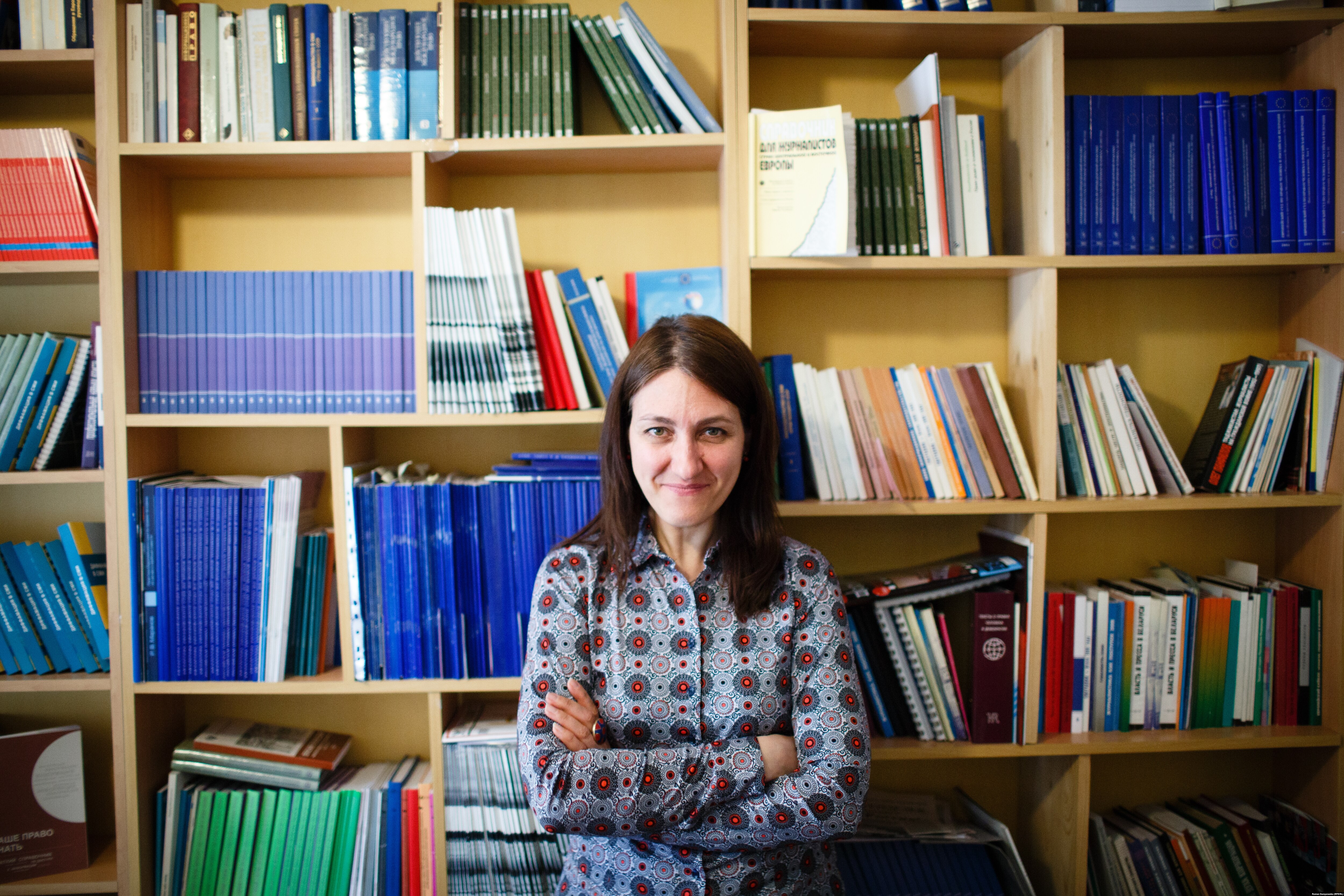
– В последние годы все сложнее защищать в судах журналистов, многие дела, связанные с прессой и свободой слова, особенно если речь идёт о распространении информации в интернете, воспринимаются судами как политические, – говорит руководитель Центра медиаюрист Галина Арапова . – Если стороной в деле является Роскомнадзор (а таких дел все больше и больше), то суды удовлетворяют требования РКН почти в 100% случаев, не особенно разбираясь.
Концепция свободы слова и права на доступ к информации не обсуждается, не рассматривается как ценность
Это можно объяснить общей тенденцией в государственной политике считать интернет опасностью и местом, где распространяется всякий хлам, от детского порно до фейкньюс. В восприятии населения, включая и судей, плотно заложена концепция информационной безопасности и что государство борется за чистоту Рунета от опасной для нас, и в особенности для детей, информации. Концепция свободы слова и права на доступ к информации не обсуждается, не рассматривается как ценность. Поэтому и судебная практика в такой атмосфере ориентирована на поддержание усилий государства и его органов власти в борьбе за информационную безопасность. Судьи стоят на стороне государства и Роскомнадзора, длительность среднестатистического судебного заседания по делам о распространении информации в Интернете редко превышает 10–15 минут. Поэтому у журналистов остаётся одна надежда – добиться справедливости и защитить своё право в Европейском суде по правам человека.
Добиваться справедливости в суде, по словам Араповой, еще удается по искам о защите чести и достоинства – к этой категории дел судьи подходят не формально и выслушивают аргументы защиты: "Здесь у нас процент выигранных дел до сих пор очень высокий, больше 90%".
Арапова считает, что само понятие цензуры в современной России пора переосмыслить – сегодня это уже далеко не "согласование материалов до их публикации", а принципиально другой набор инструментов давления. "Неоцензура" – это, в том числе, и контроль над интернет-провайдерами и операторами мобильной связи, которые создают техническую площадку для обмена информацией.
– И если контролировать их, можно вырубить, как мы знаем, любой канал связи. Именно таким образом работают блокировки, – поясняет юрист. – И это новые, мощные инструменты неоцензуры, которые государство использует очень эффективно, начиная от национализации всего федерального телевидения, контроля над контентом через административное давление, через государственные контракты с региональными СМИ, когда они конкурируют уже не за аудиторию, не за рекламу, не за подписку, от которой они получают доходы, а за бюджетные субсидии.
Такого не было даже во времена, когда официально существовала та самая изначальная цензура
И безусловный инструмент цензуры – это непрерывное введение новых и новых тематических ограничений на распространение то одного, то другого контента. Осознание редакторами того, как много стало юридических санкций – то нельзя, это нельзя, Роскомнадзор, прокуратура, которые тебе угрожают блокировкой, штрафами, – вызывает колоссальное повышение уровня самоцензуры. Даже тогда, когда нет прямого указания сверху, редакторы, журналисты уже боятся что-то писать, потому что они понимают, что если поднять эту тему, то завтра придут и к ним, заблокируют их сайт.
Поэтому очень смешно, на самом деле, когда государственные деятели говорят: "У нас нет цензуры. Посмотрите, у нас же демократическое государство, статья 29 запрещает цензуру, все прекрасно". Сразу всплывают, пышными красками расцветают все эти картины бесконечных судебных процессов, запретов, непрерывных штрафов, блокировок. Такого не было даже во времена, когда официально существовала та самая изначальная цензура.
Is the site blocked?
Go around the lock!
Read>