
Translated material
Soft powerlessness
Why is the country shooting in the leg
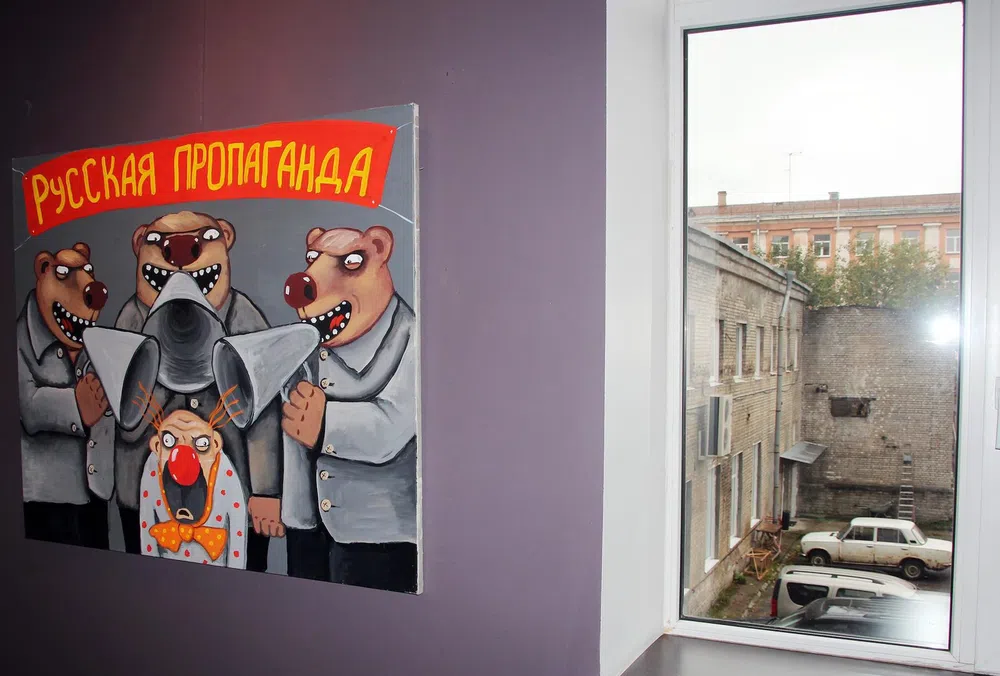
Each global event of cultural, sporting or scientific significance (like an Olympiad or Nobel ceremony) instantly awakens in politicians, commentators and political technologists the desire to talk about “soft power” / soft power. Let the country not have allies and lives almost in isolation, the regime is authoritarian and cruel, human rights and freedoms have remained only in the Constitution - but in the field of ballet/physics/cinema we got ahead of everyone, see what people work/work for us, not contrary to, but thanks to it, we will win, all the flags will be visiting us.
The idea of Soft Power, like many other excellent ideas, taken out of scientific household and sent to swim around the seas of pop politicalology, underwent a terrible intellectual rape. And if today, it doesn’t matter, in Russia or where else, Soft Power is mentioned, then at best we are talking about PR, and at worst - about banal propaganda. Both are the absolute opposite of the Soft Power that Joseph Nae - the youngest and his colleagues wrote about.
They have Power not “strength”, as is customary to translate, but rather “ power ”. And the authorities, as Hannah Arendt taught us, is the antipode of violence. Where power coercion is required, power - a complex system of relations - disappears. Power, unlike strength, is not an instrument, but an end in itself - they fight and compete for power, it exists regardless of who has specifically possesses it. The difference between instrumental strength and spontaneous power is critical for understanding the concept of Soft Power.
This is like a natural phenomenon: if you are lucky, you can use it, but you cannot design or completely control it. Here is a rigid force - means of military or economic coercion - it is really power , it can be calculated. But the weapon is obsolete, the economic situation is changing, the balance of power is being reviewed. It turns out that without the support of values (not in the sublime, but in the household sense), the price of power victories is negligible. You can command the best army in the world, but what is the use of this if the officers and soldiers are about to refuse to comply with your orders? And on the contrary,
Sanctions can destroy your economy, but so far people believe you, they will not blame you, but will unite around you.
The theoretician “Classes of civilizations” Huntington wrote that “McDonald's” would not correct Islamic terrorists. Suppose McDonald's here and now - not, but the culture is not a cassette bomb. The generation after secular Western values before our eyes turn the children of radicals into humane Europeans. But the opposite is possible: many of the respectable citizens of the Weimar Republic, succumbing to the temptations of Hitlerism, became the support of the Third Reich.
What unites these cases? Sincerity. As Ny himself joked, the best propaganda is the one that is not propaganda. On the one hand, a person should be discovered by a new experience, on the other, he must meet something genuine . Not the power that forces him, but the power that offers him something.
Soft Power vulgarization is a common problem. But if in the world these are more often journalistic simplifications, then in our country an erroneous power interpretation deeply penetrated the brains of the establishment and walked nests in very serious documents like doctrines/strategies (information, national) security, etc.
Their logic, despite the verbal lace, is primitive. “The elites of the country N do not want to negotiate with us? So we will blow out the heads of 1/4 of their population, and they will not have a way out! Ah, isolation? Well, look, what a championship we have, how many medals, how they squeeze our hands in Cannes! ” But 150 channels of Russia Today, even with Larry King, are no Soft and no Power yet.
Yes, propaganda is effective. Doping also gives an instant result. In the era of post -truths and dipfaces, a lie is easy to give out for the truth - but we all see how quickly the secret becomes clear? In the Russian “soft power”, the cause and investigation are confused in places. This is the sad aberration of consciousness that it is necessary to invest in sports for the sake of a medal offset, and not for the sake of athletes; that support for cinema is needed for the image of the country, and not the production of good cinema; What
We have a space program for pride and posts on Twitter, and not for the sake of, in fact, the study of space.
All states exploit culture, sport, science for their political purposes - but they are achieved by those for whom this product is “side”. Bonus for systems that have been spending huge funds for decades on the so-called “human capital”, without calculating to get any power/influence back. We have everything the other way around: power and influence are goals, and the main product has become sideways.
The modern world provides unprecedented conditions for the competition of cultures, ideas, values and lifestyles. But this competition is tough, long, exhausting, and every year it will only intensify. A strong national culture gives an advantage at the start-and sadly, as for the sake of momentary ambitions, whether Sochi-2014 or the elimination of the media, “foreign agents”, the country shoots itself and destroys the hope of the emergence of a real “soft power” for years and years ahead.