
Translated material
Kolyma ledges
Memory of Varlam Shalamov
I was offered to drive along the Kolyma highway by the travel club Mikhail Kozhukhov. To me - and those who would like to go along with me in the footsteps of Varlam Shalamov. Not the Maldives, of course, but in these lands they fly behind the sensations of a completely different kind ...
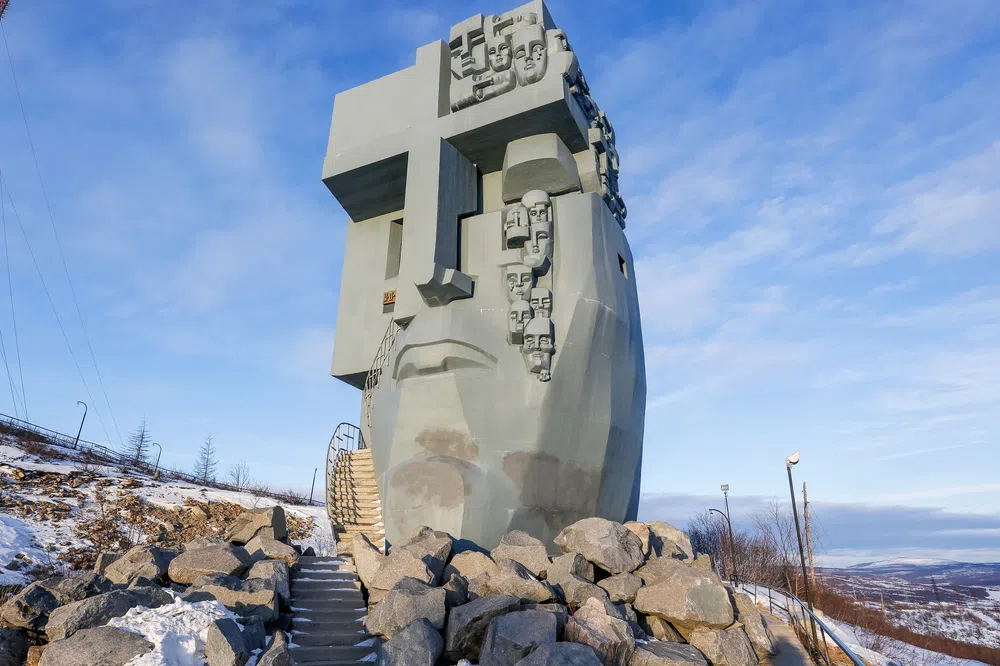
- Our plane landed in the city of labor glory - Magadan!
I did not rush: it is now called that. Well, yes: “Labor in the USSR is a matter of honor, glory, valor and heroism” (stormy, prolonged applause, grin in their mustache).
The city of labor glory lies in the lowlands between the hills and the bay of Nagaev. The “Mask of Sorrow”, according to Ernst Unknown, was supposed to look at this city, standing on the lifeless dead-stone space of the slope. The slope, in the types of improvement, was planted with greenery, but the mask itself (after a crack went through her face due to violation of construction technology) was painted, in simplicity, a ship's soric in a dark spide color.
Sorrow? Well, I don't know, I don't know. Something is not particularly seen here.
On a magnet with Zhirinovsky, the old political clown stands at the wagon with a plate "Maidan-Magadan" in the form of a conductor, haha. A magnet is bought.
The idea that the name of the city remained synonymous with horror, local patriotic strings, apparently, does not hurt. The native land as a symbol of a terrible and lawless punishment is cool!
For Zhirinovsky on the occasion of Freedom coming, they once voted here with the whole world (the Karjakinsky “Russia, you fooled” sounded right then)-now the population was drawn to this fake liberal democracy, but another, real, was not interested.
Magadan himself (maybe in contrast to my expectations) turned out to be the city quite alive and residential, very Soviet, but not “killed”. Signs of free entrepreneurship, salons and restaurants with exotic names with a typical way are scattered along the streets with communist names. And as everywhere in Russia, the past proceeds through the present “insensitively” ...
This is speaking Gogol. Simply put, the country does not simply bother with the bloody horror of its own recent history, and here, at the Nagaev Bay, this is especially noticeable.
... I am standing in the museum of the village of Ust-Omchug (five hours on the Kolyma highway and a little to the left on the map) and listen to the story of a good local history about the life of the city and the region.
This life is quite diverse: in the first hall of the museum we are waiting for a story about the local flora and fauna, then follows the hall dedicated to the camps, and then they will tell you about the development of the region - which, so it turned out, these very camps contributed a lot.
- Progress was walking. Negative progress, but it was going! - reports the local history. Shalamovsky Ice Hell in the same harness with a schedule for the extraction of tin and uranium looks historically justified.
“The work was very difficult, but ...” says the woman, and state notes are heard in her voice. This "but" is always ready with us; The price for that tin and that uranium does not go off our way. It’s a pity for people, of course, but it is necessary, it is necessary!
“The country needed restoration,” Valera’s driver is important importantly to say on the third day of the journey ...
Valera, the harsh guardian of our group on this Kolyma highway, wears the Valkyrie tattoo on his shoulder (the sign of the warrior, as he explains). He knows the local camps thoroughly, he does not like communists, he doesn’t like these either, he was disappointed in Zhirinovsky, and he does not know who to vote for now. Twisting the KamAZ-Vakhtovka steering wheel, Valera degrees about how all this happened in those years. Political, of course, says, but it’s not just that they got here?
-Probably said something wrong ...
And Valera falls silent in deep thought about historical inevitability. Saying "not that" humanly sorry, but what to do? "The country needed to restore!"
Restoration - what? Nemot and fear? Restoration - after which? Solovetsky Sekirka? Prompartia process? Exhausting industrialization and destruction of the peasantry? But I did not plan to discuss with Valera, and by that time I was sick in the most literal way. Kolyma Roads are ... how to tell you ... In short, it is not entirely expensive ... or not at all.
“The partner could not go sober, I was afraid,” says Valera about the times when he worked as a “long -range”. - I trample at forty, one torment ... but he drank - he rode normally!
In roadside cafes, on stands - the monstrous statistics of the local accident, but the camp attitude to death, apparently, has long been penetrated into the soul of “Volnya” and their descendants: they are used to it.
- Why not make the road? - pretending to be a foreigner, I ask Olga, our Sherpo on this campaign.
- For what? - pretending to be local authorities, she reasonably answers.
And indeed.
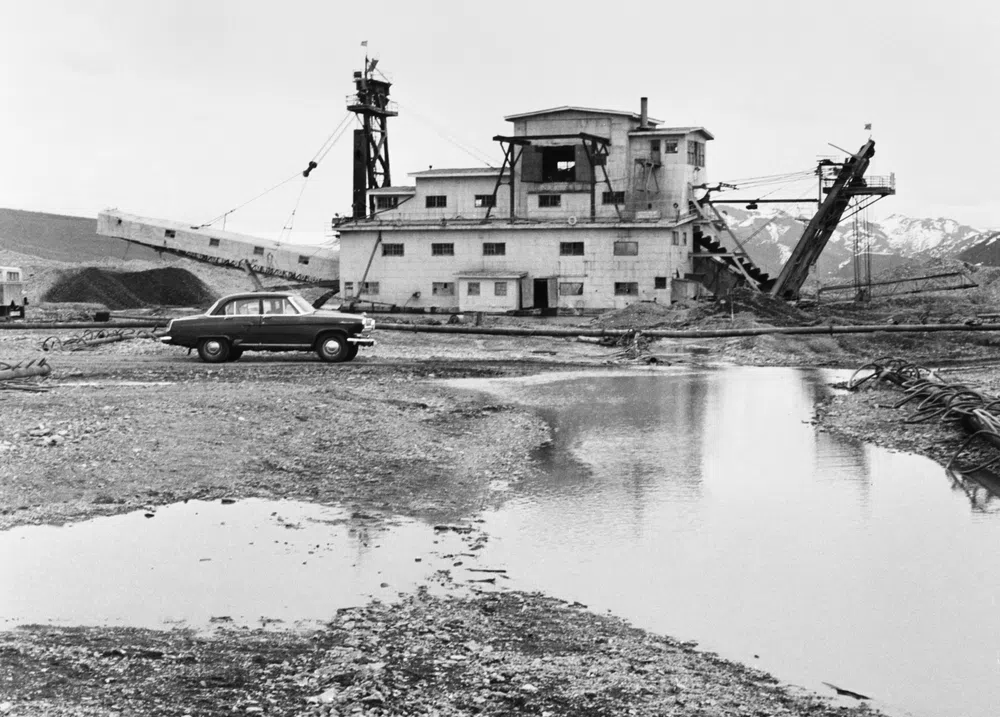
Make roads to be? To drive from Ust-Omchug to the mortal mines of Butugyaga? Who needs it? The mines have long been abandoned - it became unprofitable to obtain tin without slaves,
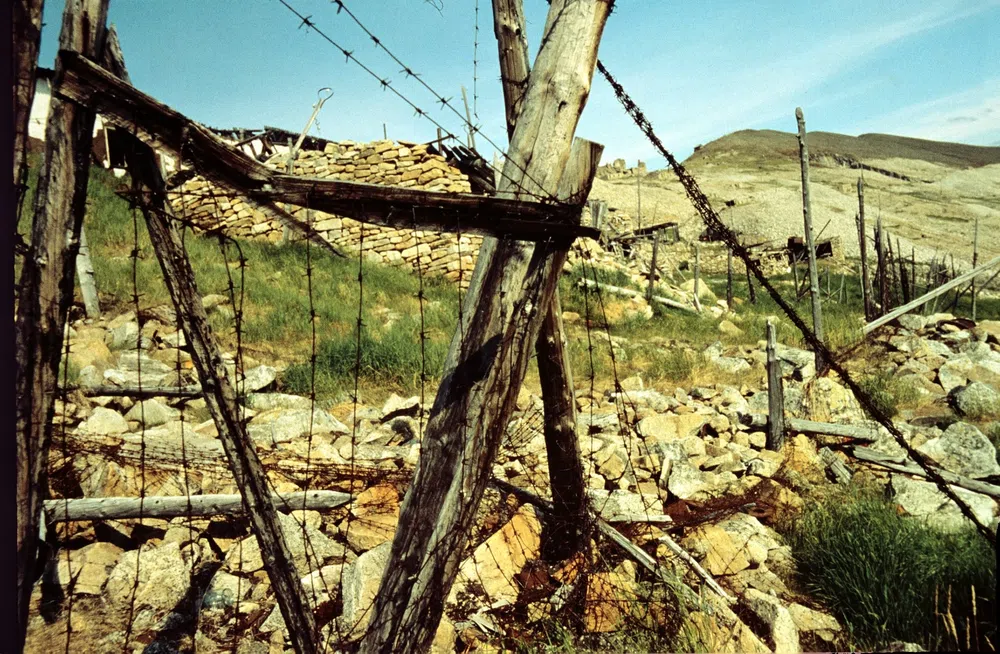
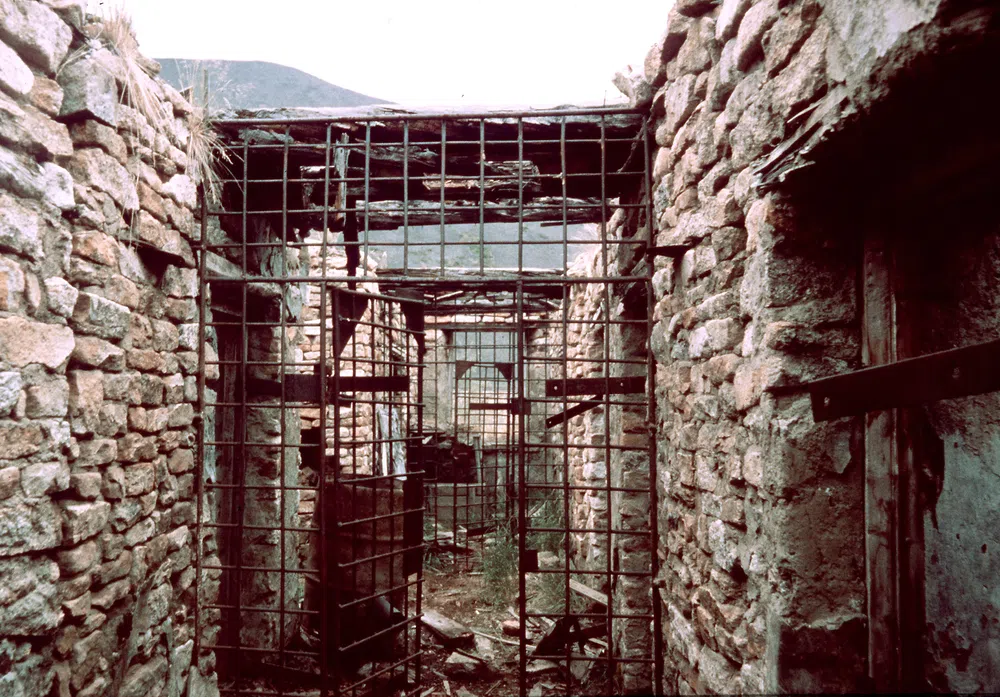
And the museum or memorial is not expected here. The ruts of the thickets, the paths and slopes are plentifully dotted with rusty evidence of the former horror: pieces of barbed wire, pots, brackets ... A random warehouse lies on the stones of shoes made from pieces of tires fastened with nails ...
I’m trying to imagine the surroundings of modern German Dachau with a kind of concentration camp artifacts scattered through the landscape - there is not enough fantasy.
The walking road to Butugychag (from the place where the capabilities of KAMAZ ends) takes about three hours. “The route is not difficult, less than one,” as our guide Sergei Raizman assured before the exit ...
For three hours, together with our selfless group, I wrapped around the stream and slipped along the scree, dreaming of catching up with Sergey and expressing him everything that I, a quiet Russian pensioner, think about professional tourism. But the main words on that day, already besides jokes, said the sixteen -year -old young man Fedor. He said:
- You can’t complain here!
Yes. This route of decades was on end by people who fell into slavery. They did not go in July with halves, but Kolyma winter under the threat of execution. And after 10-12 hours of work in the mines, they went back to the huts. You can’t complain here.
Fedor flew to Kolyma and his mother, other young participants in our campaign, Sonya and Robert, with his father. They have been living in England for a long time, and on vacation, the father invited children here.
For my taste, this is a patriotic education.
"May the descendants of the Orthodox know ..."
Today, however, the Pushkin Pimen would quickly be built into the framework drawn by Medinsky: you will not be lusting with us. No gloomy truth, gentlemen! This pessimism smells of betrayal. You never know who ran into Russian history on whose knife ... more pride, even more! Thus, the "Seligers" and "Unarmium" are alive, our patriotic sawing and molestation of young people at least in a figurative sense ...
Fedor, Sonya and Robert - outside this trend. They are about another. And if the homeland is lucky, these children will still be useful to her.
The local historian Ivan Panikarov, who collects the testimonies of the Kolyma hell for decades, does not know how to talk about patriotism. He probably does not know what exactly this word is called the feeling that determined his fate.
Ivan Alexandrovich lives in the berry - a place known to the Russians as the birthplace of Yuri Shevchuk. These edges are rich in names, and could it be different? The first “thaw” are almost entirely children of repressed, throughout the width of the Stalin’s arbitrariness, from the “Kulak son” of Twardowski to Okudzhava, Trifonov, Aksenov, whose communist parents fell under the death of the thirties.
Many of the survivors after the defeat in the rights remained to live on Kolyma ... The touching monument to the singer Vadim Kozin in the courtyard of the house, where he lived his life, is a reminder of how these places became relatives.
Panikarov himself, however, is a visiting one. And not even from a repressed kind. A neighbor was sitting on the hostel, but he did not particularly remember about the camp, silent; His friend who came to visit was more talkative ... And Panikarov “hooked” on this subject.
Fate found him to the touch, by case: Kolyma, in the wide and clear sound of this word, became the content of life.
Hearing the Earth is full: letters, documents, photographs flowed to Panikarov. A homemade museum, not appropriate in a small apartment, flowing into a garage ... Exhibitions, publication of books - all this is a stubborn panicar character, its fulfilled calling.
Now he stands in thought at the red line: I do not want to become a "foreign agent." And he was given grants and Soros, and the Foundation of McArturov, and the Netherlands-tried, villains, secretly melt the ice palace of our state correctness for their money! Thanks to Putin, this lawlessness is put to an end - the dollar will now not receive panicars to preserve the memory of dead people and destroyed fates!
Only along with the stigma of the traitor.
Crimes in Russia are carried out openly, righteous affairs - stealthily. A few years ago, an unknown employee of the bodies handed over to Ivan Alexandrovich a folder with personal affairs of prisoners intended for destruction. He did this, of course, secretly: saving invaluable documents and resurrecting names, the employee committed an official crime.
Think about: the only thing we can thank this person today for a conscientious act is to hide, like a partisan, not to give out for reprisal to the state.
We have a strong state! Powerful, dangerous for people. The country is in the fainting, but the state is wow! Nice to admire.
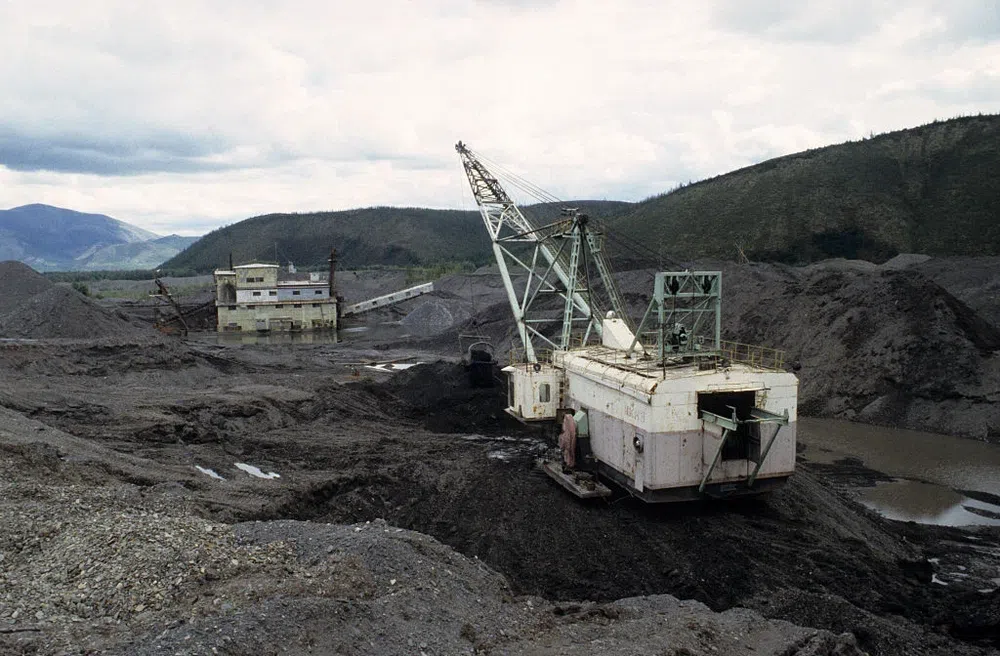
... Yakutia burns, Magadan region too. I was hanging over hopeless Susuman. On the second day, the rain was a little nailed - it became a little more visible and even more hopeless. The killed landscapes along the road: in search of gold, sand is washed here on the fifth, and there is no talk of any reclamation. The landscape is simply snatched ...
Here, in Susuman, I was overtaken by the virus, and I lay in the room for a day - I drank warm with lemon, swallowed an antibiotic, slept and in the moments of the lumen snapped a TV remote control.
“This is a real tragedy,” said the TV voice once. I tensed, listened. It turned out that our swimmer in Tokyo passed a positive test for Covid and could not take part in the Olympics.
Yes, this is a tragedy, of course. And the mines of Butugyaga are simply difficult working conditions. Do not confuse in temperature delirium.
... Early departure to the Dneprovsky mine. A shaking, taking out the intestines, a stone cemetery on the mountain, nameless crosses at sunset. The numbers on them were erased, and it is already non -controversial, who lies under these stones are just people, nameless slaves who died from exhausting labor and cold. Only one cross is with a portrait of a person and the dates of his life, but this sign is screwed at random at random: it lies somewhere here, a concluded Semen Opirailo, convicted in 1937 and died from the cold on November 18, 1943.
Somewhere next to Semen Efimovich lies a mullah, whom the comrades were able to cheat on Muslim custom, organized a breakdown at the mine and distracted the convoy. Olov’s prey decreased that day, and cutting the authorities is a terrible crime, it would cost several more lives ...
State interest! Having diluted millions of people, to register the land with white -shockanals and scoop up a uranium from it for blackmailing the planet ... In this regard, we are in perfect order and now: we continue to stand on our own, blackmailing the surroundings and glorifying the Stalinist effective management. And not forgetting, of course, to press those who dared to look at things differently.
After the film Dudia about Kolyma, one noble historian made his terrible lie: there was no serpentine (investigative prison and a place of mass executions of prisoners), it turns out!
How so? And so: according to documents, this place was called differently! There was a separate camp point "Stan Khatynne", but there was no serpentine ...
- Lie! - Lying screams heart -rendingly and spins before our eyes with his countless thimbles.
- There were no tens of thousands of executed! - screams a lie. Yes, it was shot in the Dalstroy system, according to documents, about 12 thousand prisoners, and not at all “tens of thousands”, as it is written on the plate, which Panikarov installed on the site of executions in the 1990s. (The archives were closed, and the figure was written according to the testimonies of the survivors ...)
- Lie!
About three thousand were executed on a “serpentine” - only on this piece of land, where the dead were raked with bulldozers, “cleaning” the crime scene, where prospectors later refused to work: teeth, bullets and bones shook in a flushing machine ...
- Lie! - screams a lie.
To complain to the mistake, which they themselves provoked deaf and criminal secrecy, replace the topic, make the obvious ambiguous - and lie, lie into the eyes, without stopping ... And then a century later a wave of hatred of insulted fellow citizens falls on Panicarov: why does he slander the country?
This aggression is from fear of truth. It’s so easier for them - to wander in mental frost among monuments to the murderers in contempt for the dead ... people are more familiar, and the state is calmer.
The killers are their own corporately close ones.
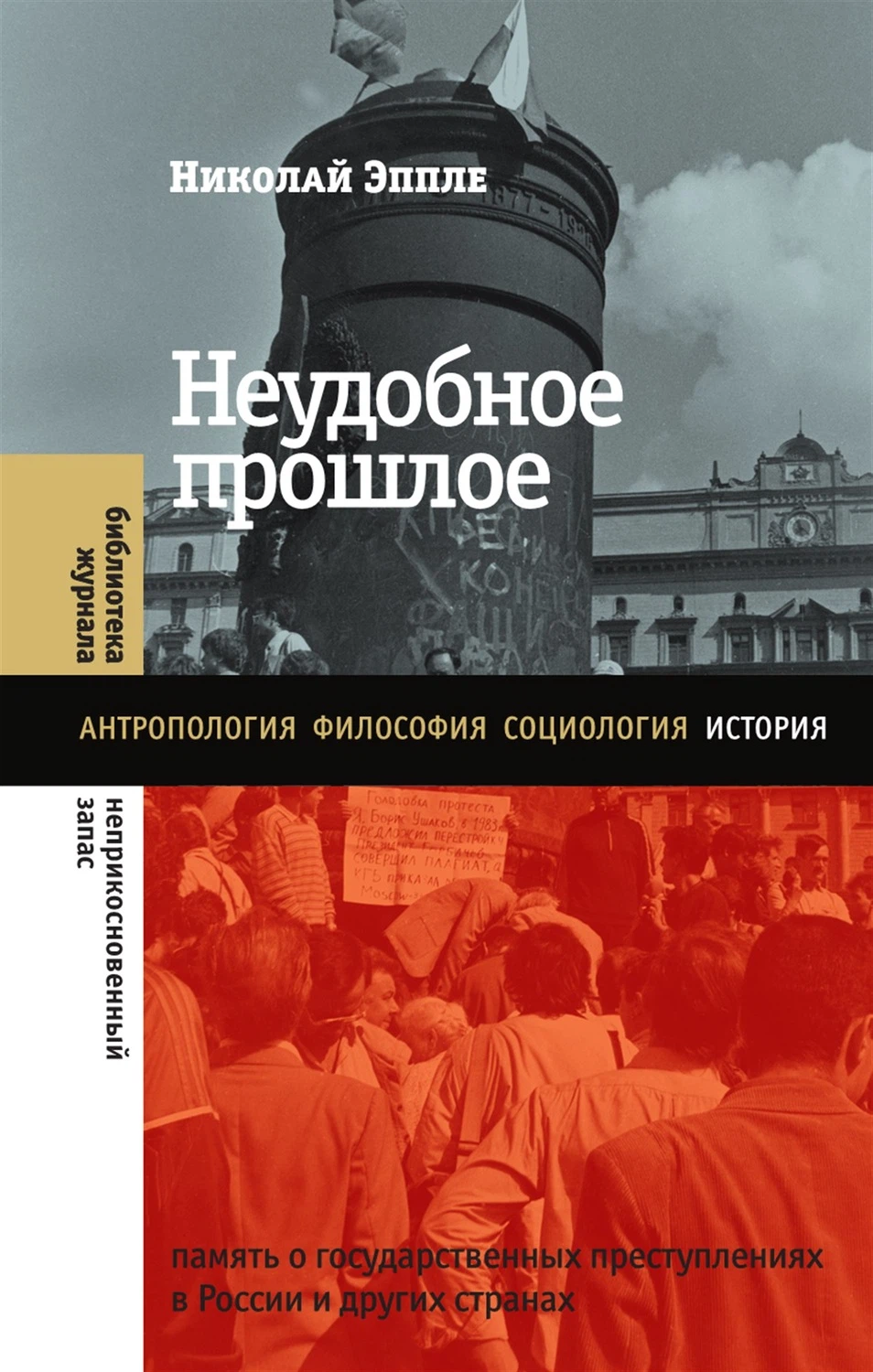
The book of Nikolai Epple “The uncomfortable past” was published as if specially under our Kolyma expedition. What to do nations with their skeletons in cabinets? How to sew yourself together after a mental disaster, how to start living again? How to reflect your past - and to part with it finally? The author peers at the mirrors, placed for Russia throughout the twentieth century ...
The ideal picture is not visible, but there is something to compare with.
The German experience is clearly not useful to us - the nation, fascinated by the Fuhrer, poked their face into her own bloody shit, not particularly asking for the consent of those who had just shouted “Hail”.
But how to pull yourself by the hair - yourself?
Latin America? But in the framework of this experience, it is necessary to bring the killers to the bench of the defendants at least demented, like Pinochet ... And this despite the fact that the “death squadrons” there are a baby babble compared to the measured work of the Gulag, and the size of the injury is completely incomplete. Yes, and something of our killers are in no hurry to give power in honest referenda ...
The Spanish recipe also does not seem to work. The descendants of the phalangists and the Communists were able to hug on the stones of the general pantheon decades later, because they were equal in grief and mutual responsibility to the dead ancestors ... And in our case, what is the Pantheon?!
The unprecedented terror was unleashed by the Bolsheviks - one -sided, for many decades. And when (or if) Russia returns from the fainting, the day of the announcement of this “red terror”, September 5, will become the day of national sorrow in memory of the destruction of estates and entire nations, the fusion of ideological inquisition with blatars, about the triumph of scum, about the absolute human catastrophe and about the broken ridge of the nation ...
When this time comes, I don’t know - so far all this has not even been called by its proper, and hastily, through the teeth of a branded apology, more like “choked on you”, is clearly not enough for the descendants of the worn out the benefits of this historical hell.
By the way, they continue to celebrate the Chekist's Day here.
*Still alive a man
Having shot my father
In the summer in Kyiv, in the thirty -eighth.*
*Probably retired.
Lives at rest
And he threw the usual case.*
*Well, if he died -
Probably a person is alive
That the most execution
Tolstoy
Wire
Twisted
Hands
My father
Behind.*
True, I also retired.
*And if he died,
Then, probably, a person is alive
That he tortured during the interrogations of his father.*
This one, right, went out for a very good pension.
*Maybe the escort is still alive
That his father brought out to be shot.*
*If I wanted to
I could return home.*
*I heard,
That all these people
They forgave me. **
*Poem by Ivan Elagin (1918–1987).
I’m afraid that reconciliation will not work on these basics.
More recently, it seemed: we are ready to meet with our own past, without taking a look ... Alas, it seemed. The new century, the next imperial sinusoid - and here we are again flying along our gagging historical slope - a special path, Ept! - On the eternal sledges of their own greatness.
"We will ensure the food security of Kolyma!" - He promises a strict unicorn, looking at the city of labor glory of Magadan from the height of its election poster.
Who threatens her on the third ten of their permanent power, local food security? Who is this courageous man with a bear on the logo to fight for food for Kolyma residents? This secret is great, but something tells me that he will win in this election, especially since I never saw any other agitation on Magadan streets.
Well, they are not looking for good from good. Medvedik is so Medvedik.
In the ominous “Vaskov’s House”, the internal prison of the sweatshirt, whose walls keep the memory of nightmares that did not slow down Stevens King, the Magadan Regional Duma works measuredly. About Vaskov himself, the beast -like owner of Solovkov, whose name has become a symbol of camp horror, can now be read in the memoirs of his son: a modest worker, a good business executive ... a man of a difficult fate.
- Why is it so?
“The son’s voice is trembling. Tears appear in front of his eyes, ”the sensitive correspondent of Rossiy newspaper ends his material.
National reconciliation is it.
From Dante, according to rumors, contemporaries-Florence shied away: they believed that he saw hell. Варлам Шаламов, прошедший живьем через настоящий ледяной ад Колымы и сам ставший нашим Вергилием, умер в январе 1982 года в неврологическом диспансере, куда его упрятали подальше от глаз и ушей народа — строителя коммунизма.
Впрочем, народ и не больно-то рвался узнавать про эти круги.
До конца коммунизма было рукой подать, но русская народная амнезия легко пережила и красное знамя, и наступившие вслед за тем новые (недостаточно новые, как оказалось) времена…
«Маска Скорби», обсаженная типовым леском и выкрашенная в дурацкий цвет корабельным суриком, — не более чем объект на балансе города трудовой славы. Задуманная как покаяние, покалеченная, дискредитированная номенклатурным идиотизмом и вписанная в очередное безвременье, она символизирует сегодня наш упрямый незачет по собственному прошлому.
Don't disturb, please, — предлагает как альтернативу уборке табличка в номере отеля «Магадан». Да-да, запереться — и попросить не беспокоить.